Choosing a Laser Welding Machine in 2026 requires more than comparing laser power and purchase prices. The correct decision depends on material, joint design, production speed, automation, safety, and long-term service support. A machine that performs beautifully on thin stainless steel may struggle with reflective copper or inconsistent gaps. That detail matters.
Industry forecasts show strong expansion. Grand View Research estimates that the global laser welding market will continue growing through 2030, driven by electric vehicles, batteries, electronics, medical devices, and precision manufacturing. MarketsandMarkets also reports rapid growth in laser welding technology, although its market boundaries differ from other research firms. These differences deserve attention. Report definitions are not identical, so headline figures should not become the only purchasing argument.
A reliable evaluation starts with real samples from your workshop. Test a 1.5-millimeter steel bracket, a copper connector, or the exact battery component you plan to produce. Record penetration, spatter, distortion, cycle time, and operator workload. Ask suppliers for repeatability data, maintenance intervals, training details, and local parts availability. Fiber, diode, and disk lasers each offer different advantages, and higher wattage is not automatically better.
Safety and process qualification remain essential. IEC 60825-1 provides a recognized framework for laser product safety, while ISO standards support welding procedure qualification and operator competence. Independent test results are valuable, but practical trials often reveal inconvenient weaknesses. I have seen impressive demonstrations fail when fixtures flex or protective windows collect dust. A careful buyer should therefore compare verified performance, total ownership cost, and engineering support before selecting a Laser Welding Machine for 2026.
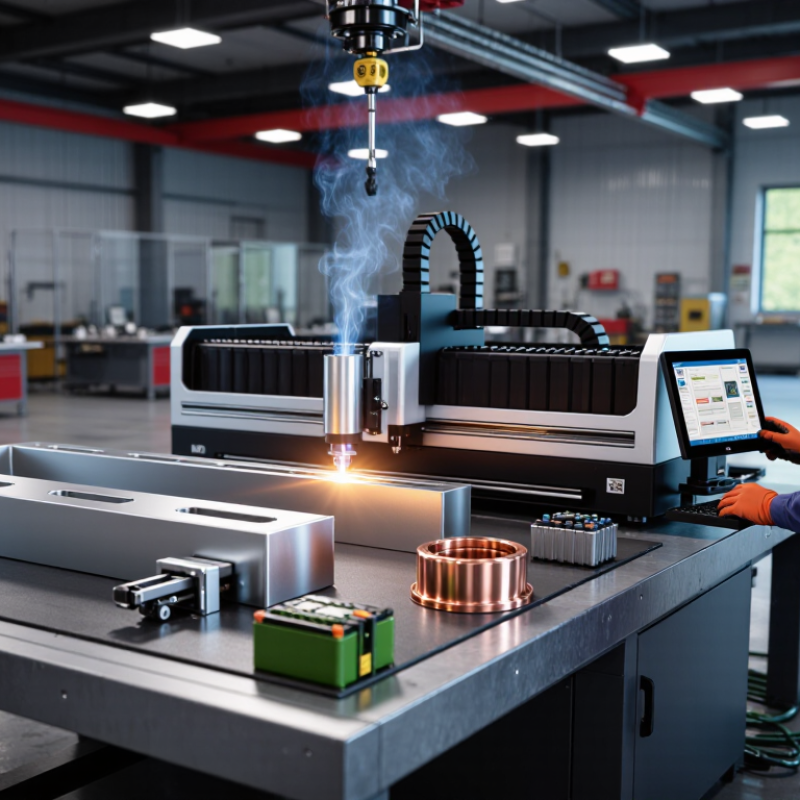
Choosing a laser welding machine starts with process basics, not advertised power. Laser welding concentrates light into a small spot, creating conduction-mode or keyhole welds. Conduction mode suits thin, visible seams. Keyhole welding delivers deeper penetration with higher energy density. Fiber lasers dominate many modern systems because they offer efficient beam delivery and stable output. Pulsed operation helps control heat on thin sheets and sensitive assemblies.
Grand View Research estimates that the global laser welding market will grow at about 9% annually through 2030. However, market forecasts differ by source and application. That uncertainty matters. Select power from actual thickness, joint design, material reflectivity, and production speed. Stainless steel, aluminum, copper, and coated materials absorb laser energy differently. A 2 kW source may weld one alloy smoothly, yet struggle with another. Run destructive trials.
Core technology also includes beam quality, focal position, shielding gas, wire feeding, wobble control, and process monitoring. Wobble patterns can widen narrow joints and reduce fit-up sensitivity. Cameras and photodiodes may detect unstable penetration, but they cannot replace a cross-section. ISO 15614-11 provides a framework for qualifying laser welding procedures. ISO 11553-1 addresses laser processing safety. These standards support reliable decisions, not automatic success. In practice, ask for sample welds, measured penetration, heat-affected-zone data, and repeatability records.
The perfect specification does not exist.
Start with material, thickness, joint design, reflectivity, and production speed. A 2 kW source may suit one alloy but struggle with another. Run destructive trials.
Conduction-mode welding creates shallow, visible seams with limited penetration. Keyhole welding uses higher energy density for deeper joints. Deeper is not always better.
They provide efficient beam delivery and stable output. Pulsed operation helps control heat on thin sheets and sensitive assemblies. Results still depend on setup.
Test beam quality, focal position, shielding gas, wire feeding, wobble patterns, and monitoring. Use your thinnest sheet, tightest corner, and longest daily run. Measure penetration and distortion.
No. Cameras and photodiodes can identify unstable penetration or process changes. A cross-section remains important for verification. A clean surface can mislead.
Look for programmable power ramps, wire feeding, seam tracking, recipe storage, and data logging. Clear alarms matter when operators wear gloves. Automatic does not mean perfect.
Verify enclosure interlocks, extraction performance, viewing protection, emergency stops, and documented training. Plan safe service access. Safety needs regular review.
Include electricity, shielding gas, wire, lenses, filters, labor, downtime, and maintenance visits. Inspect lenses daily and check nozzles weekly. Small omissions become expensive.
Request references, installation records, training details, response times, spare-parts availability, and actual weld samples. Ask whether specifications come from measured tests or assumptions. Do not trust demonstrations alone.
Schedule cooling-system cleaning, calibration, filter replacement, lens checks, and software support. Keep photographs and corrective-action records. I might still underestimate downtime. Recheck estimates using real shift data.
Choosing the right Laser Welding Machine in 2026 requires a clear understanding of both the technology and your production goals. Start by reviewing key laser welding principles, including beam control, heat input, penetration, and compatibility with different metals. Define the materials, thicknesses, joint designs, weld appearance, strength requirements, and production volume before comparing equipment. Laser source type, power range, beam quality, working area, and machine configuration should match your applications rather than simply focusing on maximum power.
A reliable selection also depends on precision, automation, operator accessibility, safety systems, and total operating costs. Consider whether the machine supports manual, semi-automatic, or fully automated workflows, as well as inspection, data monitoring, and future process upgrades. Before purchasing, verify technical specifications, testing procedures, training, warranty coverage, spare-parts availability, and maintenance support. A careful evaluation of suppliers and long-term service planning can improve productivity, reduce unexpected downtime, and ensure that the Laser Welding Machine remains suitable as your manufacturing requirements develop.

