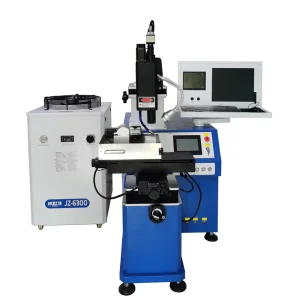
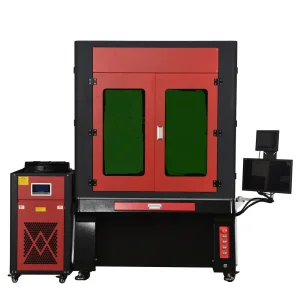
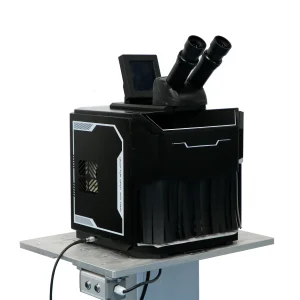
Explore our flagship configurations optimized for non-contact oxide removal, automated aerospace surface treatment, and ultra-low thermal distortion joining.

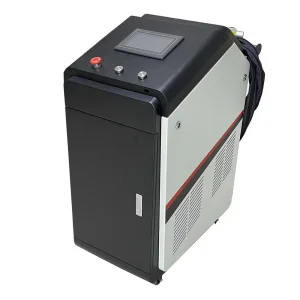




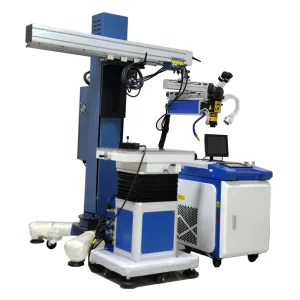
Quantitative comparisons between conventional abrasive sandblasting, chemical passivation, and industrial pulsed laser ablation.
Procurement teams must balance continuous-wave (CW) volume stripping with high-peak pulsed ablation precision. Below is our direct-from-factory pricing architecture for 2026.
| Laser Source & Technology | Nominal Power | Optimal Industrial Substrate | Cleaning Speed | Estimated Factory Price (USD) |
|---|---|---|---|---|
| MOPA Fiber (Pulsed Mode) | 100W – 200W | Injection Molds, Anodized Al, Aerospace Alloy | 0.5 – 2.0 m²/h | $7,800 – $14,500 |
| High-Energy MOPA Pulsed | 300W – 500W | Turbine Blades, Semiconductor Tools, Heritage Stone | 2.5 – 6.0 m²/h | $16,200 – $28,000 |
| CW (Continuous Wave) Fiber | 1000W – 1500W | Structural Steel, Shipbuilding Plates, Pipeline Rust | 8.0 – 15.0 m²/h | $5,200 – $7,900 |
| High-Power CW Fiber | 2000W – 3000W | Heavy Corrosion, Thick Maritime Coatings, Bridge Girders | 18.0 – 35.0 m²/h | $8,500 – $13,800 |
| Multi-Axis Robotic Integration | 500W Pulse / 3kW CW | Automotive EV Battery Trays, Automated Production Lines | Custom Automated | $35,000 – $75,000+ |
Pricelist Note: Quotes listed above represent standard factory FOB Shenzhen pricing, inclusive of industrial dual-temperature water chillers, standard handheld wobble cleaning guns, digital control consoles, and basic spare optics. Final pricing fluctuates based on source brand choice (Raycus, JPT, MAX, or IPG Photonics), optical fiber delivery cable length (standard 10m vs. optional 15m/20m armored conduits), and target regional compliance packages.
How the convergence of localized optoelectronic clusters, vertical integration, and streamlined export infrastructure drives down total cost of ownership (TCO).
Shenzhen and the Pearl River Delta house over 70% of the world's upstream laser diode, galvanometer scanner, fused silica optic, and cooling compressor manufacturing. This proximity reduces component lead times from months to hours and cuts bill-of-materials costs by 35% compared to Western assemblers.
Every industrial laser unit produced undergoes a mandatory 72-hour continuous thermal cycling and output power stability test. Beam profile metrics (M² factor), focal point dispersion, and chiller emergency shutdown relays are digitally logged and stamped into the individual machine validation passport.
Factory export variants conform precisely to international safety protocols: CE Machinery Directive 2006/42/EC, EN 60825-1 (Laser Safety Standards Class 4 protocols), FDA Accession number registrations for North American border entry, and RoHS-certified hazardous material limits.
Deploying laser ablation requires tailored optics, specialized fume filtration, and interlock engineering compliant with regional workplace safety mandates.
Rubber, polyurethane, and carbon fiber composite molding tools accumulate burnt resin residues. Traditional dry-ice blasting incurs steep recurring CO2 pellet costs, while grit blasting alters micro-tolerances. Utilizing 200W-500W Gaussian pulsed laser cleaners vaporizes the fouling layer through photo-acoustic shockwaves without micro-etching the tool steel.
High-integrity fabrication in oil & gas and pressure vessel construction demands mill-scale and hydrocarbon removal prior to automated welding. Handheld continuous wave lasers strip oxide coatings at up to 25m²/hr, eliminating post-weld porosity defects and providing instant weld-seam thermal bluing passivation without acidic pickling paste.
Laser vaporization of toxic paints (such as lead or chromate primers) generates micro-particulates. Factory configurations incorporate synchronized multi-stage HEPA carbon extraction systems compliant with OSHA 1926.1127 and European EN 1093 exhaust limits, alongside dual-channel safety interlock connectors wired directly to perimeter emergency stop barriers.
Where laser cleaning is headed over the next five years: from handheld equipment to fully autonomous, multi-sensor industrial robotics.
Next-generation scanning heads feature integrated Laser-Induced Breakdown Spectroscopy (LIBS) sensors. The system analyzes the plasma plume in real-time (<5ms) to determine when the rust or paint layer is removed, throttling laser output instantly to avoid over-exposing the underlying substrate.
Advances in high-efficiency 976nm pump diodes have eliminated bulky liquid chillers in lower power ranges. Backpack and trolley-mounted 100W–200W pulsed units now weigh under 25kg, enabling rope-access technicians to clean bridge cables and offshore infrastructure with ease.
Collaborative robots (Cobots) paired with lightweight 2D wobble cleaning heads replace manual labor in EV battery tray production. Standardized industrial fieldbus protocols (Profinet, EtherCAT) allow turnkey handshakes with factory MES systems for complete quality traceability.
Direct technical guidance covering power selection, operating costs, substrate metallography, and overseas commissioning.
Pulsed systems deliver extremely concentrated peak energies (megawatts per pulse) for nano-second durations. The ablation mechanism is non-thermal (photo-acoustic stripping), making it ideal for molds, aircraft skins, and parts where the metal's grain structure cannot tolerate heat. Continuous-wave (CW) laser cleaners output a steady beam that removes material through rapid thermal heating. While CW is dramatically faster and significantly cheaper per watt—making it ideal for structural steel plates and heavy rust—it introduces thermal heat into thin sheet metals, potentially causing distortion.
When using an engineered pulsed laser cleaning machine with parameters matched to the material's ablation threshold, the laser energy is reflected by the bare substrate once the contaminant is ablated. Independent Ra surface roughness testing confirms that pulsed cleaning preserves pre-treatment finishes down to the sub-micron scale, preventing tool degradation and prolonging die life compared to mechanical abrasives.
Pulsed units from 100W to 300W run on standard single-phase 110V/220V 50/60Hz clean power with total draw typically under 2.5kW. Industrial CW machines (1500W–3000W) require single-phase or three-phase 220V/380V circuits capable of supplying up to 8–12kW during peak refrigeration chilling. Clean, dry compressed air (oil-free, <0.5 MPa) or nitrogen is recommended for the lens-purge assist gas to keep the protective silica window clean and prevent optical degradation.
Yes. We operate a dedicated sample testing and metallurgy laboratory in Shenzhen. International clients routinely ship problematic production components or sample coupons. Our applications engineering team runs comprehensive trial sweeps varying wavelength parameters, focal lengths, wobble geometries, and traverse feeds. We provide a complete report containing high-magnification microscope photography, cross-sectional metallography, and process videos along with exact parameter recommendations.
Laser cleaning machines are solid-state fiber systems with no moving optical components in the generator, eliminating alignment downtime. The primary consumable is the protective fused-silica cover lens located in the cleaning head nozzle, which protects internal collimation lenses from vapor blowback. Replacing protective lenses costs approximately $5–$12 per optic. Water chillers require a scheduled bi-monthly flush with pure distilled or deionized water.
We provide a comprehensive 2-year warranty on the fiber laser source and a 1-year warranty on the mechanical and optical assembly. Our machines feature integrated IoT telematics for remote IP diagnostics. Factory software engineers can access system logs, monitor laser diode driver currents, and trace chiller fault codes remotely. For warranty parts, replacements are dispatched within 24 hours via DHL/FedEx priority air freight.
Engineered for high-duty-cycle tooling refurbishment, multi-axis automated welding, and specialized alloy fabrication lines.