Choosing a Laser Welder in 2026 requires more than comparing wattage, price, and product photographs. The right machine must match your materials, joint design, production volume, and operator skills. A compact fiber Laser Welder may suit stainless-steel enclosures, while a higher-power system could be necessary for thicker aluminum components. The difference appears at the workbench: unstable penetration, excessive spatter, or a heat-marked edge can quickly increase rework.
Dr. Stefan Kaierle, a recognized laser-processing expert and Managing Director of Laser Zentrum Hannover, has stated, “Laser processing is not only about the laser source; it is about the entire process chain.” This principle should guide every purchasing decision. Buyers should examine beam quality, pulse control, wire-feeding accuracy, cooling performance, software usability, and real-time monitoring. Ask for sample welds using your actual material and thickness. Request measurable results, not polished demonstrations.
Small details matter.
A reliable supplier should also provide training, maintenance support, spare-parts access, and clear safety documentation. In 2026, automation and vision systems may improve consistency, but they cannot repair poor fixture design or unsuitable parameters. I must admit that no buying guide can predict every workshop condition. A machine that performs perfectly in a showroom may struggle beside dust, vibration, or irregular power supply. This guide therefore focuses on practical verification, transparent specifications, and long-term operating value. The best Laser Welder is not always the most powerful model. It is the one that produces repeatable, inspectable welds within your real production environment.
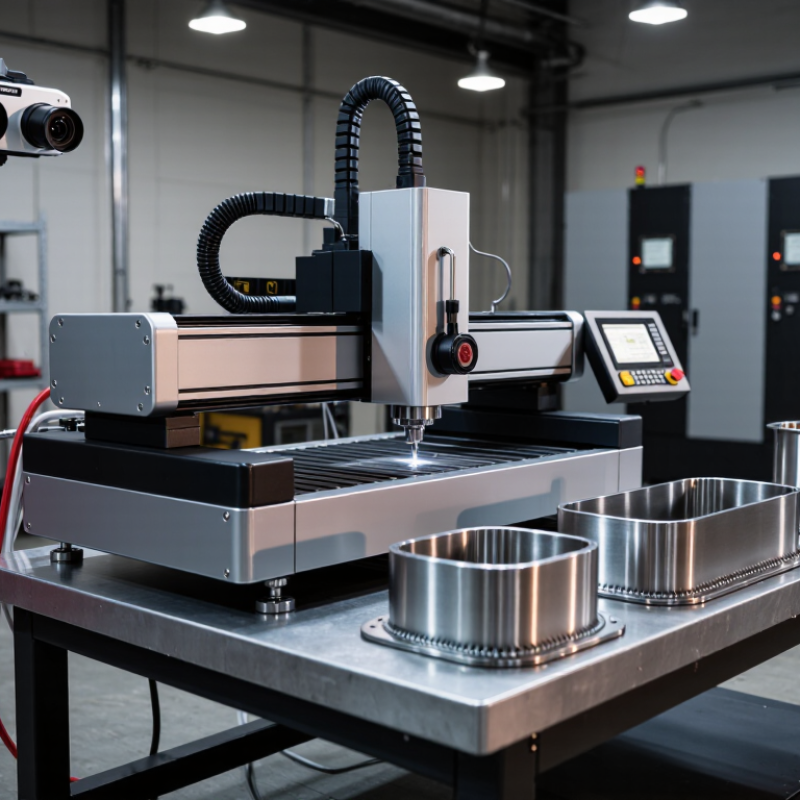
How to Choose a Laser Welder in 2026?
Laser Welder Basics: Types, Components, and Core Applications
A laser welder concentrates light into a small, intense spot. This creates narrow welds with limited heat distortion. Fiber laser welders suit stainless steel, aluminum, and many thin metal assemblies. CO2 systems still serve some larger, nonmetal applications, while pulsed lasers help with delicate parts. The choice depends on material, thickness, joint design, and production speed.
A practical system includes the laser source, welding head, focusing lens, motion platform, cooling unit, and control software. Shielding gas protects the molten pool from contamination. Vision systems can improve alignment, but they do not replace skilled inspection. Common applications include battery components, medical instruments, kitchen hardware, automotive parts, and precision enclosures. In real workshops, fume extraction and stable workholding often matter more than impressive power ratings. I have seen high-power equipment perform poorly when fixtures allowed tiny movements. More power is not always better.
Tips: Test your actual materials before purchasing. Check penetration, spatter, cycle time, and operator comfort. Ask for sample welds from thin and thick sections. Review service access, lens replacement, software training, and cooling requirements. A compact machine may save floor space, yet its work envelope can become restrictive. That trade-off is easy to overlook. Record failed samples, too. They often reveal the machine’s true limits.
Wavelength is a key specification when comparing laser welders because it affects material absorption, optical design, and process stability. Fiber and Nd:YAG systems operate near 1,064–1,070 nm, disk lasers near 1,030 nm, diode lasers commonly use 808–980 nm, and CO₂ lasers operate at 10,600 nm. A complete welding system also includes the laser source, focusing optics, motion or handheld controls, shielding gas, cooling, monitoring, and safety interlocks.
For metal fabrication, fiber, disk, and diode lasers are widely used for sheet metal, automotive components, batteries, electronics, medical devices, and precision assemblies. Select the system according to material, thickness, joint design, required penetration, production speed, automation level, and operator safety requirements.
Choosing a laser welder starts with the job, not the machine’s advertised power. Define the material, thickness, joint design, production volume, and acceptable weld appearance. A repair workshop may need flexible pulse control, while a production line may prioritize speed, repeatability, and automated feeding. Measure before buying. Record the smallest and largest parts you expect to weld.
Material behavior matters just as much. Stainless steel, aluminum, copper, and coated steel absorb and conduct laser energy differently. Reflective metals may require careful power control, suitable optics, and stable beam delivery. Thin sheets can warp from excessive heat, while thick sections may need multiple passes or preparation. Clean surfaces are essential because oil, oxides, and coatings can cause porosity or inconsistent penetration.
Test real samples before making a final decision. Use the same thickness, joint gap, and surface condition found in production. Inspect the bead, penetration depth, distortion, and hidden pores through appropriate testing. A polished weld can still be weak. Small tests matter.
I once focused too heavily on welding speed and underestimated part alignment. The result looked efficient but created uneven joints. That mistake reinforced a practical lesson: tolerances, fixturing, and operator training deserve the same attention as laser power. Ask qualified technicians to review the process, document settings, and confirm that the equipment supports applicable workplace and product requirements.
Choosing a laser welder in 2026 requires more than comparing wattage. A 1.5 kW source may weld thin stainless steel cleanly, yet struggle with reflective alloys or deep joints. Higher power helps penetration, but poor beam quality can enlarge the heat-affected zone. Check the beam parameter product, M² value, spot size, and stability across the working area. ISO 11145 definitions help suppliers describe these measurements consistently.
Control systems deserve equal attention. A useful interface should adjust power, travel speed, pulse timing, shielding gas, and focus position. It should also record each weld recipe. In real production, traceability often matters more than a brighter screen. The 2024 World Robotics report recorded 541,302 industrial robot installations worldwide in 2023. That figure shows why digital communication and automatic process monitoring increasingly influence equipment selection.
Automation should match your actual workflow, not an imagined factory. Test handoff signals, fixture sensors, vision alignment, and recovery after an interrupted cycle. Ask for sample welds using your material, joint gap, and production speed. Market forecasts from Fortune Business Insights project laser welding equipment growth above 9% annually through 2032, but forecasts differ between research firms. That uncertainty deserves attention. I would not choose a machine from headline power alone. A fast demo can hide unstable wire feeding, awkward maintenance, or inconsistent focus. Watch the operator change a lens and reload a verified recipe.
Safety should be tested before welding performance. Check the enclosure, interlock switches, emergency stop, and beam containment. The protective window must match the laser wavelength. General safety glasses are not enough. A qualified technician should verify extraction, fire prevention, electrical grounding, and operator training. Ask for documented test procedures, not only sales claims.
Maintenance affects production more than many buyers expect. Inspect the protective lens after each shift, especially when welding coated or oily parts. A small soot mark can distort the beam and weaken the joint. Cooling systems need clean fluid, stable temperature, and scheduled filter replacement. Record these checks in a simple log. It takes minutes. Skipping them can create expensive downtime.
Operating cost includes electricity, shielding gas, lenses, filters, training, calibration, and repairs. Compare these expenses over three years, not just the purchase price. A machine that saves ten minutes daily may still be costly if service access is poor. Ask how quickly replacement parts arrive and who performs calibration. I once underestimated the cost of interrupted production; the repair itself was not the biggest loss. That mistake remains worth remembering. A realistic trial should measure weld cycle time, consumable use, surface preparation, and operator fatigue on your actual materials. Thin sheets may look easy, but inconsistent fit-up can expose weaknesses quickly.
A reliable supplier should prove performance with controlled testing, not showroom promises. Ask for calibrated laser power measurements, beam-quality checks, thermal monitoring, and cross-sections of welded samples. Request tensile or shear results when your parts carry loads. ISO 15614-11 provides a useful framework for qualifying laser welding procedures. The International Federation of Robotics reported 541,302 industrial robots were installed worldwide in 2023, a 10% increase from 2022. This growth makes integration support more important. Confirm that the supplier can connect the welder with robots, sensors, fixtures, and production software.
Tips: Bring your actual materials and joint designs. Test thin sheets, reflective metals, and imperfect fit-ups. A beautiful sample bead can hide weak penetration. Ask for test records, not only videos. My own caution is simple: laboratory results may not survive dust, vibration, or rushed operators.
Support often decides the real value. Check engineer response times, operator training, remote diagnostics, spare optics, and preventive maintenance. Read the warranty line by line. Does it cover the laser source, cooling system, optics, labor, and travel? Ask about exclusions and expected repair times. A low purchase price may become expensive after one production stoppage. Compare total cost over five years, including energy, consumables, training, calibration, and downtime. Suppliers referencing IEC 60825-1 safety practices and documented quality controls deserve closer attention. Still, documentation is not perfection. Require a site trial before signing.
No. A 1.5 kW source may weld thin stainless steel cleanly. It may struggle with reflective alloys or deep joints. Higher power can improve penetration. Poor beam quality can enlarge the heat-affected zone.
Check the beam parameter product, M² value, spot size, and stability. Ask whether measurements cover the full working area. A small, stable spot usually supports cleaner welds. Do not trust wattage alone.
It should control power, travel speed, pulse timing, shielding gas, and focus position. It should also save verified weld recipes. Traceability may matter more than a bright display. I sometimes overvalue screen design.
Test handoff signals, fixture sensors, vision alignment, and cycle recovery. Interrupt the process deliberately. Check how quickly the machine resumes safely. Use your real material, joint gap, and production speed.
Bring thin sheets, reflective metals, and imperfect fit-ups. Request cross-sections, tensile results, or shear results for loaded parts. A smooth bead can hide weak penetration. Look at the cut section.
Ask for calibrated power measurements, beam-quality checks, and thermal monitoring. Request dated test records, not only videos. Confirm the testing method and equipment. Laboratory results may change under dust and vibration.
Check engineer response times, operator training, remote diagnostics, spare optics, and preventive maintenance. Ask how quickly a failed lens can be replaced. A production stoppage can cost more than the initial discount.
Read coverage for the laser source, cooling system, optics, labor, and travel. Check exclusions and repair times. Estimate energy, consumables, calibration, training, and downtime over five years. A cheaper machine may not stay cheaper.
Choosing the right Laser Welder in 2026 requires more than comparing price and power ratings. This guide explains the main welder types, essential components, and common applications, helping readers understand how laser sources, focusing systems, cooling units, and control interfaces affect performance. It also emphasizes defining welding goals in advance, including material type, thickness, joint design, production volume, precision requirements, and expected working environment.
The article then compares key technical factors such as laser power, beam quality, control functions, and automation compatibility. It also highlights the importance of protective enclosures, interlocks, ventilation, routine maintenance, energy use, consumables, and long-term operating costs. Finally, readers will learn how to assess suppliers by reviewing testing capabilities, technical support, training, warranty coverage, spare-parts availability, and overall value. A careful evaluation of these areas can lead to a safer, more efficient, and better-matched welding investment.

