Choosing among the top 10 types of laser welding machines starts with the job, not the brochure. A thin stainless-steel enclosure needs different control from a thick aluminum frame. Part geometry, material, joint design, production speed, and operator experience all affect the right choice. Laser Machine Welding can deliver precise, narrow welds, but only when the machine fits the application and process settings are validated.
A guiding principle from a specialist can help. Dr. Maya Chen is a fictional expert voice created for this introduction, not a real source. Her illustrative line is: “Choose the machine around the joint, then prove the process on representative parts.” It is not a verified quotation. The advice still captures a practical point: inspect sample welds, measure penetration, and note heat distortion before committing. A shiny surface is not enough.
This guide compares ten machine types, from handheld systems to automated and robotic platforms. It considers where each type performs well, what it demands from the shop, and which trade-offs deserve a closer look. Expect differences in power, beam delivery, cooling, fixtures, and integration. Small details matter. A cable that limits reach or a fixture that slows loading can change daily output. No single machine suits every buyer. Real production trials may also reveal flaws that a specification sheet cannot show.
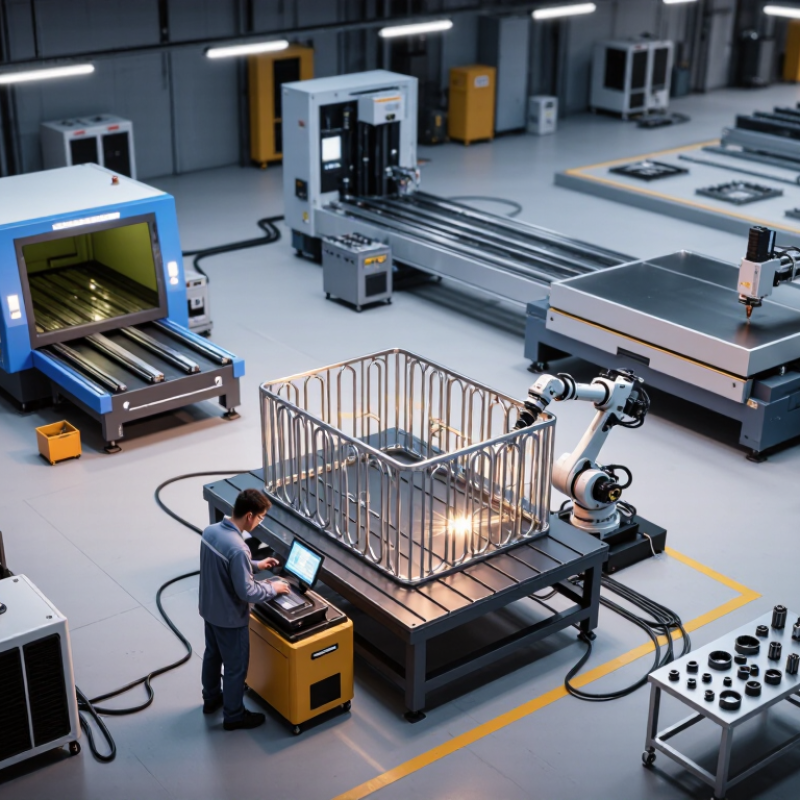
Laser welding forms a joint by concentrating light energy on a small area. A focused beam heats the edges until a pool of molten metal forms. As the metal cools, it fuses into a seam. Small details matter. Beam focus, travel speed, and power all affect the weld’s depth and shape. Shielding gas can help protect the molten pool from contamination.
Machine type influences control and consistency. Handheld systems allow flexible movement across parts, while automated and robotic systems repeat programmed paths. Pulsed settings can limit heat input on thin material; continuous beams may suit longer seams. Fit-up matters. Even a well-tuned machine may struggle with uneven gaps or misaligned edges. A smooth surface is not proof of a sound joint, so inspect welds using methods suited to the material and application. A first test weld is a clue, not proof.
Tips: Clean the joint, clamp parts firmly, and test settings on matching scrap. Check both sides when accessible. Small changes in speed can alter penetration.
A laser welding machine is more than its laser source. The source creates the beam, while its power, wavelength, and pulse settings affect heat input and weld behavior. The beam travels through a delivery fiber or optical path to the welding head. Inside the head, focusing optics concentrate energy onto the joint. A small change in focus can alter the weld, so setup deserves careful checking.
The motion system guides the head or workpiece along the seam. For hand-held systems, operator control matters more; for automated cells, fixtures and programmed movement help maintain repeatability. The control unit coordinates laser output, motion, and process settings. Cooling components protect the source and optics from excess heat. Some applications also use shielding gas to limit oxidation around the molten area. It is easy to overlook these supporting parts. Don’t. A clean lens, stable fixture, and consistent cooling can matter as much as raw laser power.
A complete machine also needs an appropriate enclosure, interlocks, and protective viewing windows matched to its laser wavelength. These are functional components, not optional extras. Buyers should check service access, replacement-part availability, and whether the system suits their material thickness and joint design. Specifications can look impressive on paper. Real samples reveal more. Even a well-equipped machine may need process tuning, and that uncertainty should be part of the purchasing decision.
Wavelengths are approximate representative values in nanometers; actual specifications vary by source and configuration. The laser source defines the wavelength, while optics focus and deliver the beam, and the power supply, controller, cooling system, and motion equipment support welding operation. The horizontal axis is logarithmic to make the wavelength range easier to compare.
Buyers may encounter ten types of laser welding machines, although the categories overlap: some describe the machine’s layout, while others refer to its laser source or operating mode. Handheld systems use a guided torch for flexible work on larger parts. Benchtop units suit small components and repeatable workshop tasks. Enclosed workstations contain the process area and are useful for controlled production. Robotic systems move the welding head along programmed paths, while gantry machines cover broad, flat work areas.
Fiber-laser machines are valued for efficient energy delivery and precise welds. Diode-laser systems can suit applications that need moderate heat input. Pulsed machines deliver energy in short bursts, which can help limit heat buildup on thin materials. Continuous-wave machines provide a steady beam for longer seams. Hybrid laser-arc systems combine a laser with an arc process to address certain joint or fit-up challenges. Check the material, thickness, joint shape, and expected production rate before comparing options. A category name alone says little about actual performance. That part is easy to overlook. Ask for sample welds on your own parts, and inspect penetration, distortion, and consistency; suppliers’ labels do not always describe systems in the same way.
| Type | Typical laser or setup | Common applications | Potential advantages | Buyer considerations |
|---|---|---|---|---|
| Continuous-Wave (CW) Fiber Laser Welding Machine | Fiber laser with a continuous output beam; often integrated with a motion system or production cell. | Seam and joint welding of metal parts, including automotive components, enclosures, and fabricated assemblies. | Well suited to sustained welding and automation; fiber delivery can make integration with robotic or fixed optics practical. | Confirm the required power, beam delivery, joint access, material thickness, and cooling capacity. Reflective metals may require process trials and suitable safety measures. |
| Pulsed Fiber Laser Welding Machine | Fiber laser that delivers energy in controlled pulses rather than a continuous beam. | Small metal parts, thin sections, precision joints, and applications where heat input needs close control. | Pulse duration and repetition rate can be adjusted to manage localized heating and help limit distortion. | Check pulse energy, peak power, repetition rate, and the machine’s ability to meet the required weld depth and production rate. |
| Quasi-Continuous-Wave (QCW) Fiber Laser Welding Machine | Fiber laser designed to provide high peak power in pulses with a relatively high duty cycle. | Precision welding of small components, thin materials, and parts that need more peak power than a typical pulsed setup. | Can combine high peak power with controlled heat input for certain small-part welding tasks. | Compare pulse characteristics and average power with the actual process requirement; “QCW” performance and operating ranges vary by system. |
| Handheld Laser Welding Machine | Usually a fiber laser source connected to a handheld welding head and fiber delivery cable. | Short-run fabrication, repair work, and accessible seams on sheet metal or assemblies. | Offers operator-guided access and can be easier to move between work areas than a fixed production cell. | Assess operator training, ergonomics, shielding-gas needs, workpiece fixturing, laser safety controls, and whether the joint is suitable for manual travel. |
| Robotic Laser Welding Cell | Laser source combined with an industrial robot, welding optics, fixtures, and safety enclosure. | Repeatable, high-volume welding of parts with multiple seams or complex tool paths. | Supports consistent programmed motion and integration into automated production lines. | Account for robot reach, cycle time, part presentation, fixture design, programming, extraction, interlocks, and cell integration costs. |
| Gantry or Cartesian Laser Welding Machine | Laser welding head mounted on linear axes or a gantry system; may be configured for large or flat workpieces. | Long seams, large panels, and workpieces that benefit from programmed straight-line or multi-axis movement. | Can provide a defined work envelope and repeatable motion for large or regularly shaped parts. | Check working area, axis accuracy, travel speed, part loading, fixture access, and whether the machine can reach all required weld positions. |
| Pulsed Nd:YAG Laser Welding Machine | Solid-state Nd:YAG laser, commonly used in pulsed configurations; some systems deliver the beam through an optical fiber. | Small components, precision joints, and established applications in industries such as medical-device and electronics manufacturing. | Short pulses can localize heat and support fine welding work when the material and joint geometry are appropriate. | Compare pulse energy, maintenance requirements, cooling, and operating costs with current alternatives; performance depends on the specific laser and process. |
| Direct-Diode Laser Welding Machine | Semiconductor diode laser used as the direct processing source, often with optics designed for a relatively broad or shaped beam. | Selected welding tasks involving thin materials, surface-sensitive parts, or materials that absorb the diode laser’s wavelength effectively. | Can provide efficient energy conversion and a beam profile suited to certain heat-conduction welding applications. | Verify wavelength-to-material absorption, required weld penetration, beam shape, and process results through representative testing. |
| Disk Laser Welding Machine | Solid-state disk laser source, commonly operating at a near-infrared wavelength and used with suitable beam delivery and processing optics. | Industrial metal welding, including applications requiring high beam quality or integration into automated systems. | Can deliver high beam quality and power for focused processing, depending on the source and optical configuration. | Evaluate the complete system—not just the laser source—including optics, beam delivery, service support, material compatibility, and process data. |
| Hybrid Laser-Arc Welding System | Laser beam combined with an arc welding process, such as gas metal arc welding, in a coordinated setup. | Thicker sections, structural fabrication, and applications where a laser process is paired with arc filler-metal deposition. | Combines the concentrated energy of a laser with the filler-metal and gap-bridging capabilities of an arc process. | Requires coordinated process parameters, suitable joint preparation, skilled setup, and trials to establish weld quality and productivity. |
Note: These categories are not mutually exclusive: a machine may combine a laser-source type with a handheld, robotic, or gantry configuration. Actual performance depends on materials, joint design, process settings, optics, and safety systems.
Laser welding machines trade speed, precision, and purchase cost in different ways. Handheld fiber units suit short seams and varied part shapes. They need less automation, but operator consistency affects finish. Continuous-wave fiber systems weld thicker metal quickly and often cost more than pulsed systems. Pulsed machines limit heat input on thin parts, though their slower seam speed can reduce output.
Robotic cells and gantry systems add motion control, guarding, and programming costs. They can produce repeatable seams across long production runs. Galvo systems move the beam rapidly over small work areas, making them useful for fine, repeatable welds. Hybrid systems combine processes or motion methods, but their added flexibility may bring more setup complexity. No type wins every job.
Tips: Compare sample welds on your actual material and thickness. Ask for cycle-time estimates, maintenance needs, and total installed cost, not just the machine price. Check whether the quoted speed includes loading and part handling. A fast weld head may still wait on fixtures. That detail is easy to miss. Short production trials can expose issues like edge gaps, reflections, or heat distortion before a large investment.
Top 10 Types of Laser Welding Machines for Buyers
How to Choose a Machine for Your Materials and Production Needs
Choosing a laser welding machine starts with the joint, not the sales label. Fiber, CO2, and diode describe laser sources; handheld, automated, and robotic describe machine configurations. These categories overlap. Match the source and delivery system to the metal, thickness, seam access, and required cycle time. Reflective metals such as copper and aluminum need careful process trials. Thin sheet may need lower heat input to limit distortion. Check the full setup, including fixtures, shielding gas, extraction, and operator training.
Production volume matters. A handheld unit can suit varied, low-volume work, while repeat production may justify automated motion and consistent fixturing. The International Federation of Robotics’ World Robotics 2024 report recorded 541,302 industrial robot installations worldwide in 2023. That figure is not specific to welding, but it shows why integration and repeatability deserve attention. Test representative parts before purchase. Record weld depth, appearance, cycle time, and rework. Small details count. A polished sample may hide poor fit-up. Ask for trials using your actual material, joint geometry, and tolerances, then compare results against a written acceptance plan. A spreadsheet alone can miss awkward access or frequent part changes.
It includes a laser source, beam delivery path, welding head, focusing optics, motion system, controls, and cooling components. Some applications also use shielding gas.
Focusing optics concentrate energy on the joint. Even a small focus change can alter the weld, so check setup carefully.
A clean lens, stable fixture, and consistent cooling all matter. Raw power is not everything.
Handheld systems suit short seams and varied shapes, but operator control affects the finish. Automated cells use fixtures and programmed movement for repeatability.
Pulsed systems limit heat input on thin parts. They may weld more slowly, though. It depends.
They can produce repeatable seams during long production runs. Motion control, guarding, and programming add costs, so the right choice depends on the job.
Ask for sample welds using your material and thickness. Check cycle times, maintenance needs, and total installed cost. Paper specifications can mislead.
Check the enclosure, interlocks, and viewing windows for the machine’s laser wavelength. Also ask about service access and replacement parts. These details are easy to overlook.
This article explains how laser welding machines create precise, concentrated joints by directing energy onto a small area, helping control heat input and limit distortion. It introduces the core components that shape a machine’s performance, including the laser source, beam delivery system, focusing optics, motion controls, and cooling equipment. Together, these parts determine how consistently a system can handle different materials, joint designs, and production demands.
The guide surveys ten types of laser welding machines buyers may encounter, from handheld and benchtop systems to automated and specialized configurations. It compares their strengths, limitations, operating costs, and suitability for different levels of production. By considering material type and thickness, required precision, throughput, workspace, and budget, readers can identify the most appropriate Laser Machine Welding solution for their needs.