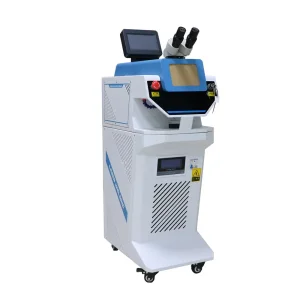
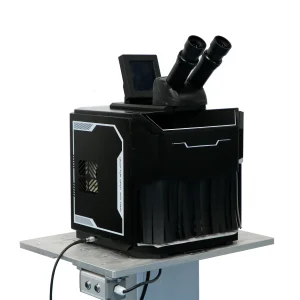
Pre-calibrated micro-beam welding machines optimized for goldsmithing studios, boutique designers, and restoration workshops across Australasia.
Navigating the operational dynamics, environmental mandates, and technological shifts within the North and South Island precious metals sector.
New Zealand's precious metal craft landscape—spanning high-end master jewelers on Queen Street, Auckland, to bespoke boutique studios in Queenstown—is undergoing structural modernization. Traditional gas torch soldering methods introduce a sprawling Heat-Affected Zone (HAZ), risking heat-sensitive stones such as opals, pearls, and indigenous greenstone (Pounamu). Compact Nd:YAG and Quasi-Continuous Wave (QCW) laser systems localize thermal energy within milliseconds, eliminating desoldering risks and surface discoloration.
Due to New Zealand's geographic isolation, local repairers and manufacturers historically faced exorbitant domestic supplier markups—often exceeding 200% above factory rates for re-badged European apparatus. Modern procurement teams in Wellington and Christchurch are now bypassing intermediaries, directly vetting Chinese Industry 4.0 manufacturers capable of delivering factory-direct pricing, custom CE/RCM electrical conformity (230V 50Hz single phase), and expedited DDP airfreight logistics.
Under WorkSafe New Zealand compliance frameworks, indoor metallurgical workshops must limit toxic flux fumes and open hydrocarbon flames. Laser welding technology requires zero chemical flux and minimal inert argon shielding gas. Equipped with integrated closed-loop HEPA fume filtration and class-leading interlock safety doors, laser welders seamlessly pass municipal commercial building audits and high-street tenancy safety guidelines.
Evaluating photon absorption, pulse shaping profiles, and peak pulse requirements across gold, silver, and refractory alloys.
Pulsed flashlamp Nd:YAG (1064nm) remains the historic gold standard for custom jewelers due to its broad pulse energy envelope (up to 60-100 Joules). It offers superior initial optical coupling on highly reflective precious metals such as 999 Fine Silver and 24K Yellow Gold. However, fiber lasers and QCW (Quasi-Continuous Wave) systems are surging in popularity due to electro-optical efficiency reaching 30% (versus 2-3% for flashlamp YAG), zero consumables (no flashlamp replacement every 3–5 million shots), and maintenance-free operational lifespans surpassing 100,000 hours.
Advanced digital pulse shaping is critical when processing non-ferrous jewelry alloys. Silver and copper-rich Rose Gold reflect up to 95% of near-infrared light at room temperature. Modern micro-welding controllers employ arbitrary wave modulation: a high-peak initial spike (pre-heating pulse) punctures the reflectivity barrier, followed by an annealing plateau that prevents liquid metal spatter, keyhole collapse, and surface cratering during the solidification phase.
| Laser Source Architecture | Rated Power / Pulse Energy | Primary Material Suitability | Estimated CIF Price (NZD / USD) | Application Match |
|---|---|---|---|---|
| Compact Desktop Nd:YAG | 60W / 40J Peak | 14K/18K Gold, Sterling Silver | $5,200 - $7,000 NZD / ~$3,200 - $4,300 USD | Boutique repair desks, prong tipping, chain fusing |
| Benchtop Heavy-Duty Nd:YAG | 150W - 200W / 80J - 100J | Platinum, Titanium, Fine Silver, Brass | $9,500 - $13,500 NZD / ~$5,800 - $8,200 USD | High-throughput manufacturing, porosity filling |
| Quasi-Continuous Wave (QCW) Fiber | 150W Continuous / 1500W Peak | Platinum, White Gold, Dissimilar Metals | $14,500 - $21,000 NZD / ~$8,900 - $12,900 USD | Automated rotary joining, zero-maintenance studios |
| Cabinet Vertical Nd:YAG | 200W / 110J Peak (External Chiller) | Heavy Castings, Cutlery, Mold Inserts | $12,000 - $16,500 NZD / ~$7,400 - $10,100 USD | Continuous multi-shift fabrication plants |
*Indicative benchmark pricing reflecting factory-direct exports including seaworthy/air-freight packaging. Exact CIF Auckland/Tauranga quotes vary depending on optics, HD CCD monitoring additions, and automated rotary chuck packages.
Why premier global ateliers and multinational equipment distributors source micro-joining platforms directly from the Greater Bay Area technological ecosystem.
Shenzhen's Guangming and Bao'an districts represent the epicenter of photonics manufacturing. Component integration—from laser cavity crystal growing (Nd:Y3Al5O12), precision ceramic reflectors, dielectric coated optics, to custom embedded microcontrollers—happens within a 30-kilometer radius. This hyper-dense industrial cluster slashes prototyping iterations and eliminates international component sourcing lag.
Every micro-welder manufactured in our Shenzhen facility undergoes a strict 72-hour continuous beam stability burn-in cycle. Using multi-channel optical power meters and beam profiling interferometers, beam divergence and pulse-to-pulse energy variances are maintained below 1.5%. Full CE, FDA, and AS/NZS electrical compliance verification guarantees that each unit delivers out-of-the-box reliability in Australasian environments.
Purchasing directly from the source bridges the technical divide. New Zealand buyers communicate directly with the R&D engineers who develop the firmware, optimize the cavity optics, and assemble the micro-chassis. From remote video parameter calibration on exotic Maori motif carvings to real-time troubleshooting via encrypted cloud channels, downtime is minimized across all operational timezones.
Engineered to solve specialized craftsmanship challenges across the Pacific jewelry and fine instruments sector.
Mounting New Zealand nephrite jade (Pounamu) into 18K gold or 925 sterling silver bezels requires zero thermal conduction into the mineral body. Traditional soldering fractures jade due to microscopic water inclusion heating. Micro-laser spot welding produces focused 0.2mm joints directly adjacent to stone contact points, preserving the integrity of precious taonga pieces.
Ateliers in Dunedin and Wellington frequently handle complex repairs of Victorian, Edwardian, and Art Deco heirlooms. Laser re-tipping preserves fragile emeralds, opals, and antique enamel in situ. By adding matching master alloy micro-wires (0.2mm–0.4mm) directly to worn prongs, fine master jewelers restore antique structural integrity without unseating stones.
Beyond fine adornment, our vertical and benchtop micro-welders are deployed across Auckland dental prosthetics laboratories and marine navigation repair facilities. Welders join titanium and nickel-free memory metals, repair precision dental bridges, and seam miniature sensor diaphragms without parent material warping or micro-cracking.
Clear, authoritative technical answers addressing voltage requirements, optical maintenance, import duties, and operator training.
Explore our full line of specialized laser platforms, mold repair welders, automated galvanometer stations, and surface restoration equipment.


High-Quality Fiber Continuous Laser Welding Machine Manufacturers, Factories

Custom Galvanometer Laser Welding Machine Manufacturers, Factories


High-Quality Handheld Galvanometer Laser Welding Machine Manufacturer, Factories

Custom Vertical jewelry welding machine Manufacturer, Manufacturers

High-Quality Advertising Word Laser Welding Machine Manufacturers, Pricelist

Custom QCW-Jewelry Laser Welding Machine Manufacturer, Factories