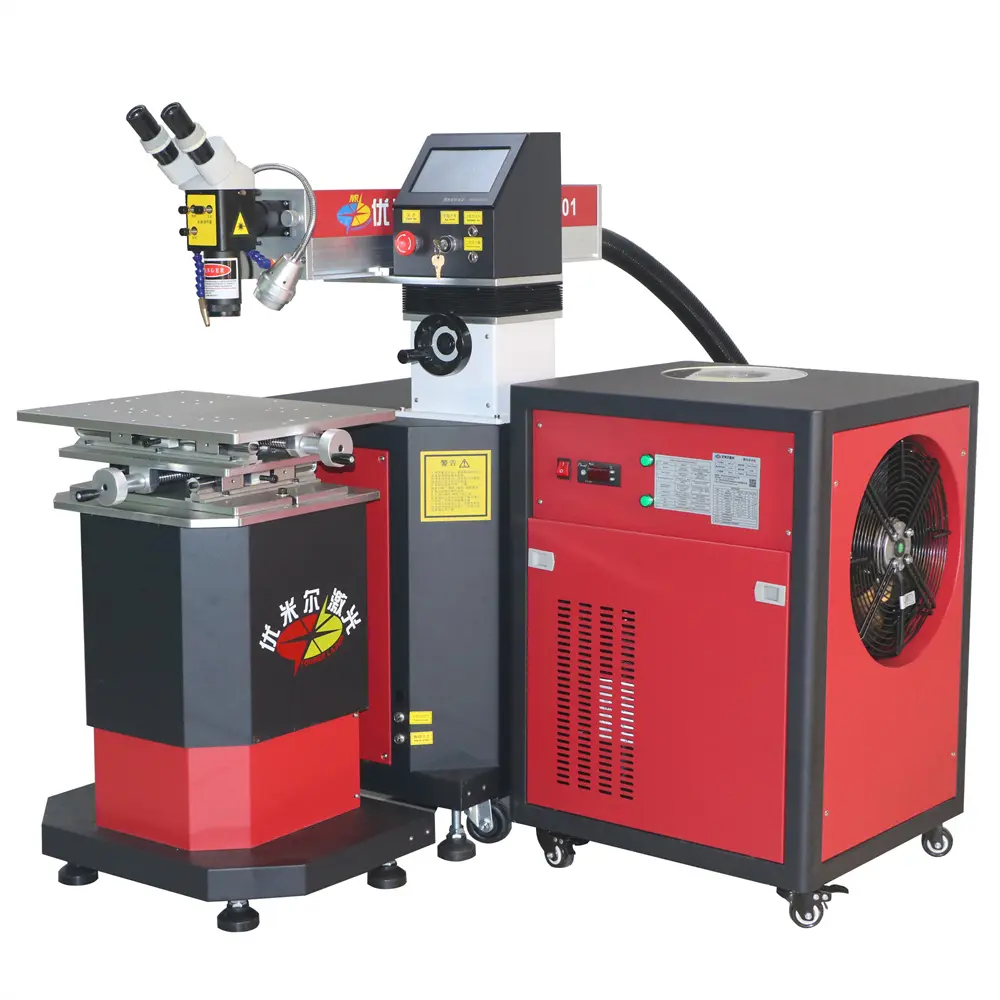
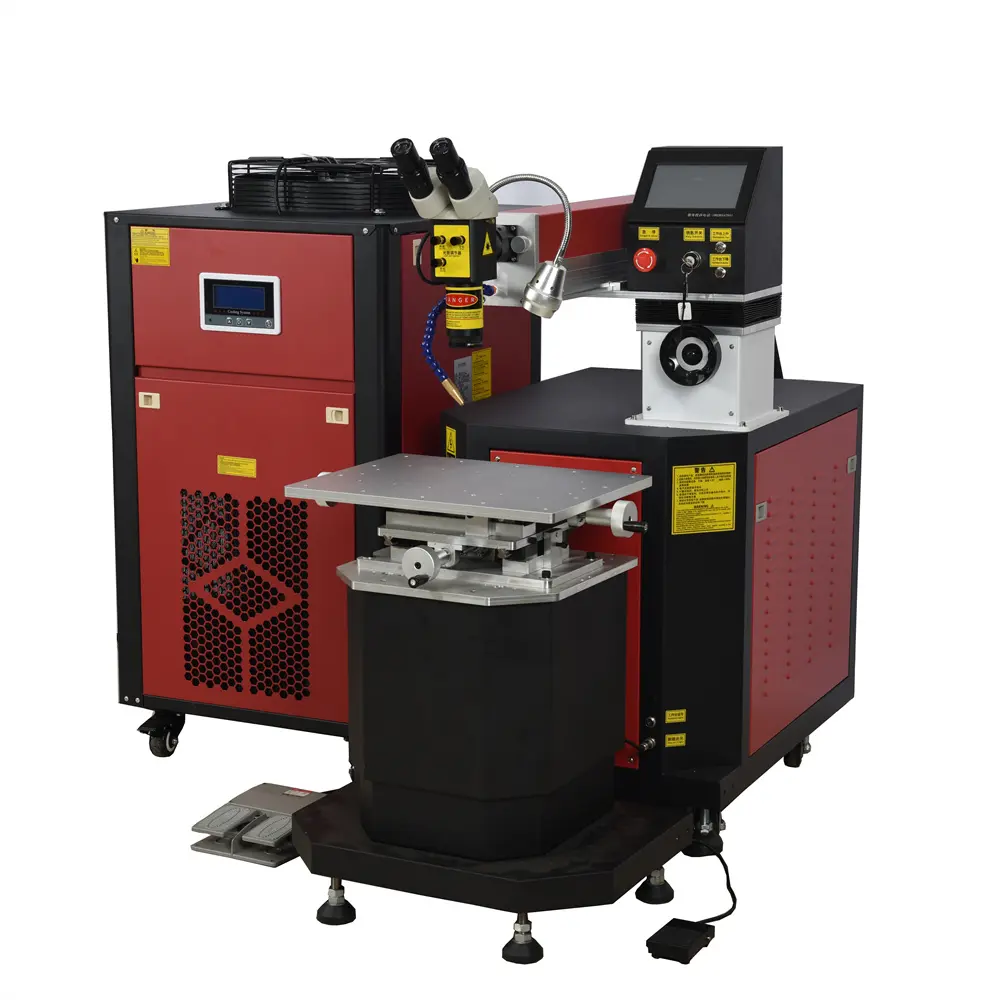
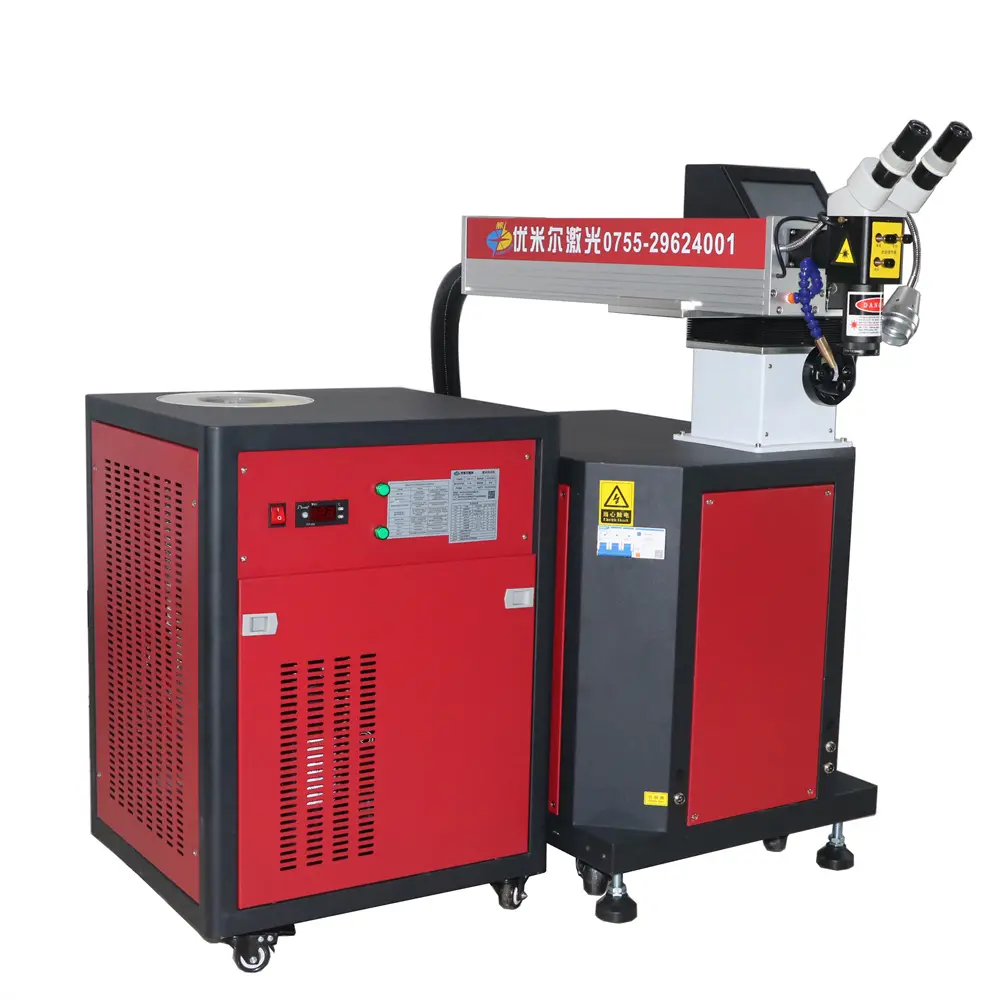
1 / 5
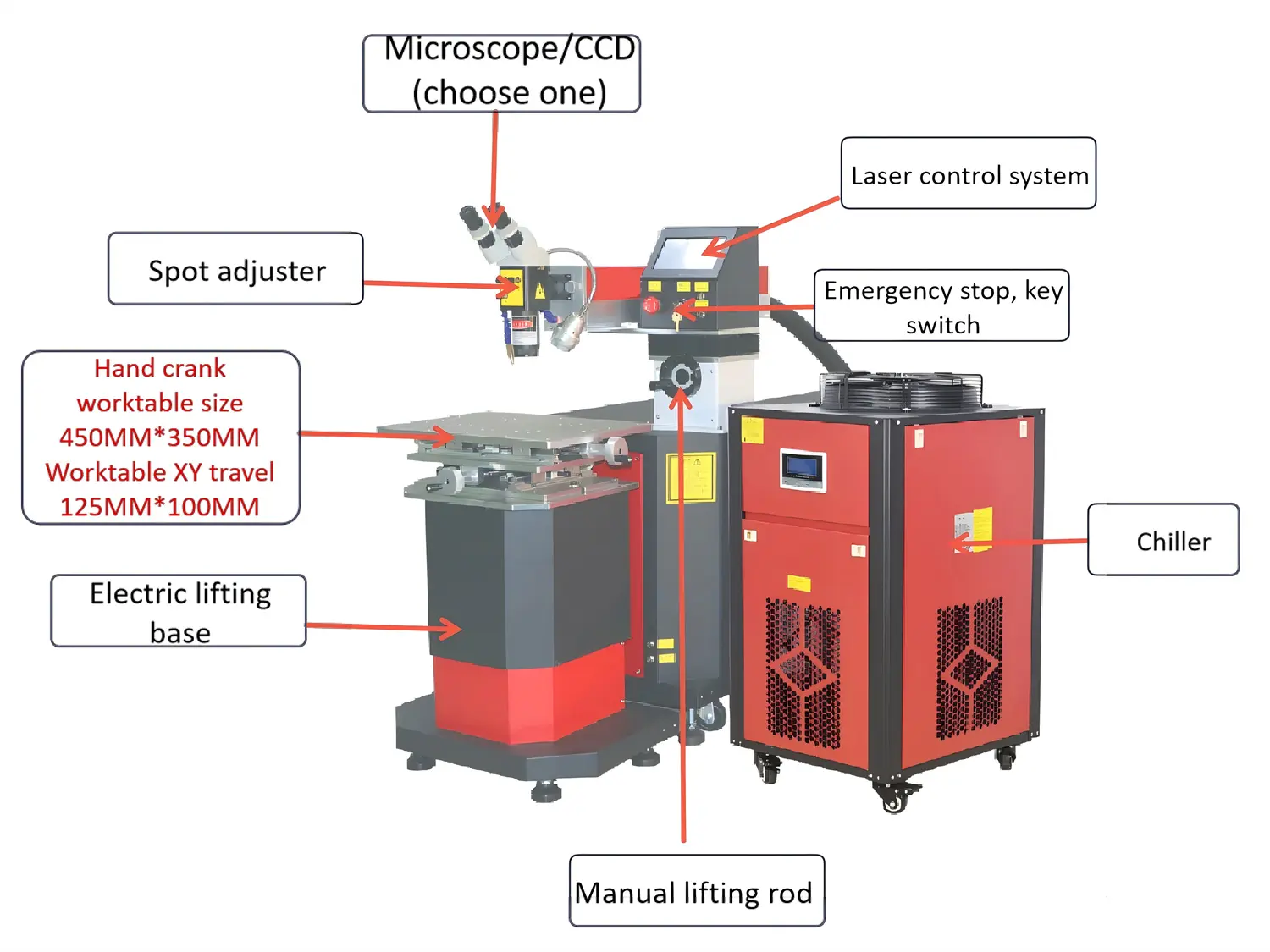
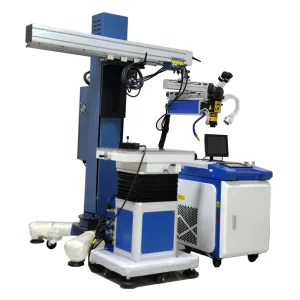
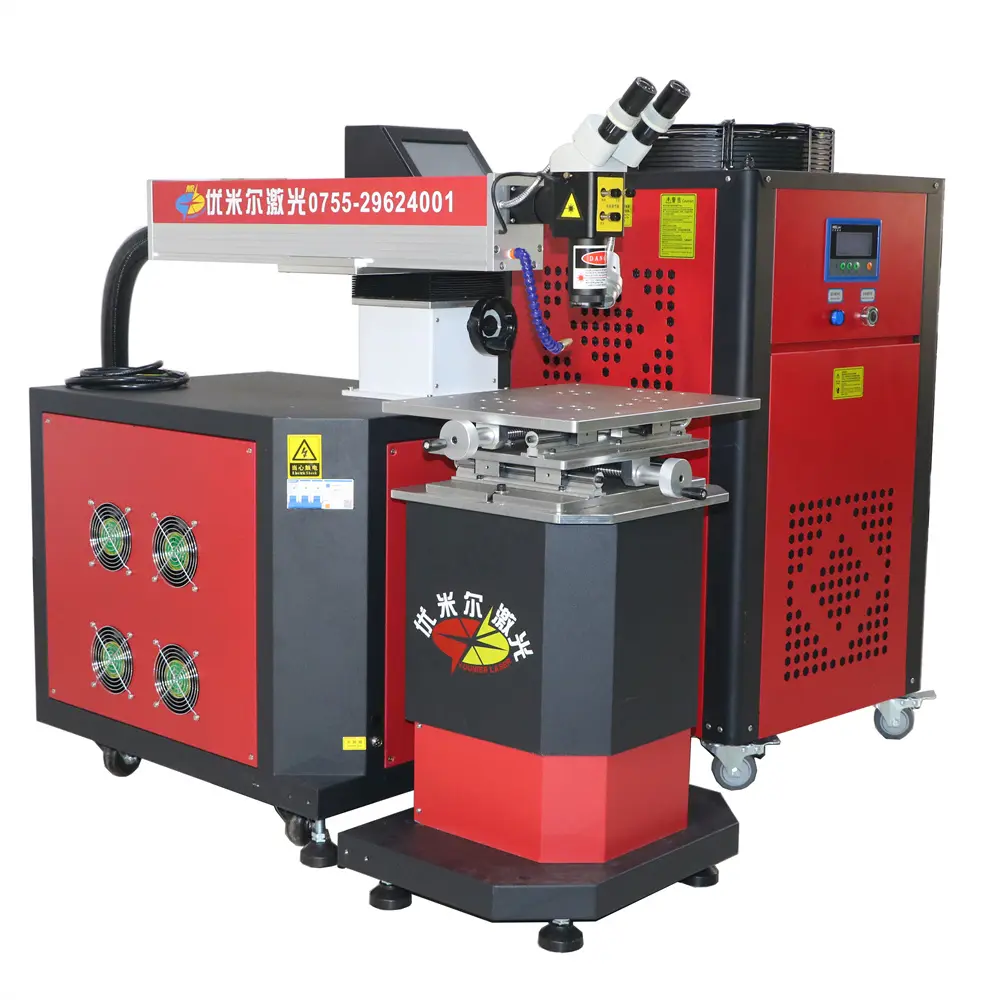
YMR-200W
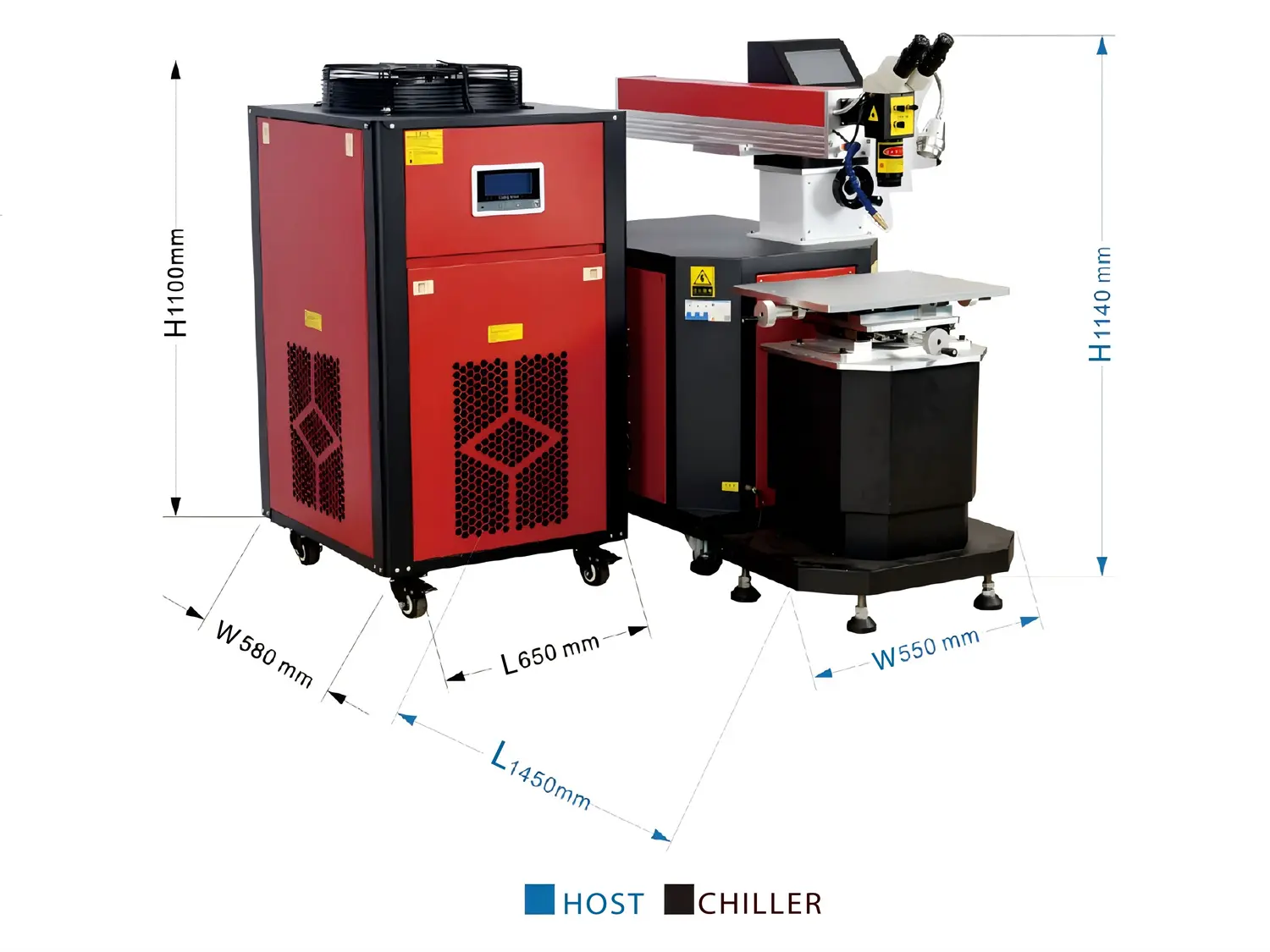
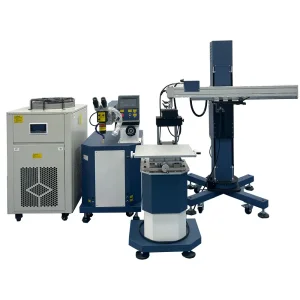
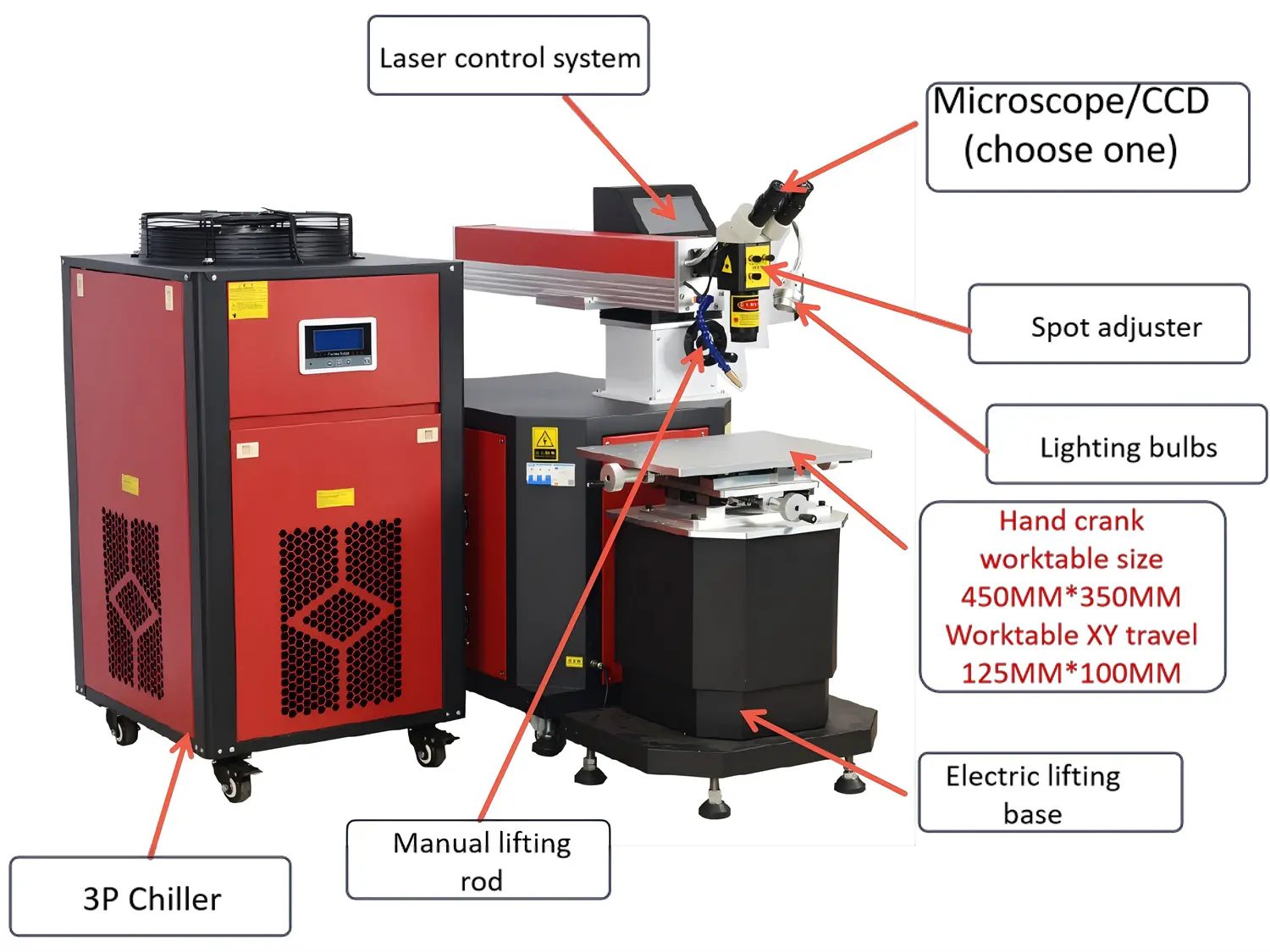
YMR-400W
| Model | YMR-200W | YMR-400W |
| Maximum laser power | 200W | 400W |
| Laser wavelength | 1064nm | |
| Focusing cavity reflector | Imported ceramic focusing cavity | |
| Laser frequency | 1-20Hz | 1-30HZ |
| Pulse Width | 0.1-10Ms | 0.1-10Ms |
| Light spot adjustment range | 0.2-2mm | 0.2-3mm |
| Aiming and positioning | Microscope (optional camera system) | |
| Chiller cooling power | 1.5P | 3P |
| Rated power | 8KW | 12KW |
| Electricity demand | 380V±5V 50Hz/40A 220V±5V 50Hz/60A |
380V±5V 50Hz/40A |
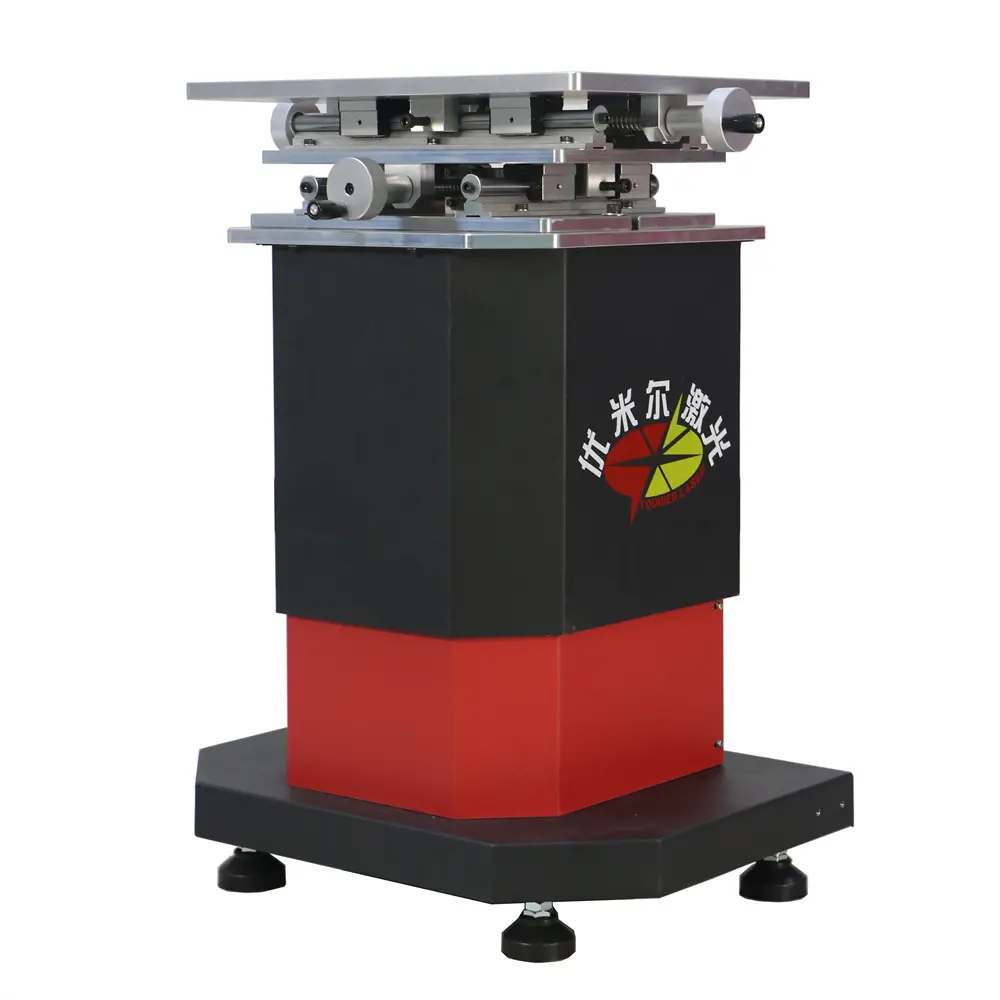
| Three-dimensional load-bearing worktable travel | ||
| Three-dimensional load-bearing workbench | 100kg | |
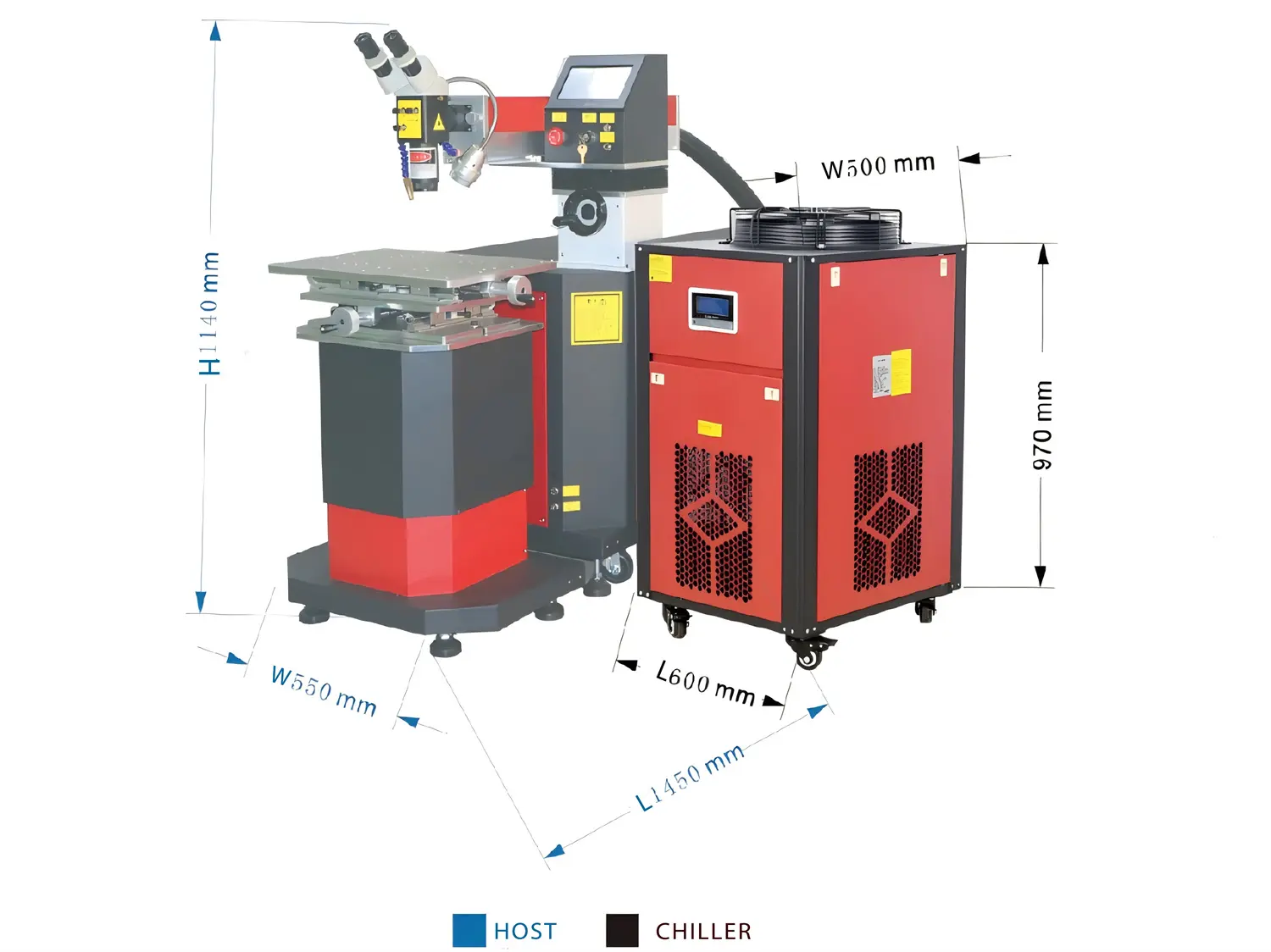
| Overall dimensions/net weight | Host: | 1450×550×1140mm |
| Chiller: | 640×580×1100mm | |
| Three-dimensional load-bearing workbench: | 550×400×700mm | |
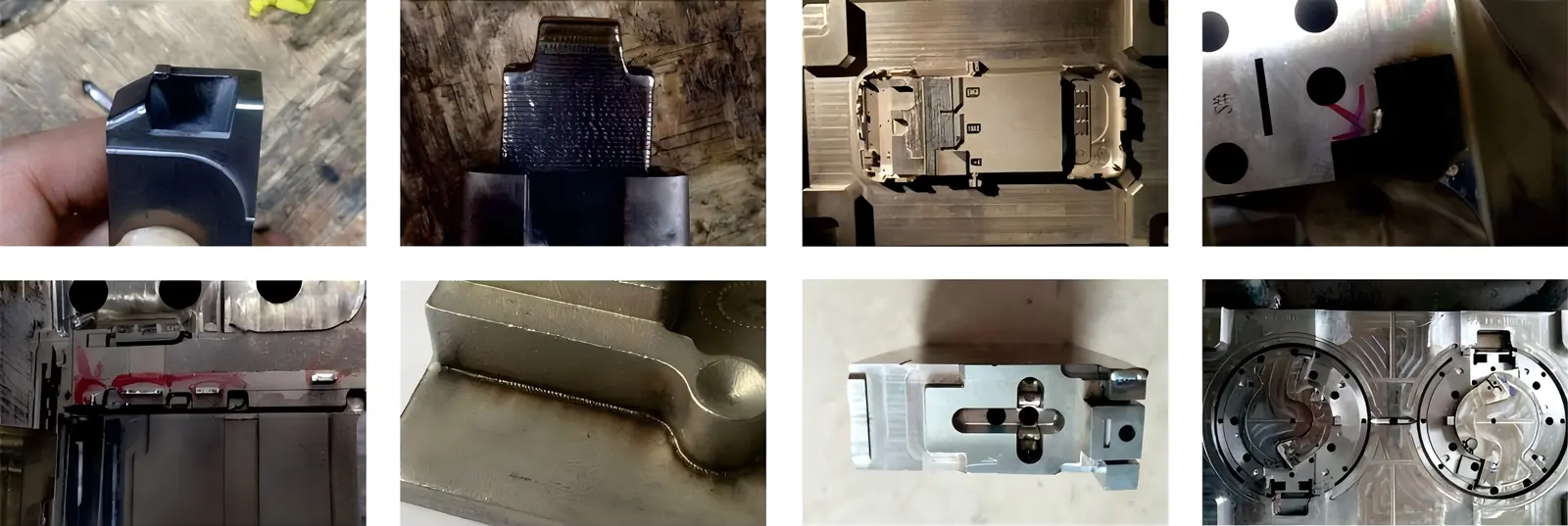
Some sample display
Q What materials can be welded by the YMR series laser welding machine?
The system is ideal for various metals and alloys, including mold steels, stainless steel, alloy steel, beryllium copper, titanium, and specialized stamping die materials.
Q What is the main difference between the YMR-200W and YMR-400W models?
The YMR-400W offers higher laser power (400W vs. 200W), a higher frequency range (1-30Hz vs. 1-20Hz), a larger maximum light spot adjustment range (up to 3mm), and comes equipped with a more powerful 3P chiller for continuous heavy-duty welding tasks.
Q Does laser welding cause thermal deformation on precision molds?
No. Laser welding produces an extremely small heat-affected zone (HAZ), preventing base material thermal distortion, undercut, or residual stress, making it optimal for ultra-precision mold repairs.
Q How does the aiming and positioning system work?
The machine features a standard high-precision stereo microscope for clear observation of micro-cracks and weld seams. An optional camera/CCD monitoring display system is also available for ergonomic viewing.
Q What are the routine maintenance requirements?
Routine maintenance includes regular deionized or distilled water replacement in the industrial chiller, periodic inspection and cleaning of optical protective lenses, and dust prevention inside the host cabinet.