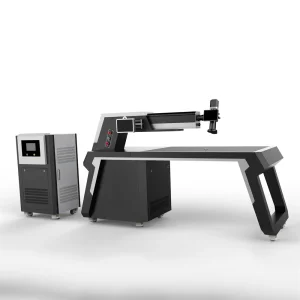
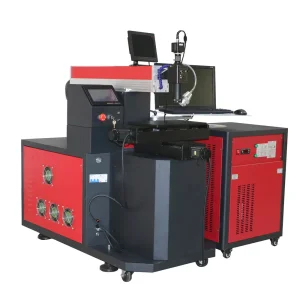
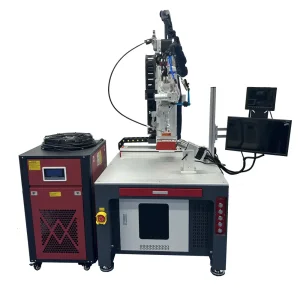
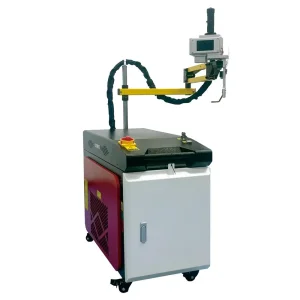
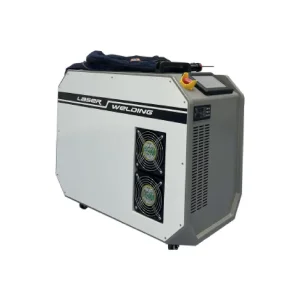
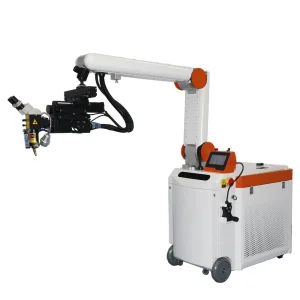
Engineered to replace abrasive grit blasting and toxic acid pickling across Brazilian manufacturing hubs from São Paulo to Belo Horizonte.
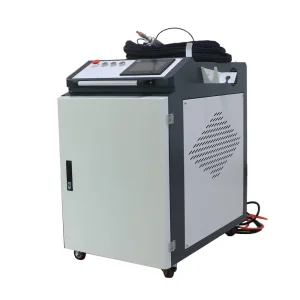
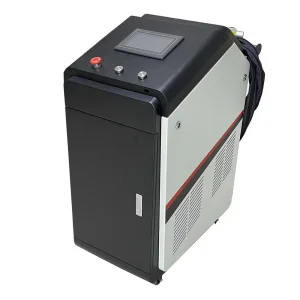
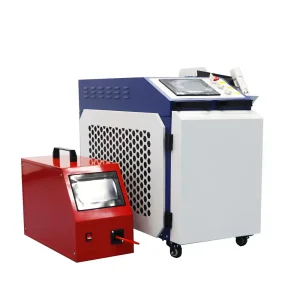
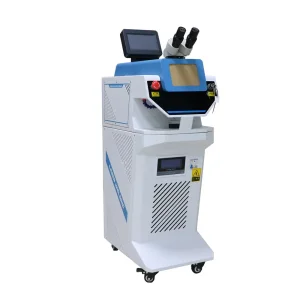
Strategic economic factors, stringent NR-12 worker safety standards, and ESG environmental imperatives are driving Brazilian asset owners away from conventional abrasive blasting toward laser ablation technology.
OpEx reduction vs. single-use garnet blasting logistics in remote Amazonian mining facilities.
Chemical effluents generated, fully conforming to IBAMA and CONAMA environmental codes.
Mean Time Between Failures (MTBF) for solid-state fiber laser pumping diode architectures.
Complete compliance with Brazilian regulatory standards for machine safety and interlocking optics.
The Campos and Santos basin offshore oil rigs face rapid hyper-saline atmospheric corrosion. Traditional grit blasting creates volatile explosive risks and hazardous secondary waste that cannot be discarded offshore.
Brazil’s iron ore, bauxite, and nickel extraction infrastructure demands robust non-stop duty cycles. Crushers, excavators, and rail cars require periodic weld inspection without surface structural degradation.
From the industrial heartland of São Bernardo do Campo to the agricultural capital of Mato Grosso, manufacturers demand micro-clean joinery interfaces for e-mobility batteries and combine-harvester frames.
Selecting the precise optical delivery modality based on Brazilian metallurgical specifications, substrate heat vulnerability, and throughput expectations.
| Technical Parameter | MOPA Pulsed Laser Systems (100W - 1000W) | Continuous Wave (CW) Laser Systems (1500W - 3000W) |
|---|---|---|
| Ablation Mechanism | Photothermal shockwave & rapid plasma expansion | Continuous localized thermal melting and vaporization |
| Heat-Affected Zone (HAZ) | Negligible (< 5 μm) — Zero structural alteration | Controlled (15 - 45 μm) — Minor localized warmth |
| Primary Industrial Tasks in Brazil | Injection molds, turbine blades, historic preservation, semiconductor tools | Ship hulls, structural I-beams, pipeline rust stripping, heavy equipment |
| Substrate Integrity | Safe for mirror-polished tooling steel, aerospace aluminum, titanium | Best for heavy structural steel, carbon plates, cast iron castings |
| Efficiency / Area Speed | Moderate (0.5 - 3.5 m²/hr depending on pulse configuration) | Ultra-High (10.0 - 28.0 m²/hr continuous output rate) |
| Energy Consumption Profile | Extremely low (0.8 kW to 3.5 kW electrical connection) | Economical (6.5 kW to 14.0 kW three-phase 380V/440V) |
Importing high-power laser equipment into Brazil requires strict alignment with the Ministério do Trabalho e Emprego standards. Our factory designs adhere directly to NR-12 (Norma Regulamentadora de Segurança no Trabalho em Máquinas e Equipamentos). Every unit delivered to Brazilian shores is outfitted with dual-channel category 4 safety interlocks, emergency stop loops, dynamic optical shutter feedbacks, and zero-leakage beam shielding.
Additionally, internal electrical enclosures are certified to NR-10 (Segurança em Instalações e Serviços em Eletricidade), featuring industrial Schneider/Siemens contactors, internal IP54 moisture isolation (crucial for Brazil's tropical northern humidity), and voltage stabilizer circuits compatible with Brazilian triphasic grids (220V, 380V, and 440V at 60Hz).
Speak with our senior laser physicists and application engineers. We offer complete Turnkey Factory Installations, On-Site Testing in Campinas, Curitiba, and Caxias do Sul, and comprehensive OEM/ODM customization.
Send Inquiry Now & Request TestComprehensive engineering clarifications addressing customs, technical specifications, and operating requirements in Brazil.
Sandblasting creates immense health hazards (silicosis under NR-15), massive environmental disposal costs under IBAMA, and abrasive wear on base metals. Laser cleaning produces zero secondary solid waste, preserves microscopic tolerances, requires no costly media replenishment, and operates at a fraction of the per-hour cost.
Industrial power supplies in Brazil vary significantly by state (e.g., 220V three-phase in parts of São Paulo vs. 380V in Rio Grande do Sul and 440V in specialized mining complexes). Our laser systems are built with custom-wound wide-band transformers and active line stabilizers configured for 60Hz Brazilian standard power.
Yes. All our cleaning and welding generators feature digital I/O, Profinet, Ethernet/IP, and analog interfaces designed for robot control cabinets. We routinely supply automated robotic laser cleaning cells for Brazilian automotive body shops and large-diameter pipe descaling lines.
We provide full documentation under Brazilian foreign trade guidelines (Siscomex), including specific NCM (Nomenclatura Comum do Mercosul) coding (typically 8456.11.00 for machines working by laser). We can supply Ex-Tarifário technical documentation to assist qualified buyers in optimizing import tariffs.
Complete photonic solutions designed for durability, ease of operator training, and high-duty performance across South American industrial plants.