East Africa Industrial Modernization Brief

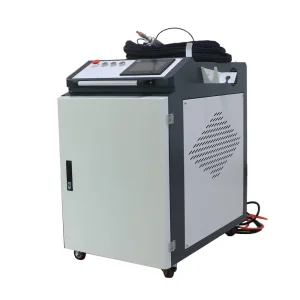
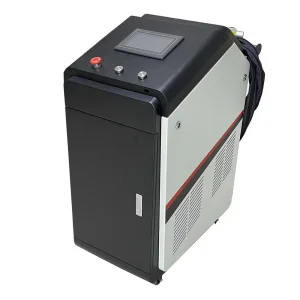
Laser Cleaning Machine Manufacturers & Quotes in the Ethiopia Market

An engineering whitepaper exploring continuous and pulsed fiber laser ablation, Total Cost of Ownership (TCO) benchmarks, localized maintenance applications in Addis Ababa, Hawassa, Dire Dawa, and direct factory procurement pipelines.

Send Inquiry Now & Request Ethiopia CIF Quote
Macroeconomics & Infrastructure

Ethiopia's Industrial Transformation: The Imperative for Non-Abrasive Surface Treatment

Analyzing the shift from legacy abrasive blasting to high-precision optical ablation under the Ethiopian 10-Year Development Plan (2021-2030).

The Ethiopian Industrial Manufacturing Landscape

Ethiopia has established itself as the manufacturing epicenter of East Africa. Driven by the Industrial Parks Development Corporation (IPDC), industrial zones like Hawassa, Bole Lemi, Kilinto, Kombolcha, and the Dire Dawa Free Trade Zone host capital-intensive steel rebar mills, automotive assembly facilities (such as Bishoftu), agricultural implement manufacturing, and precision textile fabrication plants. However, heavy manufacturing in Ethiopia confronts high ambient dust, elevated humidity during rainy seasons (Kiremt), and substantial supply chain friction for consumable abrasives (garnet, silica sand, chemical solvents).

Supply Chain Bottlenecks & Foreign Currency Optimization

Ethiopian manufacturers face persistent foreign exchange (forex) allocation constraints. Traditional sandblasting requires recurring expenditures in hard currency to import tons of abrasive media and replace worn mechanical nozzles. Chemical cleaning demands imported hazardous pickling acids requiring neutralizer treatments, which fall under rigorous environmental scrutiny from the Ethiopian Environmental Protection Authority (EPA). Fiber laser cleaning provides a decisive solution: it operates exclusively on electrical energy, producing zero recurring media costs and freeing factory managers from reliance on imported blast media.

0 kg
Consumable Blast Media Required
>100,000h
Fiber Laser MTBF Operational Life
85%
Reduction in Hazardous Waste Volume
10-18 Mo
Average Capital Payback in Industrial Zones
Comparative Engineering

Surface Preparation Methodologies: Comparative Engineering Matrix

A rigorous evaluation of operating expenditures, environmental impact, and process fidelity for Ethiopian maintenance directors.

Evaluation Parameter Continuous / Pulsed Laser Cleaning Pneumatic Sand / Grit Blasting Chemical Acid Pickling Dry Ice (CO2 Pellets) Blasting
Consumable Reliance Zero (Electricity Only) Extremely High (Sand/Grit) Continuous Acid Replenishment High (Cryogenic Solid CO2)
Base Metal Loss / Damage 0% (Below Ablation Threshold) Substantial Micro-pitting Hydrogen Embrittlement Risk Negligible
Operating Expense (OPEX) / hr $1.20 - $2.80 (Power + Optics) $14.00 - $28.00 (Media, Air, Waste) $9.50 - $18.00 (Chemicals + Sludge) $35.00 - $65.00 (CO2 Pellets)
Environmental & Safety Rating Eco-Safe (HEPA Vacuum Exhaust) Severe Silicosis & Dust Risk Toxic Runoff / EPA Violation Asphyxiation Risk in Enclosed Areas
Port of Djibouti Import Dependency None (One-time capital entry) Continuous Monthly Containers Drum Shipments & Hazmat Clearances Cryogenic Storage Chain
Precision & Selective Stripping Micron-level control (Adjustable beam) No selective capability (Crude) Immersion/Bulk (No precision) Moderate precision

*Note: OPEX values modeled across typical East African utility rates ($0.035 to $0.065 per kWh industrial electricity tariffs in Ethiopia, balanced against imported port tariffs via Djibouti).

Field Application Engineering

High-Value Industrial Use Cases Across Ethiopia

From mega-scale hydro projects to rapid transit and industrial park tooling, how laser ablation transforms daily Ethiopian maintenance.

Hydropower Infrastructure & GERD Penstocks

With the Grand Ethiopian Renaissance Dam (GERD), Gilgel Gibe III, and extensive hydroelectric installations driving the national power grid, maintenance of Francis turbine runners, penstock interior walls, and high-pressure sluice gates is paramount. Continuous-wave 2000W and 3000W fiber laser cleaners strip heavy calcification, rust layers, and marine bio-fouling without thinning the underlying alloy steel plate or creating chemical wastewater.

Ethio-Djibouti Railway & Rolling Stock Maintenance

The 750 km Ethio-Djibouti standard-gauge electrified railway handles over 90% of Ethiopia's external trade cargo. Wheelset bogies, catenary line hardware, traction motor assemblies, and rail joints require rapid turnaround oxide removal during scheduled overhauls at the Furi-Lebu and Indode locomotive maintenance depots. Mobile handheld laser cleaning heads allow technicians to service heavy parts in-situ without mechanical teardown.

Automotive Assembly & Commercial Fleets

Commercial vehicle assembly and refurbishment centers in Bishoftu, Adama, and Mekelle utilize laser cleaners for localized paint removal prior to robotic welding, axle weld decontamination, and body-on-frame chassis rust mitigation. By removing mill scale and thermal oxide films instantly, laser processing guarantees zero-porosity joints on structural carbon steels.

Injection Molds & Agro-Industrial Tooling

Beverage bottling plants, agro-processing factories in Modjo, and footwear plants in Dukem rely on precision metal molds. Traditional glass bead blasting rounds tool corners and destroys micro-textures, ruining dimensional tolerances. Pulsed MOPA laser cleaning removes vulcanized rubber, carbon deposits, and release agents without affecting the base H13 tool steel.

Heritage Conservation & Masonry Restoration

Ethiopia's ancient cultural landmarks—such as the rock-hewn monolithic churches of Lalibela, Gondar castles, and National Museum artifacts—suffer from centuries of wood smoke deposits, environmental lichen, and sulfur pollution crusts. Low-energy pulsed laser cleaners ablate soot down to the millimeter without compromising fragile porous volcanic tuff.

Structural Steel Fabrication & Storage Tanks

Pre-weld and post-weld seam preparation in fuel storage tanks, grain silos, and structural truss factories across Dire Dawa and Addis Ababa. Replacing pneumatic angle grinders and disc wheels with handheld fiber laser heads increases processing velocity by 300% while eliminating occupational hand-arm vibration syndrome (HAVS).

Laser Physics & Technology Roadmap

Continuous Wave (CW) vs. Pulsed MOPA: The Engineering Physics

Understanding beam-material interaction parameters to make an informed procurement decision for Ethiopian production facilities.

High Throughput

Continuous Wave (CW) Fiber Laser Cleaners (1000W - 3000W)

Operating Principle: CW systems emit an uninterrupted photon beam at 1064nm, utilizing a dual-axis galvo scanning head to oscillate the beam into lines, circles, or crosshatches at speeds up to 12,000 mm/s. The primary ablation mechanism is thermo-mechanical spallation: rapid heat input expands the surface oxide layer faster than the parent substrate, shattering the oxide bond and vaporizing moisture.

  • Optimal For: Thick red rust on civil steel, ship hulls, bridge girders, storage tanks, bulk pipe de-rusting.
  • Surface Effect: Generates moderate heat input. Ideal for metal thicker than 3mm where slight annealing or microscopic thermal coloration is acceptable.
  • Cost Efficiency: Lowest initial capital investment per kilowatt; maximum square-meter stripping speed per hour.
Ultra-Precision

Pulsed MOPA / Q-Switched Fiber Laser Cleaners (100W - 500W)

Operating Principle: Pulsed fiber lasers compress energy into short pulses (typically 20 to 250 nanoseconds) with peak powers surpassing 100 kW. The beam energy exceeds the ablation threshold of the contaminant before thermal energy can diffuse into the substrate material. This cold ablation process vaporizes oxides instantaneously with a negligible heat-affected zone (HAZ < 5 µm).

  • Optimal For: Aluminum alloys, precision injection tooling, turbine blades, copper busbars, heritage artifacts.
  • Surface Effect: Zero thermal distortion; substrate roughness remains unchanged down to Ra < 0.8 µm.
  • Cost Profile: Higher capital cost per watt, but eliminates mechanical tooling replacement and rework expenses completely.

Technological Roadmap: 2025–2030 Laser Industrial Modernization in Africa

Phase 1: 2025-2026

Handheld Mobile Replacement: Transition from high-pollution sandblasting hoppers to portable 1.5kW-3kW continuous wave handheld units across regional civil workshops in Addis Ababa and Hawassa.

Phase 2: 2027-2028

CNC & Cobot Automation: Integration of fiber laser cleaning optics onto 6-axis robotic arms and gantry systems for repetitive automotive, rail, and pipe manufacturing lines in Dire Dawa.

Phase 3: 2029-2030+

Intelligent AI Beam Tuning: Real-time spectroscopic monitoring (LIBS) automatically reads substrate composition, throttling pulse frequency and energy to avoid over-cleaning on high-value structural components.

Commercial Guidance

Quotation Architecture & Total Cost of Ownership (TCO) in Ethiopia

A transparent procurement framework covering CIF Djibouti, dry-port customs, and long-term operating cost comparisons.

Capital Equipment Price Framework (CIF Djibouti / Addis Ababa)

Pricing for industrial laser cleaning units entering the Ethiopian market depends heavily on the laser source configuration, cooling requirements, and automation integration:

  • Continuous Wave (CW) 1000W Handheld: $4,800 – $6,500 (Ideal for light fabrication shops, pre-weld seam cleaning).
  • Continuous Wave (CW) 1500W – 2000W: $6,500 – $9,800 (The primary industrial workhorse for structural steel, boiler rooms, and transport fleets).
  • Continuous Wave (CW) 3000W Heavy-Duty: $11,000 – $15,500 (Maximum speed for heavy mill scale, ship decks, and large storage tank rehab).
  • Pulsed MOPA 100W – 200W Desktop / Trolley: $8,500 – $14,000 (Tool & die maintenance, aerospace precision, stone heritage).
  • Pulsed MOPA 300W – 500W High-Energy: $18,000 – $32,000 (High-throughput zero-substrate damage operations).

*Note: Quotes vary based on core optical source brands (Raycus, Maxphotonics, IPG), cable length (standard 10m vs. custom 15m/20m), and industrial chillers tuned for 45°C ambient African environments.

3-Year Financial Comparison: Sandblasting vs. 2kW Laser

Modeled for an Ethiopian steel structure plant processing 3,000 m² of rust/mill scale annually:

Traditional Sandblasting System:
  • Imported abrasive sand (90 tons over 3 yrs): ~$18,500
  • Continuous nozzle, hose, and compressor maintenance: ~$6,400
  • Hazardous waste removal & dust environmental fines: ~$3,200
  • Labor (2 operators + 2 cleanup laborers): ~$10,800
  • Total 3-Year Operating Expenditure: ~$38,900+
Youmir 2000W Fiber Laser Cleaning Machine:
  • Consumable media costs: $0
  • Electricity consumption (approx. 7 kW/hr @ Ethiopian utility tariff): ~$1,450
  • Replacement protective lenses (10 pcs) & filters: ~$300
  • Labor (1 single operator, zero secondary dust cleanup): ~$4,500
  • Total 3-Year Operating Expenditure: ~$6,250
Net Operational Savings: Over $32,000 USD within 36 months!
Complete Industrial Catalog

Precision Laser Welding, Cutting & Specialized Equipment for Ethiopia

Comprehensive laser processing solutions for manufacturing facilities, toolrooms, and repair workshops.
High Quality QCW Handheld Laser Welding Machine Quotes Ethiopia
QCW Fine Welding
QCW Handheld Precision Laser Welding Machine
View Specs & Pricelist
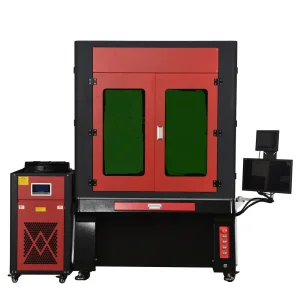
Custom CNC Enclosed Automatic Fiber Laser Welding Machine Factories Ethiopia
Enclosed Production
CNC Enclosed Automatic Fiber Laser Welder for Ethiopia Plants
Request Factory Quotes
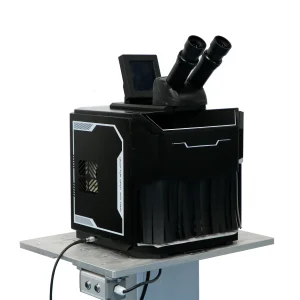
Compact 60W Jewelry Laser Welder for Gold and Silver Crafting in Addis Ababa
Jewelry Benchtop
Compact 60W Jewelry Laser Welder (Gold & Silver Artisans)
View Jewelry Specs
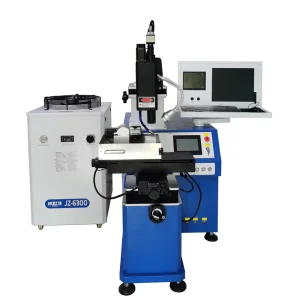
Integrated Boom Laser Welding Machine for Mold Repair in Ethiopia
Heavy Mold Boom
Integrated Boom Laser Welding Machine (Die & Mold Repair)
Request Delivery Quote
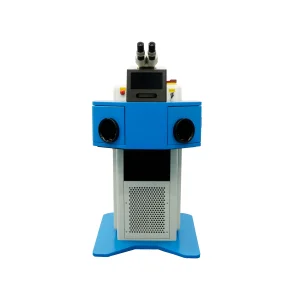
Custom Vertical Jewelry Welding Machine for Ethiopian Workshops
Vertical Cabinet
Vertical Jewelry Laser Welding System for Professional Goldsmiths
Manufacturer Pricelist
Custom 1530 2000 Watt Cutting Machine Manufacturers Ethiopia
1530 Fiber Bed
Industrial 1530 2000 Watt CNC Sheet Fiber Laser Cutter
Get Factory Quotes
Custom Pulse Laser Cleaning Machine for Delicate Surface Preparation Ethiopia
Pulse Cleaning
Custom Pulse Laser Cleaning Machine for Precision Restoration
View Pricelist & Specs
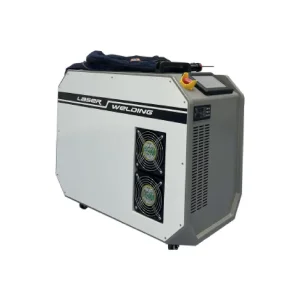
High Quality Fiber Continuous Laser Welding Machine for Stainless Steel in Ethiopia
Continuous Welding
High-Duty Continuous Fiber Laser Welding System (1kW-3kW)
Request Direct Factory Quote
Procurement & Technical FAQ

Frequently Asked Questions: Laser Equipment Importation in Ethiopia

Authoritative technical, electrical, and customs guidance for procurement teams and industrial business owners.

What electrical specifications are required to operate these laser machines on Ethiopian grids?
In Ethiopia, standard low-voltage commercial power is delivered at 220V/380V at 50Hz. Youmir fiber laser cleaning and welding machines (1000W to 1500W CW, and up to 300W Pulsed) operate on standard single-phase 220V (±10%) 50Hz supplies. Heavy-duty 2000W and 3000W systems utilize three-phase 380V 50Hz. Due to periodic voltage fluctuations and voltage sags reported in some regional industrial sectors, we engineer our export units with integrated broad-range surge suppressors and recommend pairing machines with a high-accuracy servo-type automatic voltage stabilizer (AVS). Systems are also compatible with standard Cummins, Perkins, or CAT diesel backup generators.
How does shipping, freight logistics, and customs clearance work for delivery to Ethiopia?
Shipments from our manufacturing facility in Shenzhen are typically routed via ocean freight to the Port of Djibouti, which serves as the primary maritime maritime gateway for landlocked Ethiopia. From Djibouti, cargo moves seamlessly along the multimodal transit corridor via the Ethio-Djibouti Railway or bonded trucking directly to inland dry ports, primarily the Modjo Dry Port or Kality Customs Bureau in Addis Ababa. We handle complete documentation—including Commercial Invoices, Packing Lists, Certificates of Origin, Bill of Lading (B/L), and mandatory CE/ISO compliance certificates—to ensure swift clearance under Ethiopian Customs Commission protocols.
Are laser cleaning machines subject to import tariffs or exemptions under Ethiopian investment law?
Under the Ethiopian Investment Commission (EIC) incentive regulations, capital goods and machinery imported by licensed manufacturing, agro-industrial, and construction enterprises frequently qualify for customs duty exemptions (0% duty under duty-free investment privileges). For non-incentivized commercial entities, industrial laser machinery is categorized under Harmonized System (HS) Code 8456.11 (Machine tools for working any material by removal of material, by laser). We recommend verifying your specific investment license with your clearing agent in Addis Ababa to maximize tariff relief.
What consumables and periodic maintenance are required for fiber laser cleaners?
Unlike sandblasting or chemical baths, fiber laser cleaning has no bulk consumables. The fiber laser source is hermetically sealed with an MTBF (Mean Time Between Failures) exceeding 100,000 operational hours. The only regular wear components are: (1) Quartz protective cover slides ($5–$15 each) located inside the handheld optical head to shield internal focusing lenses from vaporized spatter; (2) Air filtration cartridges in the secondary particulate extractor; and (3) Distilled or deionized water replenishment for the internal dual-temperature chiller loop every 3 to 6 months.
Can laser cleaning operate safely in high-altitude environments such as Addis Ababa?
Yes. Addis Ababa is located at an altitude of approximately 2,355 meters (7,726 feet) above sea level. High altitude results in lower atmospheric pressure and lower air density, which reduces convection heat dissipation efficiency for standard electronics. Youmir export machines configured for the Ethiopian highland market feature oversized dual-circuit industrial water chillers and high-flow electronic cooling fans to prevent overheating of the laser cavity and optical power modules during high-temperature dry season operation.
How are Ethiopian machine operators trained, and what after-sales support is provided?
Youmir provides comprehensive lifecycle technical support. Every unit arrives pre-calibrated with an intuitive multilingual touchscreen HMI (featuring preset parameter libraries for steel rust removal, aluminum depainting, oil degreasing, and mold restoration). We provide: (1) Complete video tutorial courses and step-by-step PDF operational manuals; (2) 24/7 direct remote video engineering support via WhatsApp, Zoom, or WeChat with bilingual technical experts; and (3) In-person factory engineering dispatch options for on-site commissioning and certified operator safety training for large industrial plants and government contracts.
What is the difference in speed and stripping capability between a 1500W CW and a 300W Pulsed laser?
A 1500W Continuous Wave (CW) laser delivers a high energy volume continuously, allowing it to strip thick carbon steel rust and heavy epoxy paint coats at speeds between 4 to 10 m²/hour, making it ideal for structural steel, machinery chassis, and civil infrastructure. A 300W Pulsed MOPA laser operates at lower average power but delivers high peak-power nanosecond pulses; its cleaning rate is lower (approximately 1 to 3 m²/hour), but it generates zero thermal deformation and maintains optical surface integrity, making it essential for precision injection molds, anodized aluminum, and aircraft parts.
Can we submit our own regional metal samples for laboratory trial testing prior to order placement?
Absolutely. Through our Sample Verification Service, Ethiopian clients routinely send oxidized rebar, locomotive joint samples, or contaminated tool steel to our Shenzhen testing laboratory via DHL or FedEx. Our application engineers conduct cleaning trials across varying pulse widths, power levels, and focal distances, providing you with high-definition video documentation, microscopic surface analysis reports, and exact cycle-time estimates before you finalize your equipment order.

Modernize Your Ethiopian Production Line with Zero Consumables

Connect directly with Youmir Laser technical engineers for equipment configuration reviews, tailored Ethiopian CIF shipping logistics, and custom pricing schedules.