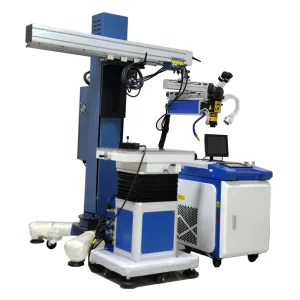
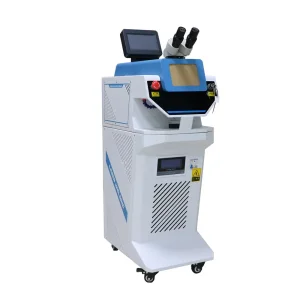
Configured for rapid tooling remediation, tight micro-clearances, and ultra-low heat-affected zones (HAZ) across demanding industrial environments.
Strategic deployment within petrochemical hubs, downhole directional drilling production lines, and high-volume packaging manufacturing across the Texas Gulf Coast.
Houston leads the world in energy tech. Our systems perform selective micro-cladding and precision build-up on elastomeric mold cavities, deep subsurface gate seals, and blow-out preventer (BOP) tooling alloys without degrading mechanical hardness.
Supporting the petrochemical processing corridor along the Houston Ship Channel. Continuous production runs cause abrasive parting-line erosion on blow molds; our cantilever and boom laser platforms allow localized in-press or near-press remediation within minutes.
Serving precision sub-contractors adjacent to the NASA Johnson Space Center. Repair tight tolerance aluminum 7075 and beryllium copper injection inserts without inducing macroscopic stresses, distortion, or grain degradation.
Understanding beam absorption dynamics, molten pool kinetics, and thermal propagation metrics in mold and die tool steels.
| Performance Metric | Micro-TIG Welding | Pulsed Nd:YAG Laser | Quasi-Continuous Wave (QCW) Fiber |
|---|---|---|---|
| Heat Input / Thermal Load | Extreme (>500 J/mm); High warpage | Low-Medium (10–30 J/pulse); Localized | Ultra-Low (<5 J/pulse); Minimal thermal dissipation |
| Beam Spot Diameter | 0.8 mm – 1.5 mm (Diffused arc) | 0.2 mm – 1.5 mm (Optically focused) | 0.05 mm – 0.3 mm (Single-mode fiber quality) |
| Heat Affected Zone (HAZ) | 1.2 mm – 3.0 mm (Extensive annealing) | 0.15 mm – 0.3 mm (Controlled margin) | <0.05 mm (Retains surrounding tempering) |
| Filler Wire Accommodation | Ø 0.5 mm – 1.6 mm | Ø 0.2 mm – 0.6 mm | Ø 0.1 mm – 0.4 mm (Micro-cladding precision) |
| Post-Weld Machinability | Extensive sink marks; Needs EDM | Moderate polish; Retains hardness | Near-net-shape; Minimal benching & texturing needed |
| Operating Life & Consumables | Tungsten electrodes, high gas consumption | Flashlamps (every 500-800 hrs), optical cavities | Solid-state fiber diodes (100,000 hrs MTBF, zero flashlamps) |
Every mold laser repair platform built in our ISO9001-certified manufacturing centers leverages a strictly vetted global component ecosystem, ensuring long-term operational predictability in North American production plants.
Shipping industrial equipment to North American manufacturing plants requires absolute regulatory adherence. Our exported machines feature:
• FDA / CDRH 21 CFR 1040.10: Class 1 enclosure compliance and Class 4 interlock protection protocols.
• OSHA & ANSI Z136.1: Safety interlocked access ports, laser safety curtains, and wavelength-matched (1064nm/1080nm) certified viewing windows.
• Electrical Conformance: 220V/480V 60Hz dual-frequency options configured with UL-listed electrical panels and circuit protection breakers.
Advancing from manually actuated joystick deposition toward closed-loop vision tracking and multi-material gradient additive repair.
Deploying structured blue-light optical scanning modules onto the boom head. The system automatically digitizes cracked die margins, calculates the precise volumetric fill profile, and autonomously guides laser wire feed paths.
Real-time coaxial optical sensors read molten weld pool emissive temperatures at 10 kHz rates, immediately adjusting pulse duration and peak power to prevent porosity and solid-solution cracking in crack-sensitive tool steels.
Dual-wire automated feeding systems designed to deposit tough buffer layers (e.g., austenitic nickel alloys) followed by wear-resistant martensitic air-hardening top coats, ensuring structural longevity in high-friction slide tooling.
Explore our complete machine family: cantilever booms, galvanometer continuous laser welders, and precision jewelry repair systems.
Direct technical answers regarding procurement, on-site commissioning, shielding gases, and tool steel compatibility.