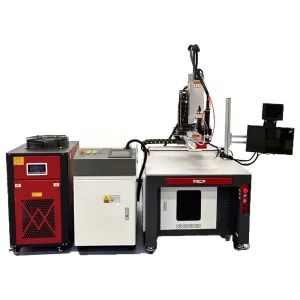
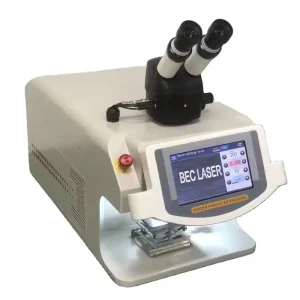
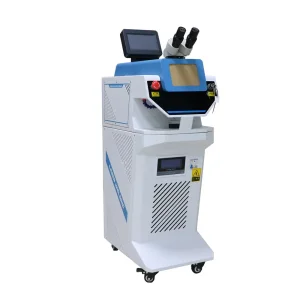
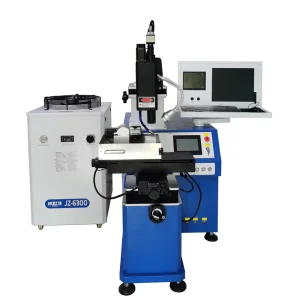
Precision engineered fiber laser equipment configured for heavy manufacturing, die repair, and high-precision micro-joining applications worldwide.

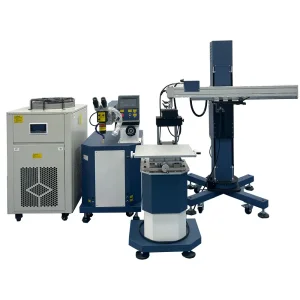
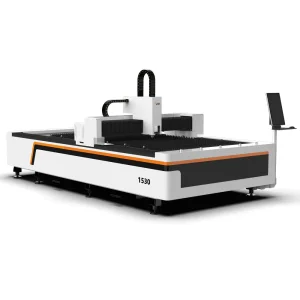
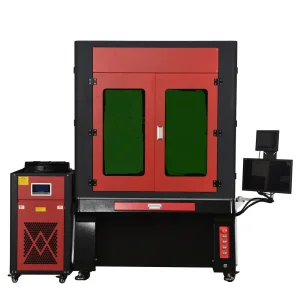
How the 1000W fiber laser cleaning station has evolved from an experimental luxury into the benchmark standard for high-throughput de-rusting, coating stripping, and pre-weld surface conditioning.
Across the global manufacturing sector, surface preparation represents an estimated $46 billion operational bottleneck. Traditional methodologies—specifically quartz sandblasting, chemical pickling baths, and mechanical wheel grinding—are burdened by crippling operational expenditures, escalating regulatory fines, and non-compliance with strict environmental mandates (such as the EU Corporate Sustainability Due Diligence Directive and US OSHA Hexavalent Chromium Standards). In this macroeconomic context, the 1000W fiber laser cleaning machine has emerged as the definitive industrial workhorse.
Operating primarily at a nominal near-infrared wavelength of 1064nm to 1080nm, a 1000-watt fiber laser generates immense power density. When focused onto contaminated metal surfaces, the contaminant layer (rust, mill scale, multi-coat polyurethane, or grease) absorbs the photon energy instantly. This triggers a thermal-elastic expansion shockwave and subsequent transient plasma vaporization, effectively ejecting the contaminant without surpassing the thermal damage threshold of the underlying metallic substrate. The result is a mathematically repeatable, clean surface profile (reaching Sa 2.5 to Sa 3.0 standards) achieved at an operational cost of less than $1.20 per hour in standard electrical utility draw.
| Performance Vector | 1000W Fiber Laser Cleaning | Grit / Sandblasting | Chemical Acid Bath | Dry Ice (CO2) Blasting |
|---|---|---|---|---|
| Direct Consumables | Zero (Photon Only) | Abrasive media (Sand, Garnet, Steel grit) | Toxic acids (HCl, H2SO4, solvents) | Liquid/Pelletized CO2 |
| Operating Cost / Hour | $0.90 – $1.40 (Power & Lenses) | $22.00 – $45.00 (Media + Disposal) | $35.00 – $60.00 (Neutralization/Waste) | $40.00 – $80.00 (Pellet supply) |
| Substrate Integrity | Zero erosion, preserves tolerance (Ra intact) | Pits and erodes base metal thickness | Risk of hydrogen embrittlement | Non-destructive but low stripping speed |
| Environmental Safety | Zero effluent; localized fume extraction | Airborne respirable crystalline silica (Silicosis) | Harsh VOCs, hazardous sludge handling | CO2 displacement hazard, high dB noise |
| Automation Compatibility | Full 6-Axis Robotic / CNC Integration | Extremely difficult due to abrasive spray | Manual immersion / semi-automated cranes | Moderate; nozzle freeze-ups common |
Transparent factory valuation matrix, core sub-assembly bill-of-materials (BOM), and capital expenditure amortization over typical industrial operating lifecycles.
When sourcing from industrial laser factories in Shenzhen and greater China, international procurement engineers frequently observe quote variations ranging from $5,800 to over $35,000 for equipment labeled "1000W Laser Cleaner". This divergence stems fundamentally from the optical architecture: Continuous Wave (CW) versus High-Peak Pulsed (MOPA / Q-switched).
Continuous Wave (CW) 1000W units deliver an uninterrupted thermal beam. They excel at high-speed bulk de-rusting of structural beams, ship plates, and thick carbon steel fabrications where modest heat input into the base metal is completely acceptable. Conversely, 1000W Pulsed systems deliver gigawatt-level peak pulses in nanosecond bursts. Pulsed systems vaporize coatings with virtually zero thermal conduction into the substrate, making them non-negotiable for precision aerospace tooling, injection molds, and mirror-finish die restorations.
| Cost Element | 1000W CW Setup | 1000W Pulsed MOPA |
|---|---|---|
| Machine Acquisition (CIF) | $5,800 – $8,500 | $26,000 – $38,000 |
| Power Consumption (4kW wall draw) | $0.48 / hr | $0.36 / hr |
| Protective Window Replacements | $40 / quarter | $40 / quarter |
| Annual Maintenance Labor | < $250 (Filter flushing) | < $300 (Coolant checks) |
| Payback Period (Single Shift) | 3.2 Months | 6.8 Months |
| Equipment Model Category | Laser Architecture | Cleaning Swath Width | Optimal Factory Applications | Estimated FOB Price Range (USD) |
|---|---|---|---|---|
| Industrial CW-1000W Handheld | Continuous Wave Fiber (Raycus/Max) | 10 – 300 mm (Adjustable) | Heavy steel framing, rust descaling, pipeline rehab | $5,500 – $7,200 |
| High-Frequency Pulsed 1000W | MOPA Nanosecond Pulsed (Raycus/JPT) | 5 – 180 mm 2D Scanning | Automotive dies, aerospace turbine blades, molds | $27,000 – $34,500 |
| 4-in-1 Multi-Process 1000W | CW (Clean / Weld / Cut / Seam Clean) | 0.5 – 120 mm | Sheet metal job shops, prototype fabrication | $6,200 – $8,100 |
| Robotic Cell Integrated 1000W | Fiber with Fieldbus / PROFINET | Custom Optic Collimation | Automated Battery Tray & EV chassis de-coating | $18,500 – $48,000 (Excl. Robot Arm) |
From extreme sub-zero shipyard overhauls in Northern Europe to high-throughput automotive stamping plants in North America, how 1000W systems perform under harsh conditions.
In electric vehicle battery enclosure assembly, aluminum 6000-series extrusions exhibit tenacious native oxide layers. The 1000W pulsed laser cleanly strips Al2O3 films and hydrophobic drawing lubricants prior to structural bonding and friction stir welding, reducing joint porosity failure rates to sub-0.01% thresholds.
Offshore maritime salt exposure triggers rapid pitting corrosion. Handheld 1000W CW systems equipped with 15-meter armored umbilical conduits allow maintenance crews to enter confined ballast voids, removing thick scale down to white metal without depositing explosive sand dust inside internal pump valves.
Traditional ultrasonic or chemical mold cleaning requires pulling hot dies offline for 8-12 hours. A 1000W pulsed laser cleans complex tire mold sipes and polyurethane injection cavities in-situ at operating temperatures (150°C), eliminating mold teardown and prolonging tooling lifespan by over 300%.
Titanium alloy (Ti-6Al-4V) and carbon-fiber-reinforced polymer (CFRP) airframe components require precise surface activation without fiber thermal degradation. Controlled-energy 1000W nanosecond pulse trains ablate release agents and epoxies, optimizing cross-linking adhesion shear strength.
Historic limestone facades, bronze statuary, and copper monuments suffer from sulfate soot crusts and biological patina degradation. Operating at sub-ablative threshold fluences, 1000W laser cleaning micro-vaporizes pollutants without stripping original artistic chiseled tooling marks.
By coupling the 1000W fiber delivery optic to long-reach articulated manipulators inside hot-cell chambers, decommissioning engineers vaporize radioactive surface crusts directly into high-efficiency particulate air (HEPA) vacuum filtration systems, minimizing worker exposure.
Navigating global laser safety certification, export compliance, factory acceptance testing, and localized warranty fulfillment across 50+ countries.
Every 1000W laser cleaning machine operates within the Class 4 Laser radiation tier (IEC/EN 60825-1). Non-compliant machinery poses severe retina risks, diffuse reflection hazards, and dangerous pyrolytic fume emissions. As a direct factory manufacturer, our build protocols adhere strictly to:
Importing industrial capital equipment demands rapid technical accountability. Shenzhen Youmir Laser Technology Co., Ltd. provides comprehensive factory-backed lifelines tailored to North American, European, Latin American, and Southeast Asian time zones:
Ship your actual target components to our Shenzhen facility. Our laser engineers evaluate laser fluence, focal beam geometry, scan speed, and assist gas variables, returning detailed metallurgical cross-sections, roughness profiles (Ra/Rz), and 4K process videos before purchase.
Real-time controller cloud diagnostics identify chiller sensor tripouts, galvo synchronization drift, or power attenuation within minutes via direct engineer-to-technician remote streaming.
Pre-configured critical spares packages—including quartz protective windows, focal lenses, nozzle cones, and water filters—are shipped via DHL/FedEx priority to eliminate operational downtime.
Exploring in-situ optical spectroscopy, AI vision adaptive pathing, and hybrid laser-water jet technologies shaping the next decade of surface decontamination.
Next-generation systems integrate coaxial machine vision cameras that analyze color gradients and reflectance spectrums. AI algorithms automatically modulate laser pulse energy and scan velocity in real-time, delivering higher fluence to heavy rust patches while reducing power over bare substrate.
Laser-Induced Breakdown Spectroscopy (LIBS) sensors capture the light emitted by the laser-induced micro-plasma. By decoding spectral lines, the machine verifies 100% molecular paint removal and records timestamped quality logs directly to enterprise MES platforms.
Advancements in multi-junction pump diode efficiency and micro-channel heat pipes are paving the way for waterless, completely air-cooled 1000W systems. This cuts overall machine chassis weight by 65%, enabling single-operator backpack deployment for bridge and wind turbine maintenance.
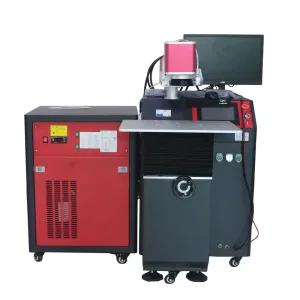
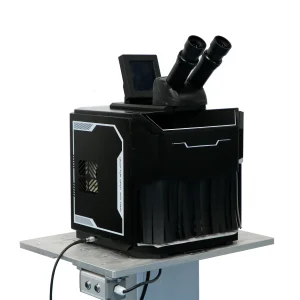
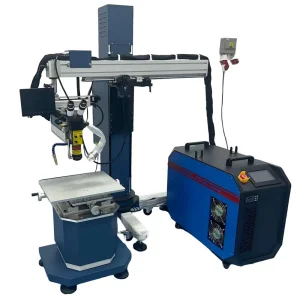
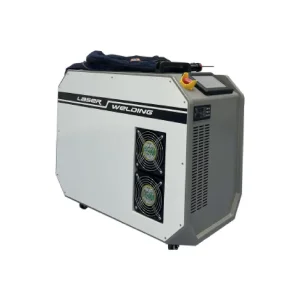
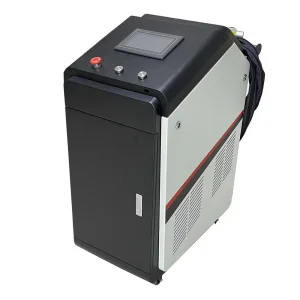
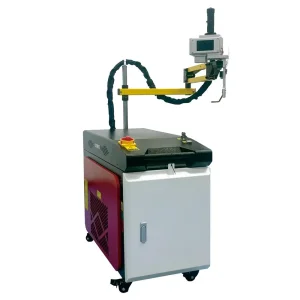
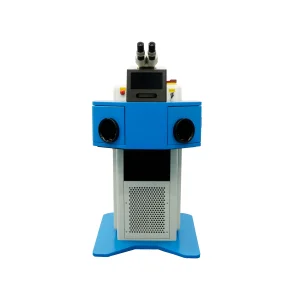
Explore our custom pulse cleaning systems, galvanometer-guided welders, and precision jewelry repair units manufactured in our Shenzhen facility.
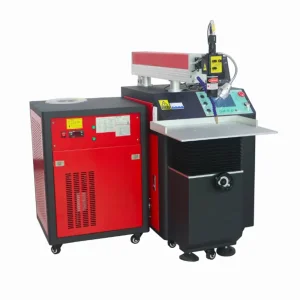
Authoritative answers directly from our laser engineering department regarding 1000W system performance, selection criteria, and maintenance protocols.
Contact our Shenzhen application engineering lab today for an authoritative machine quotation, customized OEM/ODM specification sheet, or to schedule a free sample cleaning test on your industrial components.
