Rapid-deployment industrial photonics designed for high thermal stability and tropical humidity resistance across Selangor, Penang, and Johor production lines.
Strategic alignments under the New Industrial Master Plan (NIMP 2030) driving non-contact, chemical-free decarbonization across Peninsular and East Malaysia manufacturing zones.
The Malaysian Department of Environment (DOE) rigorously curbs volatile organic compound (VOC) emissions and toxic spent sand disposal under the Environmental Quality Act 1974. Traditional abrasive grit blasting generates hazardous airborne particulates (PM2.5/PM10) that demand high disposal costs in Port Klang and Pasir Gudang.
Malaysia's thriving semiconductor back-end assembly, lead frame fabrication, and precision mold tooling (injection & die casting) cannot tolerate structural erosion. Sandblasting induces micro-pitting, edge blunting, and mechanical fatigue, significantly decreasing mold tool lifespan.
With an average ambient relative humidity exceeding 80% throughout Selangor and Johor, newly blasted structural carbon steel flashes with rust within hours. Fiber laser cleaning delivers simultaneously a dehydrating thermal barrier that chemically passivates the treated interface.
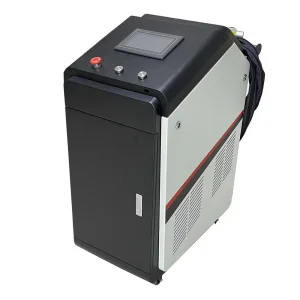
Industrial laser cleaning operates at the intersection of quantum optics and thermodynamic surface dynamics. Rather than relying on abrasive mass transfer or exothermic chemical erosion, laser ablation removes surface contaminants—such as ferric oxides, vulcanized elastomers, baked polyimide, or marine biofouling—by selectively exceeding the ablation threshold of the contaminant layer while remaining safely below the thermal and structural damage threshold of the substrate.
Selecting the optimal equipment configuration for facilities in Klang Valley, Kemaman Supply Base, or Kulim Hi-Tech Park demands an evaluation of material sensitivity versus required square-meter throughput.
| Technical Parameter | MOPA Short-Pulse Laser Cleaner | Continuous Wave (CW) Fiber Cleaner |
|---|---|---|
| Pulse Duration (τ) | 10 ns – 500 ns (Fully Tunable) | Continuous emission (No pulse pauses) |
| Peak Pulse Power | Up to 100 kW – 500 kW | Equal to nominal average power (1–3 kW) |
| Heat-Affected Zone (HAZ) | Negligible (< 2 μm micro-diffusion) | Moderate (10 – 40 μm depending on scan velocity) |
| Primary Industrial Fits | Semiconductor leads, injection molds, aircraft alloys | Shipyard hull descaling, structural bridges, heavy pipe rust |
| Substrate Structural Integrity | Completely intact (Zero Ra alteration) | Acceptable for structural steels; not for mirrors/molds |
| Ablation Speed Efficiency | Moderate (2 – 8 m²/hr high precision) | High throughput (15 – 45 m²/hr heavy bulk removal) |
Standard industrial equipment built for temperate Western or East Asian markets often succumbs to internal optical condensation and chiller fault tripping when operated continuously in equatorial climates like Malaysia. As a dedicated manufacturer, our machines incorporate active dehumidification loops inside the laser power source compartment and dual-circuit sealed chillers with anti-condensation optic interlocks.
Furthermore, our optical output heads are sealed to IP65 standards with continuous positive-pressure dry air purging. This prevents maritime saline vapors from settling on collimating and protective f-theta lenses, mitigating optical micro-cracking caused by back-reflections during processing on reflective metals such as copper and brass alloys.
Engineered optical configurations matching the specific thermal profiles, mechanical tolerances, and automation requirements of local manufacturing centers.
Deploying sub-nanosecond MOPA pulse lasers for copper leadframe deflashing, wafer packaging flux residue stripping, and oxide cleaning prior to automated wire-bonding processes in Penang and Kulim.
Integrated laser surface ablation systems removing protective e-coatings and mill scale before structural resistance welding for EV battery tray sealing and Tier-1 body assembly in Tanjung Malim and Rawang.
High-power CW 2000W–3000W ruggedized systems targeted at marine growth stripping, ballast tank descaling, and splash-zone weld seam preparation across Bintulu, Kemaman, and Labuan docks.
Online non-destructive cleaning of nickel, stainless steel, and ceramic former molds for Malaysia's global latex and nitrile glove manufacturers—stripping coagulant and latex build-up without mold cooldown.
Importing advanced laser machinery into Malaysia requires strict alignment with domestic regulatory bodies to guarantee operator safety, grid compatibility, and uninhibited customs clearance.
Every machine delivered to Malaysian destinations adheres to the safety requirements stipulated by the Department of Occupational Safety and Health (DOSH / JKKP). We provide pre-certified electrical architecture compliant with SIRIM QAS standards, including Class 4 laser interlocks and dual-channel safety relay shutoffs.
Our power supplies are configured for the Malaysian national grid (415V 3-Phase or 240V Single Phase @ 50Hz) certified under the Energy Commission (Suruhanjaya Tenaga). Integrated industrial surge suppression prevents sensitive fiber pump damage from lightning-induced voltage spikes common in Southeast Asia.
We maintain regional stocks of critical optical components, including fused silica protective windows, collimation mirrors, nozzle assemblies, and deionizing resins. Facilities across Peninsular Malaysia can access critical spares within 24 to 48 hours to prevent unscheduled downtime.
Our continuous R&D initiatives focus on integrating photonics directly into Malaysia's Industry 4.0 smart factory ecosystems.
Clear answers covering regulatory compliance, operational expenses, substrate metallurgy, and delivery parameters.
Explore our full line of specialized laser cleaning, precision fiber welding, and integrated automation systems delivered with localized factory direct warranty and calibration support.







Request a customized technical specification sheet, process parameter guide, and free sample testing evaluation from our engineering headquarters.



