Engineered for high-volume gold chain fabrication, delicate prong repair, and porosity elimination in lost-wax casting. Ready for immediate deployment across Vietnamese jewelry workshops.
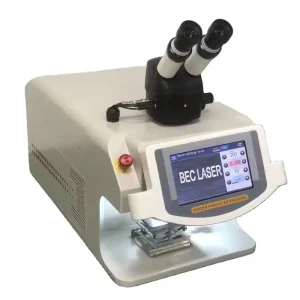
Designed for continuous, high-duty 24K gold and platinum joint fusion with ultra-low thermal distortion.
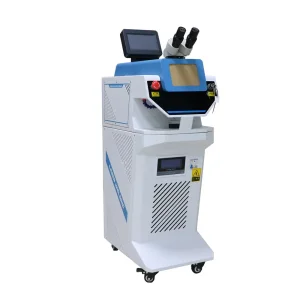
200W peak energy output optimized for 925 sterling silver filigree joining and gemstone retipping.
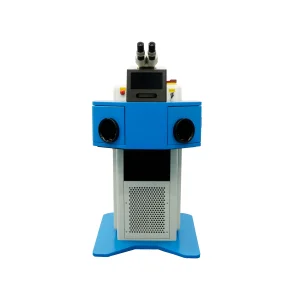
Ergonomic upright cabinet configuration built for prolonged artisan shift operation in District 5 HCMC jewelry centers.
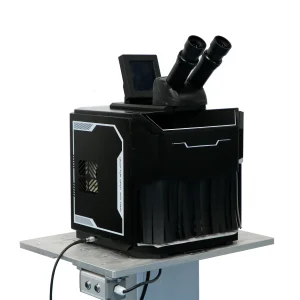
Ultra-compact 60W footprint suited for retail counter repairs, boutique goldsmith benches, and Hang Bac studios.
From the heritage artisan clusters of Hanoi's Old Quarter to the high-throughput export export zones of Southern Vietnam, precision laser manufacturing is redefining precious metal production economics.
District 5 (Chợ Lớn, An Đông) represents Vietnam’s historical powerhouse for yellow gold (24K, 18K) jewelry fabrication. As consumer demand pivots toward Italian-style hollow chains and diamond-set 14K white gold, high-duty Nd:YAG and QCW laser welders have become critical replacements for torch-brazing, cutting precious metal burn-off loss to virtually 0%.
Hanoi’s traditional artisan quarters along Hàng Bạc and the silver crafting enclave of Định Công require delicate micro-welding for intricate 925 sterling silver filigree wire (down to 0.15mm). Our spot welders allow artisans to fix joints adjacent to heat-sensitive stones without stripping enamel or unmounting pearls.
Under the EU-Vietnam Free Trade Agreement (EVFTA), Vietnamese fine jewelry manufacturers face rigorous ISO clean-weld and lead/cadmium-free solder standards. Laser fusion eliminates low-melting-point solder entirely, producing homogeneous metallurgical bonds that pass strict European and North American assay tests.
Precious metals exhibit extreme thermal conductivity and high optical reflectivity at the standard 1064nm infrared laser wavelength. Our specialized pulse-shaping architecture solves these physical bottlenecks.
Pure gold and sterling silver reflect more than 90% of incident 1064nm photon energy at room temperature. Traditional continuous lasers risk back-reflection optical damage. Our machines employ a spiked pulse waveform (providing an initial 200W+ microsecond pulse to melt the surface and lower reflection instantly) before smoothly decaying into an annealing energy plateau that prevents puddle expulsion.
Micro-shrinkage pores are common in lost-wax investment casting. Our integrated coaxial and multi-angle argon delivery nozzles produce laminar gas flow at 99.999% purity. By bathing the weld puddle in inert gas, surface oxidation is prevented, and capillary agitation collapses internal casting voids without adding heavy filler wire.
| Metal Type | Optical Absorption (1064nm) | Thermal Conductivity (W/m·K) | Optimal Pulse Shape | Shielding Gas Strategy |
|---|---|---|---|---|
| 24K Pure Gold (Ta) | ~4 - 6% | 318 | Spike Peak + Slow Ramp Anneal | Coaxial Argon (4 - 6 L/min) |
| 18K / 14K Gold Alloys | ~8 - 12% | 120 - 180 | Square Pulse (4 - 8 ms) | Micro-diffused Argon (3 L/min) |
| 925 Sterling Silver | ~3 - 5% | 406 | High Initial Peak + Double Pulse | Direct Point Coaxial (5 L/min) |
| 950 Platinum (Pt) | ~28 - 32% | 71.6 | Flat Low Peak + Extended Duration | Low-velocity Laminar (2 - 3 L/min) |
| Titanium / Stainless Steel | ~30 - 35% | 16 - 22 | Standard Square (2 - 4 ms) | Full Chamber Flooding Preferred |
Engineered to resolve real-world fabrication, assembly, and repair bottlenecks encountered daily by Vietnamese jewelers.
Direct torch flames shatter emeralds, rubies, and opals. The 0.2mm - 2.0mm focused laser spot isolates thermal transfer within a tight heat-affected zone (HAZ), enabling jewelers to rebuild worn prongs within millimeters of high-value stones.
Vietnamese jewelry casting foundries frequently encounter micro-surface blowholes. Instead of remelting entire production runs, operators use matching gauge alloy wire to laser-fill pits seamlessly, preserving fine surface details.
Modern lightweight gold bangles and rope chains feature ultra-thin walls (0.08mm - 0.15mm). Our fine pulse modulation guarantees full seam penetration without burn-through, blow-outs, or discoloration.
Heritage silversmiths can join delicate twisted wire patterns without flooding joints with excessive solder paste, maintaining crisp negative space in intricate designs.
Beyond gold and silver, workshops handle titanium watch case restoration, stainless steel spring clasps, and spring-hinged eyewear frames with zero loss of metal spring temper.
Compact 60W desktop models allow boutique retailers in Vincom or Takashimaya Saigon centers to perform immediate ring enlargement or reduction right in front of the customer.
Industrial machinery deployed in Vietnam must withstand high ambient humidity, elevated temperatures, and regional electrical variations.
Vietnam’s monsoon seasons routinely introduce ambient relative humidity exceeding 85% at 35°C+. In conventional laser cavities, this leads to fatal condensation on YAG crystals and protective mirrors. Our optical chambers are sealed to IP54 standards with intelligent heating dew-point controllers that equalize optical chamber temperature before laser firing, avoiding crystal fogging or pitting.
Workshops located outside central Hanoi and Ho Chi Minh City often face supply swings ranging from 180V to 245V. Youmir laser power sources are integrated with active power-factor correction (PFC) modules, maintaining pulse-to-pulse energy repeatability within ±1.5% and guarding high-voltage storage capacitors against premature failure.
Supporting jewelry enterprises, OEM brand partners, and trade export workshops worldwide.
How emerging optical advancements and machine vision are driving the future of precious metal fabrication.
While 1064nm infrared is standard, pure gold absorbs green laser light at over 40% (nearly 8x higher than infrared). Next-generation hybrid green-IR architectures will eliminate back-reflection challenges, allowing spatter-free microwelding on pure 99.99% gold foils and delicate jewelry links.
Combining high-definition CCD optics with real-time neural edge detection allows our automated multi-axis rotary systems to trace irregular cast jewelry seams dynamically, adjusting focus and pulse parameters on the fly without operator intervention.
Integrated IoT control modules track flashlamp life, laser output energy degradation, and argon gas consumption in real time, alerting workshop managers to schedule preventive maintenance before weld quality drifts.
Explore our complete industrial portfolio supporting Vietnam's jewelry, mold tool-room, metal cleaning, and precision cutting sectors.
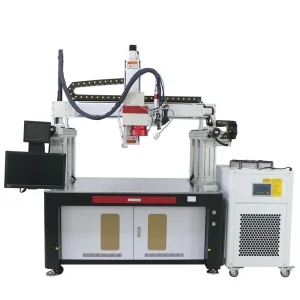
Ultra-fast optical scanning head designed for mass production of jewelry chains, watch batteries, and small electronic enclosures.
Economical and space-saving unit engineered specifically for custom goldsmith shops and jewelry repair kiosks.
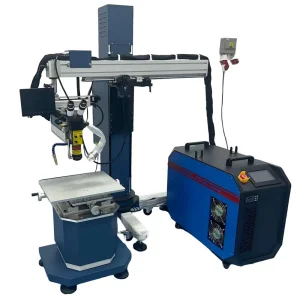
Precision build-up welding for delicate jewelry stamping dies, stamping punches, and injection mold parting lines.

Extended counterbalanced boom arm enables toolmakers to reach deep mold cavities without unseating heavy dies from the bed.
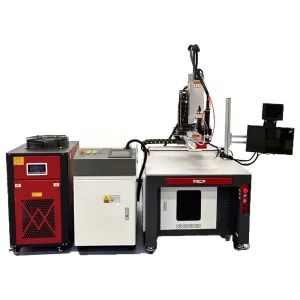
Multi-channel optical fiber output allows simultaneous multi-station welding for high-output hardware and jewelry stamping lines.
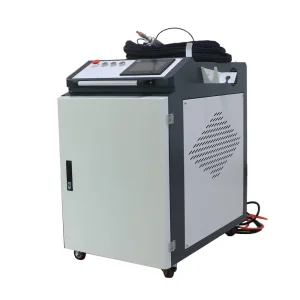
Non-contact removal of oxidation layers, casting investment residues, oil, and heat tint without chemical pickling or bead blasting.
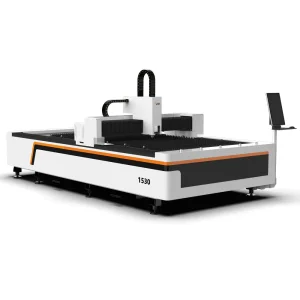
1500x3000mm bed format equipped with a 2000W fiber resonator for cutting brass, silver, gold sheets, and tooling fixtures.
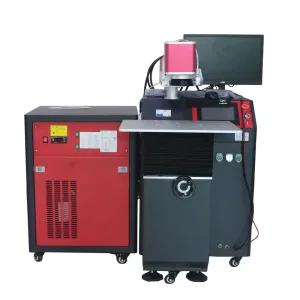
High-precision galvo scanner platform for micro-spot spot arrays, jewelry medals, watch bezel welding, and precision electronics.
Comprehensive engineering and operational answers to address common inquiries from goldsmiths, studio owners, and factory plant managers.
Send us your metal samples (24K, 18K, 925 silver, or platinum) for free lab test reports, weld cross-section microscopy, and personalized equipment recommendations tailored to your workshop layout.
