

High-precision pulsed and continuous configurations certified for tropical factory environments, automotive tooling lines, and heavy-duty maritime de-rusting.
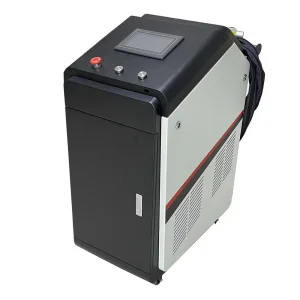

Understanding why Indonesia's core manufacturing corridor is pivoting away from chemical washing and abrasive blasting to non-contact photonics.
Greater Jakarta's coastal humidity (consistently 75%–90% RH) paired with Tanjung Priok port marine atmosphere accelerates flash rusting across steel warehousing, logistics yards, and exposed automotive parts. Traditional abrasives trap salt particulates into surface pits, inducing rapid secondary corrosion. Laser ablation evaporates moisture and salt lattices cleanly.
Indonesia's Ministry of Environment and Forestry (KLHK) enforces the PROPER environmental compliance rating. Heavy chemical degreasers, trichloroethylene solvents, and toxic grit disposal are drawing steep regulatory scrutiny in MM2100, Jababeka, and KIIC industrial estates. Laser systems generate zero hazardous effluent, simplifying ISO 14001 certification.
With West Java and Jakarta Regency minimum wage (UMK) increments, labor-intensive hand grinding, pneumatic wire brushing, and manual chemical scrubbing are financially unsustainable. Handheld laser cleaning runs 4 to 8 times faster with single-operator setups, sharply slashing tool-room turnarounds for plastic injection and tire molds.
How direct sourcing from established Chinese original equipment manufacturers breaks European pricing monopolies without compromising optical stability.
Internationally, precision surface conditioning has moved from continuous wave (CW) lasers to Master Oscillator Power Amplifier (MOPA) pulsed architecture. Variable pulse widths (10ns–500ns) allow Jakarta tooling shops to calibrate peak power precisely, avoiding thermal micro-cracking in expensive S50C, NAK80, or SKD61 die steels.
By producing optical collimators, high-speed dual-axis galvanometer scanning heads, and integrated liquid chilling units within Shenzhen's consolidated high-tech ecosystem, production cycles are halved. Capital expenditure for Southeast Asian importers drops by 45%–60% compared to legacy German or American imports.
Purchasing through non-manufacturing trading desks often causes multi-week lead times for essential optics. Direct factory procurement secures tailored air-freight spare parts bundles (F-Theta lenses, protective windows, safety interlocks) reaching Jakarta's Soekarno-Hatta (CGK) logistics hub within 72 hours.
Selecting the appropriate beam delivery profile according to your production requirements and substrate sensitivity.
| Evaluation Metric | Continuous Wave (CW) Laser | Pulsed Fiber (MOPA / Q-Switched) |
|---|---|---|
| Laser Source Architecture | Continuous high-power optical emission (1000W - 3000W) | Nanosecond high-peak pulse bursts (100W - 1000W) |
| Heat Input into Substrate | Moderate to high thermal diffusion; potential surface color shift | Ultra-low heat transfer; negligible heat-affected zone (HAZ) |
| Substrate Tolerances | Heavy steel plates, structural beams, ductile iron castings | Precision tooling, aerospace alloys, aluminum, brass, mirror molds |
| Cleaning Speed (Thick Oxide) | Extremely fast (15–30 m²/hr on coarse rust and paint) | Moderate to high (4–12 m²/hr focused on precise stripping) |
| Typical Jakarta Application | Ship repair in North Jakarta, structural steel in Tangerang | Stamping/injection die maintenance in Cikarang & Karawang |
| Initial Capital Outlay | More economical per watt; ideal for high-throughput scaling | Higher upfront cost; justified by zero-tooling-damage requirements |
Detailed answers covering customs, technical voltages, gas requirements, and operational maintenance.
Explore our complete machinery line engineered for high-duty production environments, tool-room maintenance, and automated sheet-metal processing lines.





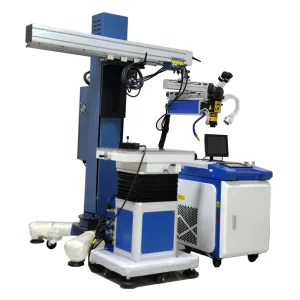

Contact our optical application engineering team directly for custom equipment quotes, sample testing arrangements, Form E tax advantage inquiries, and full FOB/CIF Jakarta shipping schedules.
Send Inquiry Now