Engineered for immediate toolroom deployment across Baghdad, Basra, and Erbil. The 4 foundational units below feature integrated optical tracking, low heat-affected zone (HAZ) deposition, and rugged chiller circuits built to endure high ambient temperatures.
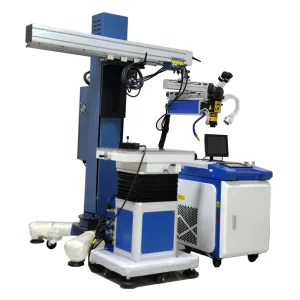
Custom Fiber Mold Laser Welding Machine Pricelist, Quotes (Iraq Deployment)
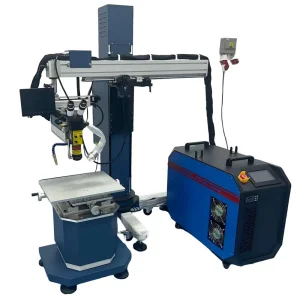
Custom QCW Mold Laser Welding Machine Pricelist, Factory (Iraq Standard)
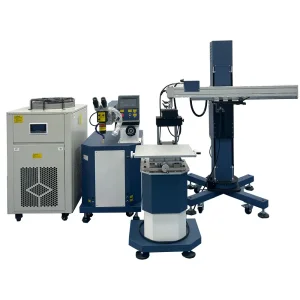
Custom Boom Mold Laser Welding Machine Manufacturers, Factory (Heavy Dies Iraq)
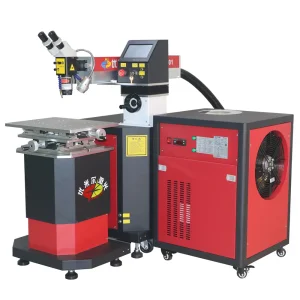
Custom Mould Laser Welding Machine Manufacturers, Quotes (Iraq Heavy Industry)
Iraq is undergoing an extensive industrial resurgence driven by downstream petrochemical diversification, infrastructural rebuilding, and domestic plastics manufacturing. High capital costs for imported replacement dies have made in-situ laser metal deposition an indispensable asset.
Valves, drilling tool flanges, and extrusion screw mandrels in Southern Iraqi extraction plants experience severe erosive and corrosive wear. Fiber laser cladding and micro-welding eliminate the thermal warping typical of traditional TIG/SMAW techniques.
Suppliers of blow-molded bottles, industrial containers, and PVC piping components face supply chain bottlenecks when ordering overseas replacement tooling. Cantilever mold laser welders deliver micro-precision cavity repairs with zero undercut.
Summer operating temperatures routinely surpass 48°C in Central and Southern Iraq. Our mold repair stations integrate dual-circuit deionized liquid chillers and hermetically sealed fiber laser modules that prevent condensation and thermal runaway.
Worldwide die-manufacturing ecosystems in Germany, Japan, and China have shifted away from flashlamp-pumped solid-state YAG welders toward Quasi-Continuous Wave (QCW) and Continuous Wave (CW) fiber architectures.
QCW sources achieve electro-optical conversion efficiencies exceeding 35% (compared to ~3% for Nd:YAG), slashing shop electrical loads—a decisive factor in facilities relying on regional diesel generators across Iraqi industrial parks.
Data gathered across NAK80, H13, and P20 mold steels demonstrates why precision laser deposition outperforms traditional TIG micro-welding in production turnaround and metallurgical structural integrity.
| Performance Metrics | Conventional Micro-TIG | Youmir QCW Mold Welder | Youmir Fiber Mold Welder | Operational Impact in Iraq |
|---|---|---|---|---|
| Heat Affected Zone (HAZ) | 1.5 mm – 3.2 mm | 0.08 mm – 0.20 mm | 0.12 mm – 0.35 mm | Zero Die Warpage |
| Substrate Annealing Risk | High (Requires Retempering) | Negligible / Sub-critical | Localized (Controlled) | Retains Factory Hardness |
| Minimum Wire Diameter | Ø 0.60 mm | Ø 0.10 mm | Ø 0.20 mm | Micron Precision Restorations |
| Post-Weld Machining Time | 8 to 16 Hours (EDM/Grinding) | 1 to 2 Hours (Polishing) | 1.5 to 3 Hours (Bench Grinding) | 75% Downtime Reduction |
| Power Consumption | 7.5 kW – 12.0 kW | 2.2 kW – 3.8 kW | 3.5 kW – 5.5 kW | Generator Compatible |
Send CAD part drawings or damaged mold imagery. Our metallurgy team will construct a tailored laser process profile, wire-feed match, and formal quote for Iraqi delivery.
Our long-range development trajectory bridges manual optical joystick operation with algorithmic pathfinding, machine vision monitoring, and robotic articulated deposition for massive stamping dies.
Dynamic beam oscillation with adjustable frequencies up to 300 Hz. Eliminates internal porosity, controls molten pool dynamics, and broadens weld pool width without switching optical focal lengths.
Integrated stereoscopic CCD microscopes combined with coaxial red alignment lasers. The automated z-axis actively maintains focal plane consistency across multi-angled bevels and irregular mold cavities.
We supply modular welding stations with built-in magnetic clamping workbenches, automated wire feed units, shielding argon flux monitors, and multi-axis overhead crane gantry arms.
Detailed answers covering supply logistics, local electrical conditions, tool steel compatibility, and preventative maintenance protocols.
Explore our full line of specialized welding platforms—from long-reach boom welders to high-precision galvanometer and continuous-fiber workstations built for high-throughput workshops.
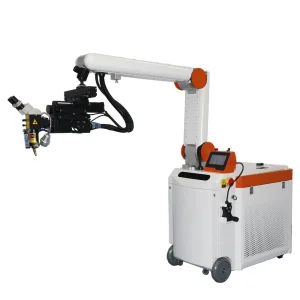
Custom Cantilever Laser Welding Machine (Iraq Toolroom Series)

Custom Integrated Boom Mold Welding Machine (Heavy Fabrication Iraq)
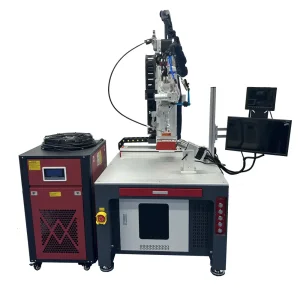
High-Quality Fiber Continuous Laser Welder (Industrial Iraq Quotes)
Custom Integrated Boom Mold Welder (High-Reach Systems Iraq)
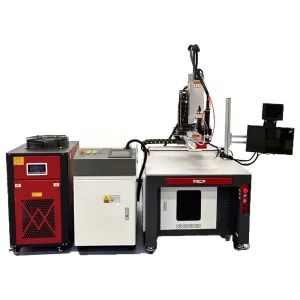
High-Quality Fiber Transmission Welder (Iraq Manufacturing Hub)
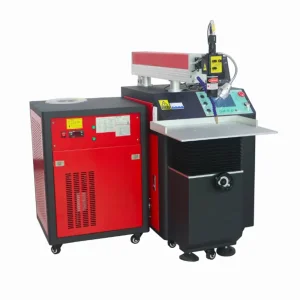
High-Quality Open Laser Welding Machine (Oversized Die Repairs Iraq)
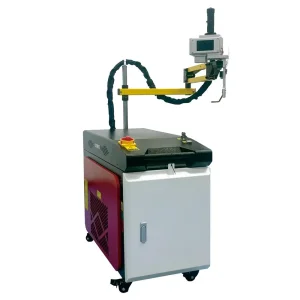
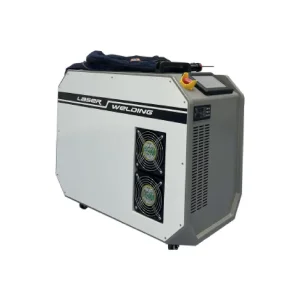
High-Quality QCW Handheld Welder (Precision Spot Deposition Iraq)
