Engineered for minimal heat-affected zone (HAZ), zero metallurgical distortion, and rapid cavity refurbishment in precision manufacturing centers across Rayong, Chonburi, and Samut Prakan.
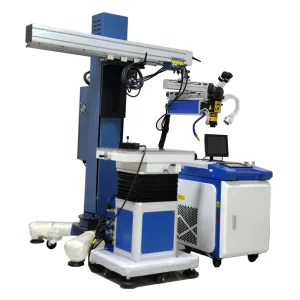



Analyzing the shift from traditional TIG remelting to non-contact, high-energy pulsed laser deposition in Tier-1 and Tier-2 automotive ecosystems.
Thailand’s automotive, consumer electronic, and polymer processing industries stand as pivotal engines in Southeast Asia. Concentrated heavily in industrial corridors such as Chonburi, Rayong, Ayutthaya, and Pathum Thani, high-pressure aluminum die-casting molds, automotive stamping tools, and precision injection cavities endure continuous thermal fatigue, abrasive friction, and mechanical fatigue. Historically, mold maintenance teams across Thailand relied heavily on conventional Tungsten Inert Gas (TIG) deposition or resistance welding. However, conventional techniques inject excessive heat flux into high-alloy tool steels (such as NAK80, SKD61, SKD11, and P20), causing catastrophic thermal stress, micro-structural recrystallization, structural distortion, and protracted CNC re-machining cycles.
The industrial adoption of the Mold Laser Welding Machine Series eliminates these bottlenecks. By focusing radiant photonic power onto a spot diameter ranging between 0.2mm and 2.0mm, the beam melts the specialized alloy filler wire and the substrate simultaneously in a localized inert gas sheath (Argon/Nitrogen). The resulting heat-affected zone (HAZ) is remarkably thin, preventing substrate deformation, sink marks, or parent-metal carbon depletion. Tooling repair teams in Thailand can carry out modifications and crack repairs directly in-house, minimizing expensive tooling downtime from weeks to a matter of mere hours.
Featuring a 360-degree motorized or manual cantilever boom arm capable of extending over massive injection molds weighing up to 20 tons without dismounting the mold from the pressing bed.
Our Quasi-Continuous Wave (QCW) and Pulsed Nd:YAG / Fiber options yield millisecond pulses with extremely high peak power, perfect for fine optical mirror-finish mold repairs.
Equipped with high-definition stereo-microscopes featuring Leica optical ergonomics, crossed reticles, and high-speed LCD shutter protection to guarantee fatigue-free operator control.
A comprehensive technical breakdown for tooling engineers, mold procurement directors, and plant managers in Thailand.
| Evaluation Parameter | Fiber / QCW Mold Laser Welder | Traditional TIG Welding | Resistance Cold Welding |
|---|---|---|---|
| Heat-Affected Zone (HAZ) | < 0.15 mm (Negligible) | 2.0 mm - 5.0 mm (High risk of warping) | 0.5 mm - 1.2 mm (Moderate) |
| Metallurgical Bond Strength | Full fusion metallurgical bonding; 100% density | High strength, but prone to porosity/slag | Surface mechanical bond; susceptible to peeling |
| Tooling Hardness Retention | Maintains 50–62 HRC based on filler wire matching | Softens parent metal, annealing effect | Inconsistent deposit density |
| Post-Weld Machining Requirement | Minimal hand polishing or light EDM | Extensive CNC milling, grinding & refacing | Grinding and continuous re-application |
| Mold In-Press Maintenance | Supported via Mobile Cantilever Arm | Extremely difficult, high splatter hazard | Possible, but low deposition rate |
| Operational Learning Curve | Intuitive CNC / Joystick control (1-2 days) | Requires master-level welder (Months) | Moderate operational skill |
As an integrated Chinese laser manufacturer established in Shenzhen with branches in Zhongshan and Hunan, Youmir Laser bypasses layers of intermediary traders to deliver precision mold laser welders directly to Thailand’s manufacturing facilities. By maintaining direct ownership of optical alignment engineering, precision CNC motion axes, and customized embedded software, our machines combine premium industrial components—such as Raycus/MAX laser engines, Schneider electronics, and custom chiller stabilization—with competitive direct-from-factory pricing.
In comparison with German or Japanese laser welding brands whose pricing often proves prohibitive for small-to-medium tooling shops, our solutions yield identical or superior deposition metallurgical density at a fraction of capital expenditure. Furthermore, we maintain direct freight routes from Shenzhen port to Laem Chabang and Bangkok, offering rapid 7-to-12 day sea transport alongside door-to-door customs clearance, English and Thai operational documentation, and responsive 24/7 engineering consultation.
Explore the full selection of cantilever welders, precision benchtop systems, and high-efficiency laser cleaning units engineered for Thai toolmakers.


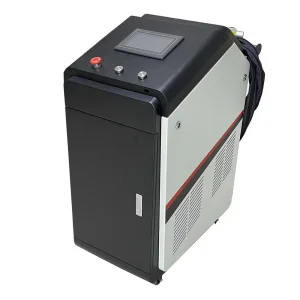



Delivering high-reliability laser solutions across key industrial concentrations in the Kingdom of Thailand.
Restoring cracked draw beads, sheared trimming edges, and punch radii on high-strength automotive stamping tools in Rayong and Chonburi automotive clusters.
Micro-welding parting lines, ejector pin scuffs, gate wear, and design revisions on NAK80 and S136 mirrors in Samut Prakan and Pathum Thani medical/electronics facilities.
Repairing thermal heat checks, erosion cracks, and molten aluminum washouts on SKD61 die-cast cores used in motor housings, structural battery trays, and brackets.
Comprehensive technical and commercial responses to guide tooling managers and procurement leads.
Pricing typically ranges from $5,800 to $18,500 USD depending on configuration (such as 300W/400W/500W Pulsed Nd:YAG or 1500W–3000W QCW/Continuous Fiber systems), cantilever reach, motorized 3-axis/4-axis movement, and integrated cooling capacity. Contact our team for an exact CIF Bangkok / Laem Chabang pricelist with itemized shipping details.
Yes. By utilizing precision matching alloy welding wires (available in diameters from 0.2mm to 0.8mm) for steels including SKD11, SKD61, NAK80, 718, P20, S136, beryllium copper, and titanium alloys, the welded deposit maintains parent-metal hardness (up to 55-60 HRC). It can undergo subsequent mirror polishing, EDM, nitriding, or texturing without visible boundaries.
Our machines are customized for Thailand’s standard electrical infrastructure: 220V Single-Phase or 380V Three-Phase at 50Hz. All integrated systems include internal phase protection, high-efficiency dual-temperature chillers, and industrial voltage surge suppression designed for tropical humidity and ambient operating temperatures up to 42°C.
We provide comprehensive English-language operational manuals, complete parameter charts for different tooling steels, and step-by-step video training modules. For plant setups in Thailand, we deliver remote engineer commissioning via direct video assistance, continuous 24/7 technical hotline access, and on-site technician deployment agreements upon request.
Send us your tooling repair specifications, material grades, and workshop requirements. Our senior laser applications team will generate a detailed feasibility study and machine quotation within 24 hours.
Send Inquiry Now