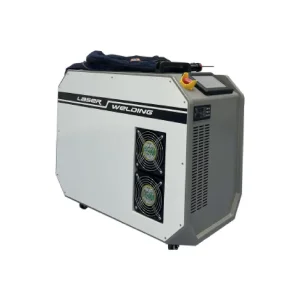
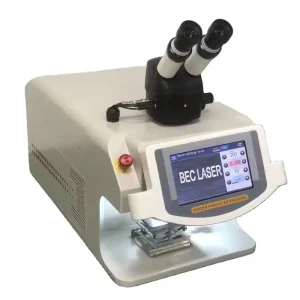
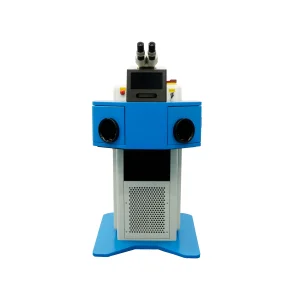
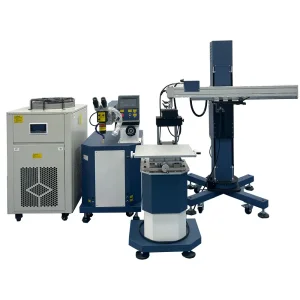
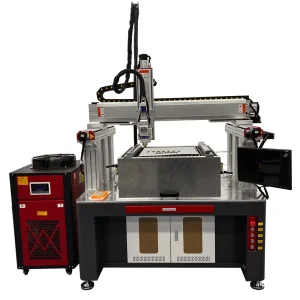
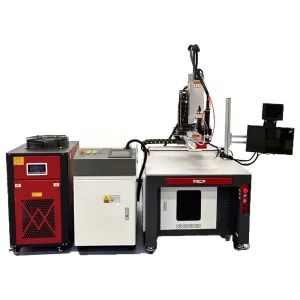
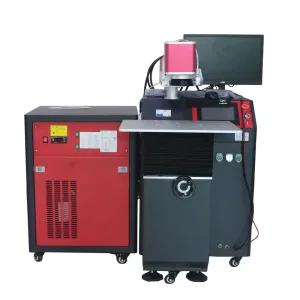
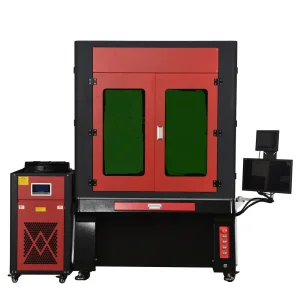
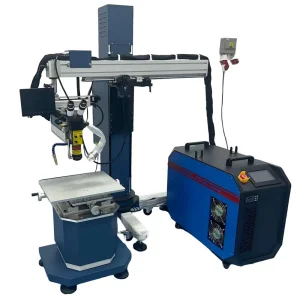
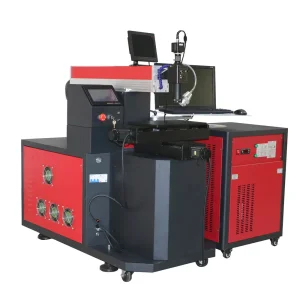
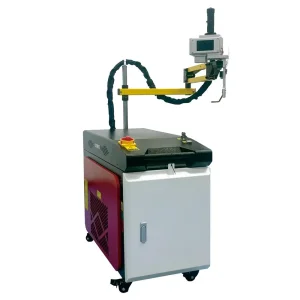
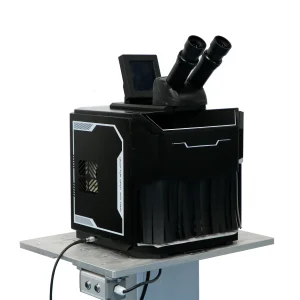
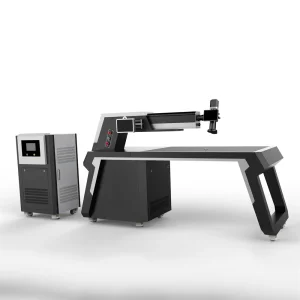
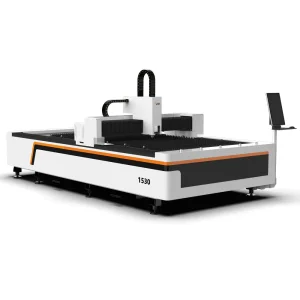
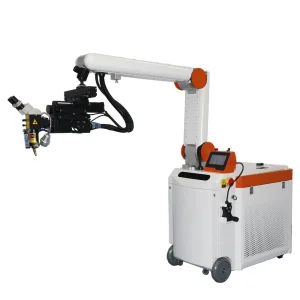
Discover field-tested laser platforms engineered for microscopic electronic seams, structural metal fabrication, and complex mold surface restoration.
The shift toward lightweight materials, high-density batteries, and non-planar geometries has fundamentally redefined the operational baseline for industrial manufacturers.
Traditional Cartesian welding stages fail when processing contoured stampings or deep-drawn components. Contemporary 3D custom laser welding setups integrate 6-axis articulated robotics with synchronized continuous-path laser heads, delivering 5-axis simultaneous interpolation that maintains exact incident beam angles regardless of curvature.
Overcoming excessive spatter and thermal cracking in high-reflectivity alloys (copper, aluminum) requires advanced beam modulation. By coupling custom dynamic wobble galvanometer scanning heads with dual-core adjustable ring beam (ARM) fiber lasers, manufacturers gain discrete control over keyhole depth and weld pool solidification dynamics.
Demands from aerospace and automotive procurement protocols prohibit non-destructive testing (NDT) as an isolated post-process. Turnkey 3D systems now integrate Optical Coherence Tomography (OCT) and coaxial visual seam tracking, measuring keyhole depth and seam gap deviations dynamically at kilohertz sample frequencies.
Engineered execution models across divergent metallurgical substrates. The data below outlines verified parameter boundaries for spatial 3D joint configurations.
| Substrate Combination | Target Joint Architecture | Optimal Laser Modality | Recommended Optics & Beam Mode | Penetration / Travel Speed Range |
|---|---|---|---|---|
| 304 / 316L Stainless Steel | 3D Flanged Butt Joint (1.5 - 4.0 mm) | Continuous Wave (CW) Fiber Laser | Standard Gaussian spot, circular wobble oscillation | 2.0 - 5.5 mm depth @ 25 - 60 mm/sec |
| 6000-Series Structural Aluminum | Complex Lap Seam (2.0 + 2.0 mm) | Adjustable Ring Mode (ARM) CW | Coaxial shielding (Ar+He mix), dual-focus optic | Full penetration @ 40 - 80 mm/sec |
| C11000 Copper to Aluminum Tab | Prismatic Battery Terminal Overlap | Quasi-Continuous Wave (QCW) / Green | High-speed Galvo Scanhead (f-theta lens) | 0.8 - 1.5 mm weld pool @ 120 - 300 mm/sec |
| H13 / P20 Mold Tool Steel | Tooling Edge & Cavity Surface Repair | Pulsed Nd:YAG or QCW Fiber | Boom-mounted zoom stereo microscope focus | Micro-deposition layer (0.2 - 0.6 mm pass) |
A primary failure mode in non-customized 3D laser integration is excessive Heat-Affected Zone (HAZ) grain growth and uncontrolled mechanical deformation. Because 3D welded assemblies frequently feature variable gap clearances caused by stamping tolerances, automated 3D laser machines from Shenzhen Youmir Laser Technology utilize high-frequency oscillating galvanometer scan heads combined with real-time wire-feed synchronization. The oscillating laser focal point alters the thermal fluid dynamics of the molten pool, collapsing dendritic structures and mitigating solidification cracking in hot-short alloys.
Additionally, localized shield gas delivery represents an essential design dimension. In 3D space, standard fixed nozzles lose laminar protective envelopes as the robot arm articulates. Youmir's proprietary multi-axis end-effectors feature coaxial trailing gas shoes engineered to protect molten weld pools from atmospheric nitrogen and oxygen contamination across continuous 360-degree rotational envelopes.
Cross-border capital equipment deployment demands rigid compliance with regional electrical safety directives, optical interlock protocols, and uninterrupted field servicing.
Every customized cell complies directly with Class 4 enclosure standards or Class 1 fully enclosed automated workstation directives (ISO 11553-1, EN 60825-1). Our electrical panels integrate dual-channel safety relays, active safety light curtains, and emergency circuit monitoring in conformance with EU Machinery Directive 2006/42/EC and NFPA 79 specifications.
Factory environments span diverse utilities. We customize internal step-up/down isolation transformers supporting 200V, 208V, 220V, 380V, 415V, and 480V 3-phase power grids at 50/60 Hz. Integrated closed-circuit dual-temperature dual-control chillers are rated to sustain laser resonator and optical head temperatures in ambient factory conditions reaching 45°C.
Through integrated encrypted industrial VPN gateways, Youmir engineers conduct deep telemetry diagnostics, firmware calibration, and optical power decay monitoring remotely. Field application engineers and regional channel partners across North America, Southeast Asia, and Europe manage expedited consignment spares and on-site engineering commissioning.
Our dedicated Shenzhen optics and software laboratory continues to pioneer integration architectures designed for tomorrow's smart factory standards.
Upcoming system updates introduce deep-learning computer vision models trained directly inside FPGA-accelerated edge controllers. The vision system perceives millisecond deviations in joint fit-up, automatically computing and modifying robot velocity, laser power, and wobble amplitude dynamically without stopping cycle runtimes.
For zero-heat-affected joining of delicate semiconductor packaging and medical stent assemblies, Youmir is bridging multi-axis motion stages with femtosecond and picosecond infrared/ultraviolet sources, achieving selective sub-micron ablation and non-thermal material molecular fusion.
Seamless ERP, MES, and SCADA platform integration is standard across Youmir custom systems. Native Industrial IoT protocols ensure real-time telemetry streaming of laser diode current, cooling water resistivity, lens contamination metrics, and localized protective gas flow velocity.
Direct insights from our chief applications engineering department regarding procurement, customization, and machine capabilities.
High-duty production units designed for high-throughput automated factory lines, fabrication workshops, and precision micro-manufacturing.
Connect with Shenzhen Youmir Laser Technology's optical, automation, and metallurgical engineering team. Send material samples for laboratory verification, cycle-time benchmarking, and turnkey machinery integration quotes.
Request Technical Consultation