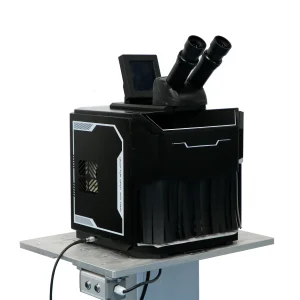
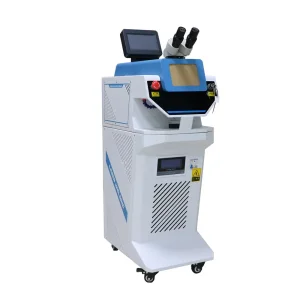
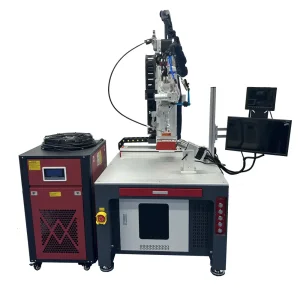
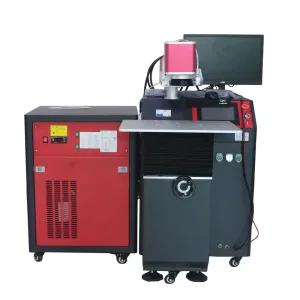
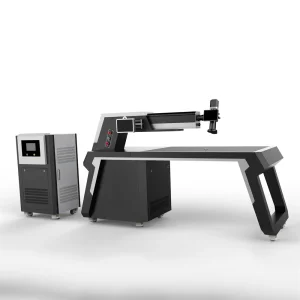
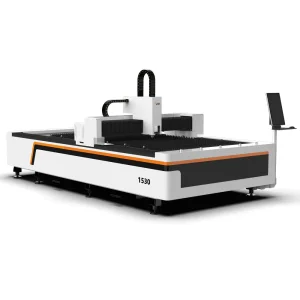
Factory-direct micro-welding platforms, high-speed galvanometer workstations, and precision cutting tools engineered for high precious-metal yield and zero thermal distortion.
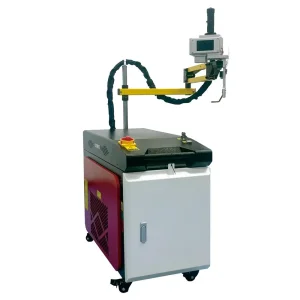
Analyzing the paradigm shift from traditional open-flame torch brazing toward closed-loop automated coherent photon processing across gold, silver, and platinum manufacturing hubs.
For centuries, the goldsmithing sector relied on oxy-gas torch micro-brazing. While culturally rich, traditional heating induces excessive collateral thermal transfer, oxidizes surrounding base metals, degrades mechanical temper, and risks damaging heat-vulnerable inclusions in sapphires, emeralds, opals, and pearls.
In modern industrial fabrication, precision custom laser welding platforms completely bypass the thermal barrier. By delivering concentrated optical power (yielding flux densities exceeding 106 W/cm2) across microsecond pulse regimes, laser welding induces local melt pools measuring between 0.1 mm and 3.0 mm. Surrounding metallurgical matrices remain ambient, eliminating fire-scale, annealing warpage, and costly chemical pickling baths.
Precise photon dosage ensures deep seam penetration without heating neighboring stone prongs or complex filigree meshes, preserving structural integrity on thin 18K/24K alloy stampings.
The global precision jewelry equipment sector is expanding at an 8.4% CAGR. This rapid adoption is propelled by record precious metal commodity valuations, strict international labor standards regarding airborne flux volatilization, and increasing demand for customized fine jewelry manufactured on rapid-response cycle schedules.
Factories throughout key jewelry hubs—such as Vicenza and Arezzo (Italy), Pforzheim (Germany), Valenza, Bangkok (Thailand), Mumbai (India), Istanbul (Turkey), and Guangdong (China)—are aggressively replacing manual assembly with custom vertical and desktop laser welding workstations. The transition is financially justified by a proven 92% reduction in metal polish loss, direct solder-free structural integrity, and the capability to weld highly reflective pure metals like Ag999, Au999, and grade-1 titanium without foreign fillers.
Traditional torch soldering requires solder alloys that dilute precious metal fineness and create visible porosity. Laser autogenous fusion joins pure metals directly, preserving exact hallmark assay ratings (e.g., 750‰ Au, 950‰ Pt) with zero weight deviation.
Because the thermal pulse cycle lasts only 0.5 to 20 milliseconds, optical energy dissipates rapidly through high thermal-conductivity gold and silver before heat propagates to prong-set diamonds or heat-labile gemstones, preventing costly cracked facets.
Micro-porosity and sub-surface shrink voids represent standard defects in investment lost-wax casting. A pulsed YAG or QCW laser welder enables technicians to backfill voids with identical alloy wire, achieving a flawless, mirror-polish metallurgical bond.
Selecting the optimal laser cavity configuration for specific precious metal reflectivity regimes, joint geometries, and continuous duty cycles.
| Laser Source Architecture | Wavelength (nm) | Peak Power Envelope | Pulse Duration Window | Best Process Fit in Jewelry Manufacturing | Gold/Silver Absorption Efficiency |
|---|---|---|---|---|---|
| Pulsed Nd:YAG (Flashlamp Pumped) | 1,064 nm | 5.0 kW – 8.0 kW Peak | 0.2 – 20.0 ms | Bespoke repair, prong re-tipping, bezel assembly, casting porosity filling | Moderate (Requires Initial Spike) |
| Quasi-Continuous Wave (QCW Fiber) | 1,070 nm | 1.5 kW – 3.0 kW Peak | 0.05 – 50.0 ms | Automated chain welding, continuous mesh fabrication, micro-stamping sealing | High Stability (Zero Cavity Thermal Lens) |
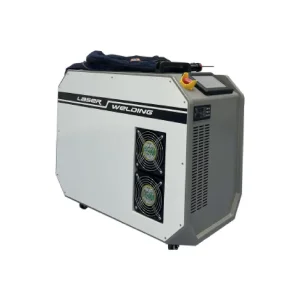
| Continuous Wave (CW Fiber Wobble) | 1,080 nm | 1,000 W – 2,000 W | Continuous Modulation | Heavy structural bangle welding, hollow gold tubing continuous seam joining | High Kinetic Seam Velocity |
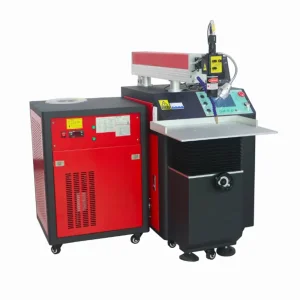
| High-Speed Galvo Scanner Laser | 1,064 / 1,070 nm | Variable Pulse Shape | Sub-millisecond | Multi-point spot welding on earrings, watch bezel seals, automated micro-arrays | Ultrafast Vector Positioning |
At standard room temperature, polished fine silver (Ag) and yellow gold (Au) reflect between 95% and 98% of near-infrared radiation (1064 nm). When using inferior laser welders, operators experience beam bounce-back, leading to erratic penetration, spatter, or damaged internal optical isolators.
Shenzhen Youmir Laser integrates proprietary variable multi-sector pulse shaping. By programming a sharp initial pulse spike (e.g., 200–300% of nominal energy for the first 0.5 ms), our systems instantly vaporize surface oxides, disrupt boundary reflectance, and drop precious metal reflectivity below 40%. The remaining pulse plateau then safely establishes a calm, homogenous melt pool without ejecting precious metal droplets.
Welding platinum (Pt950) and titanium presents the reverse challenge: high electrical resistivity and low thermal conductivity, alongside extreme melting points (Platinum: 1768°C; Gold: 1064°C). Without precise pulse control, platinum can suffer micro-cracks and brittleness.
Youmir Laser units incorporate coaxial argon gas laminar flow shrouds and precise square, ramped, or decoupled decay wave-shapes. This allows gentle, continuous cooling cycles, preventing hot-cracking in platinum rings and preserving the hardness and elasticity of white gold spring-clasps.
How fine jewelry manufacturers, automated production houses, and distributed franchise chains structure equipment specifications for maximum return on investment.
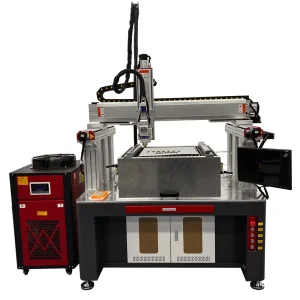
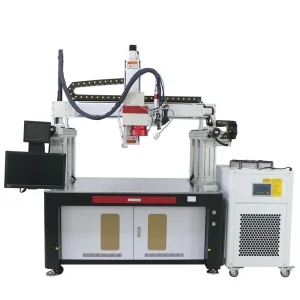
Primary Drivers: 24/7 continuous operation, automated conveyor feeding, zero cavity thermal drift, PLC fieldbus integration (EtherCAT/Profinet), and multi-axis CNC or robot automation.
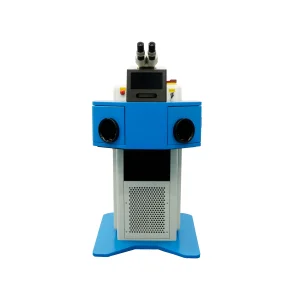
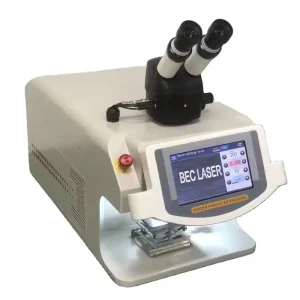
Primary Drivers: Compact bench-top footprints, minimal audible chiller noise, ergonomic ocular stereomicroscopes (Leica/Motic optical alignment), and precise low-pulse energy repeatability.
Primary Drivers: Custom sheet metal color schemes, brand badge silkscreening, customized GUI software languages, regional compliance certification, and reliable containerized shipments.
Examining critical goldsmithing and watchmaking operations resolved through custom laser optical systems.
Re-build worn claws directly over diamond pavé and emerald settings. Focused spot diameter and steep thermal decay safeguard stones from heat shock, eliminating the need to unseat and reset gemstones.
High-frequency laser welding seamlessly closes open links in curb, Figaro, box, and rope chains. Automated synchronizers fire pulses aligned to micro-pitch feeds at speeds exceeding 120 links per minute.
Ultralight hollow bangles and earrings require welding extremely thin walls (down to 0.08 mm). Our pulse-shaping control produces hermetic seals without burn-through, sagging, or pinhole defects.
Repair dings and porosity on titanium, gold, and 904L stainless-steel watch cases, bezels, and link bracelets. Welds blend seamlessly after standard diamond-lapping and polishing.
Ensuring compliance with international safety regulations, optical radiation safety standards, and factory quality management protocols.
Youmir jewel welders feature certified Class 1 laser interlocked enclosures with OD6+ rated laser shielding observation windows. High-speed liquid-crystal optical shutters darken within 1.2 milliseconds of trigger initiation, safeguarding technicians from eye fatigue.
Every system conforms to CE Machinery Directives (2006/42/EC) and Low Voltage Directives (2014/35/EU). Systems delivered to the North American market comply with FDA CDRH 21 CFR 1040.10, backed by integrated safety interlocks and localized power compliance.
With an engineering presence in Shenzhen, Zhongshan, and Hunan, Youmir supports global clientele with IoT-enabled diagnostics, cloud-based parameter calibrations, same-day spare optical parts dispatch, and multilingual technical support teams.
A look at upcoming innovations in wavelength modulation, machine vision seam tracking, and AI-driven pulse profiling.
Coupling 450 nm direct blue diodes with 1064 nm infrared fibers to achieve over 60% cold absorption on pure gold and copper, eliminating spatter entirely.
Real-time neural edge detection that identifies joint seams on complex ring geometries and aligns beam coordinates within ±5 micrometers.
Sub-millisecond closed-loop photodiode feedback that monitors melt-pool radiation and dynamically adjusts laser power on the fly to prevent burn-through.
Combining micron-scale metal powder micro-cladding directly inside jeweler laser enclosures to print and repair intricate three-dimensional settings.
Detailed technical answers addressing core procurement, integration, and operational questions from jewelry manufacturers.
Desktop models (like our Compact 60W/100W units) feature integrated internal air or compact closed-loop cooling and small footprints designed for repair shop workbenches. Vertical cabinet systems feature high-capacity industrial chillers, larger internal working chambers, and higher duty cycles, enabling continuous, multi-shift factory production without thermal throttling.
Yes. In tightly fitted joints (clearance less than 0.05 mm), autogenous welding joins parent metals directly without filler, preserving pristine alloy fineness. For gap-bridging or casting porosity repairs, using matching pure alloy wire (e.g., 18K yellow, white, rose gold, or 925 sterling silver) ensures seamless color uniformity after final polishing.
High-purity Argon (99.99%) is strongly recommended. While precious metals like pure gold do not oxidize readily, silver, copper-rich rose gold, brass, and titanium oxidize rapidly in ambient atmosphere, causing black carbonaceous discoloration and weld embrittlement. A low-velocity coaxial argon purge (3–6 L/min) prevents oxidation, yielding mirror-bright weld spots.
Flashlamp-pumped Nd:YAG systems typically require flashlamp replacement every 3 to 6 million pulses (roughly 12–24 months of normal studio operation). Water filters and deionized cooling water should be replaced every 3 to 6 months. For fiber laser welders, the optical pump diodes have lifespans exceeding 100,000 hours, requiring only routine protective cover-glass cleaning.
Our engineering division provides full turnkey OEM/ODM services. This includes custom exterior sheet metal chassis fabrication, brand color-matching, custom-branded touch-screen UI interfaces in over 15 languages, tailored optical microscope integrations, custom multi-axis motorized fixtures, and specialized export packaging.
Yes. Shenzhen Youmir Laser maintains a dedicated metallurgical testing laboratory. Prospective clients can air-courier actual workpieces to our Shenzhen headquarters. Our applications team tests process parameters, films high-magnification process video, performs micro-section polish checks, and delivers a complete parameter report before order confirmation.
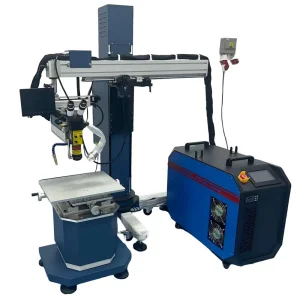
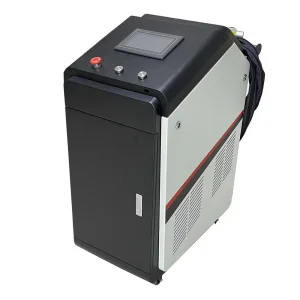
Complementary high-precision machines engineered for tool-room mold repair, heavy industrial sheet cutting, and non-destructive surface cleaning.