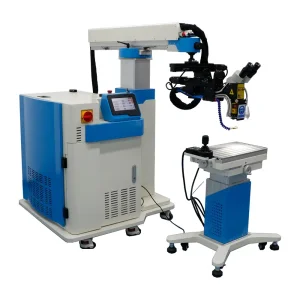
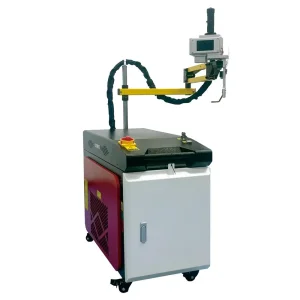
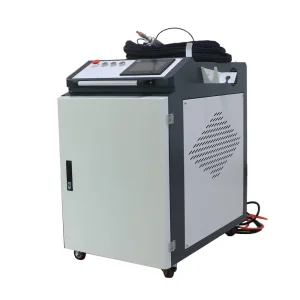
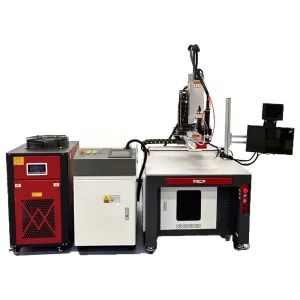
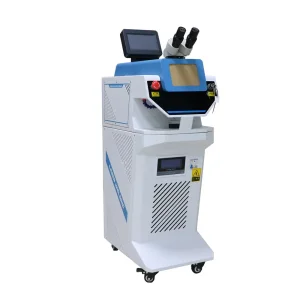
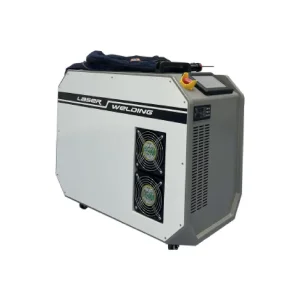
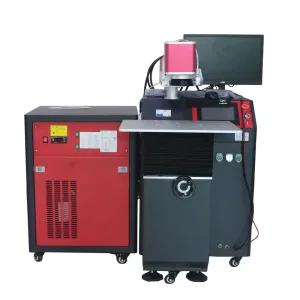
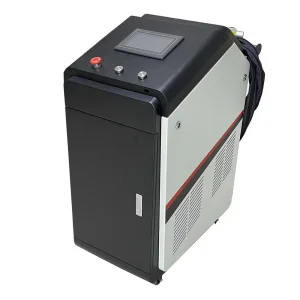
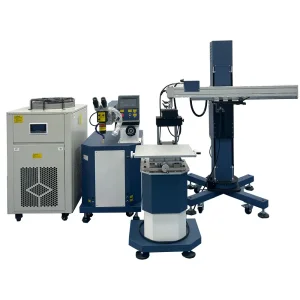
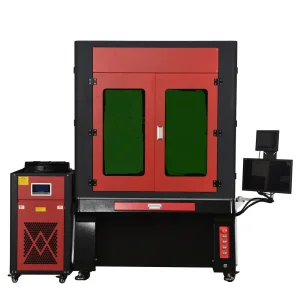
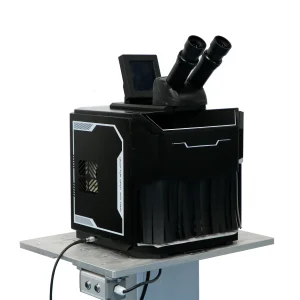
Precision machinery built in-house by Shenzhen Youmir Laser Technology Co., Ltd. for architectural letter fabrication, high-speed mold maintenance, and micro-weld deposition.
The architectural signage, luxury retail visual merchandising, and commercial illuminated display sectors have transitioned from conventional assembly technologies into high-precision, non-contact fiber laser joining. Traditionally, 3D metal letters (channel letters, reverse halo-lit letters, and monument pylons) depended upon manual oxy-acetylene torch brazing, tin soldering, or gas tungsten arc welding (TIG/GTAW). These legacy workflows present insurmountable industrial limitations: substantial thermal distortion on sheet metal below 1.2 mm thickness, severe surface oxidation, toxic flux fumes, and an excessive requirement for post-weld manual deburring, grinding, and chemical pickling.
As urban architecture embraces sleek, rimless channel typography featuring mirror-finish 304/316 stainless steel, anodized aluminum, titanium-coated brass, and galvannealed steel, dimensional tolerances have contracted to sub-millimeter thresholds. The modern custom metal letters laser welding machine has evolved from an optional specialized device into an essential anchor of architectural signage plants. Operating within the 1064 nm to 1080 nm fiber wavelength spectrum, these machines introduce focused energy beam densities exceeding 106 W/cm2, resulting in instantaneous keyhole fusion with a negligible heat-affected zone (HAZ).
Direct factory cost estimates, configurations, and functional capacities for overseas fabrication plants and OEM importers.
| System Model & Class | Laser Source & Power | Optimal Metal Thickness | Core Application | FOB Shenzhen Price Window |
|---|---|---|---|---|
| Galvo Desktop Sign Welder Precision Micro-Joint |
500W - 1000W QCW / Fiber | Stainless: 0.3 - 1.2 mm Brass: 0.3 - 0.8 mm |
Jewelry-grade small boutique characters, mini brass scripts, perfume displays | $4,200 – $6,500 USD |
| Handheld Wobble Fiber Welder High Mobility Standard |
1000W - 1500W CW Fiber (Raycus / Max / IPG) |
Stainless: 0.5 - 3.5 mm Aluminum: 0.5 - 2.5 mm |
General signage shops, deep return 3D channel letters, monument frames | $3,500 – $5,800 USD |
| Heavy-Duty Handheld Laser High Penetration |
2000W - 3000W CW Fiber | Stainless: up to 6.0 mm Aluminum: up to 5.0 mm |
Large-scale architectural letters, stadium pylons, thick aluminum profiles | $6,200 – $9,800 USD |
| Cantilever 3D Boom Mold/Sign Welder Extended Reach Arm |
400W - 600W YAG / Fiber Boom Radius: 1.5 - 2.0 m |
Tool Steel: 0.2 - 2.0 mm Stainless: 0.4 - 2.5 mm |
Dual-use: Injection mold refurbishment & oversized boxed metal characters | $7,500 – $12,500 USD |
| Automatic 3-Axis CNC Letter Welder Turnkey Automation |
1500W - 2000W Integrated | Stainless: 0.5 - 2.0 mm GI Sheet: 0.6 - 2.0 mm |
Batch mass-production lines paired with automatic channel letter benders | $12,000 – $18,500 USD |
When specifying a customized laser welding machine from Shenzhen Youmir Laser Technology Co., Ltd. or evaluating competing Chinese manufacturers, industrial purchasers should be aware that the headline price depends directly on optical, mechanical, and electrical configurations:
1. Laser Source Tier: Continuous Wave (CW) fiber sources from Raycus and Maxphotonics deliver exceptional cost-to-performance benchmarks for signage applications. However, operations welding highly reflective non-ferrous metals (such as 6061/5052 raw aluminum alloy or H62 yellow brass) require fiber engines with enhanced back-reflection protection or IPG Photonics / nLIGHT sources equipped with hardware fail-safes, which incur a 25% to 40% component surcharge.
2. Optical Delivery Head Architecture: Entry-level welders use fixed single-focus guns. Premium signage welders use dual-axis galvanometer wobbling heads (oscillating beam profiles: line, circle, figure-eight, and triangle). The wobbling mechanism broadens the joint bridging gap up to 2.5 mm, directly compensating for inaccuracies in manual or automated channel bender flanging.
3. Dual-Circuit Chiller Engineering: Industrial reliability demands autonomous temperature regulation for the laser cavity and the optical head. Youmir standardizes on high-capacity dual-temperature chillers (S&A or custom industrial modules) filled with environmentally certified refrigerants, ensuring uninterrupted duty cycles in tropical Southeast Asian or Middle Eastern climates where ambient shop temperatures exceed 42°C.
Integration frameworks connecting sheet metal profiling, automated strip bending, and laser micro-deposition into a unified Industry 4.0 production loop.
Pairing precision fiber laser cutters with high-torque automatic CNC channel letter benders and our handheld/galvo laser welding units. This setup reduces turnaround times from 3–5 working days to 4 hours per illuminated sign set, virtually eliminating seam gaps and fitting errors.
Custom optical beam conditioning designed specifically for brass, copper, and structural aluminum (5052/6061). Our dynamically synchronized wire feeding systems bypass crater cracks, hot cracking, and surface pinholes during complex tight-radius corner joins.
Integrated telemetry systems monitor gas delivery pressure, internal mirror thermal drift, and chiller flow rates in real time. Remote troubleshooting enables factory technicians in Shenzhen to assist overseas workshops instantly via encrypted diagnostic channels.
Metal letter fabrication methods diverge significantly across global regions due to local building regulations, structural standards, and architectural design preferences:
North American Market (USA & Canada): Sign companies operating under UL 48 and CSA electrical signage standards fabricate heavy-gauge aluminum channel letters (0.063" to 0.090" faces and 0.040" to 0.063" returns). Traditional production relied on mechanical clinch fastening (Stitch-welding) or manual TIG welding, which requires substantial labor to dress and clean. By implementing Youmir's 2000W and 3000W continuous wave wobble laser systems running high-purity Argon gas, fabricators achieve full structural penetration on aluminum returns without burn-through, reducing labor hours per letter assembly by 60%.
European Market (Germany, UK, France, Scandinavia): Driven by strict energy standards and luxury architectural expectations, the European market demands compact, rimless 3D letters made from 1.0 mm mirror-polished AISI 304 or 316 marine-grade stainless steel, often finished with PVD titanium plating (champagne gold, rose gold, matte black). Mechanical fasteners and argon arc welding cause localized annealing and blue heat tinting that ruin thin PVD coatings. Youmir's high-frequency galvo welding systems, using coaxial Nitrogen shielding, produce clean, non-oxidized weld beads requiring zero chemical acid baths or post-weld buffing.
Middle East & Southeast Asia (UAE, Saudi Arabia, Malaysia, Thailand): The prominent regional demand for expansive illuminated rooftop signage and high-visibility highway pylon letters presents unique challenges: continuous exposure to high ambient temperatures, wind shear, and fine desert sand. Fabricators rely on heavy-duty galvannealed steel and 2.0–3.0 mm powder-coated sheets. These heavy assemblies are difficult to maneuver onto stationary tables. Our 10-meter to 15-meter fiber-optic arm handheld laser welders give operators the freedom to navigate around massive steel letters directly on the plant floor.
Optimized parameter reference for signage fabrication engineers, covering standard alloys, shielding gases, and wobble beam geometries.
| Base Material | Thickness Range | Recommended Power | Shielding Gas | Wobble Oscillation | Penetration Profile |
|---|---|---|---|---|---|
| 304 / 316 Stainless Steel | 0.6 mm – 1.5 mm | 800W – 1200W | Pure Nitrogen (N2, 99.999%) | Circle: 1.5 mm width, 40 Hz | Clean silver bead, zero oxidation, zero burn-through |
| Mirror-Polished Brass (H62/H65) | 0.8 mm – 1.2 mm | 1200W – 1500W | Pure Argon (Ar, 99.99%) | Figure-8: 1.2 mm, 60 Hz | Uniform liquid pool, avoids zinc volatilization |
| Raw Aluminum (5052 / 3003) | 1.0 mm – 2.5 mm | 1500W – 2500W | Pure Argon (Ar, 99.999%) | Triangle: 2.5 mm, 50 Hz | Disrupts surface oxide film (Al2O3) cleanly |
| Galvanized Steel Sheet (GI) | 0.8 mm – 2.0 mm | 1000W – 1800W | Dry Air / Nitrogen Mix | Line: 2.0 mm, 35 Hz | Vaporizes zinc layer smoothly without weld spatter |
| Titanium Alloy Sheet (Gr2) | 0.5 mm – 1.2 mm | 600W – 1000W | High-Purity Argon with trailing cup | Dot / Micro-Line: 0.8 mm | Retains metallurgical ductility; prevents embrittlement |
The channel letter manufacturing sector is rapidly advancing beyond manually guided handheld torches. Three technological milestones are set to redefine the industry over the next five years:
A. Machine-Vision Autonomous Robotic Seam Tracking: Handheld manual operations depend heavily on operator precision. Shenzhen Youmir Laser is engineering high-resolution multi-camera vision modules coupled with 6-axis articulated collaborative robot arms (Cobots). By importing vector files directly from graphic design suites (.DXF, .AI), the machine's vision system locates the flanged return lip of complex letter geometries in real time, automatically compensating for micro-variations and executing structural perimeter welds without human intervention.
B. Multi-Wavelength Hybrid Laser Delivery: Reflective non-ferrous metals like copper and aluminum reflect up to 90% of standard 1064 nm fiber laser light at room temperature, requiring high initial peak wattage that risks blow-through once the weld puddle liquefies. Future Youmir sign welders will incorporate hybrid blue-diode (450 nm) and infrared (1080 nm) beam delivery. The short-wavelength blue laser delivers up to 60% absorption on copper and brass at room temperature, creating a stable, spatter-free molten pool that the infrared laser then penetrates with high efficiency.
C. Fully Automated Closed-Loop Bending and Welding Cells: Modern sign shops currently operate with separate, disconnected processes: sheet metal shearing, flatbed fiber laser profiling, automatic flange bending on a strip-forming machine, and manual movement to a laser welding workbench. Next-generation production cells integrate the channel letter bender directly into an enclosed laser welding chamber. As the letter return forms, an overhead galvo welding head tacks and seals the seams continuously, reducing human touch points from twelve down to one.
Industrial CNC cutting, handheld galvanometer welding, and pulse surface-cleaning machines engineered for global export compliance.
Direct answers from our senior applications engineering team covering installation, shielding gases, material limitations, and maintenance schedules.
Established in Shenzhen in 2012, with team research dating back to 2010, Youmir develops proprietary optical paths, digital wobbling controllers, and ergonomic gun bodies rather than assembling off-the-shelf components.
Before finalizing purchase agreements, global clients can ship workpieces directly to our Shenzhen facility. Our engineers perform weld tests, optimize parameters, and provide complete metallurgical reports alongside process videos.
We support regional industrial machinery distributors and brand owners with custom powder-coat chassis colors, tailored graphic user interfaces (GUI) in multiple languages, and factory integration support.
Consult with our laser applications engineering department in Shenzhen. Receive customized machine specifications, sample weld testing reports, and FOB/CIF commercial proposals tailored to your shop's throughput requirements.