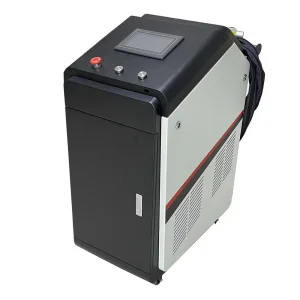
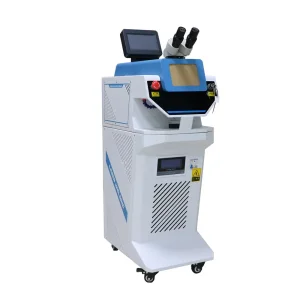
Immediate procurement lines directly from our automated Shenzhen manufacturing facilities. Featuring precision beam control, ultra-low thermal drift, and robust multi-axis motion stages.



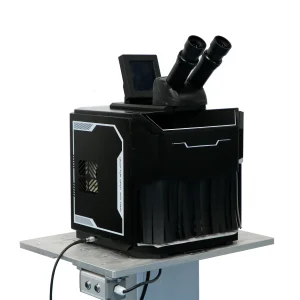

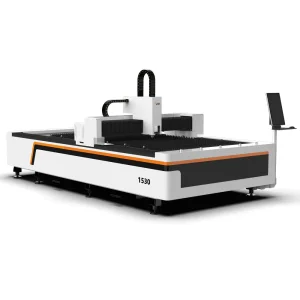


The worldwide injection molding, aluminum die-casting, and progressive stamping sectors demand microscopic heat input to salvage multi-ton, high-cost tooling without micro-cracking or structural distortion.
Traditional TIG micro-welding produces high localized thermal stresses that cause sink marks, temper-loss, and cavity deformation. Modern mold laser welders limit thermal diffusion to under 0.1mm, preserving core metallographic grain structures and pre-hardened hardness ratings.
Modern production dies utilize specialized hot-work and plastic mold steels such as H13, P20, S136, 718, and NAK80. Laser cladding and wire deposition deliver true 100% metallurgical fusion without blowholes, internal porosity, or micro-fissuring across high-wear parting edges.
By utilizing multi-axis articulating boom arms and mobile laser heads, tooling engineers can perform precision deposit repairs directly inside injection presses or die sets, avoiding disassembly, transport, and costly production bottlenecks.
From optical source calibration to full multi-axis CNC gantry assembly, discover how our vertically integrated production delivers unmatched cost efficiency and engineering consistency.
We control optical path layout, galvanometer driver board firmware, and multi-axis CNC control architecture internally, ensuring zero software markup and full design customization.
Our Greater Bay Area hub enables fast sourcing of military-grade optics, precision stepper systems, and laser diode chillers, lowering production cycles by 40% compared to Western manufacturers.
Every mold laser welder undergoes rigorous power-stability checks, galvanometer beam deviation profiling, and high-duty thermal stress testing before export sign-off.
We supply custom chassis layouts, interface languages, mechanical boom extensions, and automated continuous wire feeding assemblies for global machinery brands and toolmakers.
Clear factory pricing guidelines based on optical architecture, laser source types (YAG vs Fiber vs QCW), beam delivery dynamics, and motion control configurations.
| Machine Model & Architecture | Laser Source / Wavelength | Motion / Beam Mechanics | Applicable Tooling Scale | Factory FOB Price (Est.) |
|---|---|---|---|---|
| Standard Desktop YAG Mold Welder 200W - 400W Pulse |
Nd:YAG Crystal Rod (1064nm) | Precision Manual Joy-Stick X/Y/Z Workbench | Small precision inserts, plastic injection cavities (<50kg) | $4,500 - $6,800 USD |
| Cantilever / Boom Arm Mold Welder 300W - 500W Pulse YAG |
Nd:YAG Optical Pump Cavity | 360° Rotating Boom, 1.5m Extended Reach | Medium-to-large automotive stamping dies (<5 Tons) | $7,200 - $11,500 USD |
| Precision QCW Fiber Laser Mold Welder 150W CW / 1500W Peak Pulse |
Quasi-Continuous Wave (QCW) Fiber | High-definition CCD Microscope + Multi-Axis CNC | Micro-connectors, medical tooling, mirror-finish optical molds | $12,000 - $18,500 USD |
| Continuous CW Fiber Mold Repair Station 1500W - 2000W Fiber |
Continuous Wave Fiber (Raycus / Max / IPG) | Handheld Wobble Head + Auto Wire Feeder | Heavy casting mold edge rebuilds, large forging dies | $5,800 - $9,200 USD |
| Integrated 3-Axis / 4-Axis CNC Auto Welder 1000W - 3000W Integrated |
Fiber / Galvanometer Scanning Unit | Fully Programmable Industrial CNC System | Serial batch mold part manufacturing, hardfacing operations | $14,500 - $24,000 USD |
*Note: Exact pricing depends on selected optical source brand (Raycus, Maxphotonics, IPG), chiller capacities, motorized Z-axis extensions, and regional electrical specifications (110V/220V/380V).
From automotive casting lines in Germany to consumer electronics tooling plants in Vietnam, Youmir Laser systems are engineered for diverse production demands.
Challenge: Heavy thermal fatigue cracking and corner chipping across high-pressure die-casting cavities.
Solution: The Boom Mold Laser Welder allows multi-angle delivery of Cr-Mo-V filler wires directly onto damaged tool edges, retaining 54-58 HRC hardness without secondary heat treatment.
Challenge: Micro-burrs and wear across mobile phone connector molds made of NAK80 or beryllium copper.
Solution: QCW Fiber Mold Laser Welder focused to a 0.15mm beam waist. Real-time microscopic observation guarantees wire feed control down to 0.1mm filler alloy, avoiding post-weld EDM machining.
Challenge: Multi-cavity medical syringe molds require mirror-finish (SPI A1) cavity surfaces and strict zero-porosity standards.
Solution: Inert argon-shielded pulsed laser deposition using identical S136 stainless filler rods, eliminating parting line blowholes and preventing cavity sink marks under high clamp pressures.
How intelligent automation, adaptive vision, and green remanufacturing are transforming modern tooling maintenance.
While traditional Nd:YAG remains economical, high-efficiency QCW and continuous fiber laser engines are dominating upgrades. They provide 30%+ electro-optical conversion efficiency (vs 3% for YAG), lower maintenance, and consistent beam quality over 100,000 operational hours.
Next-generation systems integrate blue-light 3D surface scanning with robotic repair arms. The machine detects chipped edges, calculates volume deficiency, and generates continuous 5-axis laser wire cladding paths automatically without manual intervention.
Salvaging valuable die sets prevents tons of specialized high-carbon alloy scrap. Industrial users report over 85% reductions in replacement steel procurement, supporting corporate carbon-reduction mandates and lowering raw-material overhead.
Answers to common inquiries regarding optical configuration, wire pairing, international transport, and overseas factory warranty support.
Factory-direct configurations for mold maintenance workshops, jewelry crafting, high-precision surface preparation, and versatile fabrication.