Explore our top-tier factory direct models engineered for high-throughput production lines, structural metal fabrication, and versatile workshop maintenance.




Industrial manufacturing is undergoing a structural paradigm shift from legacy gas metal arc welding (MIG/TIG) toward high-coherence, fiber-delivered laser joining technologies. This transition is motivated by rigorous metallurgical, productivity, and economic imperatives.
Traditional arc welding introduces extensive Heat-Affected Zones (HAZ), inducing substantial mechanical warping in thin gauge sheet metal (0.5mm – 4.0mm). Fiber laser welding operates at focused power densities exceeding 106 W/cm2, achieving keyhole deep-penetration joining with ultra-low thermal dissipation. This eliminates downstream straightening and cosmetic grinding procedures, shaving up to 70% off labor cycles.
Early direct fiber laser welders suffered from stringent gap-tolerance constraints (<0.1mm). Modern systems incorporate dual-axis galvanometer wobble heads capable of circular, linear, figure-eight, and triangle beam oscillations at rates up to 300Hz. This dynamically broadens the weld pool to bridge gaps up to 1.5mm while simultaneously stabilizing molten metal dynamics to suppress spatter.
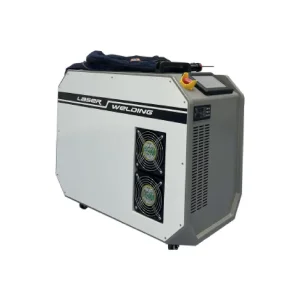
Certified manual TIG welders require years of technical apprentice training to master torch manipulation and heat modulation. Modern handheld fiber welders provide pre-programmed parameter libraries for stainless, carbon steel, and aluminum alloys. New operators attain pristine, structural-grade seam consistency within 24 to 48 hours of onboarding, mitigating chronic skilled labor shortages.
A transparent analytical breakdown of industrial capital outlay, power ratings, optical configurations, and operational cost projections across varied machine form factors direct from Shenzhen manufacturing facilities.
| Equipment Classification | Laser Source / Optical Power | Penetration Profile (Single Pass) | Key Hardware Configurations | Indicative Factory FOB Tier (USD) | Production Application |
|---|---|---|---|---|---|
| Handheld Wobble Laser Welder | 1000W – 1500W CW Fiber | SS: ≤4.0mm | CS: ≤3.5mm | AL: ≤2.5mm | Integrated Chiller, Auto Wire Feeder, Single/Dual Wobble Gun | $2,800 – $4,500 | HVAC, metal furniture, electrical cabinets, kitchen equipment |
| Heavy Industrial Handheld System | 2000W – 3000W CW Fiber | SS: ≤8.0mm | CS: ≤6.0mm | AL: ≤5.0mm | High-capacity Dual-Circuit Water Chiller, 10m Armor Fiber Cable | $4,800 – $7,200 | Pressure vessels, structural steelwork, agricultural machinery |
| Multi-Function 3-in-1 / 4-in-1 Welder | 1500W – 2000W CW Fiber | Weld: 4mm | Clean: 50mm strip | Cut: 2mm | Quick-release optics, dual-axis galvo head, multi-nozzle suite | $3,900 – $5,800 | Maintenance, repair & overhaul (MRO), structural fabrication workshops |
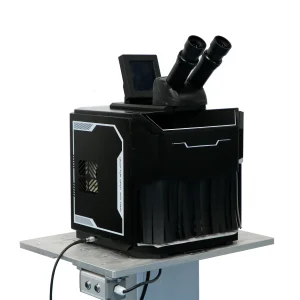
| Desktop Precision Jewelry Welder | 60W – 200W Quasi-CW / YAG | Spot size: 0.1mm – 3.0mm; Energy: 40-70J | Stereo microscope, HD CCD visual screen, inert argon chamber | $2,400 – $4,800 | Jewelry resizing, gold/silver porosity filling, dental prosthetics |
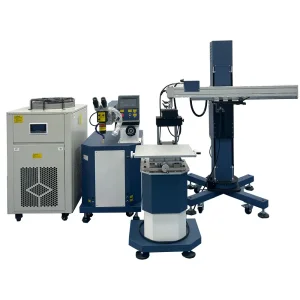
| Cantilever / Boom Mold Repair Welder | 200W – 400W YAG or 1000W QCW | Spot weld micro-deposition 0.2mm - 2.5mm | 360° hydraulic swing arm, motorized XYZ worktable, joystick UI | $6,500 – $12,500 | Die-casting tooling repair, plastic injection mold rework |
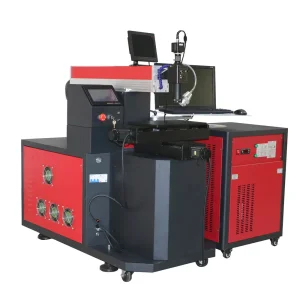
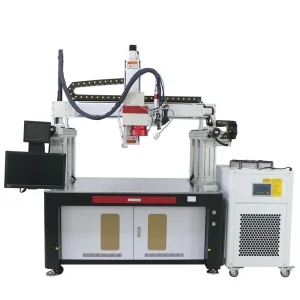
| 3-Axis CNC Automated Laser Workstation | 1500W – 3000W CW Fiber | Continuous cycle, multi-station indexer | Closed Class 1 safety enclosure, CNC motion axis, vision sensor | $14,000 – $28,000 | Automotive fuel lines, sensors, EV battery pack electrical interconnects |
When evaluating a custom laser welding machine factory quotation, sophisticated procurement professionals examine beyond initial Capital Expenditure (CAPEX). Operating Expenditure (OPEX) in a 2000W fiber laser welder averages approximately $1.20 to $2.10 per hour under typical load cycles. This comprises electrical energy consumption (approx. 6–8 kWh for both the optical generator and internal refrigerant chiller), shielding gas usage (pure Argon or industrial Nitrogen at 15–20 L/min), and replacement wear consumables (protective anti-reflective quartz cover windows, wire guide tubes, and brass nozzle tips). In contrast, traditional TIG welding displays aggregate consumables, tungsten erosion, and labor costs exceeding $14.00 to $22.00 per hour for identical linear weld meters.
Configuring custom laser wavelength, spot geometry, and beam-delivery parameters to address critical material compatibility hurdles across global industries.
Lithium-ion pouch and prismatic cell assembly mandates joining highly reflective dissimilar non-ferrous metals: pure Copper (C11000) busbars to Aluminum (Al3003) terminals. Customized laser solutions leverage fiber laser sources equipped with oscillating galvanometer optics or hybrid green/blue laser wavelengths to overcome copper’s infrared reflectivity, guaranteeing root penetration depths while mitigating brittle intermetallic compound (IMC) formation.
Injection molding cavities and high-pressure die casting dies crafted from pre-hardened tool steels (P20, H13, NAK80) regularly suffer localized chipping, pitting, and fatigue cracks. Our custom boom and cantilever YAG/QCW laser systems deposit matching wire alloys (0.2mm – 0.8mm) with sub-millimeter heat control. The micro-welded deposit matches original tool hardness without annealing base structures or inducing stress cracks.
Desktop micro-welders provide millisecond pulse adjustments, enabling repair jewelers and precious metal artisans to execute high-strength joints directly contiguous to heat-sensitive stones (emeralds, diamonds, pearls). The targeted focused pulse fuses high-karat gold, 925 sterling silver, titanium, and platinum without discoloration or surrounding thermal degradation.
Founded in 2012 with laser R&D expertise stretching back to 2010, Youmir Laser operates comprehensive optical integration, CNC programming, and mechanical assembly infrastructure spanning over 5,000m² across Shenzhen, Zhongshan, and Hunan facilities.
Independent proprietary design of collimating lens assemblies, dynamic focal systems, wobble galvanometers, and laser protection enclosures guarantees maximum beam transmission efficiency with minimal optical aberration.
Seamless OEM/ODM adaptation of 3-axis, 4-axis, or 6-axis industrial articulated robotic arms. Custom PLC and CNC firmware developed in-house to integrate with automated factory fieldbuses (Profinet, EtherCAT).
Before purchasing commitments, overseas clients dispatch production workpieces to our Shenzhen laboratory. Our engineers conduct penetration testing, metallographic sectioning, tensile verification, and issue detailed test reports.
Every laser welding, cleaning, and cutting machine is configured with dual interlock safety channels, emergency optical shutters, and CE/FDA/ISO certified electrical panels matching North American, EU, and Australasian grid codes.
Addressing the critical operational requirements of cross-border procurement teams: electrical adaptation, shielding gas purity protocols, and continuous after-sales lifecycle assurance.
Industrial machinery deployed across the USA, Canada, Germany, Saudi Arabia, and Australia must conform to disparate regional voltages. Youmir factory builds include factory-matched internal multi-tap transformers and step-up power converters: 110V/220V/240V (Single Phase, 50/60Hz) for compact desktop jewelry and 1kW-1.5kW welders, and 380V/415V/480V (Three Phase, 50/60Hz) for heavy continuous 2kW-3kW systems and automated CNC enclosures, preventing field voltage drops or inverter tripping.
Weld metallurgy depends directly on gas purity. For austenitic stainless steel (304, 316L), high-purity industrial Argon (≥99.99%) or Nitrogen is mandatory to prevent chromium oxidation and maintain corrosion resistance. Carbon steels leverage CO2/Argon blends or pure Nitrogen. We equip our machines with integrated dual-stage electronic gas regulators and pre-flow/post-flow delay timers to guarantee oxygen-free molten pool shielding from ignition through solidification.
To eliminate operational downtime across global time zones, Youmir provides a tiered service architecture. Direct WhatsApp/WeChat engineering hotlines connect your maintenance crews directly to English-proficient optical engineers. Standardized field replacement modular parts (chiller pumps, switching power supplies, fiber connectors, wire drive rollers) are stocked in key regional hubs with expedited air-freight logistics dispatched within 24 hours.
Examining emerging architectural innovations that will govern industrial laser equipment manufacturing over the coming decade.
Optical Coherence Tomography (OCT) is being integrated directly into laser welding processing heads. By directing a low-power measurement beam through the exact same optical path as the welding fiber, OCT provides real-time keyhole depth telemetry and seam-tracking corrections with micrometer precision, automatically flagging micro-voids, porosity, and burn-through instantaneously.
Traditional 1500W–3000W fiber welders utilize heavy vapor-compression water chillers containing water reservoirs and refrigerants. Advanced air-cooled fiber laser architectures utilize micro-channel phase-change heat sinks paired with high-static-pressure variable-frequency fans, slicing total machine payload by over 50% and enhancing field mobility for exterior structural construction.
Combining industrial 450nm direct diode blue laser beams with 1070nm infrared fiber beams into a single coaxial beam delivery output. The high room-temperature optical absorption of copper at 450nm (approaching 65%, compared to only 5% at 1070nm) produces a pre-heated, spatter-free conductive melt pool that infrared keyholes can penetrate with complete thermal stability.
Exhaustive technical answers addressing equipment selection, beam delivery, metallurgical boundaries, and factory sourcing standards directly from Youmir's engineering lab.
Engineered for fine tool-room die restoration, high-precision artisanal jewelry crafting, and continuous automated 3-axis industrial fabrication lines.






Connect directly with Shenzhen Youmir Laser's optical and applications team. Request complete technical datasheets, initiate custom OEM configuration inquiries, or arrange complimentary metallurgical welding tests for your factory parts.
