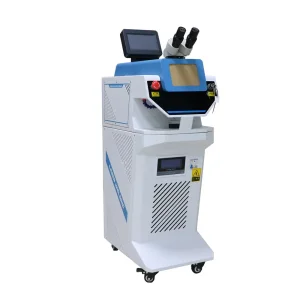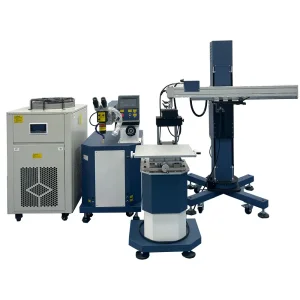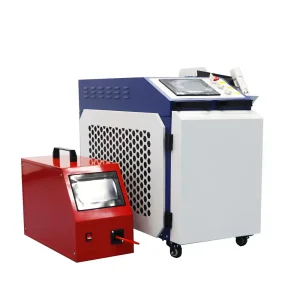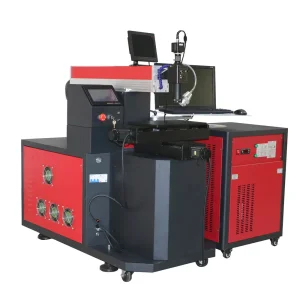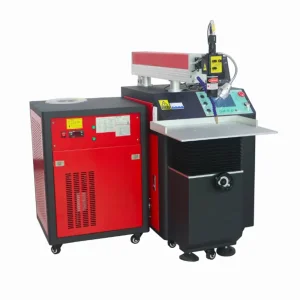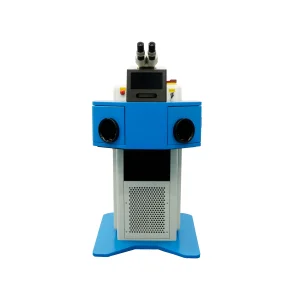
Custom Vertical Jewelry Welding Machine
Explore Specifications
Engineered by Shenzhen Youmir Laser Technology Co., Ltd. for strict dimensional tolerance and industrial continuous operation.
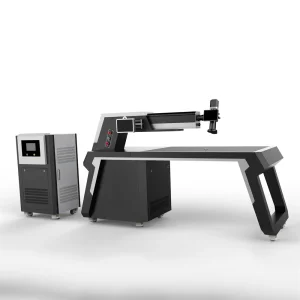


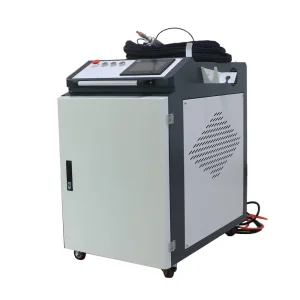

In modern precision manufacturing, traditional surface treatment methods—including chemical pickling, dry-ice blasting, mechanical grit abrasion, and acoustic ultrasonic baths—are rapidly reaching operational, ecological, and economic limits. The European Union's strict REACH chemical regulations, OSHA particulate exposure mandates across North America, and stringent global ESG standards have forced advanced manufacturing sectors to eliminate secondary chemical waste and abrasive media disposal.
The Pulsed Laser Cleaning Machine represents a definitive technological leap. Operating on the physical principle of transient photothermal ablation, pulsed fiber systems deliver nanosecond-duration pulses (typically 10 to 500 ns) with gigawatt-level peak optical power. Because the pulse duration is shorter than the thermal relaxation time of the metal substrate, the laser beam vaporizes, fractures, and strips coatings, rust, calcification, oxides, and oils instantly without conducting thermal energy into the base matrix. The underlying metallic grain structures, heat-treated tempers, and micron-level mold contours remain unaltered.
Procurement managers frequently encounter confusion between budget-oriented Continuous Wave (CW) laser cleaning units and High-Precision Pulsed (MOPA) systems. While both employ 1064nm near-infrared fiber laser modules, their physical interaction with industrial substrates is diametrically opposed:
Transparency is the cornerstone of trust. Below is our engineering baseline reference table comparing pulsed power platforms, optical parameters, and direct factory pricing structures for international distributors and end-user facilities.
| Model / Power | Pulse Width & Source | Single Pulse Energy | Typical Cleaning Speed | Primary Industrial Use-Case | Factory FOB Price (USD) |
|---|---|---|---|---|---|
| YMR-PC100 (Backpack / Trolley) | 10–500 ns (MOPA JPT/Raycus) | 1.5 mJ | 0.5 – 1.8 m²/h | High-altitude maintenance, historical stone, fine mold repair | $5,500 – $7,200 |
| YMR-PC200 (Precision Mobile) Best Seller | 10–350 ns (MOPA Air-Cooled/Water) | 1.8 – 2.0 mJ | 1.8 – 3.8 m²/h | Rubber tire molds, aerospace degreasing, automotive weld prep | $8,600 – $11,500 |
| YMR-PC300 (High-Speed Shop) | 20–500 ns (High Pulse Energy) | 2.5 – 5.0 mJ | 3.5 – 6.5 m²/h | Lithium battery busbar oxide removal, composite tool stripping | $12,800 – $15,900 |
| YMR-PC500 (Industrial Grade) | 30–500 ns (Heavy Water-Chilled) | 5.0 – 12.0 mJ | 6.0 – 12.0 m²/h | Automated production lines, thick nuclear decontamination, rail axles | $21,000 – $26,500 |
| YMR-PC1000 (Gigawatt Peak Robot-Ready) | 100–500 ns (Dual-Beam Combiner) | 15.0 – 25.0 mJ | 12.0 – 25.0 m²/h | Shipyard marine propulsion shafts, petrochemical pipeline refurbishment | $42,000 – $58,000 |
Every Youmir pulsed cleaning system is assembled using certified MOPA laser sources (JPT M7, Raycus, or IPG Photonics), dual-axis galvanometer scanning heads with high-damage-threshold quartz f-theta lenses, and dual-redundant Schneider electric protection relays.
Our in-house developed proprietary DSP control software supports 9 distinct dynamic beam scan trajectories (linear, rectangular, circular, sine wave, spiral, spiral square, and cross-hatch). Prevent optical interference patterns and tailor surface micro-roughness for paint adhesion.
Replacing traditional grit blasting with a 200W pulsed laser cleaner eliminates sand purchase costs, protective suit replacements, hazardous dust filter management, and regulatory disposal penalties. Most mid-sized machine shops achieve full capital payback within 4.8 to 7.2 operating months.
Decades of industrial photonics concentration in the Greater Bay Area provide Youmir Laser with incomparable manufacturing speed, vertical component integration, and cost efficiencies.
Situated within Shenzhen’s high-tech manufacturing corridor, Youmir maintains real-time supply networks for precision CNC housings, aerospace optical collimators, custom chilled water loops, and military-spec wiring harnesses. We build systems from the component level up, avoiding standard trading-company markups.
Unlike repackagers, our 5,000 m² factory runs 72-hour continuous thermal beam profiling, interferometric optical path alignment, and accelerated vibrational stress testing on every unit before crating. We supply individual beam divergence diagrams and power stability certificates.
From custom sheet metal branding, color-coded anodization, customized UI languages (Spanish, German, Arabic, Vietnamese, Polish, etc.), to robotic automation PLC communication interfaces (Profinet, Ethernet/IP, Modbus), we configure solutions directly with overseas engineering teams.
Explore how Youmir pulsed laser cleaning machines resolve critical maintenance bottlenecks across diverse manufacturing disciplines.
Aviation maintenance requires eliminating carbon deposits, thermal barrier coating (TBC) degradation, and oxidation from single-crystal nickel superalloy blades without altering aerodynamic curvature. Our 200W pulsed cleaners clean cooling micro-holes without mechanical stress or dimensional loss.
Vulcanized rubber and plastic residue bake onto mold cavities, causing flash defects. Traditional blasting rounds critical micro-textures, ruining millions in tooling. Pulsed MOPA lasers strip vulcanized residues online at 180°C operating temperature, prolonging mold life tenfold.
Clean electrical contact surfaces are critical for laser welding lithium-ion battery cylindrical cells and prismatic terminals. Pulsed lasers strip insulating coatings and natural oxides from copper foil and aluminum busbars within 50ms, achieving defect-free welding yields.
Surface contamination during microelectronic packaging degrades wire bond integrity. Pulsed cleaning strips organic resins and microscopic oxidation films from copper and silver-plated leadframes without ionizing sensitive internal IC junctions.
Automated orbital welding of titanium and aluminum alloy pipes demands absolute removal of stubborn anodic oxide layers. Pulsed laser passes eliminate hydrogen-induced porosities and micro-cracking, passing 100% Class-1 radiographic X-ray inspection tests.
Museum curators and preservation engineers rely on pulsed lasers to strip centuries of environmental sulfate soot, crusting, and graffiti from delicate limestone, marble, and historical bronze statues without washing away microscopic artist chisel marks.
A rigorous engineering framework for procurement directors evaluating factory direct pulsed laser equipment.
Importing industrial machinery requires moving beyond superficial wattage specifications. When comparing suppliers, verify these five optomechanical parameters:
The industrial laser cleaning trajectory is accelerating rapidly toward higher photon efficiency, artificial intelligence process closed-loops, and automated kinematic integration.
Real-time plasma emission spectroscopy (LIBS) sensors embedded directly into laser heads detect the instantaneous optical emission spectra of the vaporized plume. The system automatically turns off or reduces power within nanoseconds the moment the metallic substrate is exposed, guaranteeing zero human-error overcleaning.
Moving beyond purely manual handheld guns, industrial facilities are pairing pulsed laser cleaning optics with 6-axis collaborative robotic arms (UR, Fanuc, ABB, Kuka). High-repeatability trajectory programming allows automated surface preparation on complex compound curvatures in EV chassis cells.
Advancements in high-efficiency pump diode chips and conductive phase-change heat pipes allow 100W and 200W pulsed laser cleaners to transition from bulky water chillers to ultra-lightweight, 25kg air-cooled backpack units, empowering mobile field engineers on offshore wind turbines and high-voltage transmission towers.
Clear, uncompromised technical guidance straight from our Shenzhen laser research and development laboratory.
Explore our extended series of precision laser welding, high-yield cutting, and specialized industrial maintenance systems.