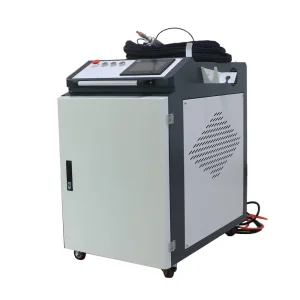
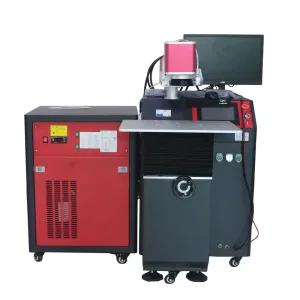
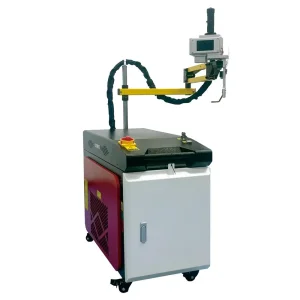
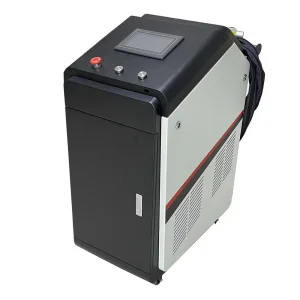
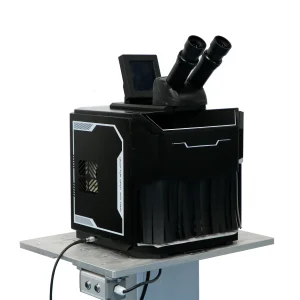
Direct from our Shenzhen precision assembly plant. Engineered with closed-loop power calibration, dual-axis wobble optical heads, and multi-language CNC suites for demanding thermal applications.
Analyzing the metallurgical shifts from traditional pulsed Nd:YAG flashlamp rods to Quasi-Continuous Wave (QCW) and high-peak nanosecond fiber oscillators across modern micro-joining lines.
Pulsed laser welding manages heat deposition by delivering energy in concentrated millisecond bursts rather than a continuous beam. This creates transient molten keyholes that solidify rapidly, preserving the original crystalline matrix and preventing warping in thermally sensitive geometries.
While solid-state pulsed Nd:YAG crystals remain common for mold touch-ups and gold jewelry repairs due to accessible capital costs, Quasi-Continuous Wave (QCW) fiber platforms now achieve electrical-to-optical conversion efficiencies of ~30%, replacing Xenon flashlamp maintenance cycles entirely.
Modern factory installations implement dynamic high-speed galvanometer wobble mirrors and customized pulse shaping. Operators can sculpt the temporal profile (square, ramp-up, ramp-down) to suppress solidification cracks in aerospace-grade aluminum and exotic refractory metals.
Direct OEM/ODM industrial pricing breakdown. Understand total capital investment requirements, operational running costs, and component tier selections across standard export configurations.
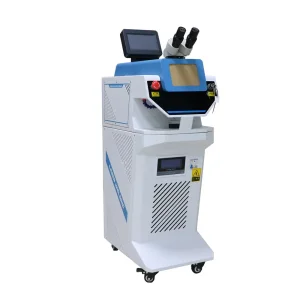
| Architecture Class | Nominal Power | Pulse Energy (Joules) | Target Core Applications | Estimated Factory FOB Price |
|---|---|---|---|---|
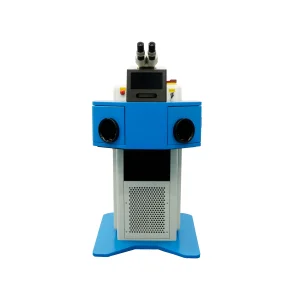
| Manual Benchtop Nd:YAG | 60W – 100W | 40J – 70J | Jewelry repair, dental labs, optical frame repairs | $2,800 – $4,500 |
| Heavy-Duty Cabinet Nd:YAG | 200W – 300W | 90J – 130J | Tool & die rebuilds, precision sensor encapsulation | $4,800 – $7,200 |
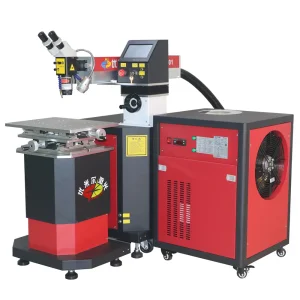
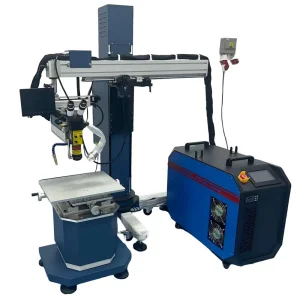
| Integrated Boom Arm Mold Welder | 300W – 400W | 110J – 150J | Injection molding dies, automotive stamping repair | $7,500 – $11,800 |
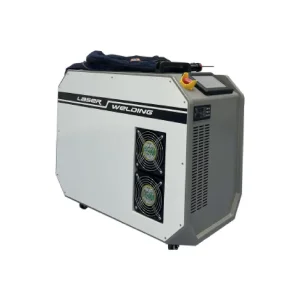
| Industrial QCW Fiber Welder (Manual) | 150W / 1500W Peak | 15J | Battery tabs, electronic contacts, copper pins | $8,200 – $13,500 |
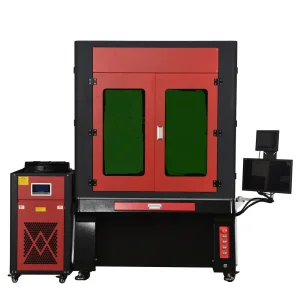
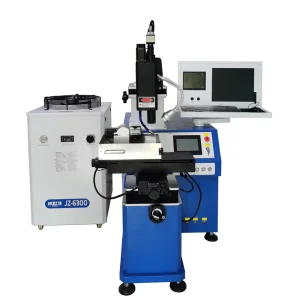
| 3-Axis / 4-Axis CNC Auto QCW Station | 300W / 3000W Peak | 30J | Automated medical devices, EV relays, hermetic cans | $14,500 – $26,000 |
| Galvo High-Speed Spot Welding Cell | 500W / 5000W Peak | 50J | Prismatic battery packs, solar cell interconnects | $22,000 – $38,000 |
Tailored laser micro-joining systems configured for exact metallurgical behaviors, cycle throughput constraints, and international quality management standards.
Class 10,000 cleanroom-ready configurations for joining stainless steel 316LVM, titanium grade 5, and Nitinol components. Complete hermetic integrity without biocompatibility degradation.
High-reach cantilever boom systems enable repair directly inside production presses. Deposit matching tool-steel alloys onto parting lines without post-weld annealing requirements.
QCW fiber sources overcome reflective barrier thresholds in high-conductivity copper and aluminum alloys. Weld foil stacks and busbar lugs without internal short-circuit hazards.
Desktop and vertical configurations for platinum, 18K/24K gold, and pure silver crafting. Pinpoint optical spotting secures stone mountings without thermal breakdown of organic gems.
Operating under ISO 9001 quality management systems, Shenzhen Youmir Laser implements multi-tier QA gates for all export equipment to satisfy international safety standards.
All pulsed welding units ship compliant with CE Machinery Directive 2006/42/EC, Low Voltage Directive 2014/35/EU, and EN 60825-1 laser radiation safety standards. FDA CDRH accession paperwork accompanies shipments entering North American ports.
Before crate packing, every machine runs continuously for 72 hours under maximum pulse energy cycling. Coaxial beam alignment, chiller refrigeration loop stability, and power stability are logged and supplied with factory dispatch records.
Supported by regional authorized technical hubs and direct engineer video links. Spare optical protection windows, specialized collimators, and pump lamps are stocked globally for rapid replacement within 24 to 48 hours.
Forward engineering at Shenzhen Youmir Laser: Integrating real-time AI keyhole monitoring, hybrid green-infrared wavelengths, and full industrial IoT connectivity.
Next-generation systems use coaxial pyrometric sensors and high-speed CMOS visual sensors feeding embedded neural networks. The system dynamically alters pulse duration and peak irradiance in under 100 microseconds whenever gaps or impurities are detected.
To resolve copper and noble-metal reflectivity issues, our optics laboratory is engineering dual-wave combiners that project a 532nm green laser to prepare the melt pool, followed immediately by a 1064nm pulsed fiber beam to form deep, spatter-free joints.
Full OPC-UA, MQTT, and industrial fieldbus protocols come standard on all automated pulsed platforms. Maintain real-time telemetry over individual pulse profiles, assist gas pressure, and chiller thermal signatures with automated preventive alerts.
Answers to common technical queries from prospective buyers, manufacturing engineers, and distribution partners.
CW systems output a continuous laser stream, making them ideal for heavy sheet joining and continuous seams at speeds of meters per minute. Pulsed laser systems emit short energy bursts with high peak power and low duty cycles, limiting overall thermal buildup to protect heat-sensitive geometries, thin electronics, and delicate mold surfaces.
QCW fiber is recommended for automated batch manufacturing, high duty cycles, low operating costs, and cleanrooms, offering >100,000 hour lifespans and zero lamp changes. Nd:YAG remains an economical choice for manual repair desks, jewelry makers, and tool rooms with intermittent production schedules.
High-purity Argon (99.999%) is the standard choice, delivering balanced arc stabilization and oxidation shielding for tool steels, gold, and nickel alloys. For titanium and medical alloys, an Argon-Helium mix or trailing pure Argon cup shields against embrittlement. Nitrogen can be used with austenitic stainless steels.
Shenzhen Youmir provides sample testing services. Buyers send workpiece samples to our testing center, where engineers conduct parameter runs, cross-section polish cuts, and tensile tests. You receive a complete engineering report, parameter sets, and process video before placing an equipment order.
Explore our full line of specialized industrial laser hardware. Manufactured to ISO standards for repair, fabrication, cutting, and automated batch handling.