Direct manufacturer supply of industrial-grade surface preparation, fiber cutting, and galvo processing workcells custom-tailored for Malaysian manufacturing tolerances, tropical duty cycles, and energy parameters.

1000W-3000W high-speed continuous laser rust and thick oxide layer ablation. Built for structural steel fabrication and Klang Valley shipyard refurbishments.
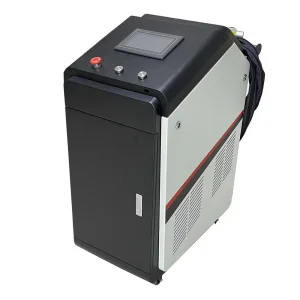
100W-500W pulsed fiber source with zero thermal distortion. Ideal for injection molds, semiconductor tooling, and aerospace component restoration.

Rigid gantry CNC fiber cutting system tailored for rapid sheet metal prototyping and enclosure fabrication across Rawang and Shah Alam facilities.

Ultra-fast scanner-based optical processing for EV battery busbars, electronics micro-spot joints, and selective high-frequency surface decontamination.
Kuala Lumpur, backed by the contiguous industrial sprawl of Selangor (Shah Alam, Petaling Jaya, Subang, Rawang, and Port Klang), represents the undisputed economic powerhouse of Malaysia. As national manufacturing policies such as Industry4WRD and stringent Environmental, Social, and Governance (ESG) criteria reshape operating conditions, local engineering works are under immense pressure to modernize legacy surface-cleaning methods.
Historically, heavy fabrication yards, marine repair facilities along the Port Klang strait, and the automotive production belt in Rawang and Tanjung Malim have relied heavily on dry abrasive grit blasting, bead blasting, and aggressive chemical bath pickling (using phosphoric, nitric, and hydrofluoric acids). However, local environmental governance under the Malaysian Department of Environment (Jabatan Alam Sekitar - JAS) has instituted rigid restrictions on hazardous airborne particulate generation and heavy metal-laden aqueous effluent discharge.
The Operational Shift: High ambient humidity (averaging over 80% year-round in Kuala Lumpur) causes immediate flash rusting on freshly sandblasted carbon steels. Laser cleaning eliminates media disposal completely, seals surface grain through rapid thermal vaporization, and yields immediate passive oxide resilience without secondary chemical passivators.
Direct Manufacturer Delivery & Calibration: Youmir Laser provides turn-key, customized configurations built to withstand tropical equatorial environments, equipped with dual-circuit industrial water chillers, anti-condensation optical heads, and integrated 415V 3-phase surge-protected power architectures.
A rigorous examination of laser-material interaction kinetics, photothermal shock spallation, and how selective absorption thresholds safeguard sensitive base substrates.
Laser ablation operates on the principle of optical absorption differentials. Rust (Fe2O3 / Fe3O4), industrial primers, polyurethane paints, and vulcanized rubber residues exhibit distinct optical absorption peaks at the near-infrared wavelength of 1064 nm. When an ultra-short laser pulse interacts with these surface contaminants, energy is absorbed exponentially faster than it can thermally conduct into the underlying metal substrate.
This localized, nanosecond-regime energy deposition induces extreme instantaneous temperature spikes (exceeding 3,000°C), triggering instantaneous plasma ionization, vaporization, and non-equilibrium thermal expansion. Concurrently, the rapid thermo-elastic reaction generates acoustic shockwaves across the contaminant-substrate boundary. These shockwaves mechanically fracture the interfacial bonds, causing the contaminant layer to spall off before heat transfers into the bulk metal, thereby ensuring the substrate temperature remains well below its metallurgical transformation threshold.
Specifying the optimal laser cleaning machine for operations in Kuala Lumpur requires matching laser temporal profiles to metallurgical requirements:
| Evaluation Parameter | Pulsed MOPA Laser Cleaner | Continuous (CW) Laser | Grit / Sand Blasting | Chemical Solvent Dipping | Dry Ice Pelleting |
|---|---|---|---|---|---|
| Base Substrate Integrity | Zero Damage / Zero Pitting | Minor Micro-Heat Influx | Severe Micro-Pitting & Erosion | Hydrogen Embrittlement Risk | Zero Mechanical Damage |
| Operating Consumables | Electricity Only (~1.5–3 kW) | Electricity Only (~6–12 kW) | Continuous Garnet/Sand Refill | Hazardous Acids / Solvents | Cryogenic CO2 Pellets |
| Malaysian Regulatory Burden | Class 4 Interlocks / Zero Waste | Class 4 Interlocks / Zero Waste | High DOE / OSHA Dust Violations | Severe JAS Toxic Effluent Mandates | Ventilation / Asphyxiation Control |
| Annual Operating Cost (MYR) | Extremely Low (Routine Optics Only) | Very Low (Protective Windows) | Very High (Media + Clean-up Labor) | High (Neutralization + Waste Fees) | High (Cryogenic Storage + Pellet Loss) |
| Post-Process Residue | Dry particulate captured by HEPA | Dry particulate captured by HEPA | Massive spent grit sludge | Toxic liquid sludge | CO2 gas sublimation |
How international tier-one industrial standards and decarbonization frameworks are driving precision laser cleaning integration across cross-border manufacturing value chains.
Global aerospace and EV battery plants in Germany, Japan, and North America have fully phased out manual solvent wiping in favor of 6-axis articulated robots (Fanuc, KUKA, ABB) carrying 2D galvo cleaning heads, achieving sub-millimeter positional repeatability and integrated vacuum shrouds.
Multinational OEMs operating production lines in Southeast Asia are required to meet corporate carbon reduction roadmaps. Switching from gas-driven dry ice and chemical washing directly slashes direct corporate carbon emissions while eliminating water treatment electricity usage.
Modern European laser stations feature in-line Laser-Induced Breakdown Spectroscopy (LIBS). By reading atomic emission spectra from the ionized plume during ablation, the system verifies contaminant removal in milliseconds and commands automatic beam shutoff before bare steel is altered.
Operating industrial Class 4 laser installations in Malaysia mandates rigorous adherence to statutory protocols enforced by the Department of Occupational Safety and Health (DOSH / JKKP - Jabatan Keselamatan dan Kesihatan Pekerjaan). Industrial buyers cannot afford compliance liabilities stemming from uncertified gray-market machinery lacking certified safety interlocks.
All Youmir Laser cleaning, welding, and cutting machines exported to Kuala Lumpur and the broader Malaysian territories are manufactured in compliance with international standard MS IEC 60825-1 (Safety of Laser Products). Our equipment incorporates redundant dual-channel safety interlock circuits, emergency shutdown switches, integrated zero-emission fume extraction interfaces, and dedicated optical isolation mechanisms that instantly terminate laser output if the cleaning head angle deviates from the targeted work surface.
Operator Protective Architecture: Every system supplied by Youmir Laser comes standard with certified OD6+ laser safety protective goggles rated for 1064nm near-infrared radiation, complete localized machine English labeling, full operational documentation for DOSH site audits, and optional Class 1 full interlocked workcell enclosures for automated lines.
We provide localized engineering support across the Kuala Lumpur Federal Territory and Selangor industrial clusters. Spare consumables—including anti-reflective protective windows, focus lenses, collimation lenses, and ceramic nozzles—are readily available to prevent production downtime.
Our control consoles are equipped with IoT-enabled industrial touchscreens supporting remote diagnostic telemetry. In the event of system alarms or parameter misconfigurations, our senior photonic engineering specialists dial in directly to conduct software diagnostics and parameter optimization.
Configured specifically to solve acute manufacturing pain points across the unique industrial verticals driving Kuala Lumpur, Selangor, and national export supply chains.
Stamping dies for automotive body panels encounter chronic carbon residue buildup, metal slivers, and drawing compound fouling. Our 300W–500W pulsed MOPA systems strip contaminants directly inside the press without removing heavy tooling, eliminating downtime and preserving critical die micro-geometry.
Serving the high-density microelectronics packaging clusters connected to the Greater KL tech corridor. Non-contact pulse lasers strip epoxy mold compound flash (EMC) from delicate gold- and copper-plated lead frames without abrasive erosion or chemical delamination.
Heavy salt-fog environments trigger accelerated marine chloride pitting and scale buildup. High-power 2000W–3000W CW systems strip decades-old tar epoxy, barnacle adhesion, and heavy rust layers from steel plates, weld seams, and pipe flanges at up to 15 m²/hr, leaving ideal surface profiles for recoating.
Sterilizer cages, threshing drums, and crude palm oil (CPO) clarification tanks suffer heavy baked-on organic sludge, corrosion, and biological crusting. Portable laser cleaning heads easily clear hardened residues from tight mechanical geometries without requiring corrosive chemical baths or extensive mechanical grinding.
Kuala Lumpur's urban rail network (LRT, MRT, and Monorail) undergoes continuous Bogie and wheelset maintenance. Laser cleaning swiftly removes carbon dust, baked grease, and thermal oxidation from axle press-fit seats and non-destructive testing (NDT) inspection tracks, maintaining strict safety clearances.
Aircraft structural frames and turbine components require precision paint stripping and degreasing prior to dye-penetrant or eddy-current crack inspections. Our pulsed lasers completely remove multi-layer polyurethane coatings without abrading high-strength structural aluminum (such as 7075/2024 alloys) or titanium brackets.
The forward trajectory of industrial photonics: Beam homogenization, variable raster geometry, and AI-driven automated process adaptation.
Traditional laser cleaners utilized simple single-axis linear oscillating mirrors, which left distinct sinusoidal ridges and microscopic grooves on the processed metal substrate due to variable dwell times at oscillation turn-around points. Youmir Laser’s advanced optical systems incorporate high-speed dual-axis galvo scan heads capable of driving complex scanning geometries, including 2D Lissajous figures, spiral patterns, circular trepanning, and uniform rectangular flat-top energy distributions.
By transforming raw Gaussian beams into top-hat intensity profiles, energy is distributed completely uniformly across every square millimeter of the focal spot. This architectural advancement completely prevents hot-spot induced substrate gouging and micro-cracking, achieving an exceptionally uniform surface roughness (Ra < 0.8 µm), making it the premier choice for aerospace MRO and pre-weld surface preparation.
The next frontier in laser manufacturing is closed-loop autonomous processing. Standard legacy cleaning heads operate on fixed, static power settings, which can under-clean thick oxidized deposits or over-irradiate bare metal patches. Youmir Laser's next-generation systems integrate coaxial machine-vision optics and hyperspectral sensor inputs.
As the cleaning head scans across non-uniform surfaces, integrated edge-computing processors evaluate colorimetric and reflectivity differentials across the substrate. The system modulates pulse energy, repetition frequency, and galvo traverse velocity on-the-fly within 5 microseconds. This ensures complete stripping of uneven paint and oxide layers while immediately throttling power back over bare base metals, ensuring maximum efficiency with minimal thermal footprint.
Explore our complete line of CNC workcells, swing-boom mold repair systems, and automated laser stations engineered for maximum uptime in demanding manufacturing environments.

Flexible swing-arm boom allows precision micro-welding on heavy injection molds without moving the tooling block off the workshop floor.

Quasi-Continuous Wave technology delivering high peak pulse energy for repair of cracked mold edges, EDM spark erosion lines, and fine cavity modifications.

Open access architectural bed optimized for oversized stainless steel kitchen equipment, sanitary vessels, and custom sheet frames in Selangor workshops.
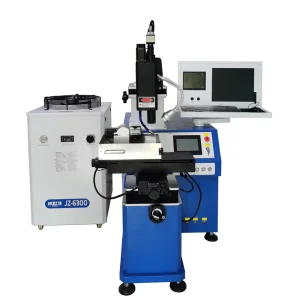
Fully automated multi-axis programmable motion system built for batch hermetic sealing of sensor housings, battery enclosures, and precision medical devices.

Continuous fiber laser delivery system for mass-production stamping plants. Features high seam consistency with zero post-weld slag or grinding requirements.

High-beam-quality energy-split fiber delivery workcell, enabling simultaneous dual-station operation or remote robotic end-effector integration.
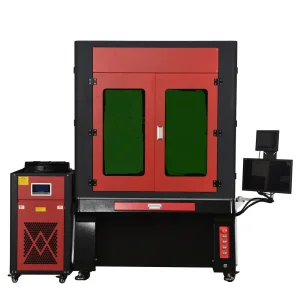
Interlocked optical enclosure meeting stringent DOSH workplace laser safety standards. Designed for high-volume consumer electronics and precision hardware fabrication.

Portable pulse and CW hybrid functionality in an ultra-compact chassis. Engineered for fast on-site tool repair, sheet fabrication, and localized spot-weld cleaning.
In-depth answers addressing operating economics, site readiness, safety compliance, and direct factory procurement logistics.
Request a tailored engineering evaluation, sample process test report, and transparent direct-manufacturer quotation serving Kuala Lumpur, Petaling Jaya, Shah Alam, and broader Malaysia.
Send Inquiry Now