Industrial Photonics · Moscow & Central Russia Hub

Custom Laser Cleaning Machine Manufacturers & Factory for Moscow

Precision Sub-Nanosecond MOPA Pulsed & Ultra-High Throughput CW Laser Ablation Systems Engineered for Moscow Industrial Clusters, Heavy Rail Transit, Aerospace MRO, and Energy Infrastructure.

Flagship Moscow Deployments

Primary Industrial Laser Systems for Moscow Enterprises

Field-proven laser ablation, surface preparation, and high-frequency precision laser processing equipment configured with cold-resistant thermal management and localized GOST-compliant user interfaces.

100,000h
Pump Diode MTTF
Solid-state fiber laser engine reliability
±0.02mm
Galvanometer Precision
Field-tested beam scanning repeatability
−30°C
Cold-Start Tested
Specialized Moscow winter thermal cycle
85%
OpEx Reduction
Versus traditional chemical & sandblasting
Industrial Environment

The Moscow Industrial Transformation: Surface Engineering in High-Demand Sectors

The Moscow Metropolitan Area and the surrounding Moscow Oblast (encompassing key industrial centers such as Podolsk, Kolomna, Khimki, and Technopolis Moscow) represent the epicenter of high-value manufacturing, transport engineering, and metallurgical restoration in Eastern Europe. Historically dependent on abrasive media blasting and aggressive chemical pickling, Moscow manufacturers are undergoing a rapid technological overhaul toward non-contact, green photonic ablation.

Our direct-to-factory laser cleaning solutions address severe operational bottlenecks in Moscow: hazardous chemical disposal regulations, intensive mechanical wear on costly tooling, and high labor costs associated with manual grit recycling. Utilizing state-of-the-art 1064nm Gaussian and Flat-Top pulsed beams, our equipment selectively vaporizes oxide scales, vulcanized rubber residues, polyurethane coatings, and heavy corrosion without removing a single micron of the virgin parent metal.

Technopolis Moscow SEZ Compliant Heavy Rail Bogie MRO GOST 9.402-2004 Cleanness Standard Aviation Turbine De-coating

Severe Climate Engineering & Operational Ruggedness

Standard industrial equipment frequently experiences laser cavity failure or coolant condensation when subjected to Central Russia's continental climate. Our Moscow-specification laser cleaners are architected with proprietary climate-hardened subsystems:

  • Intelligent Dual-Circuit Chillers: Glycol-compatible closed-loop refrigeration with active pre-heating cycles preventing optical shock at sub-zero workshop start-ups.
  • Hermetic IP65 Optical Sealing: Multi-layer O-ring barriers and positive dry nitrogen purging to prevent moisture ingress into the galvo mirrors.
  • Wide-Voltage Industrial Inverters: Robust surge suppressors calibrated for 380V ±15% industrial grid variations common in heavy production districts.
Whitepaper Analysis

Global Industrial Cleantech Shift & The Shenzhen Photonic Advantage

A macroeconomic and technical evaluation of why global tier-one manufacturing enterprises and Moscow industrial syndicates partner directly with Chinese photonics OEMs.

Global Decarbonization & Regulatory Pressure

Globally, industrial surface prep accounts for millions of tons of chemical slurry and hazardous dust per annum. European and Eurasian environmental watchdogs are enforcing rigorous zero-effluent and VOC abatement mandates.

Laser ablation provides complete compliance: zero consumable abrasive media, zero acids, zero hazardous wastewater, and negligible energy consumption per square meter treated.

Shenzhen Precision Supply Chain Density

As an OEM based in Shenzhen—the world's capital of high-power industrial fiber optics—we control the complete value chain: from collimator design, beam delivery cables, and QBH safety sensors to firmware-level pulse duration programming.

This localized cluster allows us to deliver customized 100W–3000W laser cleaning machines with a 40–60% cost efficiency over European competitors without compromising optical longevity.

Direct-from-Factory Engineering Accountability

Moscow industrial procurers avoid third-party markups and disconnected middlemen. Our engineering team conducts direct metallurgical evaluations, metallurgical cross-section reports, and video trial demonstrations prior to machine dispatch.

Every system includes pre-configured database recipes for structural steels (St3sp, 09G2S), aerospace alloys (D16T, titanium VT20), and industrial tooling steels.

Evaluation Parameter Industrial Laser Cleaning (Our Factory) Sand / Grit Blasting Chemical Solvents / Acid Bath
Substrate Impact Zero micro-abrasion, zero dimensional loss − Roughs profile, erodes tolerances − Pitting, hydrogen embrittlement risk
Operating Consumables Electricity & protective optics only − Continuous tons of abrasive media − Continuous acids, neutralizers, water
Secondary Waste Trapped instantly via HEPA cartridge unit − Massive hazardous dust clouds − Toxic toxic liquid chemical waste
Operator Safety Profile OD6+ Laser Safety Eyewear, quiet operation − Severe silicosis danger, extreme noise − Caustic vapor inhalation, skin burns
Automation & Robotic Ready 100% Digital I/O, Profinet / Ethernet/IP − Nozzle wear compromises consistency − Complex robotic tank dipping logistics
Engineered for Moscow Sectors

High-Yield Application Profiles Across the Moscow Industrial Basin

Real-world integration points where our custom pulsed and continuous laser cleaning systems are replacing antiquated processing methods in Central Russia.

Moscow Metro & Rolling Stock Maintenance

Use Case: Bogie overhaul, wheelset axle non-destructive testing (NDT) prep, and carriage chassis paint stripping.

Technical Benefit: Our 2000W continuous fiber laser strips multi-layered primer and bitumen coatings without inducing subsurface crystalline micro-fractures, enabling immediate ultrasonic and magnetic particle crack inspection.

Aerospace & Gas Turbine MRO (Khimki Hub)

Use Case: Thermal barrier coating (TBC) refurbishment, titanium turbine blade de-oxidation, and carbon-composite mould cleaning.

Technical Benefit: 200W–500W MOPA pulse lasers with variable pulse width (10ns–350ns). Provides precise ablation of oxide layers down to single nanometer tolerances without exceeding the thermal recrystallization threshold of superalloys.

Heavy Energy, Boilers & Heating Infrastructure

Use Case: District heating heat exchangers, Mosenergo power station pipeline welds, and high-pressure steam valve descaling.

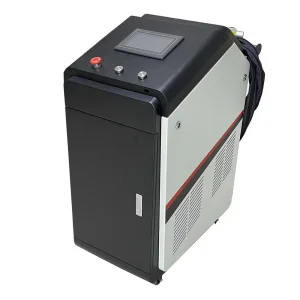
Technical Benefit: Handheld lightweight cleaning guns with 10-meter to 15-meter fiber optic delivery cables allow field operators to scale pipeline joints inside confined industrial spaces, completely stripping magnetite scales prior to orbital welding.

Precision Engineering Catalog

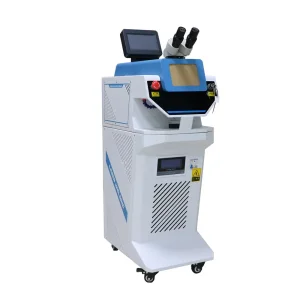
Specialized Tooling, Mold Restoration & Joining Machinery

Explore our complete export line manufactured for precision tool-rooms, die-casting maintenance, jewelry artisans, and heavy industrial fabrication facilities across Russia.


Technical Buyer's Framework

Engineering Specification Guide: Pulse vs. Continuous Wave Selection

Avoid costly procurement errors by understanding the exact laser-material interaction physics required for your target metallurgy.

Pulsed MOPA Laser Technology (Cold Ablation)

Physics: Short, gigawatt-level peak power laser pulses (10–350ns) vaporize contaminants instantaneously through thermo-elastic breakdown and plasma shockwaves before thermal energy can conduct into the base material.

Primary Targets: Injection molds, polished die cavities, automotive brake discs, aerospace composite molds, historical monuments, and precision electrical copper connectors.

  • Heat Affected Zone (HAZ): Practically zero (< 5 μm)
  • Substrate Damage: Zero remelt, zero hardness deviation
  • Average Cleaning Speed: 1.5 – 6.0 m²/hr
  • Recommended Power: 100W, 200W, 300W, 500W

Continuous Wave (CW) Laser Technology (Thermal Ablation)

Physics: High continuous optical flux melts and decomposes thick organic binders, heavy millimeter-thick rust deposits, and elastomeric polymers through rapid heat accumulation.

Primary Targets: Civil bridge steel girders, large pipe exteriors, railway bogies, shipbuilding plates, oil storage tank refurbishment, and pre-weld oxide descaling.

  • Heat Affected Zone (HAZ): Controlled (15 – 50 μm)
  • Substrate Damage: Minor superficial heat tinting on thin sheet
  • Average Cleaning Speed: 15.0 – 45.0 m²/hr
  • Recommended Power: 1000W, 1500W, 2000W, 3000W

Customization Protocols for Moscow Industrial Importers

When procuring equipment directly from our Shenzhen manufacturing plant for deployment in Moscow, clients can specify bespoke engineering adaptations:

Bilingual Russian Interface

Touchscreen control panels translated into Russian with pre-loaded GOST standard material recipes.

Extended Beam Delivery Umbilicals

Reinforced armored fiber cables up to 20 meters for bridge and high-stack industrial maintenance.

Automated Robot Tooling (EOAT)

Lightweight compact scanning heads with standard quick-mount flanges for Fanuc, Kuka, or Yaskawa arms.

Direct Answers

Frequently Asked Questions: Technical, Commercial & Logistics for Moscow

In-depth responses from our senior photonics applications team covering duty cycles, shipping customs, winterization, and process certification.

What are the key technical differences between continuous wave (CW) and pulsed laser cleaning?
CW laser cleaners emit an uninterrupted beam that rapidly transfers thermal energy into the surface. They offer phenomenal cleaning speed (up to 40 m²/hr) at a significantly lower cost per watt, making them the standard choice for heavy rust removal on railway tracks, bridge girders, thick carbon steel hulls, and construction machinery. Pulsed laser cleaners (using MOPA technology) fire nanosecond pulses with peak powers exceeding 10,000 watts. Because each pulse terminates before heat can transfer to the substrate, pulsed machines vaporize rust, paint, and contaminants without melting, altering metallurgical grain structures, or impacting precision tolerances. Pulsed is required for high-precision molds, aerospace components, automotive engine heads, and historical stone or bronze restoration.
How do your machines perform during harsh Moscow winter operations?
Standard industrial water chillers can suffer reservoir freezing and optical cavity thermal shock in unheated or semi-heated industrial facilities during Moscow winters (where ambient temperatures frequently drop below −20°C). For Russian and Central European orders, our factory outfits all laser systems with cold-climate packages: automated thermostatic fluid pre-heaters, compatibility with specialized optical-grade ethylene glycol anti-freeze solutions, insulated internal plumbing, and dual-threshold optical temperature sensors that prevent laser emission until the optical cavity stabilizes at optimal operating temperatures (22°C–25°C).
What customs clearance, logistics, and documentation support do you provide for Moscow?
We operate an established, seamless direct export channel from Shenzhen to Moscow. Buyers can select DDP (Delivered Duty Paid), DAP (Delivered at Place), or standard FOB/CIF terms. We supply comprehensive export documentation packages: Russian EAC Declaration of Conformity equivalents, CE certification, Certificate of Origin, detailed commercial invoices, HS code classifications (typically 8456.11.00 for laser machine tools), and complete Russian-language technical passports and user manuals. Cargo is shipped via expedited China-Europe Railway Express (direct to Vorsino / Bely Rast logistics hubs near Moscow within 14–18 days) or via consolidated air freight for urgent production line integration.
Can we send workpiece samples from Moscow to Shenzhen for testing prior to order placement?
Yes, our application laboratory actively encourages sample pre-validation. Moscow clients frequently air-courier sample oxidized pipes, turbine blades, vulcanized tire molds, or painted sheet specimens directly to our Shenzhen facility. Our optical engineers execute systematic parameter matrix tests (varying scan frequency, pulse width, linear velocity, focal length, and pass counts), producing high-definition video documentation, surface profilometer roughness scans (Ra measurements), and metallurgical cross-section reports. We identify the exact minimal energy density (Joules/cm²) needed to strip your contaminant while preserving your parent material.
What safety protocols and exhaust equipment are mandatory for indoor laser cleaning?
Laser cleaning involves Class 4 industrial laser radiation (1064nm near-infrared). All operators must wear laser safety goggles certified with Optical Density OD6+ at 1064nm. In addition, when rust, toxic primers, or lead-based paints are vaporized, they transition into sub-micron airborne particulate matter and aerosolized gases. We integrate matching industrial fume extraction systems equipped with multi-stage filtration: pre-filter spark arrestor, high-efficiency HEPA H14 particulate filter (capturing 99.995% of particles down to 0.1 μm), and deep-bed activated carbon filters to eliminate toxic VOC odors, ensuring full compliance with occupational health standards.
What is the expected operating life and consumable cost of a fiber laser cleaning machine?
The core fiber laser engine (solid-state laser diode modules) carries a rated Mean Time to Failure (MTTF) of 100,000 operating hours—translating to over 10 years of multi-shift industrial service under proper environmental maintenance. Unlike traditional media blasting, there are no recurring abrasive grit, blast nozzle, or slurry disposal expenses. The ongoing consumable items are limited to fused silica protective window lenses (costing approximately $5–$15 each, lasting several hundred hours when properly shielded) and occasional filter cartridge replacements in the fume extractor. The electrical power consumption is remarkably low: a 1500W continuous laser cleaning machine draws only approximately 4.5kW to 6kW of grid electricity during full-duty operation.

Request a Custom Engineering Proposal & Factory Pricelist for Moscow

Connect directly with our senior photonics application engineers in Shenzhen. Receive customized parameter calculations, cold-climate thermal specifications, sample ablation reports, and transparent FOB/DAP Moscow pricing within 12 hours.