Engineered for continuous heavy fabrication, surgical instrument micro-welding, and automated sheet metal joining. Direct factory-calibrated machines ready for dispatch.
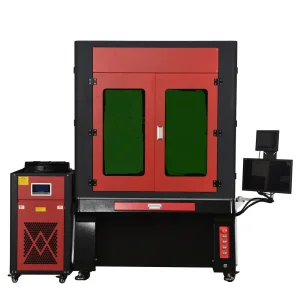



Pakistan's industrial manufacturing ecosystem is experiencing a high-velocity structural transition. Driven by modernization projects across the China-Pakistan Economic Corridor (CPEC) and surging export mandates, traditional metal joining practices such as manual Shielded Metal Arc Welding (SMAW) and Tungsten Inert Gas (TIG) welding are rapidly falling short of international compliance benchmarks. In critical manufacturing epicenters—including Karachi’s automotive parts plants, Gujranwala’s stainless steel cutlery fabrication clusters, Lahore’s agricultural machinery producers, and Sialkot’s medical device exporters—the demand for high-yield, low-distortion welding systems has intensified.
The fundamental bottleneck facing local enterprises has been high thermal deformation in sheet metal fabrication and the soaring cost of consumable post-weld grinding and acid pickling. By transitioning to high-coherence, fiber-delivered laser welding systems, local manufacturing plants achieve up to a 75% reduction in consumable electrical overhead and virtually eliminate human error in seam uniformity. This operational turnaround is directly bolstering Pakistani export manufacturers against global competitors in European and Middle Eastern markets.
| Performance Parameter | Traditional TIG / MIG | Industrial Fiber Laser |
|---|---|---|
| Travel Speed (1.5mm SS) | 150 – 250 mm/min | 800 – 1800 mm/min |
| Heat Affected Zone (HAZ) | Extensive (High Warping) | Microscopic (< 0.2mm) |
| Post-Weld Processing | Grinding, Pickling, Polishing | Zero-Grinding Aesthetic Bead |
| Electrical Consumption | High Thermal Waste | 35% Wall-Plug Efficiency |
| Tensile Strength Retention | Variable, Porosity Risk | Full Substrate Integrity |
Strategic analysis of macroeconomic procurement behaviors across North America, Europe, Central Asia, and the Global South.
On a global scale, the laser processing market has decisively transitioned away from lamp-pumped Nd:YAG resonators toward solid-state ytterbium fiber laser systems. The macroeconomic catalysts are unequivocal: high maintenance downtime, frequent flashlamp swaps, low electro-optical efficiency (rarely exceeding 3-5%), and substantial water-chilling footprints rendered early solid-state lasers commercially non-viable for rapid scaling.
Modern continuous wave (CW) and quasi-continuous wave (QCW) fiber laser sources provide operational wall-plug conversion efficiencies exceeding 35-40%. For Pakistani enterprise operators struggling with localized energy tariffs and unpredictable peak grid loads, this radical reduction in primary kilowatt consumption represents an instantaneous reduction in overheads. Furthermore, the modular fiber architecture ensures maintenance-free mean-time-between-failures (MTBF) exceeding 100,000 operational hours for the diode pumping units.
The past three years have seen handheld laser welding evolve from a rigid, spot-sensitive technique to an agile, gap-tolerant standard. The integration of dual-axis galvanometer oscillatory scanning heads ("wobble heads") dynamically sweeps the focal spot in selectable patterns—circle, line, triangle, double-helix—reaching seam widths up to 5.0mm without sacrificing weld penetration depth.
This innovation has dismantled the most restrictive barrier to entry in developing industrial markets: the requirement for ultra-precise CNC part edge preparation. Concurrently, vision-guided multi-axis Cartesian and collaborative robotic systems (Cobots) have permeated manufacturing workshops, enabling high-mix, low-volume job shops to program automated seam trajectories via drag-to-teach interfaces within minutes.
Shenzhen Youmir Laser Technology Co., Ltd. combines sovereign photonics R&D with vertical integration to build dependable, export-grade hardware.
The global photonics manufacturing landscape has bifurcated: on one hand, low-grade aggregators assembling commoditized off-the-shelf components without thermal calibration; on the other, authentic Tier-1 Original Design Manufacturers (ODMs) possessing vertically integrated optical, software, and mechanical competencies. Since its inception in Shenzhen in 2010, Shenzhen Youmir Laser Technology Co., Ltd. has prioritized complete in-house control over the optical delivery train. We do not merely assemble external sub-units; we engineer the multi-layer collimation and focusing optics, write our own closed-loop dynamic DSP driver code, and machine structural gantry components on high-precision 5-axis CNC machining centers.
For factory managers and equipment dealers in Pakistan, our Shenzhen and Zhongshan industrial infrastructure guarantees rapid availability of critical replacement consumables—including quartz protection windows, copper wire-feed nozzles, ceramic rings, and fiber collimators—bypassing geopolitical vulnerabilities and long fulfillment cycles. Every custom machine is subjected to a rigorous continuous 72-hour thermal stress endurance run and interferometric optical path verification prior to sea or air freight containerization.
Tailored configurations addressing the distinct metallurgy and cycle times of Pakistan's specialized commercial hubs.
Sialkot produces surgical instruments distributed across top hospital systems worldwide. Utilizing custom pulsed micro-laser welders and high-stability QCW fiber heads, local master craftsmen achieve hermetic, bio-compatible welds on Martensitic and Austenitic stainless steels (AISI 410, 420, 316L) without decarburization, micro-cracks, or structural discolouration.
Gujranwala's deep-drawn stainless steel cookware and sanitary fittings demand high mechanical integrity along curved contours. Youmir continuous fiber welders integrated with dual-axis rotary chucks deliver clean, smooth, non-porous seams, slashing buffing steps and eliminating post-weld reject rates caused by manual welding pinholes.
From high-volume two-wheeler and three-wheeler frame assemblies in Port Qasim and Hub to agricultural implements across Punjab, our enclosed high-power CNC and ruggedized handheld systems execute fatigue-resistant joints on carbon steels, galvanized sheets, and aluminum alloys up to 8mm in thickness.
Practical engineering answers addressing grid stability, power selection, import regulations, and on-site operator commissioning.
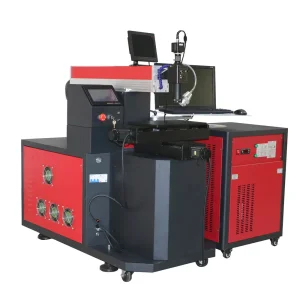
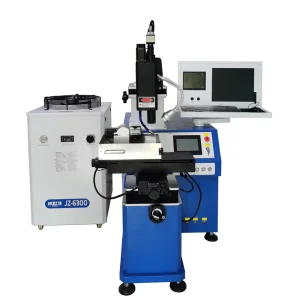
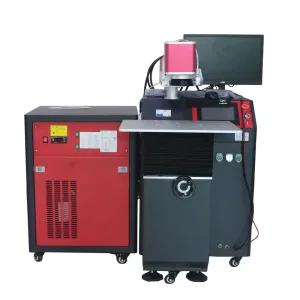
Examine our full engineering line of fiber-coupled, automated, cantilever, and precision galvanometer laser welding machines.
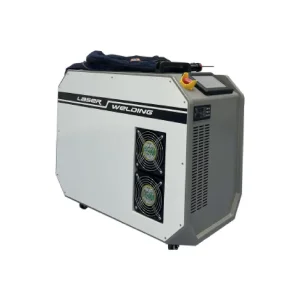
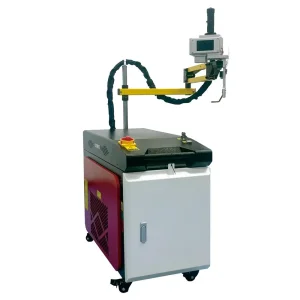
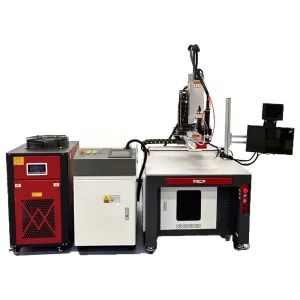


Connect with Shenzhen Youmir Laser’s senior optical engineers. Request bespoke turnkey machine configurations, empirical weld trial analyses on your alloy samples, and transparent direct CIF Karachi or Lahore freight quotations.
