
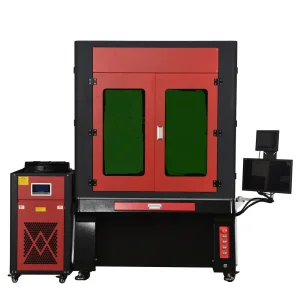
Class-1 Fully Enclosed
Custom Cnc Enclosed Automatic Fiber Laser Welding Machine Factories, Quotes
Precision, enclosed automated platforms, oscillating fiber architectures, and dynamic multi-axis configurations optimized for stringent UK health, safety, and production tolerances.
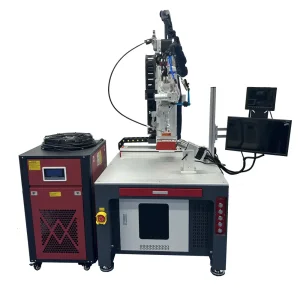
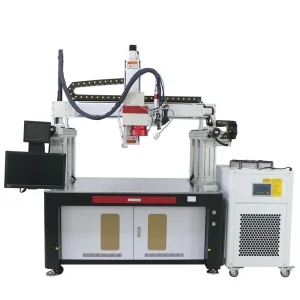
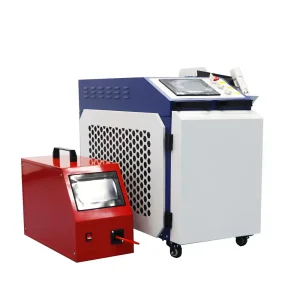
The manufacturing fabric across Greater London—ranging from specialized tech engineering hubs in Park Royal and Croydon to the aerospace and advanced mobility supply clusters along the Thames Gateway and the M4/M25 orbital—is currently undergoing a structural transformation. London's industrial landscape does not compete on mass-volume commodity fabrication; rather, it thrives on high-value, high-precision engineering, mission-critical architectural elements, medical instrumentation, and rapid prototyping for global motorsport and aerospace sectors.
Urban density, stringent workplace safety regulations (enforced by the Health and Safety Executive - HSE), high industrial square-footage rental rates, and increasing energy tariffs dictate that manufacturers operating in London maximize power density, eliminate floor space wasted on secondary grinding stations, and adopt Class-1 enclosed automated fabrication technologies. The transition from legacy Tungsten Inert Gas (TIG) and Metal Inert Gas (MIG) welding toward automated and fiber laser welding represents the standard playbook for businesses safeguarding their unit margins against elevated UK labor overhead.
A typical structural TIG/MIG station inside an urban London workshop requires extensive auxiliary extraction hoods, separate grinding and de-burring bays, and substantial post-weld pickling infrastructure to clear heat distortion and oxidation. By switching to localized high-intensity fiber laser welding systems—characterized by narrow Heat Affected Zones (HAZ) and instant solidification—London shops reduce total process footprint by up to 60% while eliminating downstream processing steps.
London manufacturing compliance requires absolute Class-1 interlocked optical protection, dual-channel emergency cutoff protocols, and integrated laser plume capture systems configured to satisfy strict UK HSE inspection audits.
With apprentice shortages challenging London fabricators, our wobble-beam handheld and CNC automated systems allow operators to achieve structural, mirror-finish welds with less than 48 hours of initial training.
Achieving electrical-to-optical conversion efficiencies exceeding 35%, our continuous fiber sources draw a fraction of the kVA required by legacy arc welders, shielding commercial facilities from steep utility costs.
Measured benchmarks recorded across 304 Stainless Steel, Aerospace-grade 6061 Aluminum, and Mild Carbon Steel configurations.
| Operational Parameter | Continuous Fiber Laser (1.5kW - 3kW) | High-Frequency TIG (GTAW) | Pulsed MIG (GMAW) |
|---|---|---|---|
| Welding Velocity (1.5mm SS) | 1,200 – 2,400 mm/min (High Productivity) | 150 – 300 mm/min (Slow) | 350 – 600 mm/min (Moderate) |
| Heat-Affected Zone (HAZ) Width | 0.2 – 0.6 mm (Micro-structural retention) | 2.5 – 5.0 mm (Severe thermal expansion) | 3.0 – 6.5 mm (Warping risk high) |
| Post-Weld Grinding & Chemical Pickling | None to minimal (Mirror finish out of box) | Mandatory mechanical blending & acid wash | Mandatory spatter removal & grinding |
| Wall-Plug Electrical Efficiency | 35% – 42% (Direct diode pumping) | 10% – 15% (High heat dissipation) | 15% – 22% (Moderate energy loss) |
| Joint Penetration Depth-to-Width Ratio | Up to 10:1 (Deep keyhole geometry) | Approx 1:1 to 2:1 (Shallow conduction) | Approx 1.5:1 (Conduction dominant) |
| Dissimilar Metal Capability | High (Cu to Al, SS to Carbon, Brass to SS) | Extremely limited (Cracking prone) | Not recommended (High dilution) |
By pairing proprietary optical engineering and complete in-house fabrication with global air and sea logistics channels directly into Felixstowe and London Heathrow, we bridge the gap between factory direct economics and zero-downtime performance.
We do not act as mere box assemblers. Shenzhen Youmir Laser engineers design the beam conditioning collators, galvanometer scanning mirrors, and multi-language control firmware in-house, ensuring complete component compatibility and remote diagnostic capability.
Critical consumables—protective quartz windows, precision copper welding nozzles, fiber delivery cables, and integrated dual-temperature chillers—are warehoused for immediate DHL express dispatch to UK business postcodes.
All automated enclosed systems are delivered with integrated IoT telemetry. Our Shenzhen support engineering lab coordinates real-time parameter tuning, cycle-time simulations, and waveform adjustments via secure cloud connection.
Youmir Laser welding units are specifically deployed to resolve acute engineering challenges unique to London's commercial ecosystem:
Send us your DXF/CAD drawings or sample parts for a comprehensive metallurgical report, power specification, and fixed CIF London quotation within 24 hours.
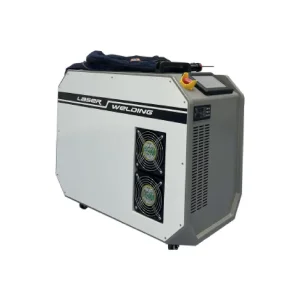
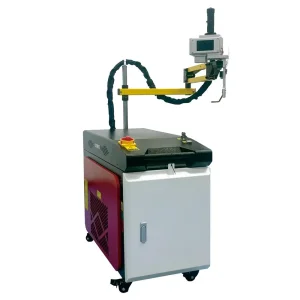
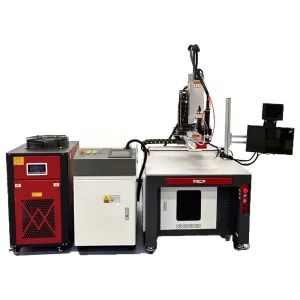
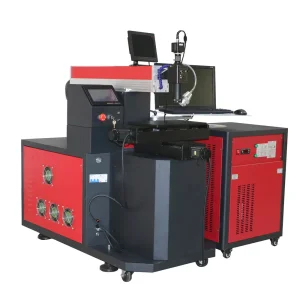
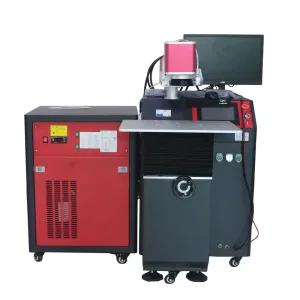
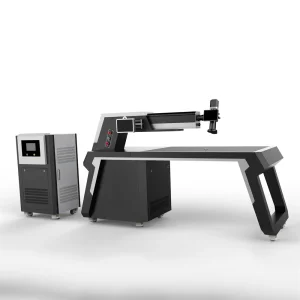
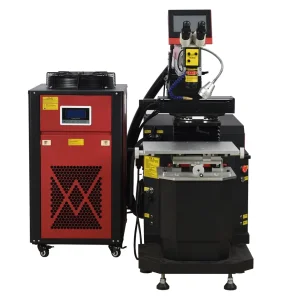
Send Inquiry NowFrom ultra-fast galvanometer scanners and multi-axis CNC cells to boom-mounted toolroom repair systems and advertising metal fabricators.

Detailed answers regarding UK importation, grid compatibility, certification, process physics, and warranty protections.