Discover our flagship baseline systems calibrated to European electrical, safety, and optical standards for turnkey deployment in Luxembourg workshops and automated cells.
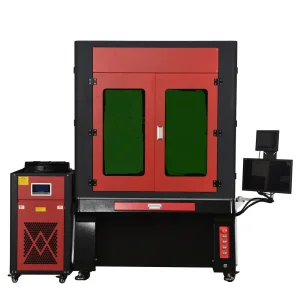



Analyzing local market imperatives, cross-border value chains, and macro-industrial tailwinds shaping procurement priorities across Western Europe.
While recognized globally as a financial powerhouse, the Grand Duchy of Luxembourg retains an exceptionally advanced manufacturing and engineering sector, contributing significantly to its Gross Domestic Product. Centered in innovation clusters like Belval, Bissen, and Contern, Luxembourgish enterprises specialize in Tier-1 automotive electronics, sensor housings, space technologies, and composite-to-metal assemblies.
With some of the highest skilled labor costs in the European Union, Luxembourg manufacturers face an operational prerequisite: deploying advanced automation and non-contact joining technologies that eliminate secondary grinding, shorten cycle times, and guarantee zero-defect yields under strict DIN EN ISO quality metrics.
Industrial operations within Luxembourg do not function in isolation; they are deeply entwined with the Saar-Lor-Lux macro-region (Saarland, Lorraine, Luxembourg, Wallonia, and Rhineland-Palatinate). Cross-border manufacturing chains demand high flexibility and standardized manufacturing telemetry.
Automotive assemblies produced in Clervaux or Dudelange are routinely fed into OEM assembly lines in Germany and France. Fiber laser systems that integrate Industry 4.0 communication protocols (OPC UA, Profinet) empower regional tier suppliers to fulfill traceability mandates while handling multi-alloy fabrication with exceptional heat-input discipline.
Globally, thermal manufacturing processes face immense scrutiny under EU Corporate Sustainability Due Diligence Directives (CSDDD) and carbon-border adjustments. Traditional tungsten inert gas (TIG) and metal active gas (MAG) welding represent profound energy inefficiencies due to broad arc dispersion and high consumable wire usage.
Modern fiber laser welding reduces kilowatt-hour consumption per meter of joint by up to 75% compared to traditional TIG methods, slashing Scope 1 and Scope 2 operational footprints—a key buying metric for ESG-compliant Luxembourg procurement boards.
Validated benchmark improvements delivered by our custom automated fiber laser installations over legacy arc systems.
To justify capital deployment in Luxembourg's competitive operating ecosystem, engineering leads require granular technological justification over conventional arc techniques.
| Evaluation Parameter | Continuous Fiber Laser | Galvanometer Scanner Laser | Conventional TIG / GTAW |
|---|---|---|---|
| Heat-Affected Zone (HAZ) | 0.1 mm – 0.4 mm (Minimal grain growth) | < 0.15 mm (Localized quasi-cold spot) | 1.5 mm – 4.5 mm (Extensive thermal distortion) |
| Travel Velocity (1.5mm SS) | 35 – 80 mm/s | Up to 250 mm/s (Quasi-instant jumps) | 6 – 12 mm/s |
| Post-Process Grinding / Polishing | Negligible / Zero in 92% of joints | Zero (Aesthetic, mirror-grade seams) | Mandatory secondary labor (High cost in LU) |
| Dissimilar Metal Capability | High (Cu-Al, Steel-Cu with wobble tech) | Extreme precision pulse modulation | Severely limited / High intermetallic cracking |
| Operator Training Requirement | 2–3 days for full certified operation | Automated CNC program setup | 2–4 years apprenticeship (Critical labor gap) |
| Total Energy Input per Meter | 0.12 – 0.35 kJ/mm | 0.08 – 0.20 kJ/mm | 0.85 – 2.20 kJ/mm |
Detailed engineering solutions addressing specific manufacturing verticals across the national industrial corridors.
Suppliers in Bascharage and Wiltz developing automotive electronic control units (ECUs), high-pressure fuel rail pressure sensors, and transmission control elements depend on galvanometer continuous and QCW laser welders. These systems allow hermetic sealing of 316L stainless steel enclosures to copper alloy connectors without thermal shock to sensitive microchips inside.
In Luxembourg's plastics processing and tire manufacturing infrastructure (Colmar-Berg region), injection molds and extrusion dies suffer cyclical abrasive wear. Our boom and cantilever mold repair laser welding systems allow toolrooms to conduct deposit micro-welding in-situ, saving days of logistical downtime and expensive re-milling operations.
Luxembourgish architectural fabrication and premium industrial cabinetry shops leverage 4-in-1 handheld fiber welders (1500W to 3000W) to assemble pharmaceutical-grade stainless cleanroom furniture, elevator interiors, and electrical enclosures. Weld seams achieve aesthetic zero-burn finishes that require no acid pickling or heavy abrasive wheel passes.
How emerging photonics innovations will redefine precision manufacturing across the Benelux zone.
Future deployments across Luxembourg smart factories will integrate coaxial optical coherence tomography (OCT) and acoustic pyrometry sensors into the laser delivery head. Machine-learning algorithms process plasma emissions and keyhole stability in real time, executing millisecond parameter adjustments to avert spatter, pore formation, and lack-of-fusion defects dynamically.
Joining highly reflective non-ferrous metals (pure copper, gold, aluminum) has historically posed challenges for 1070nm infrared fiber lasers due to low room-temperature absorption (approx. 5% in Cu). Integrating visible-spectrum blue (450nm) and green (532nm) laser architectures overcomes the reflectivity threshold, permitting conductive, spatter-free joints in e-mobility battery tab production.
The transition from manual handheld systems to collaborative robotic (cobot) laser welding cells addresses Luxembourg's skilled worker deficit. With intuitive hand-guided waypoint teaching, small-batch metal fabrication shops can program complex 3D contour weld routines in under ten minutes, bringing automated repeatability to job-shop production scales.
Explore all technical configurations, ranging from micro-spot jewelry and dental welders to heavy gantry-boom toolroom apparatus.




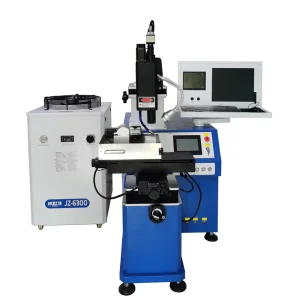



Addressing regulatory conformance, electrical standardization, shipping logistics, and lifecycle servicing.
