Configured specifically for rapid tooling modifications, complex core-pin restoration, and zero-sinkhole defect repair on hardened tool steels (P20, H13, S7, NAK80).
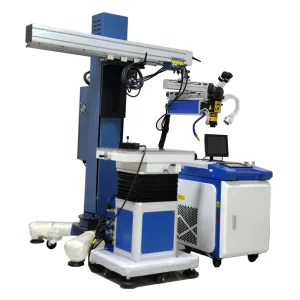
Denver Precision Series: Custom Fiber Mold Laser Welding Machine
Custom Fiber Mold Laser Welding Machine Pricelist, Quotes
Denver Ultra-Low HAZ: Custom QCW Mold Laser Welding Machine
Custom QCW Mold Laser Welding Machine Pricelist, Factory
Denver Heavy Tooling: Custom Boom Mold Laser Welding Machine
Custom Boom Mold Laser Welding Machine Manufacturers, Factory
Denver High-Precision: Custom Mould Laser Welding Machine
Custom Mould Laser Welding Machine Manufacturers, QuotesThe manufacturing landscape across the Denver Metropolitan Area—stretching from the aerospace epicenters in Centennial, Littleton, and Broomfield to the advanced precision machining hubs in Longmont and Loveland—is undergoing a rapid technological shift. High-mix, low-volume (HMLV) manufacturing mandates minimal tooling downtime, rendering traditional TIG repair obsolete due to excessive heat distortion and lengthy post-machining cycles.
Our custom mold laser welding machines provide Denver toolmakers with micro-beam pinpoint deposition capabilities. Whether addressing flash damage on aerospace-grade injection molds, repairing tight radius wear on automotive stamping dies, or executing micro-cladding on medical-device liquid silicone rubber (LSR) toolings, laser deposition preserves the metallographic grain structure without necessitating pre-heating cycles.
A granular comparative analysis between pulse YAG, quasi-continuous wave (QCW) fiber, and standard continuous wave (CW) laser modalities tailored for Denver toolrooms.
| Welding Parameter / Metric | Precision Pulsed YAG Series | Advanced QCW Fiber Series | Continuous High-Power Fiber |
|---|---|---|---|
| Primary Application | Fine parting lines, micro-cavities, razor-sharp shutoffs | Complex injection cores, medical LSR tooling, beryllium copper | Deep casting repairs, massive forging dies, structural rebuilds |
| Heat Affected Zone (HAZ) | 0.05 mm – 0.12 mm | 0.08 mm – 0.15 mm | 0.25 mm – 0.50 mm |
| Wire Range Compatibility | 0.1 mm to 0.6 mm diameter | 0.2 mm to 0.8 mm diameter | 0.8 mm to 1.6 mm diameter |
| Compatible Mold Steels | NAK80, S136, Stavax, H13, P20, Titanium | H13, CPM-1V, Ampco 940, CuBe, Inconel 718 | Cast iron, 4140, P20 mod, D2, S7 tool steel |
| Energy Delivery Stability | ±2% pulse-to-pulse energy feedback | ±1% digital beam profile consistency | Continuous regulated optical feedback |
| Post-Weld Machinability | Direct bench-stone or EDM polish ready | Immediate high-speed CNC mill or polish ready | Requires rough milling & stress-relief cycle |
Engineered to resolve critical failure modes across Colorado's primary high-tech production sectors.
Serving defense and commercial space suppliers around Jefferson County and Adams County. Restoration of wear profiles on high-nickel alloy stamping dies without creating parent-material micro-cracks or hydrogen embrittlement.
Engineered for Boulder and Lakewood bio-pharma component molders. Micro-welding of high-polish optical and fluidic multi-cavity tools made of S136 stainless steel, maintaining mirror finish without discoloration or pitting.
Supporting industrial fabrication in Commerce City and Aurora. Multi-axis cantilever and swing-arm optical heads reach 10-ton automotive sheet metal forming tooling directly on shop floor transport dollies.
Securing high-precision optomechanical systems requires robust manufacturing infrastructure. By designing, machining, and assembling optical heads, proprietary digital controllers, and gantry structures directly in our advanced Shenzhen facility, we eliminate excessive distributor markups while enforcing tier-1 quality control.
Our supply chain agility ensures immediate access to premium laser sources, precision galvo mirrors, and dual-circuit chiller systems. For Denver enterprises, this translates into industrial-grade machinery delivered at a 30% to 45% lower capital expenditure threshold compared to domestic assemblers, backed by rigorous burn-in testing and comprehensive factory-level warranties.
Zero-risk deployment engineered to satisfy North American regulatory frameworks and rapid tool maintenance requirements.
Fully compliant with ANSI Z136.1 Safe Use of Lasers, FDA CDRH 21 CFR Subchapter J registration, and interlocked Class 1 or Class 4 operator protocols to pass OSHA regional safety audits in Colorado.
Configured natively for US industrial voltages (208V, 240V, 480V 3-phase, 60Hz) with integrated line filtration to handle high altitude electrical insulation requirements across Denver's 5,280 ft elevation.
Comprehensive remote diagnostics with sub-2-hour response, digital process parameter optimization, and express air-freight fulfillment for optics and wire feed nozzles directly into DIA (Denver International Airport).
How our upcoming engineering updates integrate artificial intelligence and additive vision tracking for 2026 and beyond.
Real-time optical profilometry scans eroded die edges, automatically generating 5-axis cladding trajectory pathways without manual joystick training.
Pyrometric coaxial sensors adjust instantaneous laser peak power in response to parent metal temperature changes, completely preventing edge undercut and thermal cracking.
Interchangeable heads enabling swift transition between micro-wire deposition for fine shut-off repair and blown powder coaxial cladding for high-volume worn section build-ups.
Broad industrial solutions spanning open bed welders, precision boom units, multi-axis continuous systems, and surface restoration tools ready for export to Colorado.

Denver Flex-Reach: Custom Cantilever Laser Welding Machine
Custom Cantilever Laser Welding Machine Pricelist, Factories
Denver All-in-One: Custom Integrated Boom Mold Welding Machine
Custom Integrated Boom Mold Welding Machine Manufacturer, Quotes
Denver Heavy-Duty: Custom Cantilever Laser Welding System
Custom Cantilever Laser Welding Machine Pricelist, Factories
Denver Open-Access: High-Quality Open Laser Welding Machine
High-Quality Open Laser Welding Machine Pricelist, Factories
Denver Mold Maintenance: High-Quality Laser Cleaning Machine
High-Quality Laser Cleaning Machine Manufacturer, Quotes
Denver Fiber-Optic: High-Quality Fiber Transmission Laser Welder
High-Quality Fiber Transmission Laser Welding Machine Pricelist, Factories
Denver High-Speed: Galvanometer Continuous Laser Welder
Custom Galvanometer Continuous Laser Welding Machine Manufacturer, Factories
Denver Enclosure & Signage: Specialized Laser Welding Machine
High-Quality Advertising Word Laser Welding Machine Manufacturers, PricelistIn-depth technical answers addressing deployment, metallurgical compatibility, shipping, and total cost of ownership.
