Direct-from-factory optical systems configured to meet American AWS and European CE standards, engineered with moisture-sealed optical cavities and high-amperage cooling systems for tropical climates.
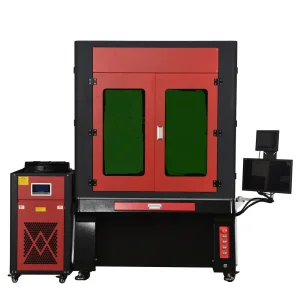
Class-1 protective housing with multi-axis motion interpolation, suited for hermetic sensor assembly, electrical enclosures, and high-volume Colón Free Zone contract manufacturing.
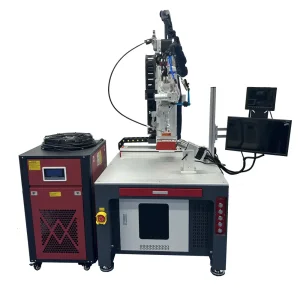
High beam quality single-mode or multi-mode fiber sources delivering deep penetration keyhole welding on heavy stainless steel 316L piping, boiler tanks, and hydraulic bulkheads.
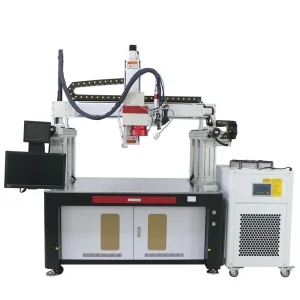
High-speed galvanometer beam deflection scanning up to 7,000 mm/s. Perfect for battery tab joining, copper busbars, solar connectors, and precision medical instruments.
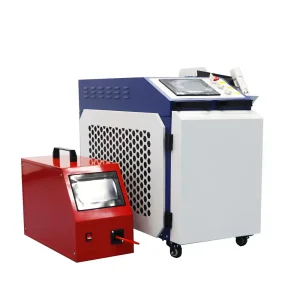
The benchmark 4-in-1 portable system featuring dynamic wobble optics, automatic dual-groove wire feed, and rapid switching between welding, cutting, and weld oxide cleaning.
An in-depth whitepaper analysis of how Panama's position as the premier multimodal logistics hub in Latin America is driving the adoption of high-energy-density fiber laser welding technologies.
The Republic of Panama commands an irreplaceable nexus in global maritime commerce, centered on the Panama Canal, the Pacific-Atlantic container ports (Balboa, Cristobal, Manzanillo, and Colon Container Terminal), and the Colón Free Zone (Zona Libre de Colón). Traditionally categorized as a services and transshipment-dominated economy, Panama is undergoing a significant industrial maturation. Heavy reliance on imported finished metal assemblies is giving way to high-value domestic custom fabrication, accelerated vessel maintenance, dry-dock hull retrofit, and specialized assembly within Special Economic Areas like Panama Pacífico.
A primary challenge historically confronting metal fabricators across Panama City, Colón, and Chiriquí has been the extreme tropical maritime climate. Relative humidity routinely surpassing 85% paired with high ambient salinity accelerates electrochemical galvanic corrosion in conventional weld seams. When using traditional Shielded Metal Arc Welding (SMAW) or Gas Metal Arc Welding (GMAW/MIG), excessive thermal input damages the protective passive chromium oxide layer of stainless steels (grades 304 and 316L) through sensitization and chromium carbide precipitation. Industrial laser welding, utilizing concentrated 1064nm to 1080nm near-infrared photons, concentrates thermal energy into a micro-focused spot (typically 0.1mm to 0.3mm), fundamentally eliminating heat distortion while preserving critical metallurgical corrosion resistance properties.
Globally, the industrial joining sector has entered the era of solid-state fiber laser supremacy. Older generation Nd:YAG flashlamp-pumped systems offered wall-plug electrical efficiencies below 4%, requiring massive chillers and fragile flashlamp replacement every 800-1000 hours. Modern diode-pumped ytterbium fiber laser resonators achieve electro-optical conversion efficiencies exceeding 35% to 40%. For factory operators in Panama—where commercial electricity rates reflect regional grid tariffs—the operational cost per linear meter of weld drops by up to 70% compared to legacy arc methods.
Furthermore, global supply chain volatility has heightened the premium placed on labor agility. Certified TIG welders capable of fabricating thin-gauge food-grade sanitary tubing or aluminum architectural profiles require years of intensive trade qualification. Handheld fiber laser welders equipped with high-speed dual-axis wobble optical scanning allow newly onboarded technicians to achieve aerospace-grade, porosity-free, uniform cosmetic fillet and butt joints in hours of training rather than months. The resulting joint exhibits deep penetration without burn-through, cutting post-weld pickling, passivation, and mechanical grinding costs down to near zero.
Operating sensitive optical and laser equipment in high-humidity ambient environments (such as the Atlantic terminal of Colón or the Pacific coastal shipyards of Balboa) presents condensation hazards. Our laser welding machines engineered for Panama integrate dual-circuit intelligent industrial refrigeration chillers with dynamic dew-point compensation. By synchronizing the internal coolant temperature strictly above the ambient dew point, optical lens fogging and QBH fiber connector condensation are completely prevented.
From canal-side auxiliary vessel repair to clean-room pharmaceutical processing in Tocumen, explore how our laser welding systems deliver quantifiable returns on investment.
Panama's ship repair facilities handle constant traffic of Neopanamax and feeder vessels. Our high-power handheld fiber laser systems (1500W to 3000W) allow emergency onboard fabrication and repair of marine stainless steel 316L seawater intakes, hydraulic tubing, ballast tank monitoring brackets, and copper-nickel piping manifolds with zero hot-work spatter risk to adjacent electrical cabling.
With millions of TEUs traversing the Colón and Balboa terminals annually, shipping containers, refrigerated intermodal reefers, and chassis trailers experience severe mechanical wear. Our 4-in-1 laser platforms allow technicians to laser-strip corrosion, precisely cut damaged corten steel sidewalls, and weld replacement panels in one continuous workflow.
Concentrated in areas like David (Chiriquí) and the central provinces, food and beverage processing demands ultra-smooth sanitary weld seams (ASME BPE compliant). Traditional TIG welds leave root oxide discoloration that harbors bacteria unless laboriously mechanically ground. Laser welding produces ultra-smooth, micro-scale weld fillets inside milk, juice, and sugar refining piping without internal slag or surface pinholes.
Panama City's skyline features iconic high-rise architectural engineering requiring extensive marine-grade architectural aluminum (6000 series) and mirror-finish stainless steel. Laser welding eliminates thermal buckling and discoloration across anodized or polished sheets, ensuring structural integrity for exterior balustrades, curtain walls, and commercial fixtures.
Supporting packaging manufacturers in the Colón Free Zone and Tocumen industrial parks, our precision mold laser welding systems utilize swing-arm boom optics to conduct micro-deposition wire cladding directly onto hardened tool steels (P20, H13, NAK80). Molds are repaired directly on the shop floor without annealing, preheating, or post-weld stress relief.
Panama's longstanding role as an international jewelry trade hub demands precision desktop laser welding equipment. Benchtop systems allow bench jewelers in Panama City to repair platinum prongs, resize 18K gold bands directly next to heat-sensitive emeralds or diamonds, and fill porosity in cast precious metals without localized flame propagation.
Detailed empirical data demonstrating metallurgical, operational, and financial advantages under tropical operating parameters.
| Evaluation Parameter | Youmir Industrial Fiber Laser | Traditional TIG (GTAW) | Traditional MIG (GMAW) |
|---|---|---|---|
| Welding Speed (1.5mm SS 304) | 15 - 50 mm/sec (Ultra Fast) | 3 - 8 mm/sec (Slow) | 8 - 15 mm/sec (Moderate) |
| Heat-Affected Zone (HAZ) | Microscopic (< 0.25mm) | Wide (1.5mm - 3.5mm) | Extensive (> 3.0mm) |
| Thermal Distortion & Warpage | Negligible; preserves tight sheet tolerances | Severe on thin sheets (<2mm) | High thermal shrinkage stresses |
| Post-Weld Processing Required | Zero to minor light wipe | Extensive pickling, grinding, polishing | Heavy mechanical de-spattering & grinding |
| Welding of Reflective Non-Ferrous Metals | Superior (Al, Brass, Copper with Wobble) | Difficult; tungsten contamination risk | Prone to porosity, erratic arc wandering |
| Dissimilar Metal Joining (e.g., Cu-SS) | Feasible via precise power control | Virtually impossible in production | Not feasible due to intermetallic brittleness |
| Operator Training Requirement | 1 to 2 days for certified cosmetic welds | 6 to 18 months for skilled consistency | 1 to 3 months for production speed |
| Electrical Energy Consumption | Low (Up to 40% electro-optical efficiency) | High (Massive wasted ambient heat) | Moderate to high electrical load |
| Corrosion Resistance in Panama Marine Air | Maximum; passive chromium film preserved | Compromised; chromium carbide precipitation | Compromised; spatter pits invite pitting |
Strategic manufacturing insights detailing our continuous technological evolution toward AI-assisted seam tracking, green/blue hybrid lasers, and complete factory automation.
Our automation engineering division integrates real-time structured laser seam-tracking cameras and neural network edge computing. The system dynamically compensates for joint fit-up gaps, bevel deviations, and thermal expansion during continuous production of structural pipes and large architectural frames in Panamanian plants.
For Panamanian enterprises and multinational contractors, we structure streamlined CIF Balboa or CIF Colón multimodal freight logistics. Full export documentation, consular legalization, tariff classification support, and containerized protective seaworthy packaging ensure zero in-transit moisture damage across the Pacific maritime route.
Historically, laser welding required unrealistic sub-millimeter joint tolerance (<0.05mm gap). Our dual-motor galvanometer wobble heads oscillate the focused laser beam in circular, linear, figure-eight, and triangular patterns at frequencies up to 300Hz. This bridges irregular fabrication gaps up to 3.0mm when combined with automated dual wire-feeding.
Explore our full spectrum of pulsed, continuous, galvanometer, and robotic boom-mounted laser welding machines engineered for versatile manufacturing requirements.
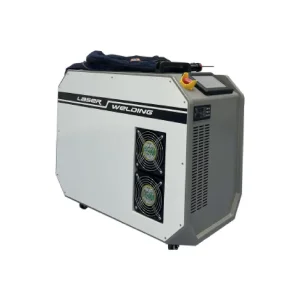
Delivers peak kilowatt pulse energy with exceptionally low average thermal heat input. Ideal for ultra-thin electronics, titanium alloys, and precision medical components.
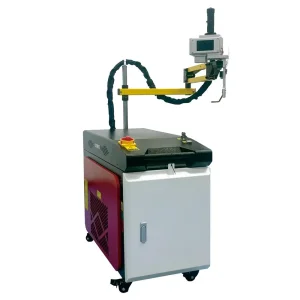
Combines the agility of manual handheld positioning with the high-speed oscillatory pattern flexibility of integrated galvanometer mirrors for smooth wide seams.
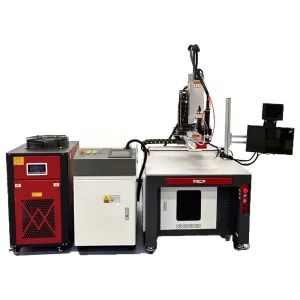
Features energy-share and time-share optical beam splitters, allowing one central laser generator to power multiple operational workstations simultaneously.
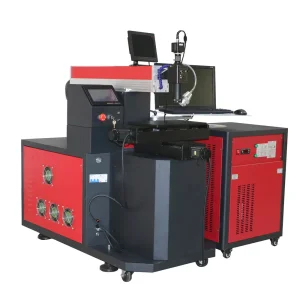
Equipped with programmable linear X-Y-Z axes and continuous chuck rotation, designed for circular sanitary fittings, stainless cookware, and pressure vessel seals.

Industrial CNC motion controller with high-precision ball screw drives and repeat positioning accuracy within ±0.02mm, suited for electronics and battery packs.
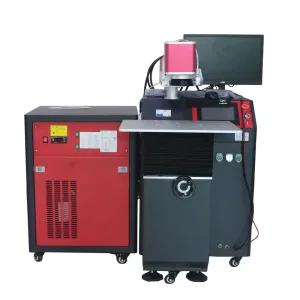
High-speed galvanometer mirrors project arbitrary weld patterns (circles, spirals, rectangles) without physical workpiece movement, accelerating production by 500%.
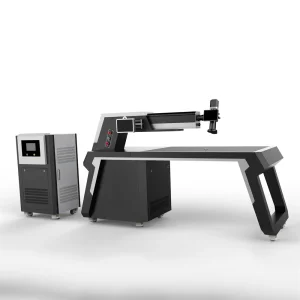
Specialized extended-focal-length optical gun engineered specifically for high-speed seamless fabrication of 3D channel letters, LED signage, and polished architectural letters.
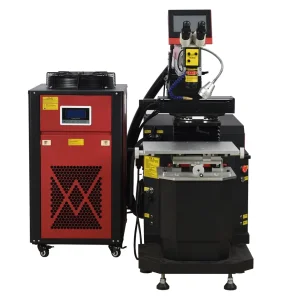
Multi-joint cantilever crane arm with 360-degree radial articulation. Reaches deep within plastic injection tooling and stamping dies weighing up to multiple tons.
Direct technical insights addressing electrical infrastructure, tropical climate control, international shipping logistics, and regulatory compliance.
Industrial machinery deployed across the Republic of Panama frequently encounters 60Hz supply grids varying between 120V/240V split-phase, 208V three-phase, or 480V commercial/industrial service. All Youmir laser welding machines destined for Panama are custom-configured at our factory with 60Hz-native transformer topologies and heavy-duty transient voltage surge suppression (TVSS) units. Handheld models up to 1500W run seamlessly on standard 220V (±10%) 60Hz single-phase circuits, while 2000W and 3000W heavy systems are engineered for 220V, 380V, or 480V 3-phase industrial power.
In high relative humidity environments (>80% RH), standard chillers cause condensation on fiber output collimators and QBH quartz connectors, which can destroy the laser cavity. Our machines for the Panamanian market feature dual-circuit intelligent chillers that dynamically calculate ambient dew point and adjust water temperature to prevent condensation. Furthermore, optical cavities inside the handheld welding guns are hermetically sealed (IP65) and continuously purged with clean shielding gas (pure Argon or Nitrogen) during laser firing.
Yes. Fiber laser welding procedures can be qualified under international marine classification societies (including American Bureau of Shipping - ABS, DNV, and Lloyd’s Register) as well as AWS D17.1 (Specification for Fusion Welding for Aerospace Applications) and ASME Section IX. The low heat input minimizes grain boundary sensitization in austenitic stainless steel 316L, yielding superior pitting resistance equivalent numbers (PREN) and passing rigorous radiographic and bend tests required by marine surveyors.
Unlike traditional welding which consumes high volumes of tungsten electrodes, ceramic cups, and grinding abrasive discs, fiber laser consumables are limited to:
1. Protective optical cover lenses (typical lifespan: 40-100 hours of continuous firing, costing only $2 - $4 USD each).
2. Copper gas nozzles (lifespan: 200-500 hours, easily redressed or replaced).
3. Shielding gas (Industrial Argon or Nitrogen consumed at 12-18 L/min).
Overall consumable and electrical utility operational cost averages approximately $1.50 - $2.80 USD per continuous operational hour, representing an 80% reduction compared to traditional TIG operations.
We provide complete door-to-port and door-to-door multimodal export services. Shipments are packed in vacuum-sealed moisture barrier foil with desiccant packs, then secured inside export-grade ISPM-15 compliant fumigated plywood crates. We provide commercial invoices, packing lists, Bills of Lading (B/L), Certificates of Origin (CO), and CE Declaration of Conformity to streamline customs clearance through the National Customs Authority of Panama (Autoridad Nacional de Aduanas) under duty-free regimens in the Colón Free Zone or special economic parks.
We back our equipment with a comprehensive 2-year warranty on the fiber laser source resonator and 1-year warranty on mechanical and optical subsystems. Overseas buyers in Panama receive 24/7 direct remote video engineering support in English and Spanish, cloud-enabled diagnostic telematics, and rapid air-courier dispatch of critical optics or electronic modules with typical delivery to Tocumen International Airport (PTY) within 3 to 5 business days.
Whether you operate a shipyard along the Panama Canal, an intermodal logistics facility in Colón, or a specialized precision workshop in Panama City, our application engineers will evaluate your drawings, execute free material test welding, and formulate a customized turnkey equipment proposal.
Send Inquiry Now