
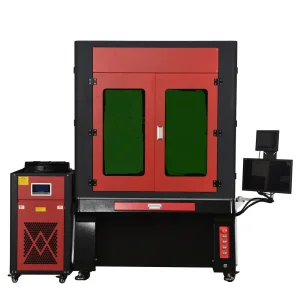
Empowering Empire State manufacturers—from Long Island aerospace subcontractors and Rochester precision optics innovators to Brooklyn architectural fabricators—with high-yield fiber laser solutions engineered for ultra-low HAZ, structural reliability, and rapid operational ROI.
Flagship industrial fiber welding systems rigorously calibrated for heavy industrial duty cycles, precision instrument seals, and automated high-throughput production lines across the State of New York.



Navigating the stringent metallurgical standards, high operational costs, and rapid production cycles across the Empire State's diverse manufacturing clusters.
The manufacturing sector in New York State represents an intricate fusion of high-precision defense subcontracting, advanced clean-energy hardware, medical device engineering, architectural sheet metal fabrication, and emerging quantum/semiconductor infrastructure. In contrast to high-volume commodity manufacturing hubs, New York’s commercial ecosystem demands exceptional metallurgical fidelity, near-zero distortion, and tight dimensional tolerances. Whether operating within the historic metalworking facilities of Western New York, the specialized optoelectronics clusters of Rochester, the Capital Region’s nanotech corridors, or the high-density architectural workshops of the Long Island and New York Metropolitan area, fabricators operate under severe constraints regarding floor space efficiency, labor rates, and power consumption.
To deliver measurable value, a laser welding machinery manufacturer must tailor its system architectures to the hyper-localized operational profiles of New York's primary industrial zones:
Dominated by aerospace Tier-2/Tier-3 defense suppliers and high-end architectural stainless steel workshops. These operations demand Class-1 enclosed automated CNC systems and agile handheld continuous units capable of joining thin-gauge 316L, titanium 6Al-4V, and Inconel without thermal burn-through or unsightly cosmetic discoloration that requires tedious pickling and passivating.
Known globally as a center of optics, photonics, and analytical imaging. Equipment deployed here requires micrometer-precise galvanometer scanning heads, pulsed QCW lasers, and active feedback telemetry to join hermetic sensor housings, kovar-to-glass seals, and miniature optical subassemblies without exceeding tight thermal budgets.
Anchors of heavy machinery, die-casting, automotive stamping, and clean power components. Fabricators in Buffalo and Albany rely on heavy cantilever boom mold repair platforms and multi-kilowatt continuous-wave laser stations to recondition massive injection tools and weld thick-gauge structural aluminum alloys on tight production deadlines.
Moving beyond conventional fiber delivery: How multi-mode oscillation, dual-wavelength fusion, and real-time vision algorithms redefine industrial joint integrity.
Traditional static fiber laser beams exhibit an exceptionally small spot diameter (typically 50–100 μm), which creates extreme energy density but yields an unforgiving seam tolerance. When fit-up gaps exceed 0.2 mm, static beams frequently cause undercut, drop-through, or incomplete fusion. Our engineering integrates high-speed dual-axis galvanometer oscillation directly within the processing head. By dynamically steering the beam in circular, triangle, sinusoidal, and figure-eight patterns at frequencies up to 3,000 Hz, the effective beam diameter expands dynamically from 0.2 mm to 5.0 mm. This bridge capability allows New York job shops to tolerate real-world part fit-up variations up to 1.5 mm while simultaneously agitating the molten pool to degas volatile compounds, virtually eliminating porosity in zinc-coated galvannealed steel and 6000-series structural aluminum.
In response to the surge in New York-based electric vehicle (EV) battery prototyping, energy storage assembly, and clean-tech electronics, our technical roadmap introduces combined wavelength architectures. Standard 1070 nm near-infrared (NIR) fiber lasers suffer from high initial reflectivity when processing polished copper and gold (often reflecting up to 95% of incident energy at room temperature). This reflectivity can lead to severe back-reflection damage and volatile spatter. By co-axially synthesizing a 450 nm visible blue diode laser with a high-power 1080 nm fiber laser, absorption is dramatically increased during initial surface coupling. The blue laser produces a conductive melt bath with zero spatter, after which the NIR beam enters deep keyhole mode, achieving flawless, high-conductivity electrical joints in copper hairpins and busbars.
Modern Industry 4.0 implementations require non-destructive, real-time quality assurance. Our automated CNC and robotic laser systems feature co-axial machine-vision seam tracking that adjusts trajectory within 5 ms latency, compensating for mechanical thermal expansion during continuous cycles. Furthermore, our high-tier custom platforms incorporate inline Optical Coherence Tomography (OCT). By utilizing low-coherence interferometry, our systems scan the bottom of the vapor keyhole in real-time, measuring precise weld penetration depths down to ±15 μm at kilohertz sampling rates. This eliminates the necessity for destructive sectioning and coupon testing—a substantial competitive advantage for facilities executing aerospace defense work under NAVSEA and MIL-STD quality audits.
| Process Parameter | Conventional Handheld / Fiber | Youmir Wobble Oscillating Fiber | Advanced CNC Automated Keyhole |
|---|---|---|---|
| Weld Seam Gap Tolerance | < 0.2 mm (Requires tight machining) | Up to 1.5 mm (Wobble beam filling) | < 0.1 mm or automated wire-fed |
| Spatter Index (AISI 304 / Cu) | Moderate to High (10-15% lost mass) | Ultra-low (< 2% mass deviation) | Near-Zero (Gas-shielded laminar flow) |
| Thermal Distortion (Heat Affect) | Low (0.3 - 0.6 mm HAZ) | Minimal (0.1 - 0.25 mm HAZ) | Negligible (< 0.08 mm HAZ) |
| Shielding Gas Efficiency | 15 - 20 L/min Argon/Nitrogen | 10 - 15 L/min with laminar nozzle | 8 - 12 L/min coaxial micro-shroud |
| Operator Training Threshold | 1-2 Weeks manual practice | 2-4 Hours rapid induction | CNC/G-code technical competence |
Unlocking extreme cost performance, verified structural component reliability, and deep vertical integration directly from Shenzhen's high-tech manufacturing core.
In the modern international industrial equipment market, sustained commercial success is driven by comprehensive supply-chain resilience. Based in Guangming District, Shenzhen—the epicenter of global optoelectronics and precision CNC manufacturing—Shenzhen Youmir Laser Technology Co., Ltd. operates across a vertically integrated industrial cluster that eliminates the multi-tiered markup structures common among domestic US equipment re-branders.
Unlike assembly-only vendors, our internal engineering teams design, mill, and program our own optical collimators, high-speed galvanometer galvo-scanners, and proprietary CNC motion controllers. This level of vertical control ensures optical alignment tolerances down to the sub-micron scale and allows direct firmware modifications for custom automated production cells.
Our strategic manufacturing base allows us to iterate optical, mechanical, and electronic revisions in days rather than quarters. By sourcing premium 976 nm pump diodes, hyper-pure synthetic fused silica protective lenses, and aircraft-grade aluminum alloy structural chassis within a 30-mile radius, we insulate our New York partners from single-source component bottlenecks.
Purchasing directly from our factory floor bypasses intermediate importer markups, regional distributors, and sales commissions that frequently inflate capital equipment costs in North America by 150% to 250%. New York business owners reinvest these capital savings into shop floor automation, tooling, and local workforce upskilling.
Every laser welding system undergoes a rigorous 72-hour continuous full-power burn-in protocol, beam parameter product (BPP) interferometer profiling, and mechanical stress testing prior to export packing. Structural frames are heat-treated in inert atmospheres to relieve internal casting stresses, ensuring that our multi-axis CNC gantries maintain micrometer positional repeatability throughout decades of intense shop-floor cycling.
Meeting and exceeding North American industrial safety mandates: OSHA Class 1 enclosure standards, FDA CDRH accessions, and US electrical grid compatibility.
A critical challenge when importing overseas machinery into New York facilities is power compatibility. Standard Chinese industrial equipment is wired for 380V/50Hz 3-phase power, whereas New York facilities operate across varied infrastructure: 208V 3-phase in older commercial buildings and Brooklyn light-industrial lofts, 240V split-phase in suburban job shops, and 480V 3-phase in heavy industrial plants upstate. Our export platforms built for the US market feature custom-wound, UL-certified internal isolation transformers and Schneider Electric switchgear, allowing plug-and-play installation into native 208V, 240V, or 480V 60Hz grids without auxiliary phase converters or harmonic instability.
Laser safety on the shop floor is non-negotiable. Industrial fiber lasers operate at 1064–1080 nm within the invisible near-infrared spectrum—wavelengths that pass unimpeded through the human cornea and focus directly on the retina, posing severe ocular hazards. Youmir engineering structures each installation around rigorous North American safety frameworks:
A rigorous financial breakdown for plant managers, purchasing directors, and shop owners evaluating fiber laser investments against legacy welding processes.
When enterprise procurement teams assess fiber laser machinery, initial capital expenditure (CapEx) accounts for only a fraction of the life-cycle equation. The definitive metric is Total Cost of Ownership (TCO) measured per linear foot of certified structural weld. In high-overhead operating environments like New York, operational savings in consumables, electrical draw, and secondary manual labor generate immediate balance sheet impact.
| Cost Factor (Annual 2,000 Shift Hours) | Traditional TIG / GTAW Setup | Youmir 2000W Handheld Fiber Laser | Annual Net Direct Advantage |
|---|---|---|---|
| Primary Welder Labor ($45/hr base + burden) | $90,000 (1x Speed Baseline) | $22,500 (4x Speed equivalent throughput) | +$67,500 direct labor reallocation |
| Secondary Grinding & Flap Discs | $14,200 (Labor + grinding abrasives) | $1,100 (Minimal spatter cosmetic cleanup) | +$13,100 in abrasive & operator time |
| Electrical Energy Consumption | $4,800 (Low efficiency 30% wall-plug) | $2,100 (High efficiency >42% wall-plug) | +$2,700 annual utility savings |
| Shielding Gas Usage (Argon vs Pure N2) | $6,400 (High flow 100% Ar) | $3,200 (Lower flow rate / N2 compatibility) | +$3,200 gas volume reduction |
| Total Operational Cost Baseline | $115,400 per year | $28,900 per year | +$86,500 Net Savings per Year |
Under standard commercial run rates in New York fabrication facilities, the payback amortization period for a Youmir 1500W to 3000W fiber laser welding system typically falls between 3.8 to 6.2 months. Beyond direct financial payback, the non-tangible operational benefits—including reduced part scrap rates, zero post-weld straightening due to thermal warpage, and expanded capacity to take on exotic alloys—position businesses ahead of competitors burdened by obsolete tooling.
Comprehensive manufacturing platforms: from specialized tool-steel mold reconditioning systems to ultra-high-speed galvanometer micro-welding stations.




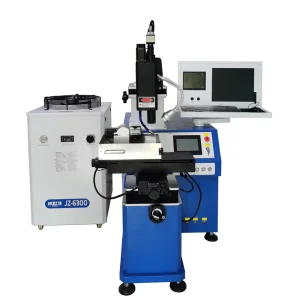



Comprehensive engineering clarity regarding duty cycles, metallurgical boundaries, electrical standards, and logistical fulfillment.
We deploy a comprehensive two-tier support model. First, all systems ship pre-configured with English CNC interfaces, verified parameters, and live video commissioning with our senior optical engineers. For regional factory onboarding in Western NY, the Capital Region, or NYC Metro, we partner with certified field service automation technicians who handle physical rigging, electrical tie-ins, and operator safety certifications. Furthermore, our 24/7 telemetry diagnostics link enables our Shenzhen engineering team to audit machine operating logs, chiller temperatures, and diode voltages in real-time, resolving over 95% of software or parameter adjustments instantaneously.
Yes, provided compliant safety controls are active. Under OSHA Standard 1926.54 and ANSI Z136.1 guidelines, Class 4 open-beam handheld lasers require a designated Laser Controlled Area (LCA) with interlocked perimeter barriers, OD6+ rated laser curtains (blocking 1064–1080 nm wavelengths), warning placards, and certified operator eye protection. Alternatively, selecting our fully enclosed CNC automated systems classifies the machinery as Class 1 under operational conditions, requiring no special eye protection or isolated safety rooms on the general shop floor.
Penetration depth is a function of laser optical wattage, beam quality (BPP), travel velocity, and wire delivery:
• 1500 Watt: Single-pass full penetration up to 4.0 mm on 304/316L stainless, 3.5 mm on mild steel, and 2.5 mm on 6061-T6 aluminum.
• 2000 Watt: Single-pass full penetration up to 5.5 mm on stainless steel, 5.0 mm on mild carbon steel, and 4.0 mm on aluminum alloys.
• 3000 Watt: Single-pass deep keyhole penetration reaching 8.5 mm on stainless, 8.0 mm on carbon steel, and 6.5 mm on structural aluminum. Multi-pass bevel joint welding with automatic wire feeding allows reliable joining of sections exceeding 16 mm.
Galvanized steel is notoriously difficult to weld with conventional TIG/MIG because zinc boils at approximately 906°C, whereas steel melts around 1538°C. The violent expansion of trapped zinc vapor under the molten pool causes spatter, blowouts, and severe porosity. Youmir addresses this with high-frequency wobble beam technology. By programming a high-frequency circular or figure-8 oscillation, the molten pool remains agitated and widened, allowing the zinc vapor to escape safely ahead of the solidification front. When combined with nitrogen shielding gas, welds are uniform, porosity-free, and corrosion-resistant without requiring pre-weld surface grinding.
Standard export orders are manufactured, burned-in, and packed in reinforced sea-worthy moisture-barrier timber crates within 10 to 14 business days. Ocean transit directly to the Port of New York and New Jersey (PNYNY) takes approximately 28 to 35 days. For urgent enterprise projects, air freight via JFK International Airport delivers machines within 5 to 7 business days. We provide full DDP (Delivered Duty Paid) logistical handling, including US Customs clearance, ISF filing, and tariff documentation, delivering machinery directly to your facility's loading dock without administrative complexity.