Pre-configured for US plant standards (208V/240V/480V 3-phase, UL-compliant components, dual-interlock laser safety enclosures).


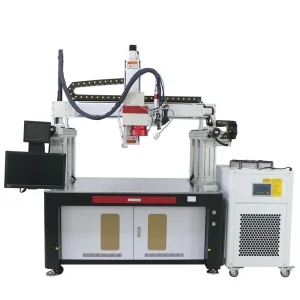
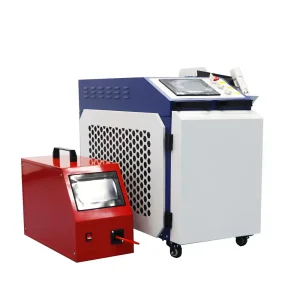
Why Tier-1 automotive suppliers, HVAC builders, and defense sub-contractors from Ohio to California are transitioning from legacy TIG/MIG to Handheld and Automated Fiber Laser Welding.
The American Welding Society (AWS) projects a national shortage exceeding 330,000 skilled welding operators by 2028. The average age of certified pipe and TIG welders in North America is 57, driving fully-burdened industrial labor rates beyond $45–$85/hour. Our fiber laser systems allow entry-level technicians to produce pristine, non-porous welds within 3 hours of onboarding.
Traditional Gas Tungsten Arc Welding (GTAW) delivers wide Heat-Affected Zones (HAZ) on thin 304/316 stainless steel and 6061-T6 aluminum, causing massive panel warping that demands hours of manual flame-straightening and abrasive grinding. Handheld fiber lasers operate with a concentrated, high-density energy profile, cutting secondary finishing and rework expenses by over 80%.
Federal incentives under the Inflation Reduction Act (IRA) and the CHIPS & Science Act have triggered aggressive reshoring of precision electrical enclosure manufacturing, cleanroom ducting, solar racking, and EV battery tray fabrication. American businesses require rapid tooling scalability with predictable capital expenditure (CapEx) timelines.
Comprehensive cost breakdown including DDP/CIF port delivery estimates, duty considerations, laser source wattage, and recommended application scopes.
| Model Category | Laser Power | Typical US Materials | Cooling Mode | Estimated Factory FOB Price | Estimated US Landed (DDP) | Key US Applications |
|---|---|---|---|---|---|---|
| Handheld 3-in-1 Compact | 1200W CW | SS ≤3.0mm, CS ≤3.0mm, Al ≤1.5mm | Water Chiller Integrated | $3,800 – $4,600 | $5,200 – $6,400 | Commercial Kitchens, Custom Automotive, Architectural Railings |
| Handheld Precision Pro | 1500W CW | SS ≤4.5mm, CS ≤4.0mm, Al ≤2.5mm | Dual-circuit Water | $4,600 – $5,800 | $6,200 – $7,600 | HVAC Ducting, Trailer Fabrication, Electrical Cabinet Enclosures |
| Heavy-Duty Handheld | 2000W CW | SS ≤6.0mm, CS ≤5.5mm, Al ≤4.0mm | Industrial Chiller | $5,900 – $7,200 | $7,800 – $9,400 | Structural Steel, Marine Hardware, Pressure Vessel Fitting |
| High-Penetration Handheld | 3000W CW | SS ≤8.5mm, CS ≤8.0mm, Al ≤6.5mm | High-capacity Dual Chiller | $8,200 – $10,500 | $10,800 – $13,600 | Heavy Machinery, Farm Implements, Shipbuilding Components |
| Enclosed Multi-Axis CNC | 1500W – 3000W | Rotary / Flat Tube & Sheet Assembly | Cabinet Chilled | $16,000 – $28,500 | $20,500 – $34,000 | Class 1 Automotive EV Battery Terminals, Medical Stents, Aerospace |
| High-Speed Galvo Station | 2000W – 4000W | Micro-spot, Copper-to-Al Busbars | Constant Temp Water | $22,000 – $42,000 | $27,000 – $49,000 | Lithium Battery Pouch Sealing, Sensor Pins, Micro-electronics |
Total Cost of Ownership (TCO) Comparison: When analyzing US operating expenditures across a 2,000-hour work year, a 1500W laser welder operating on industrial power ($0.14/kWh) and bulk Argon or Nitrogen shielding gas consumes approximately $1.15 to $1.85 per operating hour. In contrast, an equivalent TIG welding station incurring heavy shielding gas consumption, tungsten electrode regrinding, high electrical draw, and post-weld abrasive discs easily exceeds $8.40 per hour in consumables and utilities alone—before factoring in the 400% welder productivity differential.
From NSF-certified food service sanitization to AS9100 aerospace precision, our fiber laser welders address demanding metallurgical tolerances across the American continent.
For custom commercial food prep counters, stainless tanks, and microbrewery vessels across Wisconsin and the Midwest. The wobbling beam delivers airtight, crevice-free butt and fillet joints with zero micro-porosity, easily passing stringent USDA and 3-A Sanitary Standards with near-zero chemical pickling or mechanical polishing.
From California hot-rod builders to Texas commercial truck body converters. Enables clean joining of dissimilar alloys, including copper busbars to 6000-series aluminum modules for EV battery packs, alongside ultra-thin 0.8mm aluminized exhaust piping without blow-through.
Ideal for Seattle and Florida aerospace corridors. Provides exact deposit repair for high-grade P20, H13, and NAK80 tool steels without heating the mold core. Prevents localized hardness loss and residual stress cracking in aerospace avionics housing brackets.
Combining the Shenzhen precision electro-optical industrial cluster with deep vertically-integrated component sourcing to give American enterprises an overwhelming technological and pricing edge.
Unlike Western equipment assemblers who outsource subsystems across multiple international intermediaries (compounding markups at every stage), our Shenzhen facility engineers the optical delivery system, wire feed controllers, patented dual-axis wobble galvanometer mirrors, and intelligent water cooling circuits internally. This concentrated supply cluster slashes lead times from 16 weeks down to 5–10 business days for standard systems.
Every laser welding platform bound for the United States undergoes an unyielding testing protocol before crate sealing: 72 hours of uninterrupted cyclic laser output at 45°C ambient chamber temperatures, high-voltage insulation dielectric tests (IEC 60204-1 standards), vibration simulation for ocean freight transit, and precise beam profile divergence characterization with Ophir beam profilers.
A closer look at the optical physics and control logic driving the next generation of American industrial laser welding systems.
Traditional static spot lasers demand zero joint gap (<0.1mm), making fabrication tolerances unrealistic for typical American shear-and-brake job shops. Our high-frequency dual-axis galvanometer motor system oscillates the focused beam up to 300Hz in circular, ellipse, hourglass, and line patterns across an adjustable 0.5mm–6.0mm seam width, effortlessly bridging gap discrepancies up to 2.5mm with automatic synchronized filler wire feeding.
Integrated high-resolution CMOS coaxial camera systems feature AI-assisted visual weld positioning. The control software auto-detects joint deviations, corrects the robot arm or linear CNC trajectory in real-time (±0.02mm response latency), and logs weld penetration anomalies via localized edge computing, satisfying strict aerospace Quality Management Systems.
Moving toward ultra-portable 1200W models utilizing refrigerant compressor air-cooling instead of liquid deionized water chillers. This innovation strips machine weight down to 38kg (83 lbs), eliminates seasonal anti-freeze maintenance, and permits truck-bed mobile field repairs on remote pipeline installations and farm equipment across rural America.
Ensuring complete peace of mind for environmental health officers, plant safety managers, and corporate procurement directors.
All machines are fully certified for export to the US with registered FDA Center for Devices and Radiological Health (CDRH) Accession Numbers. Outfitted with dual redundant interlocks, key switch master controls, remote interlock terminals for laser safety enclosures, external warning light logic, and OD6+ certified 1064nm safety goggles complying with OSHA 29 CFR 1910.133.
Control cabinets are assembled with genuine Schneider, Omron, and Mean Well power supply components designed to pass NFPA 79 and UL 508A industrial machinery safety audits. Pre-wired for North American utility standards: 220V/240V single-phase 60Hz or 480V 3-phase heavy industrial grid setups.
We maintain domestic warehouse hubs in California and Illinois stocked with replacement optical protective lenses, focus mirrors, wire feed liner sleeves, nozzles, and emergency fiber modules. We guarantee standard consumables overnight shipping via FedEx/UPS and offer real-time remote English video support backed by a 24-month comprehensive laser core warranty.
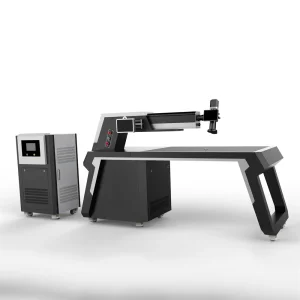
Explore specialized pulsed QCW micro-welders, cantilever heavy-duty mold repair systems, high-speed letter fabricators, and 3-axis CNC workstations.
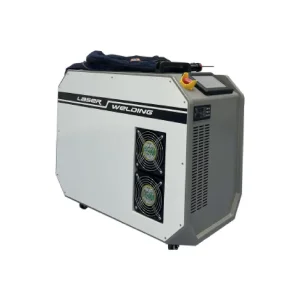


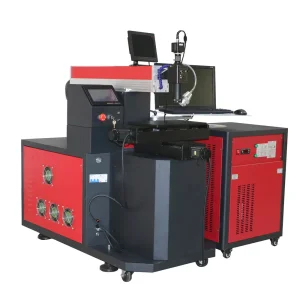



Expert answers addressing electrical connections, shielding gas consumption, duty cycles, and import tariffs.
Our 1200W and 1500W systems operate efficiently on standard single-phase 220V–240V AC (50/60 Hz) on a 30-amp or 40-amp dedicated breaker, making them plug-and-play for almost any American commercial unit or garage shop with a NEMA 6-50 or L6-30 receptacle. Larger 2000W and 3000W continuous models require a 3-phase 208V, 240V, or 480V connection (with our included industrial dry-type step-down transformer) drawing 40–60 amps peak current.
For carbon steel and 304/316 stainless steel, industrial-grade 99.99% pure Argon or High-Purity Nitrogen produces mirror-bright, oxide-free beads. Nitrogen is particularly cost-effective in the US ($20–$35 per 250 cu. ft. cylinder) and yields a stiffer, harder weld nugget on stainless sheet. For 5052 and 6061 aluminum, 99.999% Ultra-High Purity Argon (UHP) is necessary to suppress magnesium oxidation and eliminate weld soot. Flow rate is typically set between 12 to 18 liters per minute (LPM).
Laser welding machines fall under US Harmonized Tariff Schedule (HTS) Code 8456.11.00. While equipment originating from China is subject to general tariffs and Section 301 duties, we offer seamless Delivered Duty Paid (DDP) maritime and air shipping. Under our DDP tier, we manage ocean logistics, US Customs clearance, ISF filing, harbor maintenance fees, and Section 301 duty payments, delivering the crated unit via lift-gate truck directly to your shop floor with zero unexpected broker bills.
Yes. We strongly encourage sample verification. You can ship coupon samples of your proprietary alloys (e.g., Inconel 625, Hastelloy, Titanium Grade 2, brass, or custom stamped aluminum) to our testing laboratory. Our welding engineers will perform cross-sectional metallographic cut-and-etch tests, tensile pull tests, record HD process video, and deliver a comprehensive Welding Procedure Specification (WPS) parameter sheet detailing laser power, frequency, wobble width, wire speed, and gas velocity.
Our fiber laser sources (Raycus, MAX, or IPG Photonics) possess a 100% continuous duty cycle (24/7) at their rated output under ambient temperatures up to 40°C (104°F). The industrial dual-circuit water chiller features independent temperature control for both the optical torch head and the fiber laser core, ensuring consistent laser beam mode quality (M2 < 1.2) without thermal lensing during multiple eight-hour production shifts.
