Standardized and automated laser solutions calibrated for high-throughput rust removal, precision mold decontamination, and cleanroom manufacturing in the Hungarian industrial sector.

Hungary has emerged as one of Central and Eastern Europe's most formidable industrial powerhouse corridors, strategically balancing traditional tier-1 automotive manufacturing with the European continent's second-largest EV battery manufacturing network.
With massive operational facilities in Győr (Audi Hungaria), Kecskemét (Mercedes-Benz), Esztergom (Magyar Suzuki), and the revolutionary BMW iFactory in Debrecen, Hungarian precision engineering requires automated, micro-level surface preparation. Traditional abrasive sandblasting causes mechanical wear and particulate contamination, whereas pulsed laser cleaning offers repeatable surface roughness (Ra) without compromising metallurgical tolerances.
CATL's 100 GWh gigafactory in Debrecen, coupled with major battery facilities from Samsung SDI (Göd), SK On (Komárom & Iváncsa), and Sunwoda (Nyíregyháza), represents a staggering demand for laser decoating. High-precision laser ablation removes insulation layers, electro-coatings, and microscopic oxide barriers from battery busbars and copper/aluminum tabs, securing ultralow internal contact resistance and zero-defect laser welding.
Hungarian State Railways (MÁV-START) rolling stock maintenance, the Dunakeszi Járműjavító railway works, and structural steel maintenance across the Danube bridges demand non-contact corrosion remediation. Furthermore, historical stone restoration in Budapest—governed by stringent EU heritage preservation covenants—increasingly mandates non-abrasive, chemical-free pulsed laser cleaning to preserve porous limestone and ornamental bronze monuments.
Plant managers across Central Europe are phasing out hazardous solvent degreasing and abrasive blasting due to tightening EU REACH regulations and escalating hazardous waste disposal tariffs.
| Evaluation Parameter | Fiber Laser Cleaning (Continuous/Pulsed) | Dry Ice / Grit Sandblasting | Chemical Pickling & Acid Baths |
|---|---|---|---|
| Consumables Cost | Zero (Operates on electrical power only) | High recurring costs (Garnet, steel grit, pellets) | Extreme (Acids, neutralizing agents, water) |
| Substrate Integrity | Non-contact; selective ablation prevents base damage | Mechanical erosion; risks thinning and dimension loss | Risk of hydrogen embrittlement & micro-pitting |
| EU Green Compliance (REACH) | 100% Eco-compliant; zero toxic emissions or effluents | High airborne dust; requires complex ventilation | Severe environmental penalties & disposal costs |
| Automation Feasibility | Seamless integration with 6-axis robots & CNC gantries | Difficult; high nozzle wear and debris recirculation | Manual dip-tanks or massive immersion lines |
| Operational Running Cost (OPEX) | Approx. €0.85 – €2.20 per hour (Electricity + optics) | €18.00 – €45.00 per hour (Media + compressor load) | €30.00 – €65.00 per hour (Neutralization + hazard fees) |
| Average Payback Period (ROI) | 6 to 14 Months in Hungarian continuous production | Negative amortized cost profile over 36 months | Regulatory liability drag on balance sheet |
Selecting between continuous laser radiation and high-peak nanosecond pulsed beams dictates both the physical cleaning mechanism and surface integrity of the treated material.
CW laser cleaners utilize a constant stream of photons at a nominal 1064nm or 1080nm wavelength. The primary mechanism is rapid, thermal vaporization coupled with mechanical spallation caused by steam expansion within the contaminant layer.
Pulsed systems concentrate energy into microscopic bursts (10 to 200 nanoseconds), reaching peak pulse power of hundreds of kilowatts. Contaminants instantly vaporize via plasma breakdown and optical shockwaves before thermal energy can conduct into the substrate.
Procurement quotes for the Central European market vary based on optical configuration, laser generator tier (Raycus, MAX, IPG), handheld vs. automated tooling, and regional CE compliance packaging.
| System Category | Typical Laser Power | Optical Architecture | Target Hungarian Industrial Use Case | Indicative Price Range (EUR / DDP Hungary) |
|---|---|---|---|---|
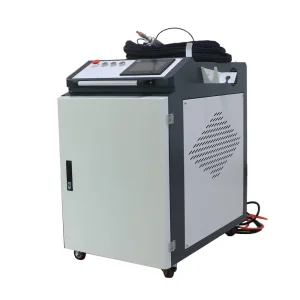
| Handheld CW Cleaner | 1500W – 2000W | Single/Dual wobble continuous | Metal fabrication, construction steel, gate repair | €4,800 – €7,500 |
| High-Power CW Descaler | 3000W | Water-cooled heavy-duty gun | Rail chassis cleaning, ship maintenance, bridge retrofits | €8,900 – €13,800 |
| Precision MOPA Pulsed | 100W – 200W | Galvo optical head, air-cooled | Die repair, electronic components, historical restoration | €9,500 – €16,500 |
| High-Energy MOPA Pulsed | 300W – 500W | Water-chilled pulse generator | Automotive tire molds, EV battery tab oxide stripping | €19,500 – €34,000 |
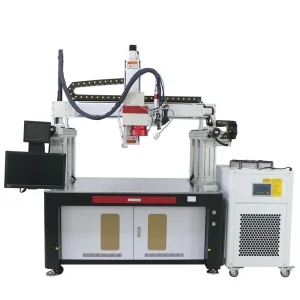
| Robotic Cell Laser Cleaner | 500W Pulse / 2000W CW | 6-Axis industrial robot + safety booth | Automated continuous lines (Debrecen/Győr automotive lines) | €58,000 – €145,000+ |
*Note: Final quotes are delivered FOB Shenzhen or DDP Budapest/Debrecen including customs clearance, VAT handling, CE conformity certification, and sea/air freight insurance.
From real-time spectral feedback to cooperative robotics, industrial laser cleaning is migrating from manual handheld tools to intelligent, Industry 4.0 integrated production cells.
Laser-Induced Breakdown Spectroscopy (LIBS) integrated directly into the beam delivery head analyzes plasma emission spectra in real-time, instantly shutting down the beam the millisecond rust is eliminated and base metal is exposed.
Deploying lightweight collaborative robots (Cobots) with 3D structured-light vision allows automated scanning of irregular workpieces, delivering 100% uniform surface roughness without manual operator fatigue.
Development of high-power 532nm (green) and 355nm (ultraviolet) lasers for specialized battery materials where copper absorption spikes, enabling cold-processing on ultra-thin current collector foils.
Central European enterprise deployments feature secure IoT telemetry, monitoring chiller water flow, diode current decay, and protective window cleanliness to guarantee 99.8% uptime across shift schedules.
Deploying high-power laser equipment in Hungary requires rigorous adherence to European Union health and safety directives and factory workplace protocols.
All industrial cleaning systems are certified according to European Standard EN 60825-1:2014. Features include dual-channel safety interlocks, remote door interlock connections, key-switch laser activation, emission indicators, and matching OD6+ certified laser safety eyewear.
Every unit ships with complete European Declaration of Conformity documents (Machinery Directive 2006/42/EC, Low Voltage Directive 2014/35/EU, EMC Directive 2014/30/EU) accompanied by comprehensive Hungarian and English operation and maintenance manuals.
We maintain express consumable pipelines (protective lenses, focus mirrors, ceramic rings, cleaning nozzles) ensuring doorstep delivery within 48 to 72 hours across Hungarian industrial regions including Pest, Fejér, Győr-Moson-Sopron, and Hajdú-Bihar.
Detailed answers addressing engineering feasibility, duty cycles, operating safety, and international shipping to Hungary.
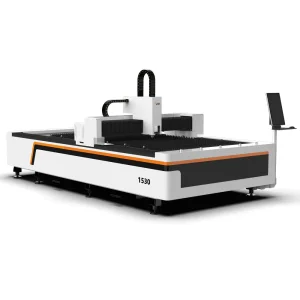
Explore our expanded equipment line-up engineered for Hungarian metalworking job shops, tool & die maintenance departments, and precision electronic manufacturers.



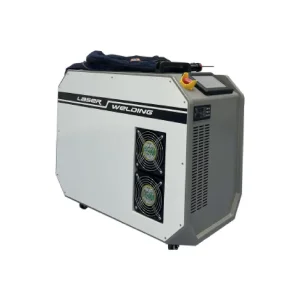
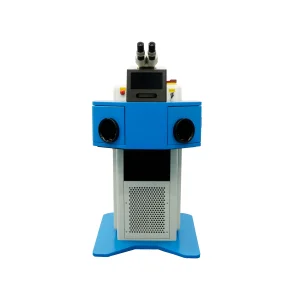
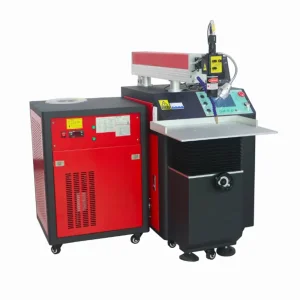

Get direct technical assistance, sample ablation feasibility testing on your parts, and fully transparent DDP Budapest pricing including European CE conformity documentation.
