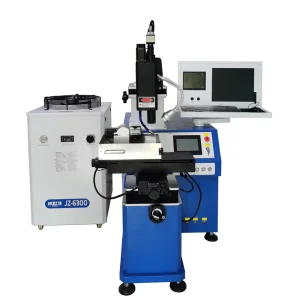
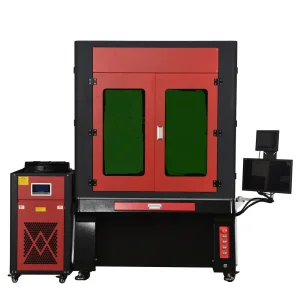
Engineered for strict metallurgical tolerances, minimal thermal distortion, and deep seam penetration in high-output manufacturing facilities across southern Ontario.
The Greater Toronto Area (GTA)—stretching through Mississauga, Brampton, Vaughan, and into the automotive corridor of Oshawa and Oakville—forms Canada's most critical manufacturing corridor. Understanding its technological transition is essential for equipment procurement.
Ontario's rapid pivot to EV battery pack manufacturing, bus chassis assemblies, and lightweight aluminum alloys demands ultra-low heat input. Our laser systems eliminate heat-induced warping on 6000-series aluminum and copper busbar connections.
With Bombardier, Collins Aerospace, and Tier-1 sub-assemblers operating across the Toronto Pearson and Downsview hubs, metallurgical fidelity on titanium, Inconel, and stainless alloys must satisfy demanding AS9100 and CSA standards.
Ontario faces a documented shortage of certified TIG/MIG tradespeople. Handheld fiber laser welders bridge this gap by enabling apprentice operators to produce smooth, porosity-free welds at 3x to 5x traditional TIG welding travel speeds.
Procuring laser equipment requires deep alignment between physical hardware, optics architecture, and local plant electrical infrastructure.
Traditional fixed-spot fiber lasers suffer from narrow fit-up tolerance. Our advanced wobble heads support customizable spot oscillation up to 5mm width, forgiving poor joint tolerances on sheared or stamped sheet metals.
Seamlessly weld copper to aluminum for EV battery terminals or brass to steel for plumbing assemblies. Microsecond pulse shape programming controls the intermetallic compound layer, preventing embrittlement cracks.
Operating with a wall-plug electro-optical efficiency above 35%, our continuous fiber sources draw a fraction of the power consumed by legacy CO2 or flashlamp YAG lasers, significantly cutting monthly plant utility expenses.
Laser welding is entering an era of automated, closed-loop machine intelligence. Our factory engineering team continuously tests and integrates forward-looking technologies.
Real-time coaxial machine vision automatically tracks micro-deviations along 3D weld trajectories, compensating for thermal expansion in long-run assemblies.
Infrared photodiodes monitor vapor plume dynamics inside the weld pool, predicting spatter or porosity formation and auto-modulating power in milliseconds.
Weld seam data streams directly to edge processors, matching optical back-reflection profiles with pre-trained metallurgical quality datasets for 100% QA logging.
Full integration with plant ERP and SCADA systems, providing Toronto fab managers real-time metrics on laser diode degradation, argon flow, and wire consumption.
Operating laser equipment in Ontario requires strict adherence to regulatory standards set by federal and provincial bodies.
All factory-shipped equipment configured for Toronto buyers can be tailored with CSA-approved components or arranged with field evaluation inspections (SPE-1000) for smooth ESA (Electrical Safety Authority) sign-off.
Our Class 4 laser enclosures and handheld guns feature dual-channel redundant safety interlocks, contact grounding confirmation, and wavelength-calibrated optical safety glass compliant with ANSI Z136.1 and IEC 60825-1.
We maintain streamlined global logistics for replacement focus protective windows, copper wire feeder nozzles, and fiber optic QBH delivery cables to prevent downtime in critical production shifts.
Send your CAD drawings or physical metal coupons for a complimentary metallurgical weld audit and cycle time calculation.
Direct answers to the most common metallurgical, operational, and shipping questions posed by plant managers and procurement teams in Canada and globally.
Explore our full line of industrial laser welding configurations, from high-speed galvanometer workstations to precision multi-axis CNC systems.