In the vibrant industrial landscape of Doha, spanning the New Industrial Area, Mesaieed Industrial City, and Ras Laffan, manufacturing operations are experiencing an unprecedented industrial modernization. Under the framework of Qatar National Vision 2030 (QNV 2030), economic diversification has accelerated high-value localized production: precision polymer packaging, aluminum architectural extrusions, downhole oil & gas valve manifolds, and specialized maritime components. Central to maintaining operational continuity in these plants is the tool, die, and mold ecosystem.
Historically, when complex injection molds, pressure die-casting dies, or progressive stamping tools encountered parting-line wear, cracking, or thermal fatigue (heat checking), Qatari industrial operations faced agonizing bottlenecks. Tooling had to be either air-freighted back to European or Asian tooling hubs at immense logistics costs or repaired locally using archaic Manual Metal Arc (MMA) or Conventional Micro-TIG welding. Both conventional methods impart excessive heat input, generating wide Heat-Affected Zones (HAZ), internal stresses, base metal annealing, microscopic undercut, and unavoidable structural warping. The subsequent electrical discharge machining (EDM) and bench polishing cycles often took weeks.
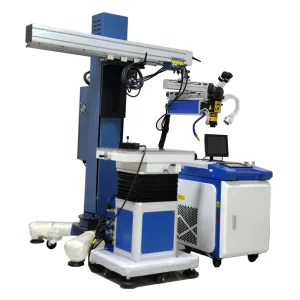
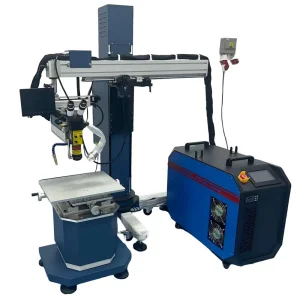
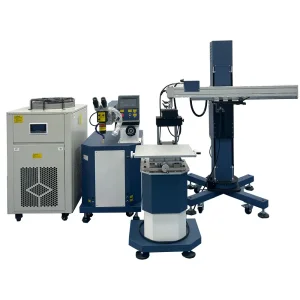
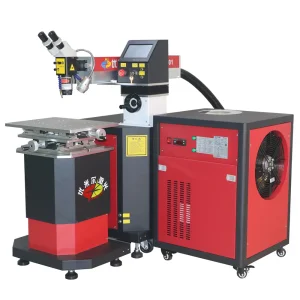
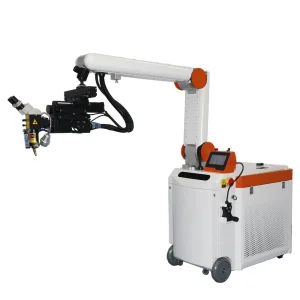
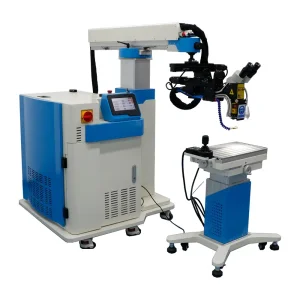
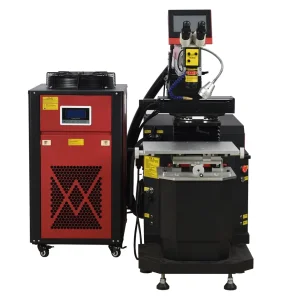
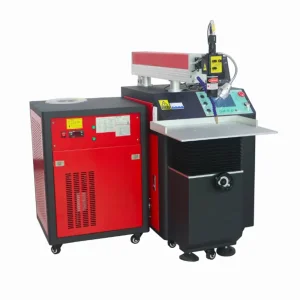
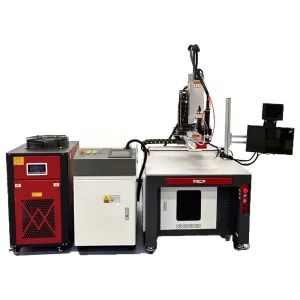
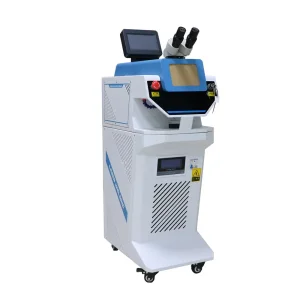
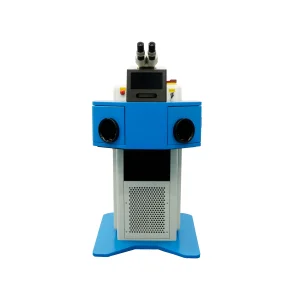
Our Mold Laser Welding Machine Series introduces a quantum leap in laser metallurgical restoration to Doha’s industrial sector. Leveraging fiber-coupled Quasi-Continuous Wave (QCW) and high-peak pulsed YAG/Fiber sources, our machinery concentrates high energy density onto a pinpoint micro-pool (0.1 mm to 2.0 mm beam waist). This restricts metallurgical transformation strictly to the deposition seam. Base tool steels—ranging from pre-hardened P20 and 718 to premium air-quenched H13, high-polish S136, and NAK80—retain their original bulk temper, Rockwell hardness, and grain structure without cracking or sinking.