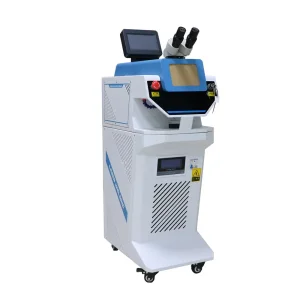
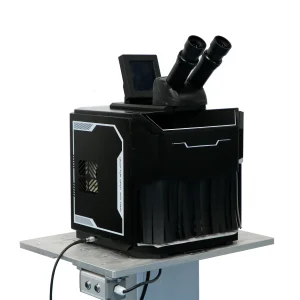
Explore our industrial-grade fiber laser welders, robotic CNC stations, and high-energy deposition workstations tailored for high-volume fabrication.
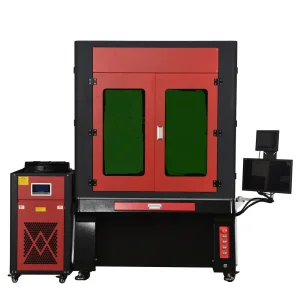






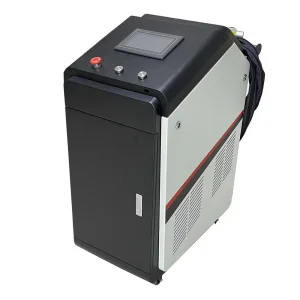
A rigorous examination of energy density thresholds, weld pool stability, and metallurgical advantages over legacy arc welding paradigms.
In modern industrial manufacturing, the transition from conventional Gas Tungsten Arc Welding (GTAW/TIG) and Gas Metal Arc Welding (GMAW/MIG) to continuous-wave (CW) fiber laser processing is governed by energy concentration. A 2000 Watt (2kW) Laser Welding Machine operates at an optical wavelength of approximately 1064 to 1080 nanometers, concentrating 2000 Joules of photonic energy per second into a focal spot diameter often smaller than 100 micrometers. This establishes a localized power density exceeding 106 W/cm2, substantially passing the vaporisation threshold required for deep-penetration keyhole welding.
Unlike conduction-limited welding, where thermal energy dissipates passively from the outer surface downward, keyhole mode creates a stable, vapor-filled capillary surrounded by liquid molten metal. The beam couples directly into the workpiece via multiple internal reflections, achieving an aspect ratio (depth-to-width) exceeding 4:1. For mid-range industrial fabrication (1.0 mm to 5.0 mm metal thickness), 2000 Watts is widely regarded by welding engineers as the optimum equilibrium point. It offers sufficient photonic flux to overcome the high thermal diffusivity and surface reflectivity of materials like aluminum and brass without causing excessive vapor recoil, blow-through, or uncontrollable root spatter on thinner sheet metals.
By drastically increasing travel speed (up to 4 to 10 times that of manual TIG), the net heat input per linear millimeter drops by 75–85%. Metallographic cross-sections confirm minimal grain coarsening, preserving yield strength and fatigue resistance while virtually eliminating structural warpage.
Youmir Laser's proprietary 2kW handheld and automatic welding heads integrate dual-axis galvanometer scanning mirrors. By oscillating the beam in circular, line, ellipse, or figure-8 patterns (amplitude 0–5mm, frequency up to 300Hz), joint fit-up tolerance expands, bridging wide gaps while actively degassing the molten pool.
Copper, brass, and structural aluminum alloys (e.g., 6061, 5052) exhibit high optical reflectivity at room temperature. A customized 2000W continuous source produces the critical irradiance peak needed to trigger instantaneous phase change, enabling dense, spatter-free joints without optical back-reflection damage.
Verified laboratory process parameters established at our Shenzhen R&D center using Youmir 2000W systems with pure Argon/Nitrogen shielding gas.
| Material Substrate | Thickness (mm) | Joint Configuration | Laser Power (W) | Wobble Width (mm) | Shielding Gas & Flow | Typical Linear Speed |
|---|---|---|---|---|---|---|
| Austenitic Stainless (AISI 304/316) | 1.5 mm | Butt Joint / Flange | 1200 W | 1.2 mm (Circle) | Nitrogen (15 L/min) | 35 – 50 mm/s |
| Austenitic Stainless (AISI 304/316) | 3.0 mm | Square Groove Butt | 1800 W | 1.8 mm (Triangle) | Nitrogen (18 L/min) | 18 – 25 mm/s |
| Austenitic Stainless (AISI 304/316) | 5.0 mm | Single Pass V-Prep | 2000 W | 2.2 mm (Line) | Argon (20 L/min) | 8 – 14 mm/s |
| Carbon Steel (Q235 / A36) | 2.0 mm | Corner / T-Joint | 1500 W | 1.5 mm (Figure 8) | Argon / CO2 mix | 28 – 38 mm/s |
| Carbon Steel (Q235 / A36) | 4.5 mm | Butt Joint (0.8mm Wire) | 2000 W | 2.5 mm (Circle) | Argon (18 L/min) | 10 – 16 mm/s |
| Structural Aluminum (6061-T6) | 2.0 mm | Lap Joint | 1700 W | 2.0 mm (Dual Arc) | Pure Argon (22 L/min) | 22 – 32 mm/s |
| Structural Aluminum (5052) | 3.5 mm | Butt Joint (ER4043 Wire) | 2000 W | 2.5 mm (Circle) | Pure Argon (25 L/min) | 12 – 18 mm/s |
| Brass Alloy (H62 / CuZn38) | 2.0 mm | Square Butt Joint | 1900 W | 1.5 mm (Circle) | Pure Argon (20 L/min) | 15 – 22 mm/s |
Custom 2000-watt systems designed to satisfy stringent structural, metallurgical, and aesthetic codes across diverse international industrial hubs.
Integrators across Michigan, Ohio, and Baden-Württemberg deploy our 2000W enclosed fiber systems for aluminum alloy battery trays, cooling manifold fluid couplings, and hydroformed chassis pillars. The dynamic wobble ensures zero hot-cracking in 6xxx-series aluminum and preserves airtight seal integrity tested under 0.5 MPa helium leak detection.
Fabricators in Italy, France, and the UK adhere strictly to EN 1672-2 hygienic design requirements. The 2kW laser delivers smooth, zero-porosity root passes on dairy tanks, catering counters, and architectural balustrades. The smooth bead eliminates bacteriological traps without demanding labor-intensive mechanical blending or pickling chemicals.
In high-volume manufacturing hubs across Vietnam, Thailand, and the UAE, galvanized sheet metal and stainless kitchen appliances demand high cycle speeds. Youmir's handheld 2000W units allow non-certified welders to join 1.2–3.0 mm galvanized panels without burning away the protective zinc coating adjacent to the seam, preserving corrosion resistance.
Equipped with micro-wire feeders and high-magnification stereomicroscopes, our cantilever and boom-arm mold repair laser systems deposit H13, P20, and S136 tool steels directly into chipped parting lines, worn cores, and fatigue cracks, restoring tool geometries without thermal annealing of surrounding zones.
Joining thin-gauge Inconel 625, Hastelloy, and titanium alloys requires absolute thermal control. The 2000W fiber delivery system incorporates closed-loop optical feedback and trailing inert gas trailing shields, preventing atmospheric nitrogen/oxygen embrittlement during full-penetration passes.
Structural assemblies for photovoltaic brackets and battery energy storage system (BESS) containers require reliable, deep welds in weather-resistant Corten steel and structural Q355 carbon steel. The 2kW power easily achieves 4.0 mm fillet welds with automated seam tracking.
How our vertically integrated Shenzhen R&D and production facilities yield substantial cost efficiencies, agile customization, and rapid global delivery cycles.
Shenzhen represents the epicenter of global electro-optical innovation, encompassing the most integrated photonics industrial cluster on the planet. As a direct manufacturer headquartered in the Guangming District of Shenzhen, Shenzhen Youmir Laser Technology Co., Ltd. capitalizes on this unique geographic concentration to optimize every link of the manufacturing value chain—from optical fiber preforms and collimating lens fabrication to FPGA motion control board surface-mounting.
Unlike Western equipment assemblers burdened by tiered component markups and multi-month supply lead times, our engineering center designs machine chassis, laser cavity temperature feedback loops, dual-circuit industrial chillers, and proprietary wobble gun control boards in-house. This delivers concrete operational advantages for international distributors and OEM partners:
We source ultra-pure 915nm pump diodes and active double-clad fibers with pre-screened beam parameter products (BPP < 2.5 mm·mrad). Partnerships with leading fiber laser engine makers (Raycus, Maxphotonics, IPG) give Youmir direct access to first-run binning, ensuring output power stability within ±1% across continuous duty shifts.
Our 5,000 m² Shenzhen facility maintains a continuous inventory of structural frames, CNC gantries, laser sources, and chillers. While standard European machine build times run 8–16 weeks, Youmir dispatches fully verified, burn-in tested custom 2000W units within 7 to 14 business days, slashing time-to-market.
From private-label industrial design, custom sheet metal color powder-coating, and bespoke HMI touchscreen software localization (English, German, Spanish, French, Russian, Turkish, Japanese, Korean) to customized wire feed drive rollers—our in-house software and mechanical teams adapt equipment directly to your catalog requirements.
A comprehensive economic breakdown contrasting traditional TIG production setups against Youmir 2000-watt fiber laser technology.
For workshop directors, production managers, and plant financial controllers, capital expenditure (CapEx) represents only a fraction of lifetime asset cost. The overwhelming majority of operational expenditures (OpEx) stem from certified welder labor costs, post-weld mechanical finishing, electrical utility draw, and consumable gas usage.
A 2000W fiber laser welding machine delivers an electro-optical conversion efficiency exceeding 35–40%, compared to roughly 20% for older Nd:YAG flashlamp welders and low electrical duty cycles in manual arc systems. Below is an annualized operational cost comparison based on a standard single-shift manufacturing environment (2,000 operating hours/year) welding 2.5 mm austenitic stainless steel components:
| Operational Cost Parameter | Legacy Manual TIG (GTAW) | Youmir 2000W Fiber Laser | Annualized Savings Impact |
|---|---|---|---|
| Welding Operator Skill Level / Wage | Certified Journeyman Welder ($35–$45/hr) | General Operator ($20–$25/hr) | $30,000 – $40,000 / year reduction |
| Linear Production Speed | 4 – 8 mm/s | 25 – 40 mm/s | Over 350% increase in component output |
| Post-Weld Flap-Wheel Grinding & Pickling | Mandatory ($8,000 consumable + labor) | Negligible (Minimal thermal discolouration) | $7,000 – $9,000 / year reduction |
| Electrical Utility Consumption | Approx. 7.5 kW draw at wall | Approx. 6.5 kW total (including chiller) | $500 – $1,200 energy savings |
| Shielding Gas & Filler Wire Usage | High gas volume, heavy wire build | Precise coaxial shielding, minimal wire | $1,500 – $2,500 / year reduction |
| Typical CapEx Payback Period | Baseline Reference | 3.8 to 6.2 Months | Immediate positive cashflow in year 1 |
Engineered to satisfy stringent global regulatory frameworks, workplace safety standards, and round-the-clock technical continuity.
Every Youmir custom machine carries CE compliance under Machinery Directive 2006/42/EC and Electromagnetic Compatibility Directive 2014/30/EU. Integrated dual-channel safety interlocks, contactor-isolated E-stops, and earth-ground fault loop monitors safeguard operators on the shop floor.
Conforming to EN 60825-1 and FDA CDRH 21 CFR 1040.10 standards. Handheld systems integrate dual-contact work clamping grounding loops—the fiber beam cannot trigger unless the nozzle maintains electrical circuit continuity with the grounded workpiece.
Standardized electrical cabinets configured for universal input options: 3-Phase 380V/400V/415V (50/60Hz) for European and Asian industrial grids, and single-phase 220V/240V or step-up transformer packages for North American fabrication environments.
Next-generation optical architectures, in-situ neural network process monitoring, and hybrid-wavelength integration underway at Youmir.
Integrating Optical Coherence Tomography (OCT) coaxially through the welding optic. By scanning millimeters ahead of and behind the keyhole at 50 kHz, the system maps groove profiles and measures weld bead depth dynamically, feeding closed-loop power corrections in real time.
For zero-spatter processing of pure copper busbars and hairline hairpins in automotive stators. A 450nm visible blue laser creates a liquid molten pool with high ambient absorption (absorptivity > 40%), while the 2000W fiber laser penetrates deeply without reflective backscattering.
Collaborative multi-axis robotic platforms featuring drag-and-drop teach pendants and stereoscopic machine vision. Operators with no CAD/CAM background can trace complex 3D pipe seams, press 'Start', and achieve sub-millimeter precision welding on custom batch fabrications.
In-depth responses compiled by senior laser application engineers to guide configuration, sample testing, and industrial commissioning.
While 1000W and 1500W sources excel on thin gauge metals up to 3mm, a 2000W fiber laser expands single-pass penetration capability up to 5mm on stainless steel, 4.5mm on carbon steel, and up to 3.5–4.0mm on reflective aluminum alloys. More crucially, when welding 2mm–3mm materials, a 2000W source can run at lower duty-stress, substantially raising linear travel speeds and extending pump diode service life.
A 2000W continuous fiber laser generates waste heat that must be precisely extracted to prevent thermal lensing and wavelength drift. Our systems incorporate dual-circuit industrial water chillers with independent PID controls: the low-temperature circuit (22°C ± 0.5°C) cools the fiber laser source module, while the ambient circuit (28°C–32°C) cools the QBH optical connector and wobble gun collimation/focusing lenses, eliminating condensation risks in humid climates.
Yes. When fit-up clearance is tight (joint gap < 0.3mm for butt welds or precision-machined edges), autogenous welding (without filler wire) yields narrow, clean seams that require zero finishing. When joint gaps measure between 0.3mm and 2.0mm, our microprocessor-controlled auto-wire feeder feeds 0.8mm, 1.0mm, 1.2mm, or 1.6mm solid wire synchronously into the molten pool.
For austenitic stainless steels (304, 316L) and titanium, high-purity Nitrogen (≥ 99.99%) or Argon is recommended to yield silvery, oxidation-free beads. For structural carbon steels (Q235, A36), Argon or an Ar/CO2 (80/20) blend provides clean joint wetting. For aluminum alloys and brass, high-purity Argon (≥ 99.999%) is mandatory to prevent surface oxidation and porosity.
The primary consumables are protective windows (cover quartz lenses), copper wire-guide nozzles, and ceramic focus tips. Under normal operation with clean shielding gas, a protective window lasts 100 to 250 operating hours. Copper nozzles typically last 200 to 400 hours unless contaminated by back-spatter. We include a comprehensive starter wear package with each machine dispatch.
Prior to finalizing any contract, overseas buyers can send component drawings or physical workpieces to our Shenzhen testing lab. Our application engineers run experimental parameter matrices (power, wobble amplitude, speed, shielding gas) and return high-definition metallographic macro-etch cross-sections, tensile test reports, and 4K process videos for engineering verification.
Explore our extended portfolio of cutting, cleaning, heavy-duty boom welders, and micro-precision jewelry deposition systems.