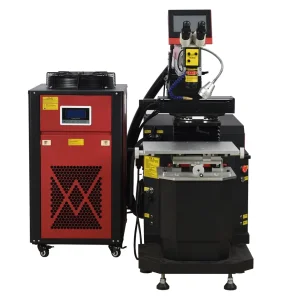
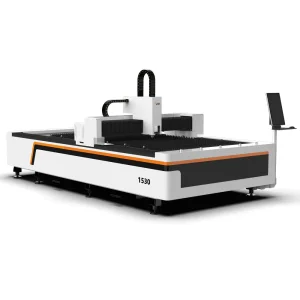
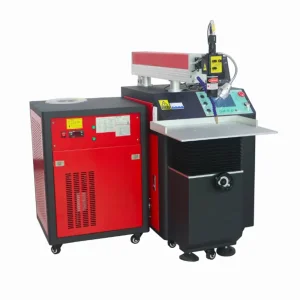
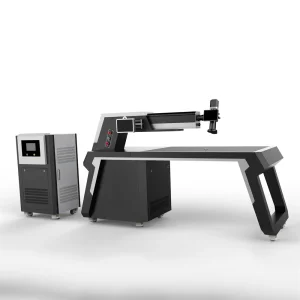
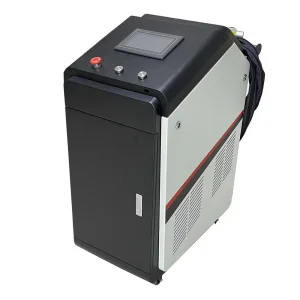
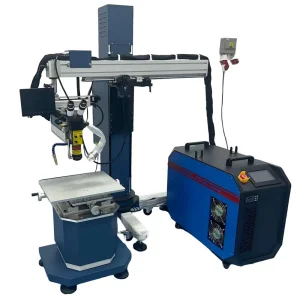
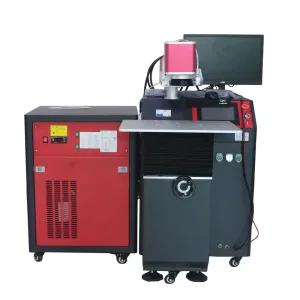
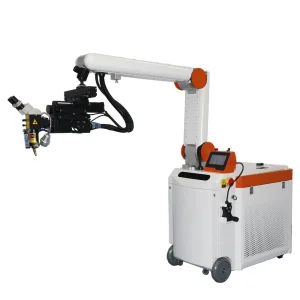
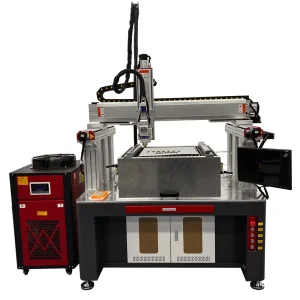
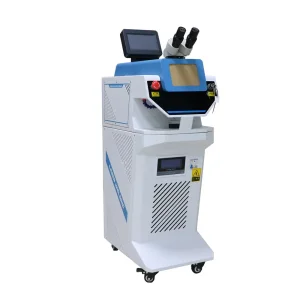
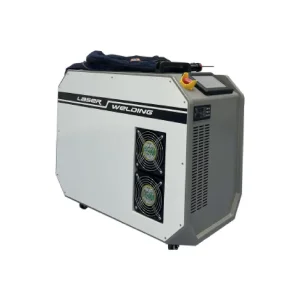
Engineered in-house by Shenzhen Youmir Laser Technology Co., Ltd., our modular product suite bridges precision fiber laser cleaning, micro-joining, and specialized automated tooling to eliminate mechanical wear and toxic consumables.
A macroeconomic and technical appraisal of how precision laser cleaning is replacing chemical bath stripping, sandblasting, and dry ice blasting across heavy tier-1 manufacturing sectors.
Across the international manufacturing theater, industrial surface preparation has undergone a generational transformation. For decades, mechanical abrasive blasting (grit, garnet, sand, dry ice) and toxic chemical dipping (solvents, acids, alkaline pickling) represented necessary evils in heavy manufacturing, automotive refinishing, and aerospace overhaul. These traditional surface treatments suffer from systemic vulnerabilities: excessive abrasive waste generation, human health hazards associated with airborne crystalline silica, micro-structural base metal erosion, and astronomical hazardous waste disposal tariffs under stringent environmental frameworks such as EU REACH, US EPA, and OSHA safety standards.
Enter fiber laser cleaning technology—an elegant, non-contact, thermodynamic ablation methodology engineered with zero consumable media. By leveraging single-mode and high-brightness multi-mode fiber resonators operating at the near-infrared spectrum (~1064 nm to 1080 nm), custom fiber cleaning systems emit controlled bursts of photon energy that selectively vaporize oxides, thermal scale, protective mill oil, adhesives, carbonization residues, and organic topcoats without impinging upon the underlying substrate metallurgical integrity.
Global demand is propelled by two distinct manufacturing thrusts: high-volume continuous production lines requiring high-speed pre-weld oxide stripping (automotive BIW, e-mobility battery tray fabrication, naval shipyard shipbuilding) and high-value precision reconditioning (injection tool maintenance, aerospace turbine de-coating, semiconductor wafer holder refurbishment). Custom fiber cleaning machine manufacturers are no longer merely assembling commodity units; they operate as specialized surface engineering consultancies that tailor beam quality ($M^2$), pulse repetition frequencies ($1$ kHz to $2$ MHz), pulse durations ($15$ ns to $500$ ns), and multi-axis galvo scan geometries to match the exact thermodynamic ablation thresholds of client substrates.
Dissecting the physics of selective photo-ablation, acoustic shockwave generation, and thermodynamic ablation thresholds.
To specify an industrial fiber cleaning machine accurately, procurement engineers must recognize the fundamental physical dichotomy governing photon-material interaction: Pulsed Laser Ablation versus Continuous Wave (CW) Thermal Decomposition.
Employs MOPA (Master Oscillator Power Amplifier) architecture emitting ultra-short nanosecond pulses (10–300 ns). Peak powers frequently exceed 100 kW to 500 kW per pulse. The laser flux induces photothermal ionization and microscopic thermoelastic shockwaves, ejecting contaminant layers without conducting thermal energy into the core substrate. Zero melting, zero micro-hardness variation.
Utilizes constant laser radiation running continuously from 1000 W to 3000 W+. By integrating high-speed dual-axis galvo wobble scanning (linear, sinusoidal, circular, cross-hatched), CW systems rapidly oscillate the focal spot across broad surfaces. Best suited for heavy rust, mill scale, thick civil infrastructure coatings, and bridge weld seams where high square-meter-per-hour speed outweighs thermal sensitivity.
Proprietary digital scanner heads developed in Shenzhen incorporate programmable galvanometer drivers. Operators can switch between 8 pre-programmed optical waveforms, tailoring scan fields from 10 mm up to 300 mm in width to prevent thermal overlap, eliminate surface micro-grooving, and ensure homogeneous surface roughness ($Ra$) values.
The core operating mechanism relies on the Damage Threshold Principle: the ablation threshold of iron oxide ($Fe_2O_3$), paint resins, and polyimide binders is orders of magnitude lower than the vaporization and melting threshold of carbon steel, aluminum alloys ($6061/7075$), or titanium. When laser fluence ($J/cm^2$) is precisely tuned between these two boundaries, the contaminants absorb photonic energy, undergo instantaneous explosive expansion, and evaporate, leaving the host metal pristine, chemically passivated, and micro-textured for post-process bonding.
How automation, real-time closed-loop spectral feedback, and smart optical design are redefining factory floor operations.
Next-gen cleaning heads integrate Laser-Induced Breakdown Spectroscopy (LIBS). By analyzing atomic emission spectra generated during the ablation plume in real-time, the control controller automatically cuts laser emission the microsecond base metal is detected, guaranteeing zero substrate over-ablation.
Manual handheld guns are giving way to collaborative robot (cobot) tooling. Integrated with safety force sensors and vision-guided 3D contour mapping, our automated cleaning cells process geometrically intricate aerospace vanes and automotive chassis members with sub-millimeter positional repeatability.
While multi-kilowatt CW lasers mandate dual-circuit water chillers, our R&D advances in high-efficiency pump diodes have enabled compact 100W–200W pulsed backpack cleaners weighing under 25 kg. These air-cooled units provide mobile field technicians uninterrupted operation for heritage restoration and remote petrochemical pipe inspection.
Dynamic beam-shaping optics (top-hat, ring, Gaussian distributions) allow operators to modulate energy intensity profiles. Top-hat flat-top beams avoid localized central hotspots, ensuring pristine layer-by-layer de-coating of delicate carbon-fiber reinforced polymers (CFRP) in aerospace assemblies.
From high-voltage electric vehicle battery lines to precision offshore oil infrastructure: real-world production engineering deployments.
Battery pack safety demands zero electrical resistance. Custom fiber cleaners ablate thin dielectric insulating films, oxides, and coatings from aluminum foil tabs and copper busbars prior to ultrasonic and laser micro-welding. Creates high-adhesion surfaces without mechanical indentation or galvanic contamination.
Thermal barrier coating (TBC) de-bonding, dry stripping of polyurethane aircraft skin primers, and precision degreasing of titanium engine components. Retains critical aircraft part dimensional tolerances within $0.005$ mm, passing rigorous FAA and EASA non-destructive testing (NDT) audits.
Rubber vulcanization deposits, plastic residue outgassing, and polyurethane build-ups foul expensive tire and injection molds. Pulsed laser cleaning cleans mold cavities online while still hot ($150^\circ\text{C}$+), slashing tool downtime from 8 hours of disassembly and bead-blasting down to 30 minutes in-situ.
Welding over rust, scale, or mill primer guarantees porosity, hydrogen embrittlement, and weld seam rejection. High-speed fiber scanners strip joint bevels up to 2 meters per minute. Post-welding, the same system vaporizes the heat tint (blue/yellow oxide zone) on stainless steel, instantly restoring chrome-oxide corrosion passivation.
In nuclear facilities, radioactive surface oxide layers are ablated directly into specialized high-efficiency particulate air (HEPA) suction filtration systems, concentrating tons of contaminated concrete or metal waste down to compact filter cartridges. In shipyards, removes heavy bio-fouling and barnacles from hull bulkheads.
Historical monuments, bronze sculptures, and architectural sandstone accumulate centuries of soot, atmospheric sulfides, and pollution crusts. Nanosecond laser cleaning safely exfoliates black patina without destroying delicate chisel marks, historical inscriptions, or delicate substrate friezes.
Quantitative benchmarks developed by Youmir application labs to assist factory engineers in sizing laser sources, beam parameters, and optical heads.
| Architecture Type | Laser Source / Waveform | Typical Average Power | Pulse Energy / Peak Power | Surface Heat Affected Zone (HAZ) | Target Substrates & Applications | Environmental Profile |
|---|---|---|---|---|---|---|
| Ultra-Precision Pulsed | MOPA Fiber Laser (1064 nm) | 100W – 300W | 1.5 mJ – 2.0 mJ / >100 kW Peak | Undetectable (< 2 μm) | Semiconductor tools, high-precision injection molds, aerospace composites, precious jewelry, delicate artwork. | Zero Fumes w/ HEPA |
| Heavy-Duty Industrial Pulsed | Q-Switched / MOPA High-Energy | 500W – 1000W | 15 mJ – 50 mJ / >250 kW Peak | Minimal (< 5 μm) | Pre-weld aluminum oxide clearing, aerospace engine de-coating, railway wheelset inspection, military refurbishment. | High Throughput Clean |
| High-Speed CW Continuous | Single-Mode / Multi-Mode Fiber | 1500W – 3000W | Continuous Direct Emission | Controlled (< 25 μm) | Heavy structural steel de-rusting, shipbuilding hull renovation, bridge maintenance, oil pipe coating removal. | Replaces Sandblasting |
| Automated Multi-Axis CNC Cell | Integrated Pulsed or CW Laser | 300W – 3000W | Configured to Production Speed | Software Regulated | Automotive transmission parts, EV battery busbars, continuous pipe manufacturing, automated continuous strip cleaning. | Smart Industry 4.0 |
Shenzhen Youmir Laser Technology Co., Ltd. emphasizes practical verification before capital commitment. When specifying custom equipment, our engineering team executes a three-stage audit:
Shenzhen Youmir Laser Technology Co., Ltd. operates state-of-the-art manufacturing lines delivering complete custom hardware, proprietary software firmware, and worldwide field commissioning.
From portable ultra-light carbon-fiber handheld cleaning guns (under 0.8 kg) to heavy gantry booms spanning 12 meters across automotive stamping beds. We tailor cable harness lengths (5 m to 30 m fiber conduits), optical focal lengths, and dual-axis scan fields to your exact plant floor envelope.
Our proprietary embedded controller software provides clean touch-screen operation with 20+ preset material process libraries. We support multi-lingual localization (English, German, Spanish, French, Japanese, Russian, Arabic) and offer white-label firmware branding for OEM industrial distributors.
Seamlessly interface with modern industrial automation backbones via Profinet, Ethernet/IP, Modbus TCP, or digital I/O handshakes. Our lasers integrate directly with Siemens, Beckhoff, Fanuc, and KUKA PLC architectures for synchronized trigger timing and safety interlock compliance.
Comprehensive engineering clarity addressing surface integrity, operational costs, operator safety protocols, and machine reliability.
Comprehensive turnkey laser systems engineered for specialized industrial niches: sign fabrication, heavy mold repair, pulse cleaning, high-speed sheet cutting, and micro-precision jewelry joining.