Industrial Laser Engineering White Paper

Custom Fibre Laser Cleaning Machine Manufacturers & Factories

A rigorous engineering treatise and global procurement architecture on fiber laser surface decontamination, sub-nanosecond pulse ablation kinetics, and smart OEM manufacturing standards.

Direct Factory Catalog

Precision Laser Machinery Showcase: Tier-1 Production Models

Explore high-power continuous wave and pulsed fiber systems engineered by Shenzhen Youmir Laser Technology Co., Ltd. for extreme duty-cycle welding, cutting, and ablation operations.


High-Quality Integrated Boom Laser Welding Machine Factory
High-Quality Integrated Boom Laser Welding Machine Factory, Quotes
View Machine Specifications
High-Quality Handheld Laser Welding Machine Manufacturer
High-Quality Handheld Laser Welding Machine Manufacturer, Pricelist
View Machine Specifications
Custom Integrated Boom Mold Welding Machine Manufacturer
Custom Integrated Boom Mold Welding Machine Manufacturer, Quotes
View Machine Specifications
High-Quality Automatic Laser Welding Machine Pricelist
High-Quality Automatic Laser Welding Machine Pricelist, Factories
View Machine Specifications
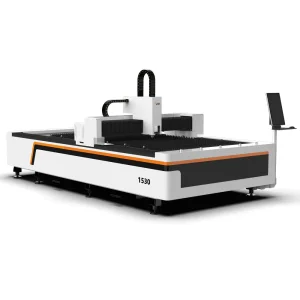
Custom 1530-2000 Watt Cutting Machine Manufacturers
Custom 1530-2000 Watt Cutting Machine Manufacturers, Factory
View Machine Specifications
High-Quality Fiber Transmission Laser Welding Machine
High-Quality Fiber Transmission Laser Welding Machine Pricelist, Factories
View Machine Specifications
Custom Boom Mold Laser Welding Machine Manufacturers
Custom Boom Mold Laser Welding Machine Manufacturers, Factory
View Machine Specifications
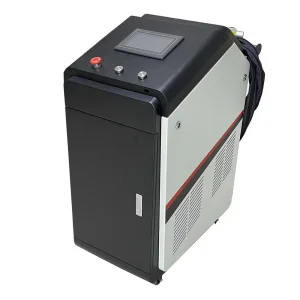
Custom Pulse Laser Cleaning Machine Manufacturer
Custom Pulse Laser Cleaning Machine Manufacturer, Pricelist
View Machine Specifications
Physics & Core Mechanics

Engineering Principles of Fiber Laser Photonic Decontamination

A systematic analysis of optical absorption, thermo-elastic stress wave generation, and selective material vaporization in non-contact industrial surface processing.

Fibre laser cleaning operates through the focused delivery of high-intensity, coherent photons directed at an engineered workpiece interface. When a laser beam with a characteristic near-infrared wavelength (predominantly $\lambda = 1064 \text{ nm} \pm 20 \text{ nm}$) encounters a contaminant layer—such as ferric oxide ($\text{Fe}_2\text{O}_3$), organic polymers, mill scale, or grease—the localized optical absorption coefficient of the layer determines the interaction dynamics. Unlike traditional mechanical grit blasting or chemical bath pickling, which introduce substantial substrate erosion or hazardous toxic waste effluents, fiber laser ablation relies on reaching the specific ablation threshold fluence ($J/\text{cm}^2$) of the contaminant while strictly remaining below the optical breakdown threshold of the metallic parent material.

Photothermal Vaporization

Upon subjection to multi-kilowatt pulsed optical irradiation, contaminant surface temperatures surge past sublimation points within picoseconds to nanoseconds. The localized organic or oxide matrix is instantly volatilized into gaseous fractions, evacuating through integrated negative-pressure HEPA extraction units without transferring excessive bulk thermal energy into the component core.

  • Zero chemical solvent reliance (eliminates VOC emissions)
  • Sub-micron depth selectivity control
  • Eliminates thermal metallurgical warping

Photomechanical Shockwave

High-peak-power pulsed MOPA lasers inject extreme instantaneous energy densities ($\gt 10^7 \text{ W/cm}^2$) in ultrashort pulse durations (10 to 200 ns). Rapid thermal expansion generates acoustic recoil shockwaves that mechanically fracture brittle surface oxides, severing adhesive Van der Waals and chemical bonds at the interface, cleanly ejecting oxidized particulate matter.

  • Leaves the parent surface profile metallurgical grade unmarred
  • Maintains tight dimensional tolerances for precision tooling
  • Ideal for micro-cracks, mold venting slots, and textured dies

Plasma-Induced Micro-Spallation

Under specific peak flux regimes, dense surface micro-plasmas ignite at the target boundary. The rapid ionization and localized atmospheric gas expansion establish a microscopic scrubbing action. This mechanism provides unparalleled efficacy when stripping bonded aerospace coatings, epoxy primers, and polyurethane sealants from heat-sensitive alloy skins.

  • Controlled selective layer-by-layer stripping
  • Retains substrate anodization or conversion layers
  • Prepares ideal Ra 1.5–3.2 µm bonding textures
Source Architecture Evaluation

Pulsed MOPA vs. Continuous Wave (CW) Fiber Systems

A rigorous specification matrix designed to de-risk capital equipment investments by mapping laser physics to industrial manufacturing demands.

Evaluation Parameter Pulsed MOPA Fiber Laser System (100W - 1000W) Continuous Wave (CW) Fiber Laser System (1000W - 3000W+)
Temporal Emission Profile Discrete nanosecond bursts (2 – 500 ns selectable pulse duration) Uninterrupted, continuous optical radiation output
Peak Output Power Up to 500 kW – 1.0 MW instantaneous peak Equal to rated average power (e.g., 2000 W peak = 2000 W continuous)
Heat Affected Zone (HAZ) Negligible / Sub-micron thermal diffusion; zero substrate distortion Moderate; localized thermal accumulation present on thin sheet materials
Substrate Surface Alteration Zero melting, zero pitting; original surface roughness ($R_a$) preserved Mild surface remelting or micro-polishing possible on non-ferrous metals
Primary Target Application Injection molds, aerospace components, historical restoration, EV cell tabs Structural steel bridges, ship hulls, pipeline de-scaling, rust stripping
Capital Expenditure Ratio Higher initial investment per watt; high-yield, high-margin manufacturing Low capex per watt; optimized for vast square-meter areal clearance
Operating Consumables Optics protection cover slide + dry clean shop air (zero media/grit) Protective glass cartridge + dry purge gas (zero chemical waste)
Supply Chain Excellence

China Factory 4.0: Shenzhen Engineering & Global Supply Chain Resilience

How Shenzhen Youmir Laser Technology Co., Ltd. leverages full-stack vertical integration to deliver unbeatable lead times, stringent ISO quality control, and robust optical engineering.

Full-Stack R&D

Founded in Shenzhen's Guangming high-tech cluster, Youmir controls internal optical design, laser trajectory firmware, galvanometer motor drivers, and cabinet structural kinematics completely in-house.

Tier-1 Component Sourcing

Direct strategic partnerships with industry-defining fiber laser engine manufacturers (Raycus, JPT, Maxphotonics, IPG) paired with quartz f-theta lenses ensure unmatched optical transmission fidelity.

48-Hour Sample Testing

Our dedicated application laboratory provides international procurement teams with comprehensive material metallurgical cross-section reports, SEM microscopy, and process videos prior to order signing.

Rigid 72h Stress Testing

Every industrial unit undergoes an unyielding 72-hour continuous thermal cycling, optical power stability measurement, and high-vibration burn-in protocol before ocean-freight packaging.

16+
Years Laser R&D (Since 2010)
5,000+
Square Meter Factory Facility
10,000+
Global Systems Deployed
50+
Countries Supported Globally
Sector Deployments

Macro Industry Field Solutions: Targeted Applications

How customized laser cleaning engineering replaces obsolete mechanical grit blasting and toxic chemical baths across key global manufacturing sectors.

Aerospace & Defense

Depainting of commercial aircraft composite fuselages and titanium turbine engine components. Replaces hand scuff-sanding and volatile methylene chloride stripping agents while ensuring ZERO fatigue life degradation on flight-critical aluminum 7075 components.

  • Selectively strips topcoats while preserving epoxy primers
  • Passes ASTM E1444 non-destructive magnetic particle inspection
  • Zero mechanical deformation on thin honeycombed panels

EV Battery & E-Mobility

High-precision micro-cleaning of lithium-ion battery aluminum and copper tab foils, bipolar battery tray plates, and electric hairpin motor stators. Strips insulating polyimide/polyamide-imide coatings in under 12 milliseconds without copper oxidation.

  • Enables defect-free zero-spatter laser welding joints
  • Inline automated 6-axis robot cell integration
  • 100% elimination of chemical flux residue risks

Tire Molds & Injection Tooling

On-press non-destructive ablation of vulcanized sulfurized rubber residues, mold release wax, and polyurethane buildup. Accomplished at operating temperatures up to 200°C without requiring tool disassembly, minimizing costly production line idle times.

  • Zero abrasive rounding of micro-vent steel sipes
  • Reduces mold cleaning downtime from 8 hours to 45 minutes
  • Significantly extends multi-million dollar tooling longevity

Maritime & Heavy Fabrication

High-throughput 2000W - 3000W continuous wave decontamination of hot-rolled structural steel, marine hull ballast tanks, and weld-prep plate bevels. Cleans rust, mill scale, and primer coatings at speeds up to $25 \text{ m}^2/\text{hr}$ prior to automated submerged arc welding.

  • Achieves ISO 8501-1 Sa 2.5 to Sa 3 surface cleanliness
  • Eliminates massive hazardous spent grit disposal costs
  • Prevents hydrogen-induced cold cracking in high-tensile steels

Semiconductor & Electronics

Non-destructive selective removal of sub-micron organic contaminants, epoxy mold flash, and oxide passivations from lead frames, wafer carrier fixtures, and gold-plated PCB terminals without etching underlying metal underlayers.

  • High-frequency short-pulse prevents wire-bond shearing
  • Class 100 cleanroom compatible with vacuum capture
  • Sub-nanometer precision via custom galvanometer mirrors

Nuclear Decommissioning & Heritage

Remote tele-operated removal of radioactive surface contamination on stainless steel fuel pool walls, minimizing personal dose exposure. Also deployed for gentle, conservation-grade soot and encrustation removal from ancient stone monuments and delicate bronze artifacts.

  • Direct fiber-optic beam delivery up to 100 meters
  • Concentrates secondary radioactive waste into HEPA filters
  • Preserves original historical patina layers beneath dirt
The Future of Photonics

Technology Roadmap (2025–2030): The Next Horizon

Key evolutionary leaps in intelligent closed-loop sensing, multi-wavelength beam delivery, and ultrafast picosecond power scaling shaping modern industrial ablation.

Real-Time LIBS Spectral Feedback

Integration of in-situ Laser-Induced Breakdown Spectroscopy (LIBS). By analyzing atomic emission spectra generated within micro-plasmas on a pulse-by-pulse basis, the system instantaneously differentiates between coating and parent material, auto-terminating the beam within 5 nanoseconds of substrate exposure.

  • True zero-over-etching guarantee
  • Closed-loop neural network parameter tuning
  • Automated cleaning quality verification logs

Multi-Wavelength Hybrid Coupling

Next-generation optical heads combining 1064nm IR fiber lasers with green (532nm) and ultraviolet (355nm) pulsed harmonic sources. Allows simultaneous degradation of high-bandgap organic polymers and low-absorption reflective copper alloys within a single combined optical beam spot.

  • Ablation of highly reflective precious metals
  • Cold photo-dissociation without thermal dissipation
  • Broadened processing window for exotic materials

Dynamic Beam Shaping (DBS)

Moving beyond standard Gaussian and Top-Hat distributions to dynamic real-time spatial beam sculpting. By switching between donut-shaped vortex beams, line arrays, and segmented rings via liquid-crystal spatial light modulators (SLM), scanning speeds are optimized for intricate 3D geometric surfaces.

  • Even energy distribution over wide 300mm scan fields
  • Zero edge re-deposition through vortex air sweeps
  • Up to 40% increased energy conversion efficiency
Enterprise Procurement

Enterprise Procurement: OEM Customization & Total Cost of Ownership (TCO)

A transparent breakdown of lifecycle capital expenditures, elimination of hazardous consumables, and factory-level OEM/ODM custom brand engineering.

85% Operating Cost Reduction

While sandblasting incurs ongoing expenditures in aluminum oxide media, hazardous dust collection, nozzle wear, and labor-intensive containment setup, fiber lasers operate solely on standard factory electricity (average 2.5 – 6.5 kW/hr). Typical return on investment (ROI) is achieved within 8 to 14 months of multi-shift operation.

Turnkey OEM / ODM White-Labeling

For machinery distributors and global automation integrators, Youmir Laser delivers tailored equipment skins, custom color anodizing, localized multi-lingual HMI software (English, German, Spanish, French, Japanese), private-labeled manuals, and pre-integrated Siemens or Schneider PLC fieldbus interfaces.

ESG & Carbon Neutral Compliance

Fiber laser cleaning directly supports corporate ISO 14001 environmental sustainability objectives. By eliminating millions of gallons of hazardous chemical washwater disposal and eliminating microscopic airborne silica dust liabilities, factories dramatically mitigate environmental risk and insurance premiums.

Quality & Standards

Regulatory Compliance, Safety Architecture & Localized Global Support

Exceeding international laser safety directives with industrial Class 4 interlock architectures, FDA CDRH accessions, and around-the-clock engineering response.

CE Machinery Directive

Certified in complete compliance with EU 2006/42/EC machinery standards, EN 60825-1 laser radiation safety, and EN 60204-1 electrical safety directives.

FDA CDRH Accession

Fully compliant with US 21 CFR 1040.10 and 1040.11 laser product mandates. Features redundant dual-channel safety interlocks, key-switch locks, and external E-stop loops.

24/7 Remote Telemetry

IoT cloud connectivity enables our Shenzhen optical engineering staff to run remote hardware diagnostics, firmware upgrades, and calibration assistance across all global time zones.

Global Spare Parts Hubs

Guaranteed 48-hour global air dispatch for replacement protective quartz windows, focus lenses, collimators, and galvo assemblies directly from our international distribution depots.

Engineering Knowledgebase

Enterprise Engineering FAQ: Technical & Operational Queries

Definitive, expert-level responses covering beam optics, material metallurgy, and procurement requirements for plant operations managers and purchasing directors.

How does fiber laser cleaning prevent micro-structural damage to high-strength aerospace alloys?
Fiber laser cleaning prevents thermal degradation through ultra-short pulse temporal modulation. In pulsed MOPA configurations (such as our 200W–500W systems), optical energy is coupled into the contaminant layer in durations ranging from 10 to 200 nanoseconds. Because this duration is substantially shorter than the thermal relaxation time of high-performance alloys (like Ti-6Al-4V titanium or 7075 aluminum), thermal energy cannot diffuse into the underlying parent matrix. The process operates under cold photo-ablation and acoustic-wave spallation regimes, entirely avoiding recrystallization, micro-cracking, or changes in material Vickers hardness.
What is the actual square-meter throughput difference between a 300W pulsed and a 2000W continuous wave laser?
Process throughput is governed by the specific contaminant thickness and required substrate finish. A 300W pulsed laser, operating with peak powers exceeding 200 kW, strips paint and oxide layers from delicate precision injection molds at approximately $0.8 \text{ to } 2.5 \text{ m}^2/\text{hr}$ with zero substrate damage. Conversely, a 2000W continuous wave (CW) laser delivers massive total thermal energy suitable for thick mill scale, heavy corrosion, and bridge paint stripping, reaching rates of $8.0 \text{ to } 22.0 \text{ m}^2/\text{hr}$. Where microscopic surface preservation is paramount, pulsed lasers are mandatory; where high-tonnage structural metal cleaning speed is critical, CW lasers provide optimum economic utility.
Can Youmir fiber laser cleaning units be integrated into automated robotic production lines?
Yes. All Youmir laser cleaning systems are available with robotic-ready configurations. The lightweight optical cleaning head (weighing just 1.2 kg to 1.8 kg) is easily mounted on standard 6-axis industrial robots (e.g., Fanuc, KUKA, ABB, Yaskawa) or collaborative robots (UR, JAKA). We provide integrated I/O interfaces, Profinet, EtherCAT, and discrete digital handshakes that enable the master cell PLC to command laser triggering, dynamic scan-width adjustment, wobble pattern selection, and fume extractor operation in real time.
What fume and particulate extraction standards must be maintained during fiber laser cleaning?
Laser ablation transforms solid surface matter into sub-micron airborne aerosols, metal oxide condensates, and volatile vapors. To ensure strict compliance with OSHA, CE, and ISO 15012-4 environmental workplace regulations, systems must utilize a dedicated multi-stage high-vacuum extraction unit. Youmir provides integrated extraction stations comprising a spark arrestor pre-filter, a primary F9 particulate cartridge, a final H14 HEPA filter (capturing 99.995% of particles $\ge 0.3 \text{ µm}$), and an activated carbon absorption bed for organic VOC adsorption.
What are the maintenance requirements and consumable lifespans for these systems?
The solid-state fiber laser engine possesses an MTBF (Mean Time Between Failures) exceeding 100,000 operational hours with zero scheduled laser cavity maintenance. The system contains no internal flashlamps or mirror alignments. The primary consumable is the external quartz protective cover slide situated in the handheld cleaning head, which shields the f-theta focusing optic from back-spatter. These inexpensive cover slides have an operational life of 300 to 800 hours depending on operating cleanliness and purge gas quality, and can be swapped out by an operator in under 60 seconds without tools.
How does Youmir support custom electrical and utility specifications for international shipments?
Every machine manufactured in our Shenzhen plant is configured to the purchaser's domestic utility infrastructure prior to dispatch. We support single-phase 110V/220V $\pm 10\%$ (50/60 Hz) for compact mobile units, and three-phase 208V, 380V, 415V, or 480V for high-power continuous systems. All units feature heavy-duty industrial breakers, localized power disconnects, standard Harting industrial power couplings, and dual-language safety schematics verified under CE and UL508A design protocols.
Industrial Laser Catalog

Specialized Tooling & Advanced Precision Laser Systems

Comprehensive laser hardware solutions engineered for specialized mold restoration, micro-jewelry craftsmanship, and high-frequency automated manufacturing lines.


Custom Vertical jewelry welding machine Manufacturer
Custom Vertical jewelry welding machine Manufacturer, Manufacturers
View Machine Specifications
High-Quality Open Laser Welding Machine
High-Quality Open Laser Welding Machine Pricelist, Factories
View Machine Specifications
Custom QCW-Jewelry Laser Welding Machine Manufacturer
Custom QCW-Jewelry Laser Welding Machine Manufacturer, Factories
View Machine Specifications
Custom QCW Mold Laser Welding Machine Pricelist
Custom QCW Mold Laser Welding Machine Pricelist, Factory
View Machine Specifications
High-Quality YAG-Jewelry Laser Welding Machine
High-Quality YAG-Jewelry Laser Welding Machine Pricelist, Factories
View Machine Specifications
High-Quality Laser Cleaning Machine Manufacturer
High-Quality Laser Cleaning Machine Manufacturer, Quotes
View Machine Specifications
High-Quality QCW Handheld Laser Welding Machine
High-Quality QCW Handheld Laser Welding Machine Pricelist, Quotes
View Machine Specifications
High-Quality Handheld Galvanometer Laser Welding Machine
High-Quality Handheld Galvanometer Laser Welding Machine Manufacturer, Factories
View Machine Specifications
Verification Protocol

Engineering Sample Evaluation & Factory Verification Roadmap

Eliminate procurement guesswork before committing capital expenditure. Follow our transparent, laboratory-verified 4-step sample evaluation protocol.

01

Application Review

Submit your base alloy grade (e.g., Inconel 718, Al 6061-T6, SS 316L), contaminant classification, target layer thickness ($\mu\text{m}$), and target line throughput rate ($m^2/\text{hr}$).

02

Coupled Lab Trials

Youmir engineers execute pulsed MOPA and continuous wave matrix tests, logging fluence thresholds, wobble geometries, overlap percentages, and assist gas purging settings.

03

Microscopy Analysis

Workpieces undergo optical profilometry, surface roughness measurement ($R_a$, $R_z$), scanning electron microscopy (SEM), and energy-dispersive X-ray spectroscopy (EDS) confirmation.

04

Turnkey Quotation

You receive the completed metallurgical test dossier, high-speed 4K trial videos, tailored machine configuration options, and transparent CIF/DAP port pricing within 48 hours.