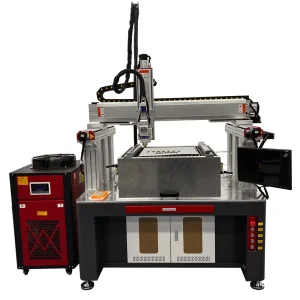
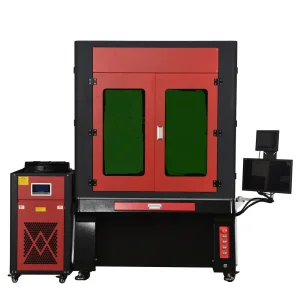
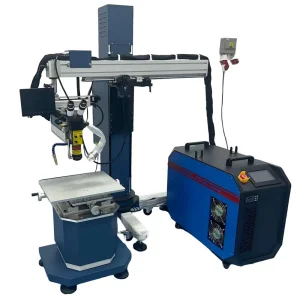
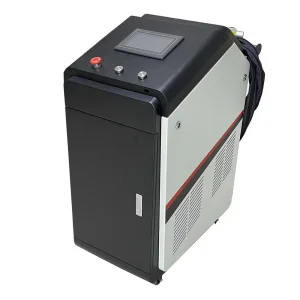
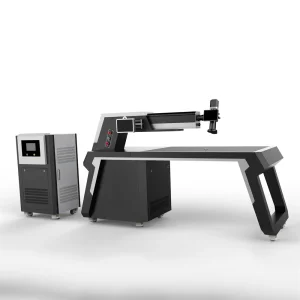
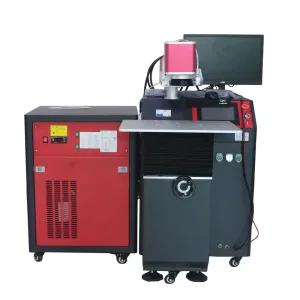
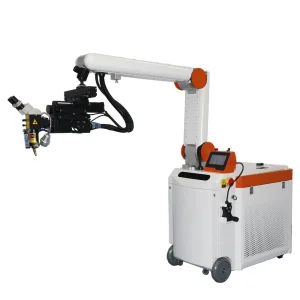
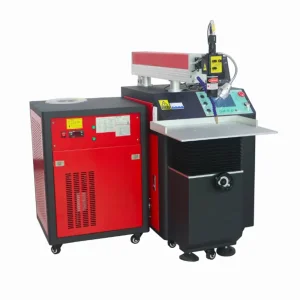
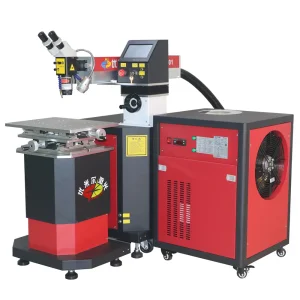
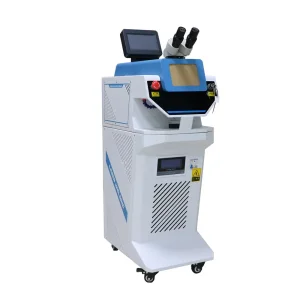
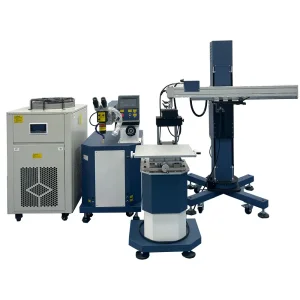
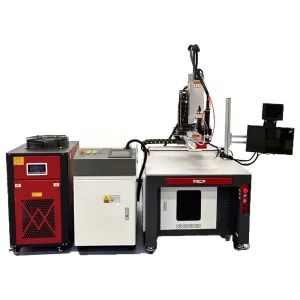
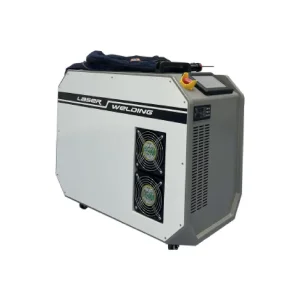
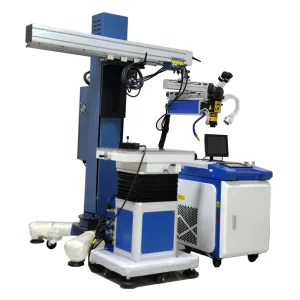
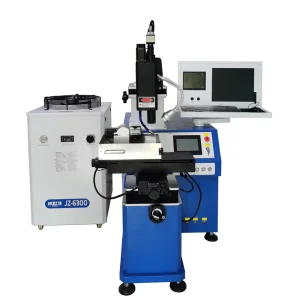
Explore our heavy-duty CNC, QCW, cleaning, and custom mold repair systems built directly in our Shenzhen facility.
Replacing traditional TIG, MIG, and manual resistance welding with continuous wave and high-frequency wobble beam architectures.
Traditional electric-arc methods inject diffuse, excessive thermal energy into base substrates, inducing warpage and degrading metallurgical structure. Handheld fiber laser optics concentrate power into a focused spot (0.2–0.5 mm beam waist), restricting the Heat-Affected Zone (HAZ) to negligible levels while maintaining deep penetration at 2–4× higher linear welding speeds.
The manufacturing sector faces an acute shortage of certified Class-A welding personnel. Modern handheld laser welders feature intelligent presets, dual-axis wire feeding, and ergonomic heads that allow semi-skilled apprentices to produce certified, structurally sound hermetic welds with less than 48 hours of instruction, drastically reducing labor costs.
Post-weld processing represents up to 35% of total structural steel fabrication budgets. By utilizing an adjustable wobble beam (circle, triangle, figure-8) coupled with active argon/nitrogen shielding, our machines produce smooth, spatter-free, aesthetic bead profiles that bypass grinding, pickling, and mechanical leveling entirely.
Single-pass full penetration benchmarks calculated across typical industrial alloys using continuous fiber generators.
| Laser Source Power | Stainless Steel (304/316) | Carbon Steel (Q235/Mild) | Aluminum Alloys (6061/5052) | Brass & Copper | Optimal Gas Supply |
|---|---|---|---|---|---|
| 1000 Watt | ≤ 3.0 mm (0.118") | ≤ 2.5 mm (0.098") | ≤ 1.5 mm (0.059") | ≤ 1.0 mm (0.039") | Pure Nitrogen / Argon (0.2-0.4 MPa) |
| 1500 Watt | ≤ 4.0 mm (0.157") | ≤ 3.5 mm (0.137") | ≤ 2.5 mm (0.098") | ≤ 2.0 mm (0.078") | Nitrogen / Mixed Argon (0.3-0.5 MPa) |
| 2000 Watt | ≤ 5.0 mm (0.196") | ≤ 4.5 mm (0.177") | ≤ 3.5 mm (0.137") | ≤ 2.8 mm (0.110") | High-Purity Argon (0.3-0.6 MPa) |
| 3000 Watt | ≤ 8.0 mm (0.314") | ≤ 6.0 mm (0.236") | ≤ 5.0 mm (0.196") | ≤ 4.0 mm (0.157") | Argon / N2 High Flow (0.4-0.8 MPa) |
*Note: Penetration depths are subject to joint geometry, root opening tolerances, dual-drive wire filler gauge (0.8–1.6mm), and dynamic optical focus positions. Youmir provides free non-destructive sample evaluation.
Tailored power, emission, and electrical safety profiles configured for cross-continental regulatory approvals.
CDRH Accession numbers, dual-channel interlock systems complying with ANSI Z136.1 Class 4 laser safety mandates, UL/CSA electrical enclosures, and UL-certified variable speed chillers operating on standard 220V/480V 60Hz.
Full conformance to Machinery Directive 2006/42/EC, Low Voltage Directive 2014/35/EU, and EN ISO 11553-2 handheld laser processing safety standards. Includes emergency stop circuits with PL-d/Cat 3 ratings and multi-lingual UI software.
Certified for high-ambient-humidity operation in climates like Malaysia, Thailand, and Indonesia. Features tropicalized anti-condensation optical heads, RCM approval for Australia/New Zealand, and dual-language operating displays.
Overseas technical engineering nodes supported by remote cloud telemetry, direct technician video linkups, localized inventory hubs for protective glass, nozzles, and lenses, plus available on-site setup and calibration.
The convergence of artificial intelligence, real-time seam tracking, and multi-wavelength processing.
Integration of coaxial CMOS sensors and optical emission spectroscopy directly into the handheld torch head. On-board machine-learning chips monitor melt pool dynamics at 10,000 frames per second, automatically adjusting wobble frequency and laser power in microseconds to eliminate porosity and burn-through.
Combining 1070nm near-infrared fiber lasers with 450nm visible blue or green laser diodes into a single optical delivery fiber. This hybrid architecture increases optical absorption in non-ferrous metals like copper and aluminum from 5% to over 45%, enabling spatter-free, zero-defect battery tab welding.
Collaborative developments with aerospace-grade composite structures have reduced handheld gun weight down to 650 grams. Featuring integrated liquid-cooled coaxial lines and rapid-coupling fiber assemblies, fatigue-free 8-hour continuous operations are now practical for manual production lines.
Engineered for high-end mold restoration, fine jewelry micro-joining, fiber transmission arrays, and multi-axis production.
Insightful, direct answers to common queries regarding customization, cycle times, safety protocols, and import processes.