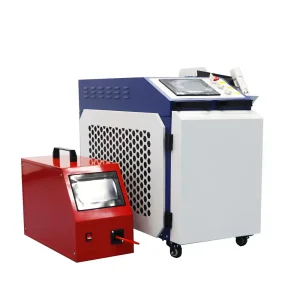
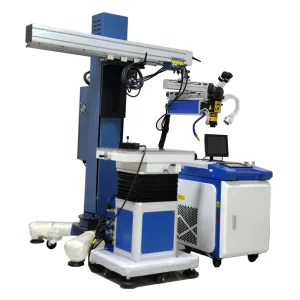
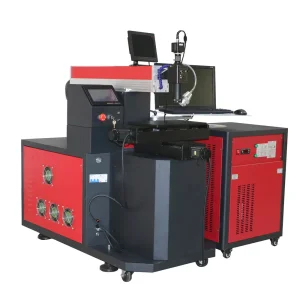
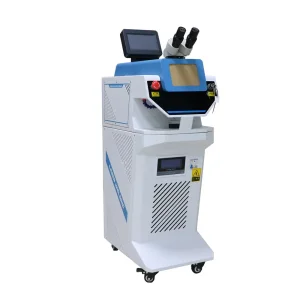
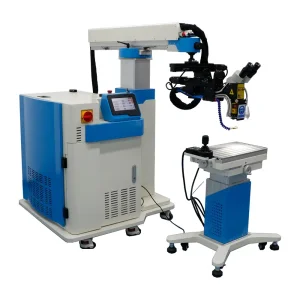
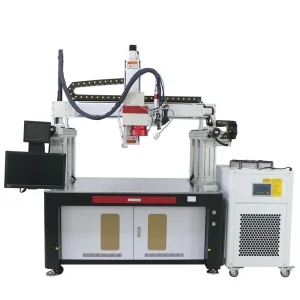
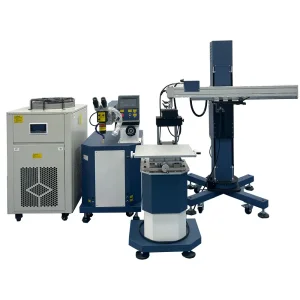
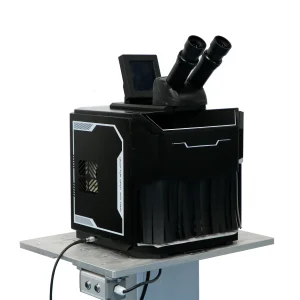
Factory-direct industrial continuous and handheld welding configurations optimized for high throughput and reduced operator fatigue.
The shift toward high-efficiency 1500W lightweight laser welding represents a structural leap across modern metal fabrication and manufacturing supply chains.
Traditional arc welding systems (MIG/TIG) impose significant ergonomic strain and require extensive post-weld rectification. The custom lightweight 1500W system introduces an ultra-compact handheld torch (under 0.75 kg) coupled with integrated phase-change cooling, slashing physical fatigue by 60% and empowering operators to maintain continuous seam integrity throughout extended production shifts.
With an energy density exceeding 10^6 W/cm², a 1500W fiber laser achieves keyhole welding dynamics that limit the Heat-Affected Zone (HAZ) to microscopic margins. This mitigates sheet warping, minimizes metallurgical phase transition defects, and preserves mechanical tensile strength across delicate alloys and cosmetic sheet assemblies without post-process abrasive polishing.
By transitioning from legacy processes to the 1500W lightweight architecture, fabrication operations experience a 4x increase in linear travel speed on gauge materials. Electrical-to-optical conversion rates exceeding 38% combine with zero consumable filler wire requirements on tight-tolerance seams to reduce operational overhead by up to 45% annually.
Shenzhen Youmir Laser Technology Co., Ltd. delivers vertically integrated optical design, localized supply resilience, and verifiable quality metrics across 50+ sovereign jurisdictions.
Export units engineered for the US and Canadian corridors feature dual-channel interlocks, Class 4 laser enclosures, integrated laser safety relay circuits, and full alignment with ANSI Z136.1 and NFPA 79 industrial machinery protocols.
Our global models strictly conform to European Low Voltage Directive (LVD) 2014/35/EU and Electromagnetic Compatibility (EMC) 2014/30/EU, offering integrated SIL-rated emergency shutdown architectures and dual shielding gas monitoring.
Supporting high-duty fabrication throughout Southeast Asia and Latin America, our lightweight 1500W hardware incorporates wide-range power condition transformers and anti-corrosion optical sealing rated for humid environments.
Empirical metallurgical metrics illustrating the technological edge of single-mode and high-efficiency multi-mode 1500W fiber systems over legacy Tungsten Inert Gas (TIG) infrastructure.
| Evaluation Parameter | Custom Lightweight 1500W Laser | Standard GTAW / TIG Inverter | Advantage Factor |
|---|---|---|---|
| Travel Velocity (1.5mm SS Butt Joint) | 18 – 35 mm/s (Continuous Seam) | 3 – 8 mm/s (Manual Wire Feed) | Up to 4.5× Throughput |
| Heat Affected Zone (HAZ) Width | < 0.25 mm (Narrow micro-structure) | 1.8 – 3.2 mm (Coarse grain growth) | Zero Distortion Risk |
| Consumable Gas & Filler Overhead | Ar/N2 Shielding at 10-15 L/min; Optional wire | Continuous Argon flow + mandatory filler rods | 35% Material Savings |
| Operator Training Requirement | Intuitive GUI; 2-4 hours to standard weld | High hand-eye dexterity; 6-12 months apprentice | Minimal Barrier to Entry |
| Post-Process Grinding & Buffing | Negligible; Cosmetic, mirror-smooth face | Mandatory mechanical grinding/polishing | Saves 1.5 Man-Hours/Cycle |
Designed for versatile deployment across complex factory environments, repair facilities, and specialized multi-material fabrication stations.
Stainless steel cabinetry, commercial catering installations, and architectural trim require pristine aesthetic finishes. The 1500W beam delivers low heat input, eliminating distortion, thermal discoloration, and weld burn-through on polished gauge panels.
Galvanized steel and thin aluminum casing demand stable joins without destroying zinc coatings. Wobble head oscillation bridges joint gaps up to 1.2 mm effortlessly while preventing weld porosity and spatter deposition.
Rapid field joints on customized automotive exhaust piping, battery compartment chassis, and light alloy structures benefit from the portable, lightweight form factor, allowing operators to maneuver within tight chassis profiles without repositioning the workpiece.
Our Shenzhen R&D team continues to pioneer next-generation industrial laser hardware, prioritizing intelligent control systems and enhanced mobility.
Integration of compact CMOS cameras and neural network algorithms within the lightweight welding torch head. Automated tracking adjusts focus, laser power, and wobble frequency in real time (up to 500 Hz) to compensate for minor seam misalignments.
Expanding the quick-disconnect nozzle framework to allow instantaneous switching between continuous welding, keyhole cutting, high-frequency pulsed rust cleaning, and post-weld seam passivation via an intuitive digital interface.
Developing refrigerant-free, solid-state micro-cooling modules that slash the overall chassis weight of 1500W platforms by an additional 30%, making true backpack-portable and high-altitude field maintenance viable for heavy industrial infrastructure.
Explore specialized pulsed cleaning units, automated 3-axis CNC systems, and heavy-duty mold repair configurations from our Shenzhen facility.
Transparent engineering insights addressing equipment lifecycle, metallurgical capabilities, operator safety, and global logistical support.