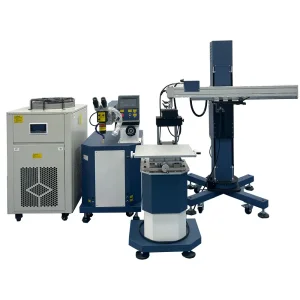
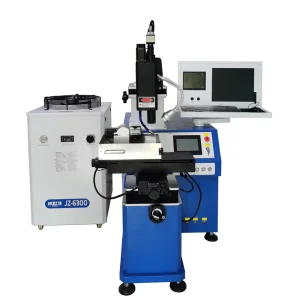
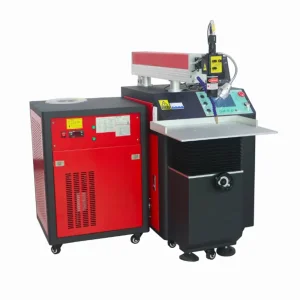
Precision-manufactured laser architectures built for heavy-duty mold reconditioning, galvanometer-driven ultra-fast seams, and continuous automated batch fabrication.



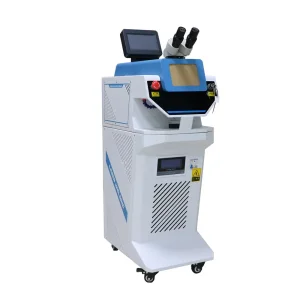
Evaluating macroeconomic market shifts, thermodynamic mechanics, and the fundamental transition from legacy arc welding to fiber-optic photonics.
The international manufacturing sector is undergoing an aggressive displacement of legacy CO2, flashlamp-pumped Nd:YAG, and conventional TIG/MIG welding units. Continuous wave (CW) and quasi-continuous wave (QCW) optical fiber lasers deliver near-diffraction-limited beam quality (M² < 1.1–1.3 for single-mode units). By utilizing active optical fibers doped with rare-earth ions (Ytterbium, Yb³⁺ emitting at 1064–1080 nm), modern optical fiber welders achieve electro-optical conversion efficiencies exceeding 35% to 42%, compared to a meager 2% to 4% for traditional flashlamp YAG lasers.
Traditional arc and fusion welding deposit broad, unconstrained heat envelopes into workpieces, triggering substantial mechanical warping, phase crystallization, and extensive post-process grinding. Optical fiber welding operates in the extreme power density threshold (>10⁶ W/cm²), transitioning the weld pool instantaneously from thermal conduction mode to deep keyhole penetration. The resulting deep-penetration weld profiles exhibit depth-to-width aspect ratios up to 10:1 with a microscopically thin Heat Affected Zone (HAZ), reducing structural distortion by over 80%.
Modern custom fiber laser welders incorporate industrial EtherCAT/Profinet communication protocols, allowing instantaneous sync with 6-axis articulated robotics, 3-axis CNC gantries, and galvanometer optical heads. Closed-loop CCD vision inspection, real-time seam tracking sensors, and pyrometric temperature feedback ensure micro-second laser power modulation during complex corner trajectories, eliminating thermal burn-through on thin-gauge metals and delicate battery tab foils.
Analyzing why Shenzhen and the Greater Bay Area have emerged as the definitive procurement and engineering epicenters for customized optical fiber welding equipment.
Within a 50-kilometer radius in the Shenzhen-Dongguan-Foshan industrial belt, optical fiber welding equipment manufacturers operate with direct, same-day access to Tier-1 semiconductor pumping diode producers, fiber Bragg grating fabricators, optical collimation lens coaters, CNC gantry precision millers, and dedicated dual-circuit chiller makers. This geographic concentration completely eliminates foreign sub-assembly logistics bottlenecks, enabling custom design modifications to move from CAD modeling to physical verification in days rather than months.
While Western laser integrators frequently carry substantial corporate overhead, complex licensing royalties, and fragmented assembly systems, Chinese optical fiber welding machine factories offer highly standardized modular engineering. Global buyers routinely achieve 40% to 60% capital expenditure reductions on equivalent laser sources, CNC interpolation stages, and laser processing heads, drastically shortening payback periods (ROI) to under 6 to 9 months under two-shift industrial operations.
Direct factory engagement allows international distributors and OEM brand owners to specify custom chassis colors, CNC user interface software localization (supporting multi-language operating consoles), dual-drive gantry stroke lengths (up to 3000x1500mm or specialized cantilever spans), and exact integration of domestic or imported laser engines (Maxphotonics, Raycus, or IPG Photonics) tailored to regional client compliance.
Objective metallurgical and operational performance comparison between modern optical fiber laser welders, traditional TIG, and flashlamp Nd:YAG systems.
| Performance Parameter | Continuous Optical Fiber Laser | QCW Pulsed Fiber Laser | Flashlamp Nd:YAG Laser | Traditional TIG / GTAW |
|---|---|---|---|---|
| Electro-Optical Efficiency | 38% – 42% (Ultra Low Power Draw) | 30% – 35% (High Peak Power) | 2% – 4% (Extremely Inefficient) | 35% – 50% (Electrical Arc Only) |
| Heat-Affected Zone (HAZ) | Minimal (< 0.15 mm width) | Ultra-Fine (< 0.08 mm width) | Moderate (0.3 – 0.6 mm) | Extensive (1.5 – 4.0 mm, warping) |
| Welding Linear Speed | 20 – 120 mm/sec (Ultra Fast) | Spot/Overlap Controlled | 5 – 15 mm/sec (Pulsed rate) | 2 – 8 mm/sec (Manual paced) |
| Consumable Requirements | Protective lens, shielding gas | Protective lens, shielding gas | Xenon flashlamps, deionizer, filters | Tungsten electrodes, filler rod, gas |
| High-Reflective Metal Joining | Excellent with wobble beam / ARM | Superior (High pulse peak breaks Cu/Al) | Moderate (Subject to back-reflection) | Poor on micro-scale Al/Cu joints |
| Maintenance Cycle / MTBF | > 100,000 Hours (Maintenance-free) | > 100,000 Hours (Solid-state) | Every 500–1000 hrs lamp replacement | Continuous electrode re-sharpening |
Engineered for stringent manufacturing tolerances across automotive lightweighting, energy storage, precision tooling, and high-purity medical assemblies.
Hermetic sealing of prismatic cell aluminum casings, copper-to-aluminum busbar interconnects, and pack cooling plates. High-frequency oscillating wobble optics overcome the extreme thermal conductivity and surface reflectivity of pure copper (C11000) and aluminum (AL3003), preventing solidification cracking and porosity.
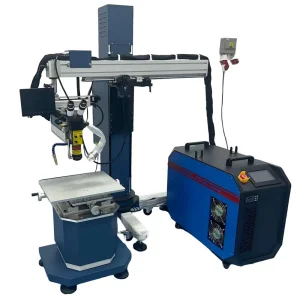
Heavy injection molding tools and die-casting matrices suffer edge wear, micro-cracking, and parting line erosion. Cantilever and boom-arm optical fiber welders allow multi-axis ergonomic access to 10-ton mold blocks directly in toolrooms, depositing matching alloy wire (H13, NAK80, P20) with zero base metal sink or preheating requirements.
Surgical tools, endoscope tubes, pacemaker titanium housings, and dental micro-structures require 100% spatter-free, biocompatible, and hermetically sealed seams. QCW fiber lasers provide fine millijoule-level pulse energy control, preserving the cellular grain structure of nitinol, 316LVM stainless steel, and Grade 5 titanium.
Aircraft ducting, heat exchangers, and thin-gauge honeycomb structures fabricated from Inconel 718, Hastelloy, and precipitation-hardened stainless alloys. Fiber laser welding eliminates weld-seam oxidation through laminar coaxial argon shielding, passing stringent AMS and ISO 24394 aerospace welding specifications.
Essential technical checkpoints and validation criteria for procurement officers and plant engineers commissioning custom machinery from Chinese manufacturers.
Avoid standard fixed collimation heads for variable gap tolerances. Specify dual-axis oscillating wobble heads (supporting circular, line, ellipse, figure-8, and triangle wobble patterns). Wobble oscillation spreads energy across seam gaps up to 1.5 mm wide without sacrificing penetration, providing massive fault tolerance for manual handheld use or inconsistent stamped parts.
Specify coaxial vs side-blow shielding nozzles based on material metallurgy. For stainless steel, high-purity Nitrogen (99.999%) delivers clean, bright silver welds while boosting surface hardness. For titanium and aluminum, pure Argon (99.999%) is mandatory to avoid embrittlement. Ensure integrated gas delay and post-flow solenoid control in the CNC software to shield molten pools during cooling.
Ensure complete factory verification for destination electrical standards (3-phase 380V 50Hz, 480V 60Hz, or single-phase 220V/110V). Demand dual-channel optical interlocks (EN ISO 13849-1), Class 4 laser safety enclosures (or OD6+ rated laser safety spectacles for handheld units), and CDRH/CE certified emergency shut-off protocols.
Engineers answer critical questions regarding laser power selection, reflective metal physics, running costs, and custom OEM factory procedures.
As an industrial standard for single-pass full penetration butt joints: A 1000W fiber laser penetrates up to 3mm stainless steel and 2mm carbon steel. A 1500W laser achieves 4mm stainless and 3mm aluminum. A 2000W unit easily welds 5mm stainless, 4mm aluminum, and 3mm brass. High-power 3000W configurations penetrate 8mm stainless steel and 6mm carbon steel. Using dual-drive automatic wire feeding widens these capabilities significantly.
Copper and brass reflect over 90% of standard 1064nm infrared laser light at room temperature. Our custom optical fiber welding machines utilize high-peak QCW pulses or continuous wave lasers paired with high-frequency wobble scanning (up to 300Hz). Furthermore, our laser sources feature integrated multi-stage optical isolators that absorb and diffuse backward-scattered photons, completely protecting the fiber laser diode modules from back-reflection damage.
Optical fiber welding reduces operating costs by 65% to 80%. A standard 1500W fiber welder consumes approximately 4.5 kW/hour of electricity (including laser source, water chiller, and controller), costing under $0.60–$1.00 USD/hour in power. Unlike TIG, there are no expensive tungsten electrodes to grind and replace. With welding speeds 4 to 10 times faster than TIG, labor cost per meter of weld drops precipitously.
Yes, sample testing is an essential component of our engineering consultation. Prospective clients can send raw components or joint assemblies directly to our Shenzhen facility. Our application engineers conduct trial welds, optimize beam focal position, shielding gas, and wobble parameters, returning a full metallographic cross-section analysis, tensile strength report, and 4K macro video footage before you place an order.
The fiber laser source itself is completely solid-state and sealed, requiring zero maintenance over its 100,000-hour rated lifespan. Routine daily maintenance is limited to inspecting and cleaning the inexpensive quartz protective window inside the laser welding gun nozzle. Deionized water in the dual-circuit refrigeration chiller should be drained and refreshed every 3 to 6 months depending on ambient shop conditions.
Standard modular machines ship within 7 to 10 working days, while complex custom automation gantries or boom-arm configurations ship within 15 to 25 days. Every machine is backed by 24/7 remote video diagnostics, rapid spare parts fulfillment, and comprehensive lifetime firmware updates. We also support on-site commissioning and overseas regional distributor training across Europe, the Americas, and Southeast Asia.
Explore our specialized continuous fiber welders, portable handheld systems, pulsed laser surface cleaners, and high-precision sheet cutting systems.


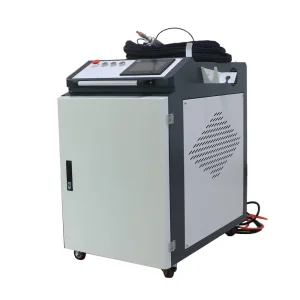
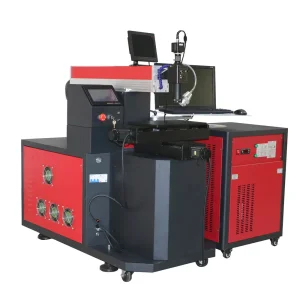
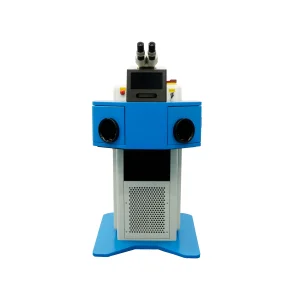

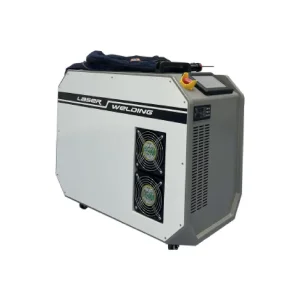
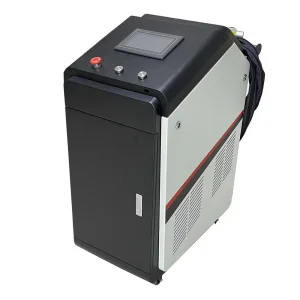
Whether you require an automated multi-axis continuous fiber laser cell, a precision toolroom mold restoration welder, or an OEM fleet under your private brand, our Shenzhen engineering center delivers proven application performance.
