
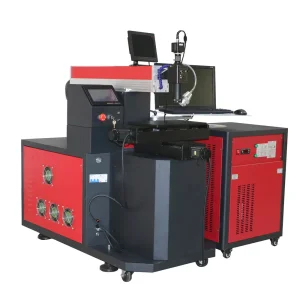
Explore our core industrial laser welding, precision processing, and continuous laser platforms engineered directly by Shenzhen Youmir Laser Technology Co., Ltd.
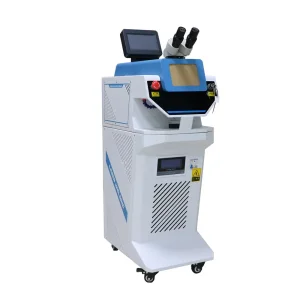
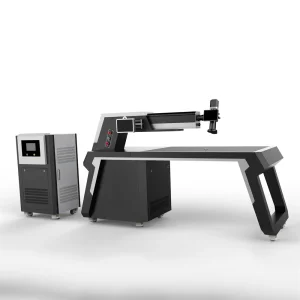
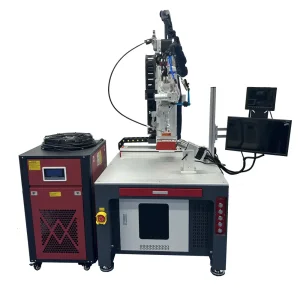
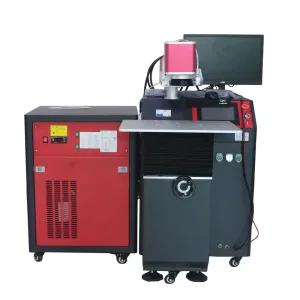
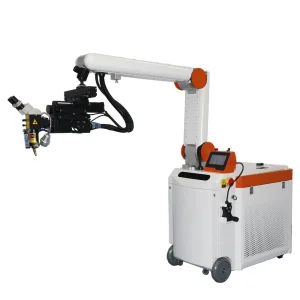
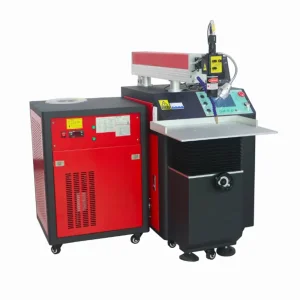
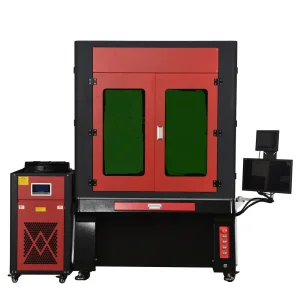
Understanding the fundamental distinction between pulsed thermal shockwave stripping and continuous melting ensures metallurgical integrity across mission-critical components.
Pulsed laser cleaning utilizes transient high-peak-power pulses (typically ranging from 10 kW to over 100 kW per pulse with durations of 10 to 120 ns). When striking an oxide, rust, or resin layer, instantaneous photothermal expansion generates a high-velocity localized acoustic vibration. This breaks interfacial Van der Waals forces and thermo-elastic chemical bonds, ejecting contaminants without conducting destructive heat into the underlying substrate.
Zero Substrate Micro-MeltingLaser cleaning relies on maintaining the beam energy density (Fluence, measured in J/cm²) precisely between the ablation threshold of the contaminant layer ($F_{th, contaminant}$) and the thermal damage threshold of the metal substrate ($F_{th, base}$). By tailoring beam frequency, spot overlap, and galvanometer scanning paths, operators strip mill scale, primer, or polyurethane layers with surgical precision while retaining substrate roughness tolerances within Ra < 0.8 µm.
Calculated Energy FluenceUnlike Continuous Wave (CW) laser systems—which transfer sustained thermal energy into the material, creating substantial Heat Affected Zones (HAZ) and potential tensile stress states—nanosecond pulsed systems decouple heat diffusion from peak surface irradiance. The interaction period is significantly shorter than the thermal relaxation time ($\tau_p < \tau_{th}$), entirely eliminating structural phase shifts in tempered tool steels and aerospace alloys.
Zero Metallurgical Warpage| Evaluation Parameter | Pulsed Laser Cleaning (Youmir MOPA) | Continuous (CW) Laser Cleaning | Dry Ice / Grit Sandblasting | Chemical Solvent Stripping |
|---|---|---|---|---|
| Base Metal Thermal Load | Negligible (Cold Ablation) | Moderate to High (Thermal Diffusion) | None (Kinetic Attrition) | None (Chemical Dissolution) |
| Substrate Tolerance Preservation | 100% Micro-dimension Retention (< 0.5 µm) | Risk of Surface Melting / Etching | Abrasive Wear & Dimensional Erosion | Chemical Pitting & Hydrogen Embrittlement |
| Secondary Waste Generated | Zero (Dust Extracted via Fume Filtration) | Zero (Smoke / Vapor only) | Massive Solid Waste (Abrasive Media) | Toxic Liquid Sludge / Disposal Hazmat |
| Operating Expense (OPEX) | Lowest (< $1.50/hr Electricity + Wear Lens) | Low ($2.00 - $3.50/hr) | High ($35 - $75/hr Media & Compressor) | Extremely High (Solvent Purchase & Hazmat) |
| Target Industrial Suitability | Precision Molds, Aerospace, Busbars, NDT | Heavy Steel Rust, Shipyard Bulk Hull | Structural Steel Beams, Rough Foundry | Niche Laboratory Immersion |
Across North America, Europe, Asia-Pacific, and Latin America, manufacturing enterprises are replacing legacy abrasive methods with precision pulse laser systems to fulfill stringent carbon-neutral and workplace safety mandates.
Driven by stringent OSHA worker safety frameworks and EPA effluent guidelines, US Tier-1 aerospace contractors and defense suppliers demand automated and handheld pulse laser cleaning to replace hazardous hexavalent chromium stripping and abrasive media blasting. Key procurement specifications prioritize laser Class 4 interlock compliance (ANSI Z136.1) and dual-channel optical path monitoring.
European manufacturers face aggressive REACH regulations forbidding volatile organic compounds (VOCs) and halogenated solvents. In automotive powerhouse regions like Germany, northern Italy, and Sweden, procurement centers on electric vehicle (EV) battery stator hairpin stripped copper, weld-preparation de-greasing, and CE Machinery Directive 2006/42/EC certification with integrated safety relays.
High-density semiconductor packaging, consumer electronics tooling, and lithium-ion gigafactories throughout China, Japan, South Korea, and Southeast Asia demand extreme throughput. Buying criteria emphasize MOPA pulse tunability to handle micro-scale deflashing of copper lead frames, wafer carrier decontamination, and continuous multi-shift toolroom injection mold cleaning.
Mining operations, oil & gas pipeline maintenance, and shipyard facilities across Latin America, the Middle East, and Africa are actively replacing chemical dipping with heavy-duty mobile pulse cleaners. Procurement teams prioritize high-ambient-temperature stability (up to 45°C ambient), ruggedized IP54 transportable chassis, and integrated dual-voltage power management.
Youmir Laser engineers every critical component in-house. We configure pulse characteristics, beam delivery optics, and software protocols to integrate seamlessly with your production footprint.
Choose between customized Q-switched fiber architectures and Master Oscillator Power Amplifier (MOPA) systems ranging from 100W, 200W, 300W, 500W to high-power 1000W pulse units. MOPA topology allows independent regulation of pulse duration (2 to 500 ns) and repetition rate (1 to 4000 kHz), providing unmatched flexibility when switching between fragile carbon fiber coatings and dense oxide scale.
100W – 1000W Pulsed RangeOur proprietary dual-axis galvo cleaning head features aerospace-grade aluminum alloy housing weighing under 0.75 kg. Equipped with interchangeable F-theta telecentric lenses (focal lengths F160, F254, F330), it generates dynamic programmable beam trajectories: linear raster, 2D spiral, annular ring, cross-hatch, and sinusoidal wave scans with widths up to 300 mm.
Dual-Axis Vibration-Free GalvoEvery custom machine includes an industrial multi-language touchscreen operating system pre-programmed with expert material presets for aluminum alloys, tool steels, titanium, brass, and composite laminates. Full hardware I/O support enables instant interfacing with robotic arms (FANUC, KUKA, ABB) and central PLC networks via Profinet, Ethernet/IP, or Modbus protocols.
Fieldbus & Robot-Ready I/OYoumir pulse handheld laser cleaners excel in environments where thermal management, process repeatability, and zero substrate wear are absolute operational imperatives.
Precision selective de-coating of primer without altering clad aluminum alloys (2024, 7075) or damaging underlying carbon fiber reinforced polymers (CFRP). Essential for composite bonding preparation, turbine blade thermal barrier de-oxidation, and Non-Destructive Testing (NDT) weld seam verification.
High-speed selective insulation ablation on prismatic and cylindrical cell busbars, stator hairpin copper wire enamel stripping, and cathode foil cleaning before ultrasonic and laser welding. Pulse cleaning guarantees oxide-free conductivity, directly eliminating cold welds and contact resistance spikes.
Online tool-room decontamination of vulcanized rubber, carbon deposits, and polyurethane release residues on high-precision injection cavities. Operators clean hot molds (up to 200°C) directly inside the press without cooling, dismantling, or eroding micron-level parting lines.
Controlled ablation of particulate atmospheric soot, calcified encrustations, and biological patinas on historical limestone, marble monuments, bronze castings, and ancient gilded artifacts. Pulse laser energy self-terminates once the reflective original patina is revealed.
Shenzhen Youmir Laser is investing heavily in optical sensing, sub-nanosecond pulse engines, and intelligent closed-loop algorithms to pioneer the next wave of industrial surface finishing.
Next-generation pulse cleaners integrate coaxial machine vision cameras and Laser-Induced Breakdown Spectroscopy (LIBS). As the laser vaporizes the surface layer, spectral atomic emissions are analyzed in microsecond intervals. The moment the characteristic elemental spectrum transitions from oxide/paint to pristine substrate metal, the system instantly modulates pulse power or shuts off, achieving 100% automated over-cleaning prevention.
Zero-Defect Closed LoopMoving beyond conventional thermal ablation, ultrafast laser pulse research focuses on sub-nanosecond pulse regimes. Operating via non-thermal "cold ablation," these systems enable nanoscale surface functionalization: generating superhydrophobic or superhydrophilic micro-patterns, creating laser-induced periodic surface structures (LIPSS), and vastly optimizing surface wettability prior to adhesive aerospace structural bonding.
Nanoscale Surface EngineeringTransitioning handheld units into collaborative robotic deployments. Integrating lightweight 6-axis cobots with 3D point-cloud LiDAR allows autonomous trajectory generation across complex curved car bodies or aerospace stringers. Real-time path optimization compensates for workpiece position variations, driving continuous production lines without dedicated human intervention.
Industry 4.0 AutonomyShenzhen Youmir Laser Technology Co., Ltd. delivers institutional-grade reliability, international customs clearing documentation, and turnkey field service across more than 50 nations.
All custom pulse laser cleaning equipment complies fully with European Machinery Directives 2006/42/EC, Low Voltage Directive 2014/35/EU, and Laser Safety Standard EN 60825-1. Registered with the United States FDA CDRH (21 CFR 1040.10) for friction-free customs clearance in North America, supported by ISO 9001 certified manufacturing protocols.
Purchasers work directly with factory laser engineers—not intermediaries. We offer remote real-time tele-diagnostics, cloud firmware updates, and local agent on-site installation, commissioning, and Class 4 safety training across the Americas, Europe, Southeast Asia, and the Middle East.
De-risk your equipment acquisition prior to order placement. Ship target workpieces to our Shenzhen R&D application laboratory. Our engineers conduct microscopic metallographic evaluations, run cleaning speed tests, measure roughness changes with 3D profilometers, and compile full video and parameter reports.
Understanding the component tiers and technical specifications that dictate capital expenditure allows procurement teams to balance performance against total cost of ownership.
The laser generator represents 55% to 70% of total machine build cost. While a 1000W Continuous Wave (CW) laser is economically mass-produced, a 200W or 300W MOPA pulsed laser carries high-precision seed diodes, optical isolators, and high-frequency RF drivers capable of delivering 1.5–5 mJ per pulse. Higher wattage translates directly to wider beam scan corridors and accelerated square-meter-per-hour removal rates.
Single-axis oscillating mirrors are budget-friendly but prone to leaving linear striping patterns and thermal accumulation edges. Custom 2D dual-mirror galvanometer scanning heads use ultra-high-speed digital servos capable of scanning frequencies over 20,000 mm/s. Precision quartz F-theta lenses with high damage thresholds guarantee uniform energy distribution across the entire beam footprint.
Configuration options include ultra-compact backpack units with lithium battery options for field maintenance, trolley-mounted air-cooled workshop units, or enclosed IP54 industrial cabinets featuring dual-circuit intelligent water chillers designed for 24/7 continuous duty cycles in 40°C+ manufacturing environments.
| Pulse Power Class | Typical Pulse Energy | Pulse Duration Range | Typical Applications | Procurement Price Benchmark |
|---|---|---|---|---|
| 100W MOPA Portable | 1.0 – 1.5 mJ | 10 – 250 ns | Cultural relics, delicate injection tools, PCB deflashing | Entry Industrial Tier |
| 200W / 300W Trolley | 2.0 – 5.0 mJ | 15 – 350 ns | Aviation paint stripping, automotive battery tabs, mold de-rusting | Most Versatile Production Tier |
| 500W High Peak Unit | 10 – 15 mJ | 30 – 500 ns | Heavy oxide mill scale, thick epoxy coatings, NDT pipeline prep | Heavy Duty Industrial |
| 1000W Water-Cooled Pulse | 15 – 25 mJ | 50 – 500 ns | Automated giga-factory lines, continuous shipyard and transit maintenance | High-Throughput Enterprise |
Direct answers from Youmir Laser's R&D engineers addressing common concerns regarding substrate safety, operational costs, and global logistics.
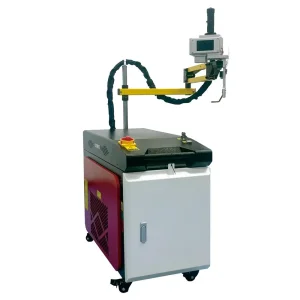
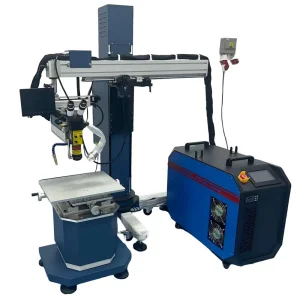
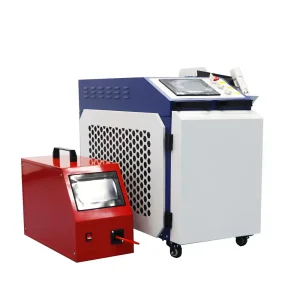
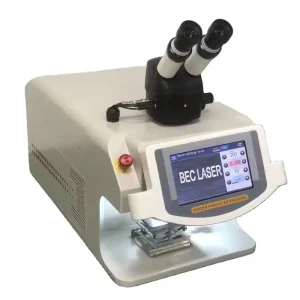
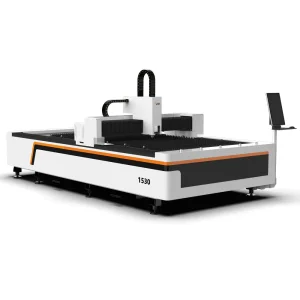
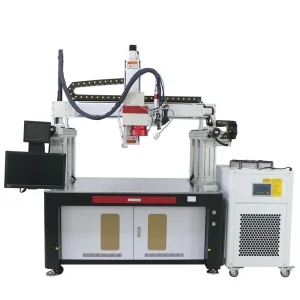
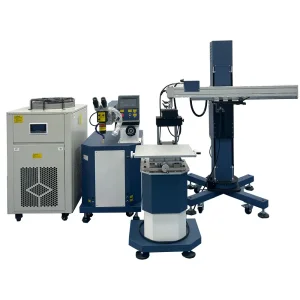
Explore our extended lineup of mold repair welders, continuous galvanometer systems, jewelry stations, and industrial CNC cutting systems.

Send your material specifications, target production cycle times, and sample parts directly to our application engineering team in Shenzhen. We provide comprehensive test reports, ROI calculations, and tailored OEM quotations within 24 hours.