
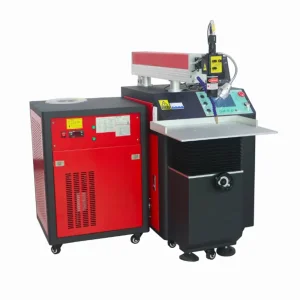
Explore our core industrial equipment engineered directly in Shenzhen. Every unit features tested optical paths, CE-compliant chassis architecture, and dedicated hardware calibrations for export.

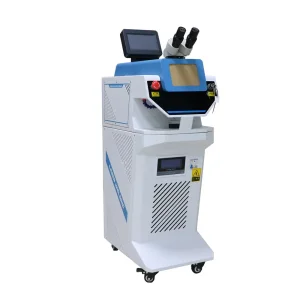


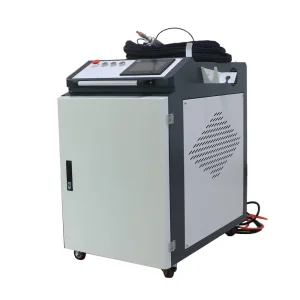


In high-end surface preparation, understanding laser-matter interaction dictates production yield. Quasi-Continuous Wave (QCW) fiber lasers bridge the critical technical gap between standard continuous-wave (CW) thermal heating and costly short-pulse nanosecond/picosecond MOPA systems. By delivering multi-joule millisecond and microsecond pulse trains with peak power levels 5× to 10× greater than their average power, custom QCW handheld laser cleaning machines strip contaminants without triggering thermal structural compromise on high-value substrates.
Continuous-wave systems deliver constant thermal energy, inducing severe thermal diffusion into base metals like copper, aluminum, and mold tool steel. QCW technology restricts duty cycle durations, matching the material's specific thermal diffusion length (μm scale). Energy vaporizes rust, oxides, and coatings before caloric transmission degrades underlying temper or induces mechanical warping.
A standard 300W average power QCW fiber module generates peak pulse energy exceeding 3kW. This high photon flux breaches the optical breakdown threshold of non-metallic scale, paint polymers, and vulcanized residues instantaneously, vaporizing the dielectric layer through cold plasma expansion while keeping total power consumption minimal.
For precision injection molds, extrusion dies, and aerospace alloys, microscopic micro-pitting from grit-blasting or continuous laser melting ruins tolerance standards. QCW laser cleaning exerts negligible recoil mechanical stress, guaranteeing 100% preservation of mirror polish, intricate grain texturing, and sharp tooling radii.
Selecting the optimal photonic process requires balancing capital expenditure, substrate safety requirements, and square-meter removal efficiency. The empirical data below reflects our Shenzhen lab test benchmarks across standard aerospace and manufacturing alloys.
| Evaluation Parameter | QCW Handheld Cleaning | Continuous Wave (CW) Laser | Nanosecond MOPA Pulsed |
|---|---|---|---|
| Peak Power Potential | High (up to 3,000 W - 6,000 W) | Equal to Average Power (1,000W-3,000W) | Extremely High (>10 kW - 100 kW) |
| Heat-Affected Zone (HAZ) | Minimal (< 15 μm) | Substantial (> 120 μm, warping risk) | Ultra-Low (< 5 μm, zero heat build-up) |
| Substrate Damage Risk | Virtually Zero on Steel / Tool Alloys | High on Thin Sheet, Copper & Aluminum | Zero Damage across All Substrates |
| Capital Investment (CapEx) | Moderate (Optimal ROI Balance) | Lowest Initial Equipment Cost | High Initial Capital Outlay |
| Removal Rate (Thick Rust/Epoxy) | Balanced / Highly Selective | Very Fast (Thermal Degradation) | Moderate / High Precision Pass |
| Primary Application Envelope | Molds, Automotive, Aircraft Components | Shipyard, Heavy Structural Steel Bridges | Semiconductor, Cultural Artifacts, Sensors |
Shenzhen Youmir Laser Technology Co., Ltd. leverages over 16 years of continuous laser R&D and proprietary component manufacturing. Operating out of Guangming District, Shenzhen, with satellite branches in Zhongshan and Hunan, our production model eliminates intermediary markups and delivery bottlenecks.
From precision galvanometer motors and optical protective lens coatings to digital dual-axis wobble controllers and ergonomic torch bodies, over 85% of critical bill-of-materials components are designed, machined, and verified within the Greater Bay Area photonics cluster, cutting lead times to under 10 business days.
We provide full hardware and software customizability: client-branded touchscreens, multi-lingual GUI menus, automated external PLC triggering, custom umbilical cable lengths (up to 15m), and specialized cleaning nozzles for narrow blind-hole cavities and pipe interior walls.
Every QCW handheld laser cleaner undergoes a continuous 72-hour thermal stress test cycle within our climate-controlled environmental chambers. Fiber beam degradation, optical power stability, and water chiller efficiency are digitally logged to ensure zero-defect field arrival.
Across North America, Europe, and Asia-Pacific manufacturing hubs, manufacturing facilities are rapidly transitioning away from chemical baths, dry-ice pellets, and manual abrasive grinding. Below are real-world operational domains where custom QCW handheld laser cleaning delivers unmatched efficiency gains.
Cleans vulcanized rubber, plastic release residue, baked-on polymers, and thermal oxidation from high-grade P20, H13, and beryllium-copper mold cavities directly on the injection press. Eliminates mold disassembly downtime and preserves sub-micron parting lines.
Removes tenacious oxide films from Al 6061-T6, Al 7075, and Ti-6Al-4V prior to automated laser welding or structural adhesive bonding. Delivers pristine metallic bonding interfaces complying with rigorous aerospace non-destructive testing (NDT) criteria.
Micro-strips polyamide insulation coatings and natural oxides from copper busbars, pouch cell terminals, and hairpin stator windings. Yields zero-spatter conductive joinery for resistance welding and fiber laser welding operations.
Cleans localized fatigue fractures and carbon deposits on large turbine blades, marine shafts, and stamping tool steel prior to laser wire deposition or powder laser cladding. Guarantees 100% metallurgical fusion without carbon inclusion defects.
Youmir Laser continues to invest over 12% of annual corporate gross revenue into next-generation photonic research. Our engineering department is pioneering integrated sensing and light-weight handheld systems to redefine surface treatment automation.
Integration of ultra-high-speed digital 2D galvanometer heads capable of delivering spiral, linear, sinusoidal, grid, and annular scanning patterns. Operators can adjust beam path geometries from 1mm up to 150mm width to eliminate overlap banding.
Embedding Laser-Induced Breakdown Spectroscopy (LIBS) sensors into the handheld cleaning head. The system analyzes real-time plasma emissions, automatically shutting off or attenuating laser pulses the instant contaminants are stripped and raw base metal is exposed.
Transitioning handheld gun bodies to aerospace-grade molded carbon-fiber to drop torch weight below 650 grams. Development of standardized quick-dock mechanical interfaces for seamless hand-to-collaborative-robot swapping on high-mix assembly lines.
Importing high-power laser equipment requires absolute regulatory peace of mind. Every custom QCW handheld laser cleaning system delivered by Youmir Laser complies fully with stringent international safety, electromagnetic compatibility, and radiation hygiene codes.
Our production protocols are certified under ISO9001:2015 quality management systems. Equipment features dual-channel safety interlocks, emergency stop switches, key-switch laser activation, and Class 4 laser safety compliance certified under CE EN 60825-1 and US FDA CDRH 21 CFR 1040.10 standards.
Overseas clients receive dedicated engineering support via high-definition video diagnostics, remote PLC parameter tuning, and IoT cloud connectivity. Our multilingual application engineers provide round-the-clock troubleshooting across North American, European, and Asian business hours.
We maintain regional spare parts inventories (protective lenses, focus modules, laser safety goggles, chiller pumps, and galvanometer assemblies) with expedited 48-hour air courier dispatch, preventing protracted production interruptions for our international clients.
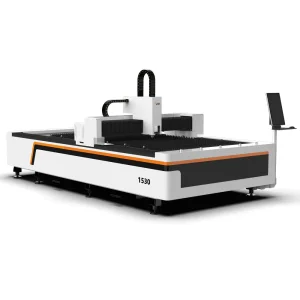
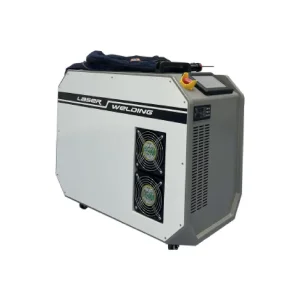
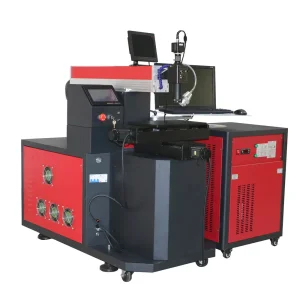
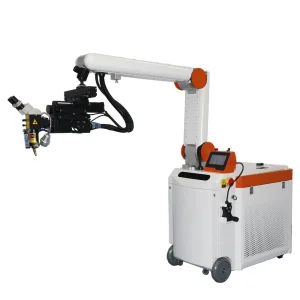
In addition to custom QCW cleaning units, our Shenzhen factory engineers specialized CNC, cutting, and micro-welding equipment to serve complete metal processing production lines.
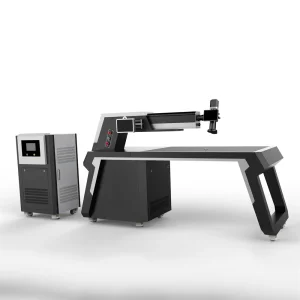



Engineered for plant managers, purchasing directors, and process engineers evaluating custom QCW handheld laser cleaning systems. Contact our team for customized sample validation reports.