Explore precision laser welders, high-efficiency cutting solutions, and automated CNC systems engineered for industrial reliability and repeatable quality.
Why modern metal fabrication lines prioritize 1500W fiber systems over legacy TIG/MIG and higher wattages.
The 1500W beam profile concentrates energy into an ultra-narrow spot diameter (0.1–0.3 mm). This high power density yields keyhole penetration while containing the Heat Affected Zone (HAZ), eliminating structural warping on precision parts.
By pairing high-frequency oscillating wobble welding heads (0–5 mm amplitude) with a stable 1500W continuous wave (CW) source, operators bridge gaps effortlessly without compromising tensile integrity or grain structure homogeneity.
Operating a 1500W fiber laser unit delivers up to 35% electrical-to-optical conversion efficiency. Compared with conventional YAG or arc systems, energy draw is cut by up to 70%, with zero consumables aside from shielding gas and nozzles.
Empirical metrics recorded across 1,000+ industrial test applications on cold rolled, austenitic, and light alloy substrates.
| Performance Indicator | 1500W Handheld Fiber Laser | Traditional TIG Welding | MIG / MAG Welding | Enterprise ROI Impact |
|---|---|---|---|---|
| Welding Speed (1.5mm SS) | 15 - 35 mm/s (4x Faster) | 3 - 8 mm/s | 8 - 14 mm/s | 400% throughput gain on batch sheet lines |
| Heat-Affected Zone (HAZ) | Ultra Narrow (< 0.5 mm) | Broad (2.5 – 5.0 mm) | Moderate (3.0 – 6.0 mm) | Eliminates post-weld straightening & rework |
| Secondary Grinding Needs | Near Zero (Mirror finish) | High (Labor-heavy grinding) | Extreme (Heavy slag/spatter) | Saves $18,000–$25,000/yr per welding station |
| Operator Skill Requirement | Trained within 2-4 Hours | Certified Artisan (Years) | Experienced Tech (Months) | Bypasses critical welder shortages |
| Electro-Optic Conversion | 30% - 38% | < 5% | < 15% | Substantially trims monthly electricity overhead |
How Shenzhen and national laser industrial clusters empower international buyers with world-class quality at disruptive economies of scale.
From local diode pumping modules and active fiber cores to precision collimation lens fabrication, Shenzhen hosts 75% of global optoelectronic sub-tier suppliers. This localization trims inventory cycle time and spares buyers costly European middle-man markups.
Leading Chinese builders like Youmir Laser execute 72-hour continuous beam stability burn-in tests, helium leak detection for cooling circuits, and cyclic thermal shock evaluations before export certification (CE, FDA, ISO9001 compliance).
Direct access to R&D engineering allows bespoke customization: multilingual UI integration, specialized wire feeder dual-drive mechanics, robotic CNC cell adaptations, and private-label chassis colorways delivered in record lead times.
Deploying 1500W laser power across high-spec sheet metal, automotive parts, mold repair, and precision manufacturing.
Thin stainless steel sinks, cookware, and ducting demand zero burn-through. A 1500W fiber beam produces airtight hermetic seams without burn scars, eliminating abrasive polishing cycles.
Galvanized steel and aluminum enclosures often spatters under conventional MIG. Wobble laser heads disperse zinc vapor safely, creating smooth, corrosion-resistant lap joints.
Heavy die-casting and plastic injection molds suffer corner degradation. Integrated boom laser welding deposits hard-facing tool steel alloy wire precisely onto cavities with minimal thermal distortion.
High thermal conductivity metals like copper and aerospace aluminum grades (6000 series) fuse securely under high peak energy density, achieving high shear strength on structural joints.
A rigorous evaluation matrix designed for enterprise procurement directors, contract manufacturers, and international machinery distributors.
While a quality 1500W system carries higher upfront Capex than an entry-level arc welder, Opex plummets immediately: 80% lower shielding gas consumption when using optimized gas lenses, zero tungsten electrodes, and reduced labor wages.
Overseas procurement contracts must mandate standardized protective cover slide windows (D20x2 or D20x4), copper nozzles, and universal water chiller fittings. Youmir stocks 5-year reserve packages directly to prevent customs holdups.
Class 4 laser operation requires interlocking safety contacts, redundant dual-channel laser emission triggers, and wavelength-calibrated optical safety goggles (OD6+ @ 1064nm–1080nm) certified under EN 60825-1 standards.
Anticipating the technological disruptions shaping smart metal fabrication shops over the next five years.
Real-time machine-vision seam trackers integrate with wobble galvo motors to dynamically adjust beam trajectories on irregular seams, delivering flawless welds on non-uniform press-brake components.
Advanced high-efficiency thermal architecture is reducing machine footprint. Next-generation 1500W systems utilize compact phase-change heat dissipation, removing bulky water tanks for outdoor installation sites.
Handheld laser torches are shifting into modular collaborative robot (Cobot) arm fixtures. Operators program complex 3D toolpaths in minutes via hand-guided teach pendants for flexible high-mix, low-volume runs.
In-depth responses curated by certified laser application specialists for plant managers and purchasing teams.
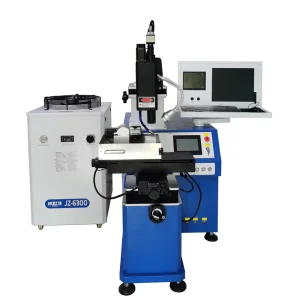
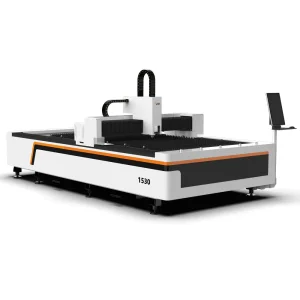
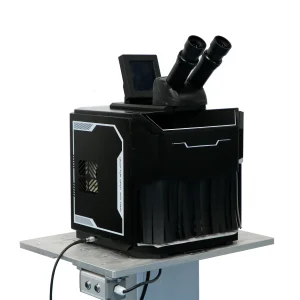
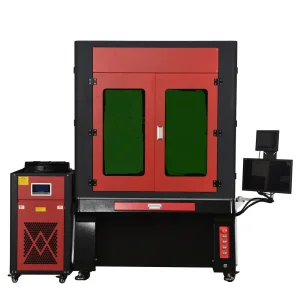
Browse our automated industrial product line—from continuous fiber welders to high-precision QCW mold repair stations.
Send our laser engineering department your material grades, dimensions, and production targets. Receive a complimentary process evaluation report, parameter roadmap, and factory-direct pricing quote within 24 hours.
Request Technical Quote & Sample Testing