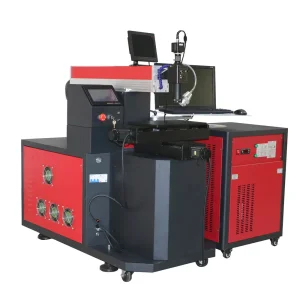
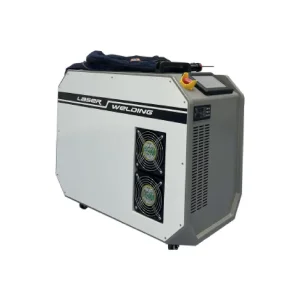
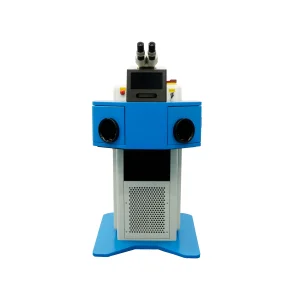
Factory-calibrated automatic, CNC-driven, and multi-axis fiber laser systems engineered for high repeatability, micro-joint consistency, and seamless integration into modern fabrication lines.
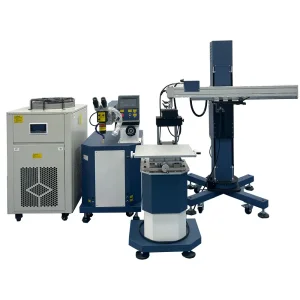




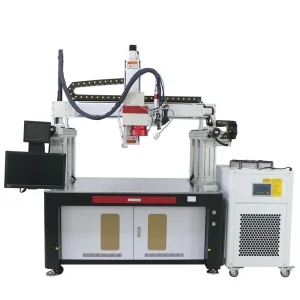
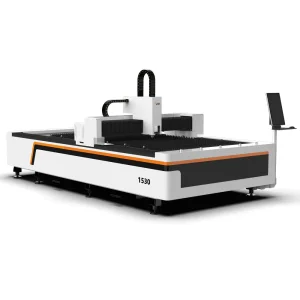

High-performance automated welding transitions sheet metal fabrication from high-labor manual processes to repeatable, sub-millimeter precision joining.
Automatic fiber laser welding machines generally fall into three structural paradigms: 3-Axis/4-Axis CNC Cartesian Gantries for high structural rigidity and large dimensional components; 6-Axis Articulated Robots for complex spatial geometries; and High-Speed Galvanometer (Galvo) welding units for instantaneous micro-spot welds in electronics, battery pack tabs, and medical sensors.
Modern automatic fiber welding utilizes dynamic dual-wobble optical heads capable of circular, linear, triangular, and figure-eight oscillation patterns. This expands the beam profile across gaps up to 1.5 mm without sacrificing deep keyhole penetration, drastically reducing porosity while bridging slight fit-up variations typical of high-volume stamping lines.
Integrating coaxial CCD cameras, laser line triangulation scanners, and closed-loop visual feedback loops ensures sub-0.05 mm trajectory fidelity. This active sensing counteracts real-time thermal distortion during high-power continuous passes, delivering zero-defect seam continuity in stainless steel, titanium, and aerospace-grade aluminum.
Budget reference ranges directly from Chinese Tier-1 manufacturing sources, structured by optical power, kinematic automation degree, and core component configurations.
| System Category / Architecture | Laser Source Power | Typical FOB Price Window (USD) | Core Hardware Stack | Ideal Industrial Applications |
|---|---|---|---|---|
| Standard 3-Axis CNC Enclosed Welder | 1500W – 2000W CW | $12,500 – $18,800 | Raycus/Max source, CypWel/RayTools head, dual-drive servo gantry | Precision hardware, kitchenware, enclosures, sensor cases |
| High-Speed Galvo Flying Welder | 1000W – 3000W CW / QCW | $16,000 – $24,500 | IPG/Raycus, high-speed digital scanhead, coaxial vision alignment | Cylindrical battery tabs, micro-electronics, electrical relays |
| Heavy-Duty 4-Axis Rotary Automatic Unit | 3000W – 6000W CW | $22,000 – $36,000 | Continuous fiber laser, high-torque rotary chuck, water chiller 10kW | Pressure vessels, pipe flange assemblies, automotive drive shafts |
| 6-Axis Articulated Robotic Laser Cell | 2000W – 4000W CW | $28,000 – $48,000 | Fanuc/KUKA/Estun 6-Axis robot arm, laser seam tracker, safety cell | Automotive BIW parts, HVAC ducting, complex 3D curved pressings |
| Precision QCW Mold Repair Rig (Boom Arm) | 300W – 600W Pulse / QCW | $8,500 – $14,000 | Precision boom gantry, microscope alignment, joystick positioning | Injection mold crack deposition, stamping die edge restoration |
How localized clustering in Shenzhen and the Pearl River Delta delivers uncompromised component integration, dynamic customization, and significant cost advantages.
Shenzhen's industrial laser cluster represents the highest concentration of photonics engineering globally. Fiber laser sources (Raycus, Maxphotonics), dynamic wobble optics, industrial CNC controllers, and refrigeration systems are co-located within a 50-kilometer logistics radius, compressing engineering prototype iterations from months to days.
Unlike Western systems constrained by rigid, catalog-only modular frameworks, Chinese factory ecosystems allow custom mechanical designs—such as extended Z-axis strokes, customized rotary trunnions, specialized gas manifold delivery, and tailored PLC fieldbus handshakes—with zero prohibitive non-recurring engineering (NRE) penalties.
Sourcing an automatic fiber laser welding system directly from an accredited Shenzhen manufacturer saves procurement teams 40% to 65% compared to re-badged European or North American turnkey integrators, providing identical laser diode lifetimes (100,000+ hours MTBF) and standardized non-proprietary replacement optics.
High-performance photonics machinery requires rigorous electrical, mechanical, and optical radiation safety certifications to ensure turn-key commissioning across global industrial zones.
Full compliance with CE Machinery Directive 2006/42/EC, EN 60825-1 (Safety of Laser Products), and FDA CDRH (21 CFR 1040.10) protocols. Automated enclosed enclosures integrate interlocked access panels, OD6+ certified laser viewing ports, dual-channel emergency stop circuits, and exhaust extraction hoods.
Standardization across multiple supply voltages ensures operational safety worldwide: 380V/400V/480V 3-phase 50/60Hz industrial mains, equipped with high-performance electrical isolators, Schneider contactors, and UL-certified internal wiring looms for seamless North American and European plant integration.
Tier-1 manufacturers operate a hybrid after-sales structure: 24/7 direct remote diagnostics and telemetry tracking from Shenzhen headquarters, backed by certified localized distribution hubs across Southeast Asia, North America, and Central Europe for on-site commissioning, operator training, and stocked consumable hubs.
Analyzing real-world deployment cases across international manufacturing industries transitioning from manual TIG/MIG to automated fiber laser cells.
Automated galvo and multi-axis systems are critical for battery module assembly: connecting copper-to-aluminum busbars, prismatic cell seal pin welding, and pack cooling channels where minimal heat input prevents separator puncture and thermal runaway risks.
Hermetic sealing of titanium pacemaker cases, endoscope components, and 316L pressure transducers demands zero spatter and metallurgical purity. Enclosed automatic CNC laser welders maintain inert argon purge chambers to achieve clean, oxidation-free seams.
Sheet metal fabricators replace multi-operator manual TIG stations with continuous CNC fiber welders. This reduces secondary weld grinding and polishing labor by 85%, eliminating panel warpage across 0.8 mm to 3.0 mm stainless sheets.
Emerging industry standards are transforming conventional CNC laser systems into autonomous, intelligent manufacturing nodes.
Joining pure copper and reflective non-ferrous alloys presents physics challenges at standard 1070 nm fiber wavelengths. Next-generation systems integrate hybrid blue (450 nm) diode beams to stabilize the molten pool, overlaid with infrared fiber power to achieve deep, spatter-free penetration without keyhole collapse.
High-speed coaxial photodiodes and optical coherence tomography (OCT) inspect keyhole depth and surface morphology in real time. Neural network vision engines classify cold welds, burn-through, and porosity at 10 kHz rates, immediately adjusting laser power and travel speeds mid-process.
Modern CNC laser platforms feature standardized OPC-UA and Profinet industrial protocols. They sync with automated guided vehicles (AGVs), robotic loading gantries, and centralized MES systems to allow continuous, lights-out batch processing with full traceability.
Detailed technical answers resolving key import considerations, system selections, and return-on-investment calculations.
Standard industrial fiber laser sources (Raycus, Max, IPG) deliver an operating lifetime exceeding 100,000 hours under standard maintenance (mean time between failures > 11 years of continuous operation). Routine maintenance is limited to regular water chiller filter flushes, periodic replacement of inexpensive protective lenses ($15–$30/pc), and nozzle tips.
While handheld welders offer flexible operation for low-volume repair work, automatic CNC setups eliminate operator fatigue and skill dependencies. Automatic systems achieve 3x to 5x higher continuous travel speeds (up to 120 mm/sec), deliver 100% path repeatability, can run lights-out shifts, and comply fully with Class 1 laser safety standards.
For carbon steel and structural stainless applications, 99.99% pure Argon or 99.9% Nitrogen gas is standard. While Helium provides maximum thermal conductivity and suppression of plasma plumes, high-grade Argon delivers the optimal balance of oxide-free cosmetic bead finish and cost-efficiency for over 90% of industrial fabrications.
Reputable Shenzhen manufacturers provide pre-order sample testing: international clients can send their actual production stampings or raw material samples. The manufacturer's applications laboratory records high-speed video during welding, runs cross-sectional metallographic inspections, and supplies tensile strength test reports prior to contract confirmation.
Explore specialized CNC-enclosed welding workstations, high-power automated plate processing units, jewelry micro-welders, and industrial surface conditioning lasers.