Explore standard and customized continuous-wave (CW), quasi-continuous-wave (QCW), and high-frequency galvanometer systems tested for cell tab, busbar, and structural enclosure applications.
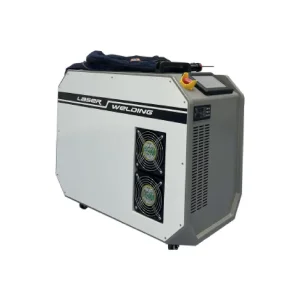
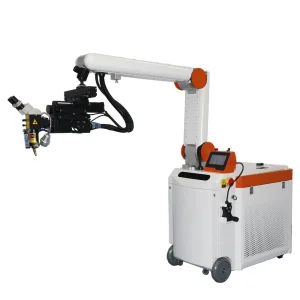
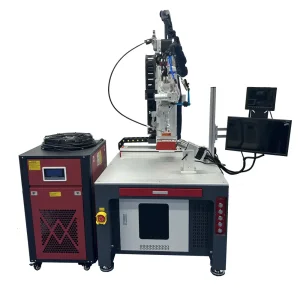
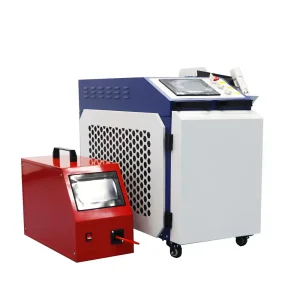
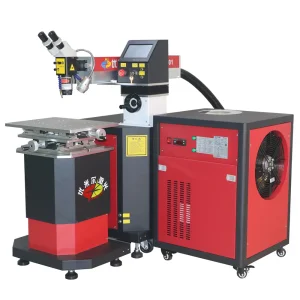
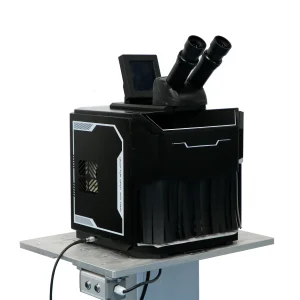
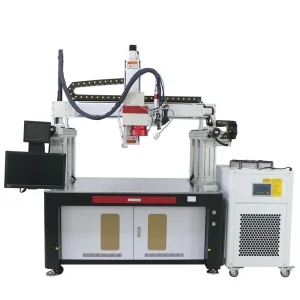
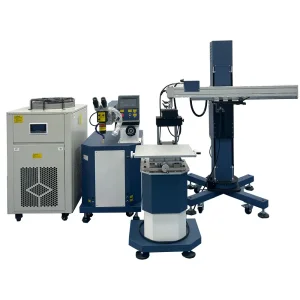
As global energy storage systems (BESS) and electric vehicle (EV) platforms migrate toward higher energy density, lower internal resistance, and ultra-fast charging architectures, precision laser welding has shifted from a secondary fabrication process to the premier core manufacturing milestone.
In typical lithium-ion and sodium-ion power cell assembly, more than 35% of all manufacturing interconnects rely directly on non-contact laser beam processing. From sealing prismatic aluminum casings and precision fusing multi-layer current collector foils to connecting high-conductivity copper busbars across hundreds of 21700 or 4680 cylindrical cells, weld integrity directly determines pack longevity, electrical conversion efficiency, and thermal runaway prevention.
Shenzhen Youmir Laser Technology Co., Ltd. (incorporated in 2012 with foundational laser engineering since 2010) develops next-generation battery laser welding solutions. Engineered in Shenzhen's Guangming high-tech cluster, our continuous-wave fiber laser welders, quasi-continuous-wave (QCW) systems, and high-speed galvanometer workstations solve the industry's most notorious metallurgical hurdles: highly reflective materials, brittle intermetallic compounds (IMCs), and micro-porosity.
Every industrial laser machine designed by Youmir Laser adheres to four non-negotiable performance benchmarks demanded by Tier-1 pack manufacturers:
Why Tier-1 gigafactories, battery pack integrators, and global hardware brand owners partner directly with Shenzhen-based laser machinery builders.
Shenzhen and the wider Greater Bay Area house the planet's most complete electro-optics supply chain. From fiber pump sources, active rare-earth doped fiber cores, to high-power quartz collimators and dielectric mirrors, our factory sources precision sub-components within a 20-kilometer radius.
Ultra-Fast R&D Immediate Component AvailabilityUnlike European or North American systems integrators burdened by 6 to 9-month development lead times, Youmir Laser leverages modular mechanical prototyping and direct software control stacks. We deliver custom pneumatic fixtures, 3-axis CNC gantries, and galvo-scanner battery automation cells in 4 to 8 weeks.
4-8 Wks Lead Time In-House CAD/CAM MechanicsDirect sourcing from a verified Chinese production facility removes intermediaries, cutting machinery procurement capital expenditure (CapEx) by 40% to 60%. Furthermore, standard consumable wear components (protective optical windows, copper shielding gas nozzles) are engineered to universal industrial tolerances at exceptional lifecycle costs.
50% CapEx Reduction Standard Universal OpticsTeam engineering fiber laser hardware since 2010.
Operating across manufacturing plants worldwide.
Export-certified to EU, Americas, and APAC markets.
Shenzhen, Zhongshan, and Hunan manufacturing sites.
Detailed process parameters, metallurgical challenges, and laser system architectures tailored for prismatic, cylindrical, pouch, and pack-level assembly.
Prismatic lithium iron phosphate (LiFePO4) and ternary (NMC) cells utilize 3003 aluminum alloy housings. Welding the top cap plate to the deep-drawn can requires continuous, high-speed sealing to prevent electrolyte evaporation and withstand high internal burst pressures.
High-volume cylindrical packs (power tools, micro-mobility, EV drivetrains) require rapid fusing of current collector tabs directly to cell terminals. The recent transition to 4680 tabless architectures involves welding multiple copper shingled folds to heavy nickel-plated copper collectors.
While ultrasonic metal welding was historically common, multi-layer current collector foils (40 to 80 layers of 6μm copper or 12μm aluminum) in heavy pouch cells are rapidly transitioning to galvanometer fiber laser welding to eliminate mechanical horn wear and particle generation.
In full battery module and pack assembly, hundreds of individual cells are joined in series and parallel via stamped copper or aluminum busbars, or integrated flexible printed circuit (FPC) Cell Contacting Systems.
How recent breakthroughs in beam shaping, hybrid wavelengths, and closed-loop process monitoring solve the traditional limitations of high-speed battery pack manufacturing.
Pure copper reflects over 90% of standard 1064nm infrared laser light at room temperature, leading to unstable keyhole initiation and excessive thermal expulsion. Modern blue laser wavelengths (450nm) increase copper photon absorption by nearly 800%, enabling completely spatter-free conductive welds with zero internal voids.
450nm Blue Wavelength Spatter-Free CopperRather than using a static spot, dual-axis galvanometer wobble heads oscillate the laser beam at frequencies up to 2000 Hz in circular, figure-eight, or sine wave patterns. This dynamically stirs the molten puddle, releases entrapped hydrogen gas from aluminum alloys, and bridges joint assembly gaps up to 0.3 mm effortlessly.
Gap Bridging >0.3mm Hydrogen DegassingOptical Coherence Tomography (OCT) uses an interferometric pilot beam coaxially aligned with the processing laser. Sampling at rates exceeding 100 kHz, OCT measures keyhole depth and melt-pool surface elevation in real-time, instantly flagging out-of-tolerance penetration without requiring destructive metallurgical cross-sectioning.
100kHz Real-Time Sensing Non-Destructive QAQuantitative analysis of throughput, thermal footprint, and electrical conductivity benchmarks.
| Performance Metric | Fiber / Wobble Laser Welding | Ultrasonic Wire / Tab Bonding | Resistance Spot Welding | Micro-TIG Welding |
|---|---|---|---|---|
| Process Cycle Speed | Ultra-Fast (0.1s - 0.4s per joint) | Moderate (0.8s - 1.5s per joint) | Slow (0.5s - 1.2s per weld) | Very Slow (2.0s - 4.0s per weld) |
| Heat-Affected Zone (HAZ) | Extremely Narrow (<0.15 mm) | Negligible (Cold solid-state) | Moderate (0.5 mm - 1.5 mm) | Very Wide (>2.5 mm, High Distortion) |
| Electrical Joint Resistance | Ultra-Low (<15 μΩ, True Fusion) | Low (Solid friction bond) | Variable (Surface oxide sensitive) | Moderate (Prone to oxidation) |
| Mechanical Tool Wear & Consumables | Zero Contact (Optical cover glass only) | High (Frequent sonotrode wear) | High (Electrode dressing required) | Moderate (Tungsten electrode degradation) |
| Automation & MES Line Integration | Native (Real-time telemetry, 2D galvo) | Moderate (Bulky mechanical head) | Limited (Electrode pressure tracking) | Difficult (High electromagnetic interference) |
Procuring laser equipment for gigafactories or automotive Tier-1 battery assembly demands strict adherence to rigorous engineering, data telemetry, and personnel safety mandates.
Youmir Laser manufactures systems compliant with international electrical and mechanical safety frameworks. Our machines seamlessly interface with enterprise production architectures:
Complete data serialization per battery pack. Real-time logging of laser power, wobble frequency, gas pressure, and positioning coordinates mapped directly to cell 2D Data Matrix codes.
All mechanical enclosures, linear axes, and cable drag chains are manufactured using non-shedding, anodized aluminum or stainless steel materials compliant with ISO Class 7 / Class 10,000 dry-room environments (-40°C dew point).
Turnkey systems certified to CE Machinery Directive (2006/42/EC), Low Voltage Directive, and EN 60825-1 Class 1 enclosed interlock safety standards with OD6+ optical viewing glass and FDA CDRH accession registration.
Before releasing equipment for overseas shipping from Shenzhen, our engineering team executes rigorous validation protocols:
Shenzhen Youmir Laser Technology Co., Ltd. is a national high-tech manufacturing enterprise dedicated to industrial laser welding, cleaning, and precision cutting machinery.
With deep engineering roots extending back to 2010 and corporate incorporation in Shenzhen in 2012, Youmir Laser operates three state-of-the-art facilities: our primary R&D headquarters in Guangming District, Shenzhen, alongside specialized manufacturing branches in Zhongshan (2017) and Hunan (2018).
Our core competitive strength is in-house proprietary design: we build the optical collimation paths, write the numerical control and wobbling software algorithms, and construct the multi-axis mechanical gantries internally. This unified architecture allows us to rapidly optimize pulse shapes, spot sizes, and shielding gas laminar channels directly to your specific alloy formulations.
Facility Address: 5th Floor, Building 4, No. 5 Tianyuan Road, Matan Street, Guangming District, Shenzhen, Guangdong, China.
Direct Phone / WhatsApp: +86 137 8778 7637
Engineering Emails: [email protected] | [email protected]
De-risk your equipment purchase prior to issuing a commercial purchase order. Overseas clients ship their proprietary battery materials, stamped busbars, or can structures directly to our Shenzhen application laboratory.
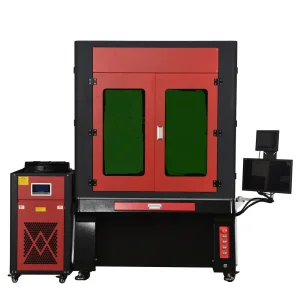
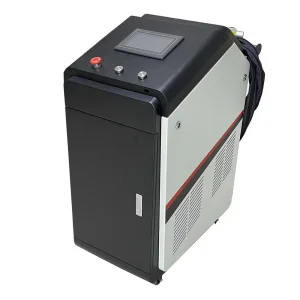
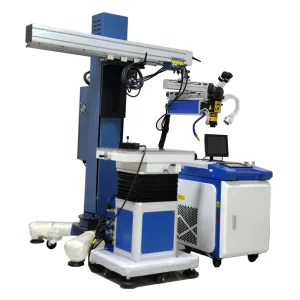
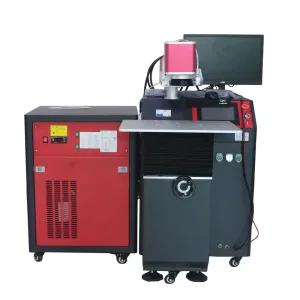
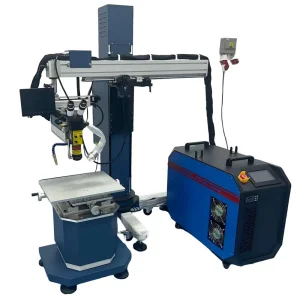
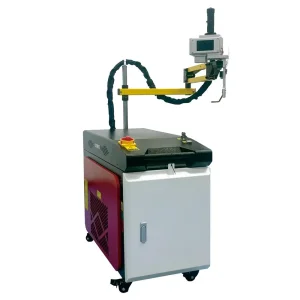
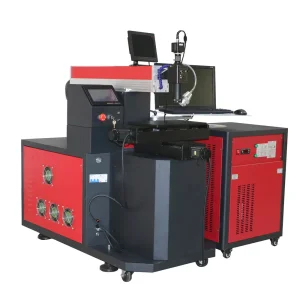
Complete product series engineered for factory integration, tool-room maintenance, surface decontamination, and high-speed multi-axis batch processing.

In-depth responses covering process metallurgy, optical selection, production tolerances, and overseas service commitments.
