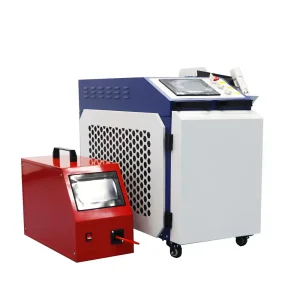
High-Quality Fiber Mold Laser Welding Machine Factory & Quotes

Industrial-Grade Precision Deposition, Sub-Millimeter Thermal Distortion Control, and Strategic Direct-from-Factory Solutions for Global Tooling and Die Restoration

Direct Factory Series

Engineered Mold Repair & Precision Processing Equipment

Direct-from-manufacturer laser systems designed for extreme duty-cycle mold rehabilitation, micromachining, and high-integrity localized metallurgical fusion.
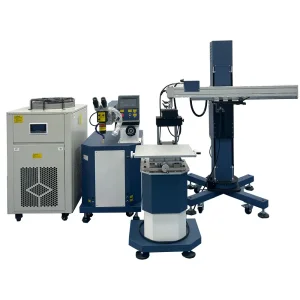

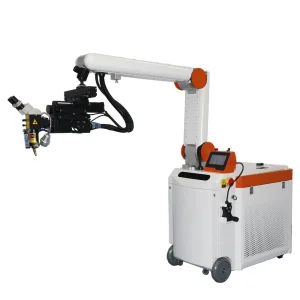
Custom Boom Mold Laser Welding Machine Manufacturers, Factory

Custom Boom Mold Laser Welding Machine Manufacturers, Factory

Configure Machine & Quote
Custom QCW-Jewelry Laser Welding Machine Manufacturer, Factories

Custom QCW-Jewelry Laser Welding Machine Manufacturer, Factories

Request Technical Datasheet
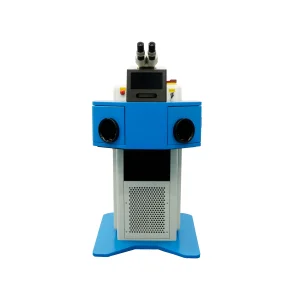
Custom Vertical jewelry welding machine Manufacturer, Manufacturers

Custom Vertical jewelry welding machine Manufacturer, Manufacturers

Factory Direct Inquiries
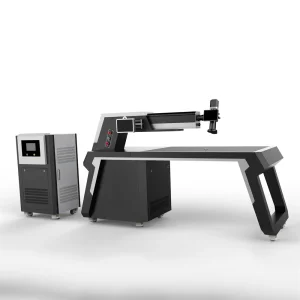
Custom Cantilever Laser Welding Machine Pricelist, Factories

Custom Cantilever Laser Welding Machine Pricelist, Factories

Get Official Pricelist
High-Quality Fiber Transmission Laser Welding Machine Pricelist, Factories

High-Quality Fiber Transmission Laser Welding Machine Pricelist, Factories

Download Quotation
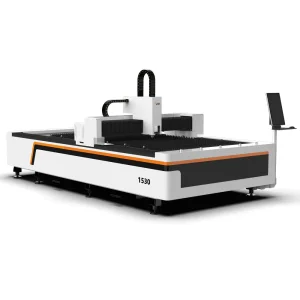
High-Quality Fiber Laser Cutting Machines Factories, Quotes

High-Quality Fiber Laser Cutting Machines Factories, Quotes

Get Industrial Pricing
Custom Pulse Laser Cleaning Machine Manufacturer, Pricelist

Custom Pulse Laser Cleaning Machine Manufacturer, Pricelist

Review Surface Prep ROI
Custom 1530-2000 Watt Cutting Machine Manufacturers, Factory

Custom 1530-2000 Watt Cutting Machine Manufacturers, Factory

Inquire OEM Line Specs
Global Industrial Landscape

State of Global Tooling & Fiber Laser Weld Deposition

Evaluating the shift from legacy lamp-pumped YAG platforms to solid-state fiber laser engines in high-precision mold maintenance and manufacturing.

Thermodynamic Precision & Zero Substrate Sink

Traditional TIG and submerged arc welding impose massive heat inputs ranging from 2,000 to 5,000 Joules per millimeter, causing thermal deformation, dimensional shrinkage, and microstructural embrittlement in tool steels such as P20, H13, and NAK80. Modern continuous wave (CW) and Quasi-Continuous Wave (QCW) fiber laser welders concentrate energy into a pinpoint optical spot (50–300 microns). This reduces the Heat-Affected Zone (HAZ) by upwards of 85%, ensuring zero annealing or unwanted temper reduction on adjacent high-polish surfaces.

Photoelectric Efficiency & Operational Economics

Legacy YAG systems operate with an electrical-to-optical conversion efficiency under 3%, requiring extensive multi-kilowatt deionized liquid chillers and persistent flashlamp replacements every 800–1,200 hours. Solid-state doped ytterbium fiber laser resonators achieve wall-plug photoelectric efficiencies exceeding 30–35%. This dramatic efficiency reduction directly lowers overall plant electrical operational expenditure (OPEX) while delivering maintenance-free diode lifetimes up to 100,000 continuous hours.

Direct Multi-Axis Cantilever Integration

Large automotive stamping dies and heavy structural die-casting tools often weigh anywhere from 2 to 20 metric tons, rendering transport to a dedicated machine bed prohibitively expensive and time-consuming. Modern cantilever and multi-joint boom mold laser welders offer 360-degree radial articulation and reach envelopes exceeding 1,500 mm. Technicians can execute in-press mold rehabilitation directly within the injection molding shop floor, reducing downtime from days to less than two hours.

100,000+
Pump Diode MTBF (Hours)
< 0.05 mm
Localized HAZ Boundary
35%+
Wall-Plug Electro-Optic Yield
50+
Countries Deployed Globally
Technical Validation

Tool Steel Weld Deposition & Laser Metallurgical Metrics

Empirical process parameters verified across high-volume toolmaking facilities for standard die alloys and advanced injection tooling.

Base Alloy System Hardness Target Filler Wire Matrix Optimum Laser Mode Shielding Gas Strategy Post-Weld Processing
AISI H13 / 1.2344
Hot-Work Die
52 - 55 HRC Cr-Mo-V Alloy (0.2–0.6 mm) Pulsed / Wobble Modulation High-Purity Argon (12-15 L/min) Zero stress relieve required; Direct EDM/Polish
AISI P20 / 1.2311
Plastic Injection
30 - 34 HRC Low-Carbon Ni-Cr Matching Wire Quasi-Continuous (QCW) Argon + 2% CO2 or Pure Ar Mirror finishing; High-luster photo etching
NAK80 / 1.2083
Pre-Hardened
38 - 42 HRC Age-Hardening Cu-Al-Ni Wire High Peak Low Duty Fiber 99.999% Pure Industrial Argon Class A-1 optical surface diamond buffing
S136 / Stavax
Corrosion Resistant
48 - 52 HRC Martensitic Stainless (Cr 13%) Wobble Fiber Beam (0.8mm) Argon Backing Purge Recommended Direct CNC high-speed milling without micro-cracks
Beryllium Copper (BeCu)
Thermal Inserts
36 - 40 HRC Cu-Ni-Si Laser Micro Wire High Absorption Green/Fiber CW Ultra-High Flow Argon (18 L/min) Standard micro-finishing; No thermal delamination
Macro Solutions

Cross-Sector Factory Integrations & Localized Scenarios

Targeted deployment models across diversified precision industries where zero-defect manufacturing is mandatory.

Automotive Class-A Body Panel Dies

High-speed stamping operations routinely incur edge chipping, gouging, and draw-radius gauling across hardened cast dies. Utilizing our Custom Boom & Cantilever Fiber Laser Welders allows die maintenance crews to reconstruct sheared trimming steels and draw beads on-site. The narrow heat distribution preserves adjacent base hardness, bypassing full furnace pre-heating cycles and delivering 70% faster tooling recommissioning.

Medical & Electronic Precision Multi-Cavity Tools

Injection tooling for microfluidic medical devices, electrical interconnects, and pharmaceutical dosage caps relies on tolerances tighter than ±0.005 mm. By leveraging high-frequency fiber transmission setups combined with stereo microscopes and high-definition CCD visual positioning, operators accurately rebuild flash parting lines and core gate shutoffs without altering adjacent cavity micro-geometries.

High-Luster Consumer Electronics & Jewelry Dies

Smartphone chassis, optical lens tooling, and fine precious metal manufacturing mandate non-porous welds capable of holding SPI A-1 mirror finishes. Our QCW and pulsed fiber laser welding platforms provide localized shielding control that prevents oxidation, eliminating gas entrapment and pinholes during deposition on premium stainless steel and aluminum inserts.

Future Roadmap

The Next Evolutionary Phase of Mold Laser Systems

Forward-looking intelligence mapping the intersection of automated vision systems, dynamic beam shaping, and AI closed-loop monitoring.

AI-Guided 3D Scanning & Path Generation

Future mold laser processing systems are incorporating structured-light optical scanners directly on the articulation wrist. Machine learning models automatically compare damaged tool geometries against the original CAD file, identifying tool wear volumes and autonomously plotting optimal multi-layer wire deposition trajectories without human intervention.

Dynamic Variable Beam Shaping (Ring-Mode Optics)

Transitioning from pure Gaussian profiles to adjustable ring-core fiber configurations allows precise division of thermal flux. By forming a cooler outer energy sheath that preheats and post-tempers the base metal, while a concentrated inner core creates the melt pool, spatter is reduced to zero and micro-cracking across high-carbon tool steels is fundamentally eradicated.

In-Line Pyrometric Closed-Loop Quality Control

Real-time spectral analysis and coaxial high-speed pyrometry monitor the weld pool at kilohertz frequencies. If the thermal signature strays from the optimal thermodynamic crystallization envelope, laser pulse output is adjusted in sub-milliseconds, ensuring completely uniform grain boundaries and identical metallurgical density from root pass to cap.

Complete Industrial Fleet

Specialized Production, Marking & Precision Welding Machines

Explore our broader industrial portfolio spanning high-speed galvanometer workstations, CNC automated lines, and precision handheld fabricators.
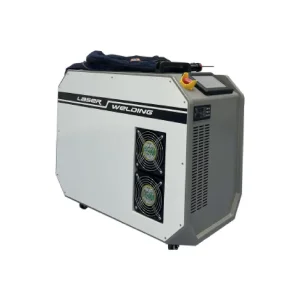
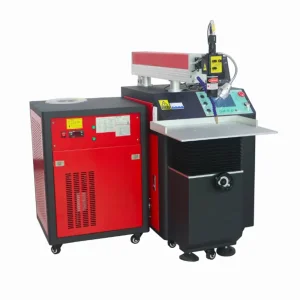
High-Quality QCW Handheld Laser Welding Machine Pricelist, Quotes

High-Quality QCW Handheld Laser Welding Machine Pricelist, Quotes

Get Instant Quote
High-Quality Open Laser Welding Machine Pricelist, Factories

High-Quality Open Laser Welding Machine Pricelist, Factories

Compare Platform Specs
High-Quality Advertising Word Laser Welding Machine Manufacturers, Pricelist

High-Quality Advertising Word Laser Welding Machine Manufacturers, Pricelist

View Production Speed
High-Quality Handheld Laser Welding Machine Manufacturer, Pricelist

High-Quality Handheld Laser Welding Machine Manufacturer, Pricelist

Request Operator Manual
Custom Cnc Enclosed Automatic Fiber Laser Welding Machine Factories, Quotes

Custom Cnc Enclosed Automatic Fiber Laser Welding Machine Factories, Quotes

Inquire CNC Automation
Custom Galvanometer Laser Welding Machine Manufacturers, Factories

Custom Galvanometer Laser Welding Machine Manufacturers, Factories

Check High-Speed Scanner
High-Quality Handheld Galvanometer Laser Welding Machine Manufacturer, Factories

High-Quality Handheld Galvanometer Laser Welding Machine Manufacturer, Factories

Explore Dynamic Optics
High-Quality Integrated Boom Laser Welding Machine Factory, Quotes

High-Quality Integrated Boom Laser Welding Machine Factory, Quotes

Order Factory Directly
Factory Advisory

Frequently Asked Technical & Purchasing Questions

Direct technical clarification from our senior engineering team to streamline your procurement and tooling line integration.

Why is a Fiber Laser preferred over traditional Nd:YAG flashlamp welders for mold repair?
Fiber lasers feature superior optical beam quality (M² typically < 1.2 for single mode or precise top-hat profiles), ensuring consistent power density without focal point drift. YAG platforms rely on xenon flashlamps that degrade over time, leading to inconsistent penetration depths and erratic metallurgical bonding. Furthermore, fiber engines are fully solid-state, drawing 70% less energy and eliminating flashlamp, cavity mirror, and deionized water filter maintenance.
How does beam wobble technology prevent hot cracking during mold deposition?
Integrated high-speed galvanometer wobble heads stir the molten pool at frequencies up to several hundred Hertz in circular, figure-eight, or linear patterns. This oscillation shears dendrite formations during rapid solidification, eliminates gas entrapment, and accommodates wider filler wire gauges (up to 1.6 mm) while maintaining exceptionally low base-metal heat inputs.
Can high-hardness tool steels like H13 and D2 be repaired without preheating?
Yes. Unlike TIG or micro-arc welding which introduce massive temperature gradients that crack hard air-hardening steels, fiber laser welding generates such a minimal heat-affected footprint that micro-reconstructions can typically be performed cold (room temperature). For extensive build-ups, a moderate preheat of 150°C–200°C is recommended to mitigate martensitic shear stresses.
What is the operational turnaround and typical return on investment (ROI)?
Most mold repair facilities achieve full capital break-even within 4 to 9 months. Eliminating outsourced laser welding costs, avoiding transit times for heavy dies, and preventing catastrophic production halts on high-speed stamping or moulding lines easily recoup machine procurement investments within the first several tool rehabilitation cycles.
What factory validation and export certifications are provided with shipments?
Every fiber laser welding machine built in our factory undergoes a continuous 72-hour full-load burn-in cycle, optical power meter verification, and ISO 9001/CE-compliant electrical isolation testing. Overseas buyers receive complete factory inspection dossiers, laser source test certificates, and English-language HMI control software pre-configured to local electrical specifications (110V/220V/380V).