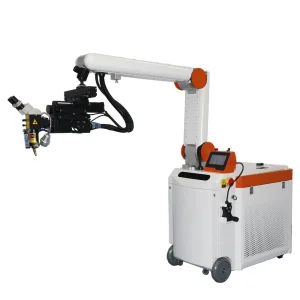
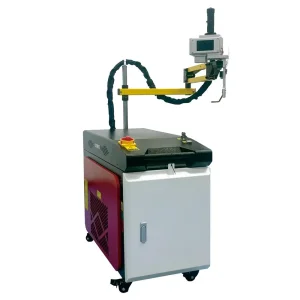
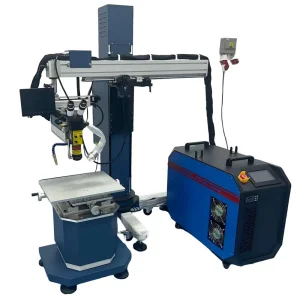
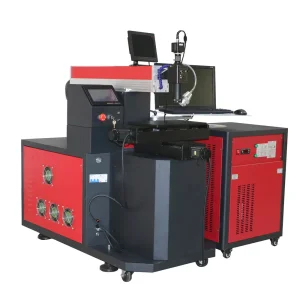
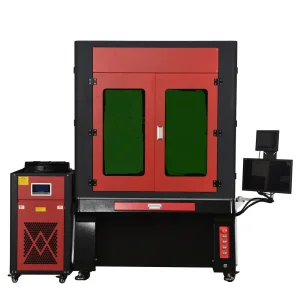
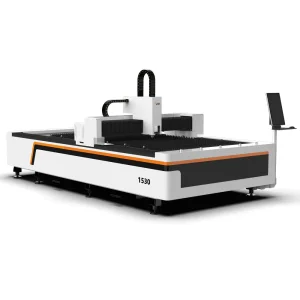
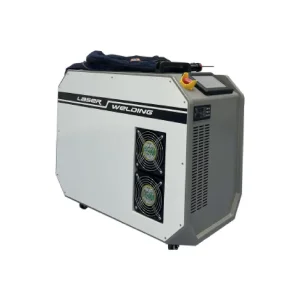
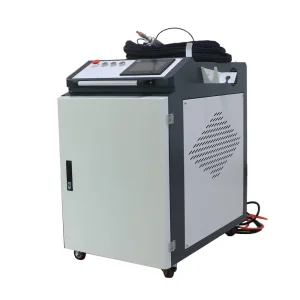
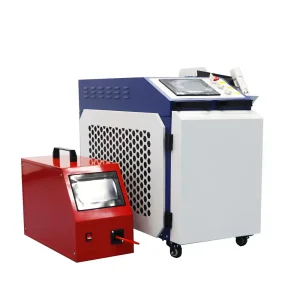
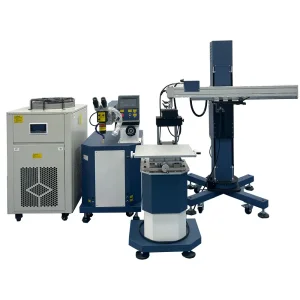
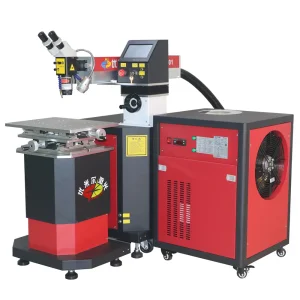
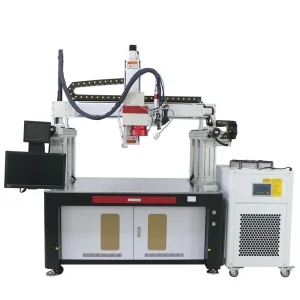
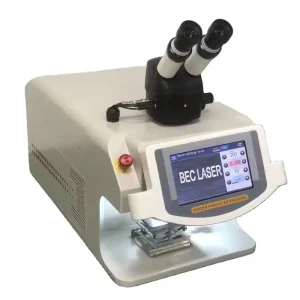
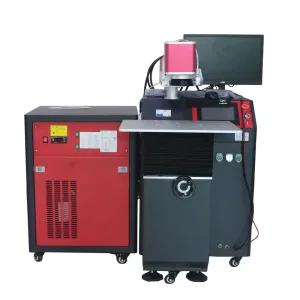
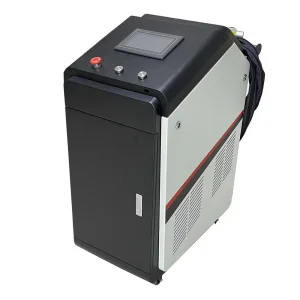
Engineered for extreme duty cycles, sub-micron precision, and clean surface preparation directly from our production floor.
Evaluating the systemic transition from abrasive media blasting and chemical solvent pickling to non-contact photon ablation across international manufacturing corridors.
Stringent zero-emission targets, EU REACH regulations, and EPA industrial waste mandates are penalizing traditional chemical striping and abrasive sandblasting due to secondary pollutant streams, airborne silica, and hazardous slurry disposal expenses.
Aerospace tooling, precision injection dies, and nuclear piping cannot tolerate abrasive micro-scratches or mechanical gauge loss. Pulsed laser cleaning preserves baseline Ra surface roughness, eliminating geometric distortion completely.
Eliminating recurring media purchases (garnet, glass bead) and mechanical mask preparation yields up to an 84% reduction in operating expenditures. Cleaners easily integrate with 6-axis robotic cells and multi-axis CNC gantries for continuous operation.
Empirical performance benchmarks across critical manufacturing variables documented by our Shenzhen testing laboratories.
| Evaluation Parameter | Pulsed Fiber Laser Ablation | Continuous CW Laser Removal | Abrasive Grit Blasting | Chemical Acid Bath Pickling |
|---|---|---|---|---|
| Ablation Mechanism | Photothermal shockwave & plasma vapor | Continuous thermal melt & gas vaporization | Kinetic micro-fracture & surface scouring | Chemical dissolution & redox reaction |
| Substrate Heat Input (HAZ) | Negligible (< 0.02 mm depth) | Moderate (controlled via scan speed) | None (Work-hardening risk instead) | None (Risk of hydrogen embrittlement) |
| Secondary Waste Yield | Zero (Trapped by integrated HEPA filters) | Zero (Dry fume extraction only) | Severe (Contaminated media & dust) | Critical (Hazardous acidic sludges) |
| Operating Cost per m² | Low (Electricity + Optics maintenance) | Lowest (Ultra-fast high square footage) | High (Constant consumable replenishment) | High (Reagents, neutralizers & disposal) |
| Process Repeatability | Deterministic (Digital CNC/Wobble control) | Deterministic (Preset recipe library) | Variable (Manual human fatigue/nozzle wear) | Variable (Dependent on chemical titration) |
Addressing region-specific industrial challenges with targeted laser rust removal architectures.
High saline air accelerates corrosion on container cranes, ballast tanks, and hatch coamings. Continuous high-power (2000W–3000W) CW fiber lasers clear heavy rust blooms down to white metal (Sa 2.5) at speeds exceeding 15 m²/hr without polluting surrounding marine waterways.
Local assembly hubs deploy pulsed laser systems for pre-weld oxide clearance on battery tray extrusions and tailored blank seams. Laser stripping removes stamping mill oil and micro-oxidation, preventing weld porosity and eliminating expensive post-weld joint rework.
Municipal renovation teams utilize variable-pulse MOPA lasers to lift decades of sulfate scale and atmospheric encrustation off bronze statues, historic wrought iron, and architectural facades without affecting the fine underlying patina or historical stonework.
Shenzhen Youmir Laser Technology Co., Ltd. exploits full vertical hardware clustering to accelerate custom configuration lead times and deliver unmatched price-performance ratios.
Our direct integration with the Greater Bay Area photonics supply cluster allows us to source premium fiber pump diodes, dynamic galvanometer scan heads, and telecentric quartz optics within a 50-kilometer radius. This compressed supply loop guarantees rapid turnaround for custom wavelength configurations, beam shaping optics, and bespoke enclosure ergonomics.
Unlike drop-shipping assemblers, every laser generator, dual-circuit water chiller, and handheld cleaning torch undergoes continuous 72-hour thermal cycling and optical beam profiling prior to crating. Beam power fluctuations are locked within ±1.5%, ensuring industrial-grade reliability from day one on customer production lines.
Where optical physics meets industrial intelligence: active development pipelines shaping our next machine generations.
Embedding real-time Laser-Induced Breakdown Spectroscopy into our scan heads. By monitoring the atomic emission spectrum of the ablated vapor plume, the system autonomously identifies the transition boundary from iron oxide (rust) to virgin steel, instantaneously throttling laser output to prevent base-metal micro-damage.
Migrating beyond traditional nanosecond regimes into picosecond laser ablation. Ultra-short pulses minimize heat conduction time below the electron-phonon relaxation threshold, enabling true "cold ablation" suited for critical semiconductor fixtures and sensitive composite materials.
Development of backpack and wheeled field cleaning systems engineered with solid-state lithium packs. Designed for high-altitude transmission towers, railway lines, and pipeline tie-ins where 3-phase grid power or heavy generator access is physically constrained.
Every machine built by Youmir Laser adheres to international workplace safety, photon radiation control, and industrial certification mandates.
Engineered in compliance with IEC 60825-1 laser radiation safety standards. Standard equipment includes Class 4 emergency interlocks, dual-channel safety contacts, optical fiber continuity monitors, and matched OD6+ rated laser protective goggles.
All exported laser platforms carry verified European CE Machinery (MD) and Electromagnetic Compatibility (EMC) declarations alongside United States FDA/CDRH accession numbers, ensuring clearance across customs checkpoints in Europe, the Americas, and APAC.
Integrated 4G/IoT telemetry modules permit our Shenzhen engineering staff to review real-time fiber laser pump diode voltage, laser cavity temperature, and chiller pressure. When on-site assistance is required, certified local agency partners handle hardware swaps and training.
Detailed technical answers to the most common queries raised by international buyers, production managers, and plant engineers.
Precision-manufactured machinery built to optimize metal fabrication lines and surface de-coating operations.