Engineered directly in our Shenzhen smart manufacturing facility. High-throughput surface treatment, automated mold rehabilitation, and fine metal fabrication machinery.


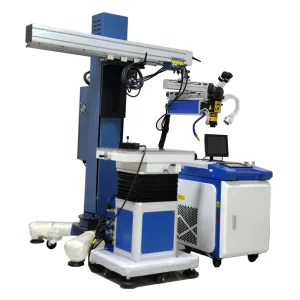


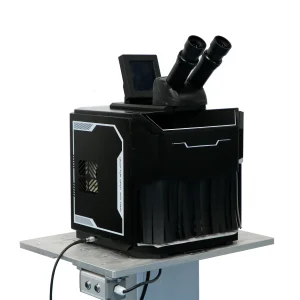
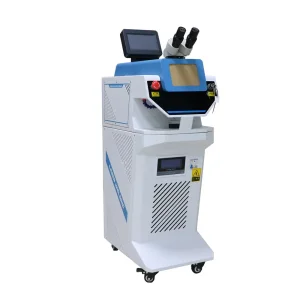
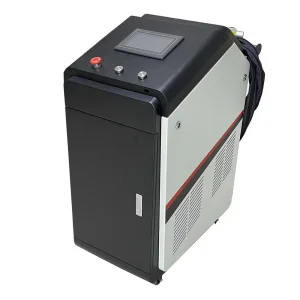
A rigorous industrial cost model examining capital expenditure (CapEx), continuous operational expenditure (OpEx), and real-world amortization schedules across pulsed vs. continuous-wave systems.
Procuring an industrial laser cleaning system is fundamentally an exercise in lifetime metallurgical return on investment. While traditional media blasting, chemical immersion tanks, and mechanical grinding incur persistent recurring consumable costs, regulatory disposal penalties, and unrecoverable substrate degradation, industrial fiber laser ablation operates on solid-state photonics with a 100,000-hour mean time between failures (MTBF). At Shenzhen Youmir Laser Technology Co., Ltd., we maintain pricing transparency across all power tiers, allowing global procurement teams to audit exact baseline hardware configurations, custom automation modules, and integration parameters.
| Optical Architecture | Rated Power | Pulse Energy / Peak Power | Estimated Factory FOB Price (USD) | Target Substrate & Applications | Operating Cost (Est. $/hr) |
|---|---|---|---|---|---|
| Pulsed Fiber (MOPA / Q-Switched) | 100W – 200W | 1.5 mJ – 2.0 mJ / 10–50 kW | $5,800 – $9,800 | Injection molds, tire molds, historical artifacts, aerospace carbon-fiber pre-preg cleaning. | $0.65 / hr (Power only) |
| High-Energy Pulsed (MOPA) | 300W – 500W | 5.0 mJ – 15.0 mJ / >100 kW | $14,500 – $26,000 | Semiconductor tooling, anodized coating stripping, thin aviation paint removal without base-metal micro-melting. | $1.10 / hr |
| Continuous Wave (CW) Fiber | 1000W – 1500W | Continuous thermal flux | $4,800 – $7,200 | Heavy structural steel rust remediation, bridge beams, maritime plate prep where heat sink is deep. | $1.40 / hr |
| Continuous Wave (CW) Fiber | 2000W – 3000W | Continuous thermal flux | $7,800 – $12,500 | Large-scale ship hull descaling, petrochemical pipe refurbishment, high-throughput slag ablation. | $2.20 / hr |
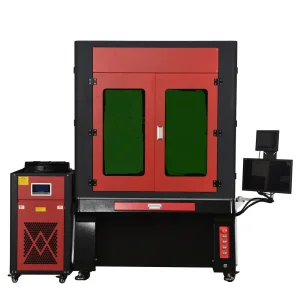
| Robotic 6-Axis Automated Cell | 500W Pulse / 2000W CW | Engineered dynamically | $35,000 – $85,000+ | Automotive EV battery tray de-coating, stator hairpin ablation, fully enclosed Class-1 safety work cells. | $3.50 / hr (Inclusive cell) |
Traditional grit blasting requires recurring abrasive purchases ($200–$800/ton), disposal costs for toxic contaminated blast media, and heavy auxiliary compressor diesel/power bills. Fiber laser systems consume negligible electrical input (1.5 kW to 7.0 kW total wall-plug draw), yielding a full payback period often within 7 to 11 months of continuous operation.
Abrasive blasting causes surface work-hardening, dimension loss, and micro-pitting ($Ra > 12.5\mu m$), destroying precision injection molds and critical aerospace tolerances. Laser cleaning ablates superficial contaminants strictly at the binding threshold, preserving base material chemistry, zero micro-cracking, and maintaining precise engineering geometric tolerances.
With global environmental regulations (EPA, REACH, OSHA) heavily restricting chemical acid baths (pickling), trichloroethylene degreasing, and fugitive particulate emissions, laser ablation operates as a fully closed, zero-VOC, green mechanical process when paired with high-efficiency HEPA and activated carbon extraction systems.
The science behind selective surface evaporation: understanding energy fluence thresholds, pulse temporal profiles, optical galvo oscillation, and the next decade of solid-state photonics.
Laser cleaning relies on high-coherence, single-mode or multi-mode 1064nm near-infrared photon flux directed through high-speed dual-axis galvo scanning heads. When the concentrated beam impinges upon a multi-layer surface, ablation occurs under two distinct physical modalities governed strictly by temporal pulse duration ($\tau_p$) and peak irradiance ($I_{peak}$):
Energy Fluence ($F$):
$$F = \frac{E_{pulse}}{\pi \cdot \omega_0^2} \quad [J/cm^2]$$
Ablation occurs only when $F > F_{threshold}$, allowing selective removal of oxide without harming base aluminum or titanium alloys.
Thermal Diffusion Length ($L_{th}$):
$$L_{th} = 2\sqrt{D \cdot \tau_p}$$
By tuning MOPA pulse width down to 10 ns, $L_{th}$ drops beneath sub-micron dimensions, virtually arresting any heat-affected zone (HAZ).
From commercial aerospace de-painting cells to gigawatt-scale EV battery tray preparation: how Youmir laser equipment solves critical production bottlenecks.
Aviation maintenance requires de-painting aircraft skins and composite assemblies without removing thin cadmium coatings or inducing composite delamination. Our 300W–500W pulsed MOPA systems selectively ablate polyurethane topcoats and epoxy primers layer-by-layer, certified for non-destructive inspection (NDI) standards.
Lithium-ion cell manufacturing mandates ultra-clean prismatic battery can cleaning, copper/aluminum busbar laser welding prep, and hairpin stator insulation stripping. Youmir automated galvo cleaning systems operate directly inline, removing polyamide coatings at 180 mm/s with zero chemical residue.
Offshore drill rigs, commercial shipbuilding ballast tanks, and cross-country pipeline girth welds face corrosive salt environments. Utilizing Youmir 2000W–3000W continuous wave cleaners, operators remove mill scale, sea-salt deposits, and severe red rust ($Fe_2O_3$) at up to 25 square meters per hour prior to automated ultrasonic testing (AUT).
Tire molds and complex automotive plastic tooling build up vulcanized polymers, release agents, and carbon soot. Traditional ultrasonic and chemical cleaning requires mold cooling, crane transit, and multi-day shutdowns. Youmir portable MOPA units clean molds directly within the press at operational temperatures (>150°C), slashing downtime by 85%.
Vertical engineering integration in Shenzhen: why our component self-sufficiency, precision optical assembly, and rapid cycle time deliver unequaled global value.
The international industrial equipment market has observed a monumental structural shift. Historically, laser manufacturing was bifurcated between high-cost, slow-lead-time Western optical consolidators and low-tier trading intermediaries. Shenzhen Youmir Laser Technology Co., Ltd. sits at the vanguard of China’s Industry 4.0 transformation. Situated in the world’s most dense optoelectronics cluster in Guangming District, Shenzhen, we leverage an uncompromised native ecosystem of fiber laser pump diodes, fused-silica laser optics, high-speed galvanometer drivers, and digital control boards.
Unlike system packagers who simply bolt third-party components into sheet-metal enclosures, Youmir engineers write custom embedded PLC firmware, calculate precision telecentric lens focal lengths, and design ergonomic handheld galvo cleaning heads with integrated air knives and safety interlocks. This guarantees 100% interoperability and eliminates sub-tier software lockouts.
Our direct access to specialized CNC machining centers and precision sheet metal production across the Greater Bay Area permits custom optical configurations (custom fiber umbilical lengths, robot-mounted cleaning heads, specialized dual-wavelength integration) to move from CAD approval to physical export-ready hardware within 10 to 14 business days.
Every laser system undergo a continuous 72-hour full-power beam stability stress test, high-vibration environmental transit simulation, optical power meter calorimeter calibration, and strict electrical insulation safety inspections conforming to ISO 9001 quality management guidelines before crating in export fumigation-free timber cases.
Guaranteed CE, FDA CDRH, and OSHA compliance combined with round-the-clock remote telemetry, distributed wear-parts inventories, and local commissioning.
Industrial laser safety is non-negotiable. Youmir cleaning systems are engineered with complete adherence to IEC/EN 60825-1:2014 and 21 CFR 1040.10 (FDA CDRH) regulations. Features include dual-channel emergency stop loops, key-switch interlocks, laser emission warning lights, beam shutter safeties, and optical OD6+ certified safety goggles provided as standard accessories.
Vaporized paints, coatings, and heavy metal oxides produce sub-micron particulates requiring active management. We integrate multi-stage extraction systems incorporating spark arrestors, F8 pre-filters, HEPA H13/H14 high-efficiency filters, and activated carbon beds to comply fully with OSHA 1910.1000 and EU air hygiene thresholds.
Equipped with optional 4G/Wi-Fi cloud diagnostics, our Shenzhen application engineers can review live system telemetry, monitor laser diode temperature curves, and optimize galvo oscillation profiles remotely. We maintain localized consumable depots across North America, Europe, and Southeast Asia for next-day dispatch of lenses and nozzles.
A step-by-step technical auditing framework to evaluate system configurations before finalizing purchase orders.
| Evaluation Parameter | Pulsed MOPA Series | Continuous Wave (CW) Series | Engineering Selection Metric |
|---|---|---|---|
| Heat Affected Zone (HAZ) | Virtually zero (<5 microns) | Moderate (dependent on travel speed) | Specify MOPA if substrate hardness and micro-structure cannot be altered. |
| Base Metal Removal / Ablation | None; strictly self-terminating | Slight etching possible on thin sheet | MOPA is required for precision dies, molds, aerospace turbine blades. |
| Cleaning Velocity | 0.5 – 6.0 m²/hr (high detail) | 5.0 – 30.0 m²/hr (bulk stripping) | Specify CW for structural steel, ship decks, large storage tanks. |
| Cable Umbilical Length | 5m to 10m standard (up to 15m opt.) | 10m to 20m standard | Consider field maneuverability versus optical fiber bend radius limits. |
| Chilling System | Air-cooled (100W-200W) / Water (>300W) | Integrated dual-temp water chiller | Select air-cooled for mobile field maintenance; water-cooled for 24/7 duty. |
Free Sample Evaluation Service: Before issuing capital equipment commitments, Shenzhen Youmir Laser provides a complete, no-cost metallurgical process verification. Global clients ship production parts directly to our Guangming District test facility. Our optical engineers perform parametric cleaning trials, compile high-resolution 3D surface topography profiles, calculate cycle times, and furnish full video and metallurgical test reports documenting the exact laser power, focal length, scan speed, and wobble geometry required for production repeatability.
Targeted technical explanations addressing search intent, metallurgical safety, international operating voltage, and long-term ownership.
Explore our complete manufacturing spectrum: heavy mold repair welders, continuous galvanometer welders, automated enclosed laser systems, and high-precision jewelry benches.







Connect directly with Shenzhen Youmir Laser's optical engineering and application team. Confirm process parameter windows, verify metallurgical cycle times, and receive an itemized FOB/CIF pricelist configured precisely for your manufacturing workflow.
