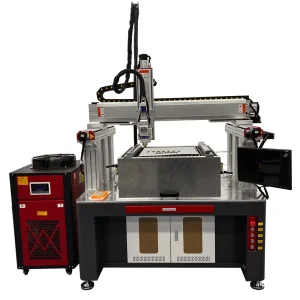
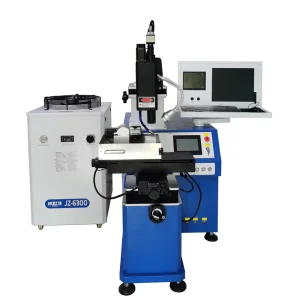
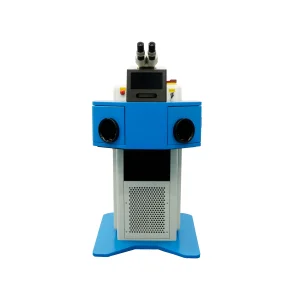
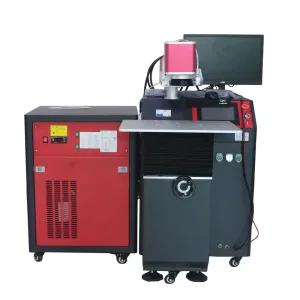
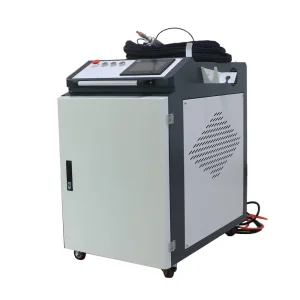
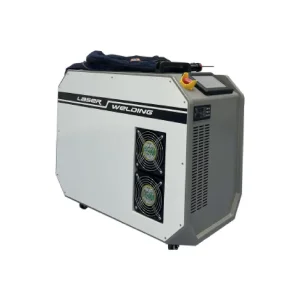
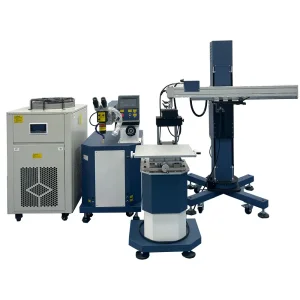
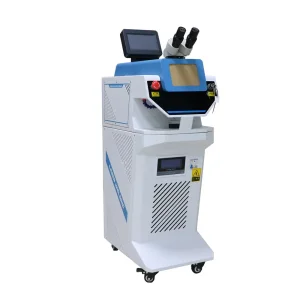
Explore our engineering-certified laser cutting, continuous hand welding, galvanometer processing, and micro-precision joining equipment manufactured in Shenzhen.
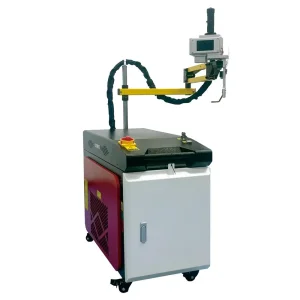
A strategic technological transition from traditional electric arc and tungsten inert gas (TIG) processes to high-density handheld fiber laser thermal fusion.
Across North America, the European Union, Southeast Asia, and the Middle East, the heavy fabrication, sheet metal, and architectural finishing industries are facing a generational structural challenge: the acute global shortage of senior certified TIG and MIG welders combined with surging energy and finishing costs. Traditional welding methodologies inherently suffer from large Heat-Affected Zones (HAZ), severe thermal warping, inconsistent joint penetration, and labor-intensive secondary polishing workflows that consume up to 40% of total floor fabrication time.
High-quality handheld fiber laser welding systems have disrupted this landscape, delivering an energy-dense, focused coherent light beam operating at approximately 1070 nm wavelength. By concentrating photon energy into a sub-millimeter spot, these machines achieve deep-penetration keyhole welding with heat input reduced by over 75% compared to manual arc welding. This allows workpieces ranging from ultra-thin stainless steel sheets to structural aluminum extrusions to be joined with virtually zero warping, crystal-clear aesthetic seams, and four-to-ten times the line speed of legacy processes.
Comprehensive engineering performance data across standardized power levels, materials, and joint configurations validated under industrial testing standards.
| Nominal Power | Stainless Steel (SUS 304/316) | Carbon Steel (Q235/A36) | Aluminum Alloy (6061/5052) | Brass / Copper Alloys | Wobble Spot Width | Recommended Chiller |
|---|---|---|---|---|---|---|
| 1000W Fiber | 0.5 mm - 3.0 mm | 0.5 mm - 2.5 mm | 0.5 mm - 1.5 mm | 0.5 mm - 1.2 mm | 0.2 mm - 4.0 mm | Dual-temp 1.5kW Water |
| 1500W Fiber | 0.8 mm - 4.5 mm | 0.8 mm - 4.0 mm | 0.8 mm - 3.0 mm | 0.8 mm - 2.5 mm | 0.2 mm - 5.0 mm | Dual-temp 2.0kW Water |
| 2000W Fiber | 1.0 mm - 6.0 mm | 1.0 mm - 5.5 mm | 1.0 mm - 4.5 mm | 1.0 mm - 3.5 mm | 0.2 mm - 5.0 mm | Dual-temp 2.5kW Water |
| 3000W Fiber | 1.5 mm - 8.5 mm | 1.5 mm - 8.0 mm | 1.2 mm - 7.0 mm | 1.0 mm - 5.0 mm | 0.2 mm - 6.0 mm | Dual-temp 4.0kW Water |
Integrated oscillating galvanometer mirror with programmable wobble patterns (circular, linear, figure-8, triangle). Expands seam-tolerance gap filling up to 2.5mm when combined with automated dual-wire synchronized feed.
Utilizes ultra-stable solid-state continuous-wave (CW) or Quasi-Continuous Wave (QCW) pumping diode modules with electro-optical conversion efficiency exceeding 37%, drastically cutting plant power consumption.
Class 4 laser safety containment circuit: tactile ground clamp loop circuit, wire-feed status monitoring, active optical reflection shuttering, and emergency gas-pressure sensor cutoff for operator safety.
A transparent breakdown of direct factory export pricing ranges (FOB Shenzhen / CIF destination), core component cost drivers, and comprehensive ROI calculation.
| System Configuration | Typical Factory Export Range (USD) | Target Substrate Range | Standard Components Included | Estimated Payback Period |
|---|---|---|---|---|
| 1000W Standard Handheld | $2,800 - $4,200 | 0.5 - 3.0mm Stainless/Mild Steel | Laser Source, Dual-temp Chiller, Single-Wire Feeder, Wobble Gun | 2.5 - 3.5 Months |
| 1500W Versatile Handheld | $3,600 - $5,300 | 0.8 - 4.5mm Mixed Metals & Aluminum | High-Power Optics, Auto Feeder, 10m Armored Fiber, Consumable Kit | 2.0 - 3.0 Months |
| 2000W Heavy-Duty Workstation | $4,800 - $6,800 | 1.0 - 6.0mm Structural Steel & Aluminum | Extended Fiber Delivery (15m), Dual-Drive Auto Wire, Digital Panel | 2.8 - 4.0 Months |
| 3000W High-Penetration System | $7,500 - $11,500 | Up to 8.5mm Deep Keyhole Welding | Industrial Chiller 4.0kW, Heavy-Duty Optic Head, Multi-Gas Solenoid | 3.5 - 5.0 Months |
| 4-in-1 Multipurpose System | $4,200 - $7,200 | Weld, Clean (Rust/Paint), Cut, Seam Clean | Quick-Change Focus Assembly, Dual-Mode Controller, Cleaning Nozzles | 1.8 - 2.5 Months |
When conducting capex appraisals, industrial procurement directors must evaluate operational overhead rather than machine purchase price alone. In a standard continuous 8-hour shift environment:
1. Labor Cost Arbitrage: TIG welding requires operators with years of manual dexterous training commanding high hourly rates. A handheld fiber laser welder can be mastered by an entry-level technician within 4 to 8 hours of structured onboarding, achieving superior weld uniformity while lowering labor overhead by 40% to 65%.
2. Post-Weld Abrasives & Chemical Pickling: TIG seams typically incur discoloration and convex beads requiring aggressive grinding discs, flap wheels, and dangerous acid pickling pastes. Handheld laser welds feature smooth, flat, low-spatter profiles that enter electrostatic powder coating or passivated anodizing directly without secondary labor.
3. Electrical Consumption: Inverter TIG power supplies run at 15% to 25% wall-plug electrical efficiency. Modern continuous wave (CW) fiber laser units operate at greater than 35-40% total electrical-to-optical conversion. With welding speed 4x faster, kilowatt-hours consumed per meter of weld seam drops by up to 82%.
How Shenzhen Youmir Laser Technology Co., Ltd. delivers global tier-1 laser performance at competitive factory-direct pricing through deep vertical integration.
Unlike trading houses that assemble off-the-shelf third-party kits, Youmir Laser designs its proprietary beam delivery modules, galvanometer controller boards, and firmware algorithms directly in our Shenzhen Guangming District R&D center.
Longstanding strategic partnerships with the world's premier fiber laser source developers (including Raycus, Maxphotonics, and IPG Photonics) guarantee priority component binning, enhanced beam quality (M² < 1.2), and direct factory replacement pricing.
Every workstation leaves our 5000+ m² facility only after completing a 72-hour continuous thermal stress test, laser power drift interferometry analysis, beam collimation alignment, and rigorous multi-gas pressure decay assessments.
Engineered to resolve real-world fabrication bottlenecks across light manufacturing, automotive, and heavy industrial maintenance.
Eliminates thermal burn-through and seam oxidation on 0.6mm - 1.5mm 304/316 grade stainless steel sinks, countertop trim, and sanitary storage vessels. Yields food-grade aesthetic finishes that comply with strict global hygiene regulations without harsh chemical pickling.
Enables ultra-clean joining of stainless steel handrails, brass elevator decorative cladding, structural door frames, and galvanized electrical distribution boxes. Eliminates heat distortion on large flat panels, keeping structural components straight and true.
High-speed, low-spatter hermetic welding of lightweight 5000- and 6000-series aluminum alloys. Critical for battery pack trays, cooling manifolds, exhaust headers, and specialized busbar interconnections where thermal spread must be kept minimal.
Replaces noisy, unreliable mechanical lock seams and rivet fastenings with continuous laser seam sealing on galvanized and carbon steels, ensuring leak-free performance and pressure ratings in high-velocity commercial ventilation networks.
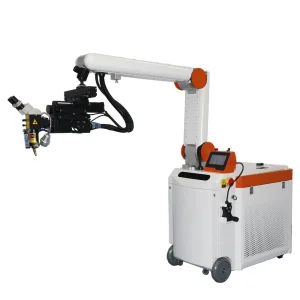
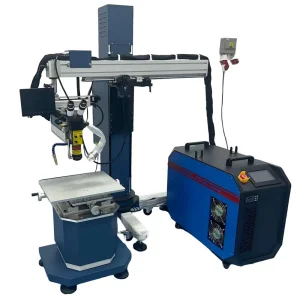
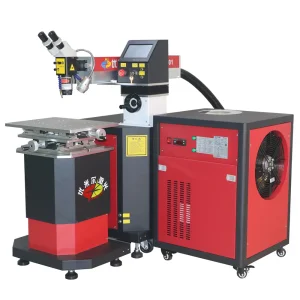
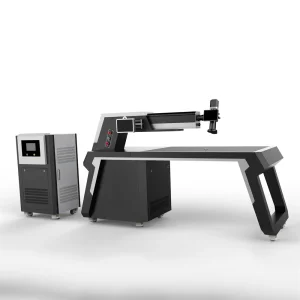
Using our Boom and Cantilever laser series, toolmakers deposit micro-layers of alloyed wire directly onto worn cavity edges, shearing punch corners, and plastic injection parting lines without annealing or distorting the heat-treated mold base.
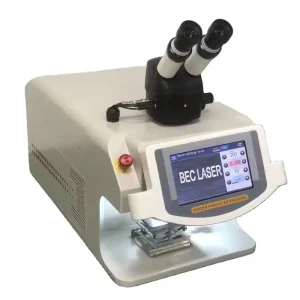
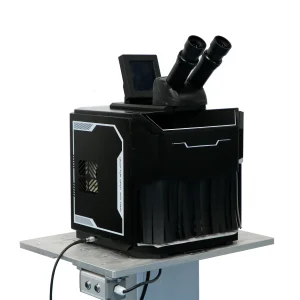
Bench-top 60W, YAG, and QCW pulsed laser welders focus down to 0.1mm spot sizes, allowing master artisans to re-tip fragile ring prongs, close platinum links, and fill porosity right adjacent to delicate gems without heat damage.
A structured engineering framework for supply chain directors to assess technical bids and eliminate hidden lifecycle risks.
Demand dual-circuit closed-loop water chillers engineered for ambient operating environments up to 45°C. The cooling unit must independently regulate the fiber laser cavity (typically ~22°C) and the hand torch optics (~30°C) to prevent destructive lens condensation.
Ensure the hand torch ergonomic weight remains under 850 grams (preferably <750g for lightweight galvanometer types) with a minimum 10m double-sheathed stainless armored conduit to ensure flexibility and resist physical abrasion on crowded factory floors.
Verify that the automated wire feeder is driven by closed-loop dual-roller drive motors synchronized with the laser emission trigger, preventing wire stuttering, torch tip jamming, and erratic deposition during continuous weld passes.
Ensure the control terminal features pre-programmed process parameter libraries for standard steel, stainless, aluminum, and copper grades, with full localization in English, Spanish, German, French, or regional languages.
Specify the procurement of backup protective quartz optical windows (D20x2mm / D20x3mm), focusing lenses, and copper gas nozzles (tapered, flat, internal corner, external corner) to guarantee uninterrupted manufacturing shifts.
Verify equipment compliance with CE Machinery Directive 2006/42/EC, Low Voltage Directive 2014/35/EU, Laser Safety Standard IEC 60825-1, and FDA registration when importing into European and North American customs jurisdictions.
Engineered for exacting mold cavity rework, high-throughput channel-letter fabrication, and micro-precision jewelry manufacturing.
Definitive answers to the most critical technical and logistical questions submitted by international purchasing managers and process engineers.
Send your metal drawings, substrate specifications, and target cycle times to our Shenzhen R&D engineering center. We conduct sample weld testing and provide customized parameter reports within 24 hours.