Engineered for high-yield repeatability, low thermal distortion, and deep-penetration seam consistency across high-reflectivity alloys and complex joints.

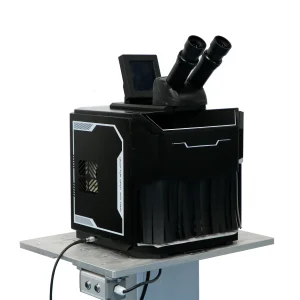
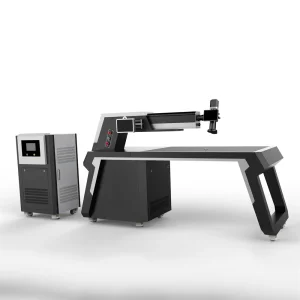


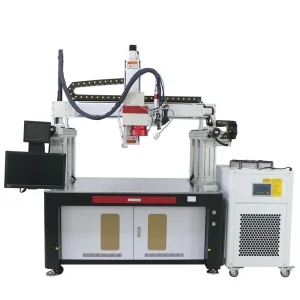

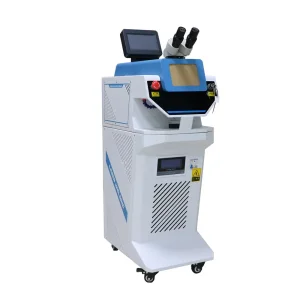
Industrial manufacturing plants worldwide are executing strategic migrations from conventional arc welding (TIG/MIG) toward solid-state and fiber laser processing to eliminate post-weld rectification and reduce carbon-intensity.
The global manufacturing index reveals a structural shortage of certified manual welders. Automated CNC fiber systems and ergonomic wobble handheld heads decrease training onboarding timelines from several months down to 48 operational hours, standardizing weld bead morphology independent of operator fatigue.
Laser keyhole dynamics restrict heat distribution to a localized micron envelope, dropping thermal deformation by over 82% compared to GTAW. Factories eliminate secondary grinding, planishing, and pickling operations, slashing shop floor cycle times and consumables overhead dramatically.
Modern commercial imperatives require hermetic joining of dissimilar metals (e.g., pure copper C11000 to aerospace-grade 6061-T6 aluminum in battery busbars). Fiber lasers utilizing beam oscillating technology suppress brittle intermetallic phase growth and eliminate hot-cracking vulnerabilities.
Understanding the critical differentiation between continuous wave (CW), quasi-continuous wave (QCW), and pulsed YAG resonators to optimize weld morphology, spatter dynamics, and thermal budget.
Continuous Wave (CW) fiber sources operating at 1070 nm deliver stable photon density exceeding 106 W/cm2, initiating instantaneous vaporization and steady keyhole creation. When joining wider gap configurations or crack-sensitive aluminum, static beams struggle with bridging tolerances.
Our proprietary dual-galvanometer wobble welding heads introduce programmable oscillation trajectories—including linear, circular, figure-eight, and sine wave patterns. This oscillation agitates the molten pool, broadens bridging tolerances up to 1.5 mm without filler wire, and vents trapped zinc vapor when handling galvanized sheet, preventing interior blowholes.
Quasi-Continuous Wave (QCW) lasers combine the thermal discipline of pulsed YAG with the wall-plug efficiency of fiber optics. In QCW mode, peak pulse power can reach 10x its nominal average rating (e.g., a 150W average power source discharging 1500W peak pulses). This makes it indispensable for precision mold restoration and thermal-sensitive micro-electronics.
The ultrashort pulse duration (0.2 ms – 20 ms) transfers concentrated energy faster than the material's thermal dissipation threshold, preventing base-metal softening, hardening loss in P20 or NAK80 tool steels, and stone discoloration in fine jewelry benchwork.
| Laser Source / Architecture | Typical Penetration Range | Shielding Gas Strategy | Heat-Affected Zone (HAZ) | Optimal Industrial Application |
|---|---|---|---|---|
| Continuous Wave (CW) Fiber (1kW - 3kW) | 0.5 mm - 8.0 mm Full Penetration | Pure Argon / High-Purity Nitrogen | Extremely Narrow (<0.35 mm) | Automotive chassis, catering equipment, architectural stainless steel |
| Quasi-Continuous Wave (QCW Fiber) | 0.05 mm - 2.5 mm Micro-Spot/Seam | Argon with 2% - 5% Helium | Microscopic (<0.08 mm) | Injection mold repair, watchmaking, implantable medical electronics |
| Pulsed Nd:YAG (Benchtop Desktop) | 0.1 mm - 1.2 mm Spot Overlap | Pure Argon at 8-12 L/min | Localized Micron Margin | Gold, silver, platinum jewelry repair, dental frameworks |
| Galvanometer Continuous Fiber (Robotic) | 0.2 mm - 4.5 mm High-Speed Path | Coaxial / Side-Shielding N2 | Uniform Micro-Keyhole | Lithium battery cell caps, busbars, electrical relay contacts |
Youmir Laser designs customized thermal joining equipment configurations addressing application-specific metallurgical challenges across diversified sectors.
Pioneering spatter-free welding of copper hairpins, pouch-cell tabs, and prismatic aluminum casing. High-speed galvanometer optical heads guarantee helium leak-tight seal boundaries meeting IP67/IP69K packaging thresholds.
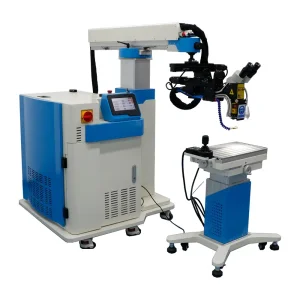
Integrated Boom and Cantilever laser mold welders allow in-situ tooling rehabilitation directly inside injection molding presses. Re-build parting lines, worn gates, and EDM pits without pre-heating heavy tool steel blocks.
Hermetic closure of titanium flight control enclosures and thin-walled Inconel ducting. Zero contact tooling ensures pristine geometric tolerances without introducing mechanical clamping stress.
Micro-welding of high-karat gold, 925 sterling silver, and platinum. Microscope-aligned optical targeting preserves gemstone stability while filling cast porosity and securing delicate clasp mechanisms.
Shenzhen Youmir Laser Technology Co., Ltd. operates state-of-the-art cleanroom assembly labs, optical test benches, and environmental burn-in testing chambers to ensure military-grade field reliability.
Optical degradation constitutes the primary root-cause of laser failure in dusty workshop environments. At Youmir Laser, all collimating lens housings, QBH connector interfaces, and protective cover-slide cassettes are assembled in certified Class 10,000 cleanrooms. Fiber end-face inspection utilizes 400x digital interferometry to ensure zero particulate contamination prior to hermetic sealing.
Prior to global dispatch, every laser generator and chiller unit undergoes continuous 72-hour thermal stress testing under ambient chamber conditions up to 45°C with 85% relative humidity. Continuous power meter telemetry captures thermal lensing drift, guaranteeing that our systems maintain beam parameter product (BPP) stability through rigorous industrial shifts.
A rigorous checklist developed for international supply chain managers and industrial equipment importers to evaluate laser manufacturing partners before contractual commitment.
Verify that the OEM utilizes genuine tier-one fiber sources (e.g., Raycus, Maxphotonics, IPG) with verifiable serial barcodes, integrated back-reflection isolators, and calibrated fiber output lengths to avoid localized attenuation.
Ensure full machine compliance with IEC/EN 60825-1 and US FDA CDRH 21 CFR 1040.10. Fully enclosed systems must feature redundant dual-channel safety interlocks (Cat 4 / PL e), OD6+ viewing windows, and certified optical interlock shutoff mechanisms.
Inspect European CE certification dossiers covering the Low Voltage Directive (LVD 2014/35/EU) and Electromagnetic Compatibility (EMC 2014/30/EU). High-frequency servo drivers must not inject harmonic disturbances into plant electrical grids.
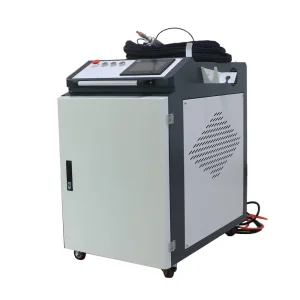
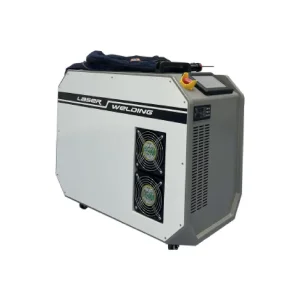
Advanced industrial platforms engineered for substrate preparation, multi-axis heavy mold deposition, high-volume automated fabrication, and high-speed precision cutting.





The next frontier in laser processing eliminates post-process non-destructive testing (NDT) via real-time optical, acoustic, and spectroscopic feedback architecture.
Optical Coherence Tomography (OCT) channels an auxiliary low-coherence tracking beam coaxially through the welding optics. By calculating optical interference shifts at 100 kHz sampling rates, the system maps instantaneous keyhole depth, instantly alerting operators to sub-surface lack-of-fusion defects.
Real-time photodiode sensing arrays monitor plasma plume intensity and ultraviolet optical emissions from the keyhole vapor plume. Neural network inferencing classifies anomalous spatter, shielding gas loss, or surface organic contamination within 2 milliseconds, maintaining zero-defect batch runs.
Complete hardware decoupling allows seamless integration with 6-axis industrial articulated arms (Fanuc, KUKA, ABB, Yaskawa) and collaborative cobots. Standardized fieldbus protocols synchronize laser pulsing with robot trajectory speed down to microsecond interpolations.
Definitive engineering answers addressing metallurgical performance, shielding gas chemistry, power calibration, and long-term operating costs.
